
Unlocking the Loonie: How Much is $20 USD in Canadian Dollars Today?
Your comprehensive guide to the current USD to CAD exchange rate for $20, the factors shaping it, and recent trends.
Quick Conversion Highlights
- Current Value: As of May 13, 2025, $20 US dollars (USD) is approximately $27.85 to $27.97 Canadian dollars (CAD), based on mid-market rates from various financial data providers.
- Mid-Market Rate Snapshot: The prevailing USD to CAD mid-market exchange rate is currently hovering around 1 CAD = 1.392 to 1.399 USD. This means one US dollar buys about 1.39 to 1.40 Canadian dollars.
- Dynamic Rates: Exchange rates are not static; they fluctuate constantly due to a multitude of global economic factors. The figures provided are a snapshot in time.
- Provider Variations: The actual amount of CAD you receive for your USD can differ between banks, currency exchange services, and money transfer platforms due to varying markups, fees, and the specific time of transaction.
Breaking Down the Buck: $20 USD to CAD Explained
As of Tuesday, May 13, 2025, converting 20 US dollars (USD) into Canadian dollars (CAD) yields an amount that reflects the current foreign exchange market conditions. Based on aggregated data from prominent financial information services:
- Using a rate like 1 USD = 1.398 CAD (a rate cited by services like Wise for today), $20 USD would convert to approximately $27.96 CAD.
- Other providers like XE.com cite rates around 1 USD = 1.39794 CAD, which also results in $20 USD being equivalent to roughly $27.96 CAD (rounded from $27.9588).
- Services like Revolut might show a conversion of $20 USD to about $27.97 CAD, using a rate near 1.3986 CAD per USD.
Therefore, a precise expectation for $20 USD is around $27.96 CAD when considering mid-market rates. However, it's common to see a slight range, such as $27.85 CAD to $27.97 CAD, depending on the exact moment of conversion and the specific provider's offered rate. Always confirm the rate with your chosen service before making a transaction, as this "mid-market" rate is typically the baseline before any service fees or spreads are applied.
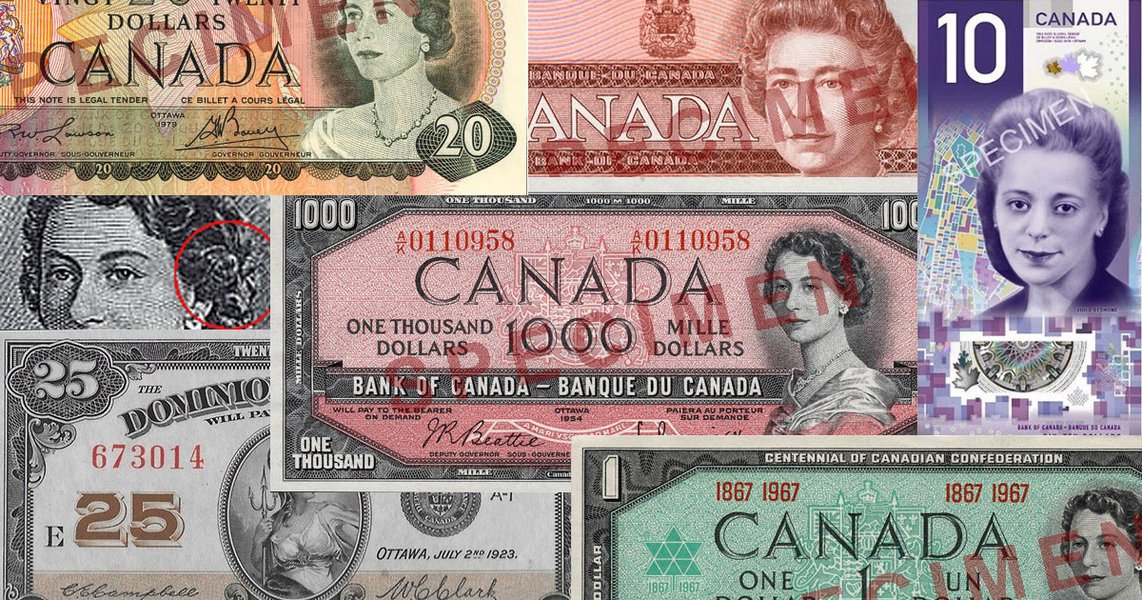
Visual representation of Canadian dollar banknotes.
The Dance of Currencies: Why Do USD/CAD Rates Fluctuate?
The exchange rate between the US dollar and the Canadian dollar (often referred to as USD/CAD) is one of the most actively traded currency pairs in the world. Its value is not fixed but rather determined by the forces of supply and demand in the global foreign exchange (forex) market. Numerous factors contribute to these fluctuations:
- Economic Indicators: Key economic data from both the U.S. and Canada, such as Gross Domestic Product (GDP) growth, inflation rates, employment figures, and consumer spending, significantly impact currency values. Stronger economic performance in one country relative to the other can boost its currency.
- Central Bank Policies: The monetary policies set by the U.S. Federal Reserve (the Fed) and the Bank of Canada (BoC) are crucial. Interest rate differentials are a primary driver; higher interest rates in one country tend to attract foreign capital, increasing demand for its currency. Quantitative easing or tightening programs also play a role.
- Commodity Prices: Canada is a major exporter of commodities, particularly oil. The price of crude oil often has a strong correlation with the Canadian dollar's value. Higher oil prices typically strengthen the CAD, while lower prices can weaken it (the "commodity currency" effect).
- Trade Balances: The balance of trade (exports minus imports) between the two countries affects currency demand. The U.S. is Canada's largest trading partner, so trade flows and terms of trade are influential.
- Market Sentiment and Geopolitical Events: Broader global risk appetite, political stability, and significant geopolitical events can cause investors to flock to "safe-haven" currencies (often the USD) or take on more risk with other currencies.
The following mindmap illustrates the interconnected factors influencing the USD/CAD exchange rate:
Navigating Currency Exchange Services
When converting currencies, it's important to understand that not all services offer the same rates or transparency. Banks, online money transfer services (like Wise or Revolut), and currency exchange kiosks (like XE Money Transfer partners) each have their own fee structures and exchange rate markups. The "mid-market rate" is the rate you often see on financial news sites; it's the midpoint between buy and sell rates on the global currency markets and doesn't include fees or spreads. Consumer services will typically offer a rate that is slightly less favorable than the mid-market rate.
The radar chart below offers an opinionated comparison of different types of currency conversion services based on common desirable attributes. Scores are on a scale where higher is generally better (e.g., higher 'Low Fees' score means lower actual fees).
This chart is illustrative and individual experiences may vary. It's always recommended to compare current rates and fees from multiple providers before making a transaction.
A Look at Recent USD/CAD Trends
The USD/CAD exchange rate can experience notable movements even over short periods. For instance, data from early May 2025 shows some variability:
| Date (May 2025) | Approximate Rate (CAD per 1 USD) | Value of $20 USD (CAD) |
|---|---|---|
| May 6, 2025 | 1.377 | $27.54 |
| May 12, 2025 | 1.401 | $28.02 |
| May 13, 2025 (Current) | ~1.398 | ~$27.96 |
This table illustrates that within just a week, the value of $20 USD could fluctuate by nearly 50 Canadian cents due to changes in the exchange rate. Over the last 30 days (mid-April to mid-May 2025), the average exchange rate has been in the range of approximately 1.3862 to 1.4148 CAD per USD. Looking further back, the yearly average for 2025 so far has been cited around 1.4225 CAD per USD by some sources, though recent daily rates in early May are trending slightly lower than this longer-term average.
Some market forecasts for 2025 anticipate the USD/CAD rate to fluctuate, with predictions varying. For example, some analyses suggest a potential range between approximately 1.329 CAD and 1.428 CAD per USD during the year. Such forecasts are speculative and depend on evolving economic conditions.
Understanding the USD/CAD Exchange Rate Basics
To gain a foundational understanding of how the USD/CAD exchange rate works, including the factors that influence it and its importance in international trade and finance, the following video provides a helpful overview:
This video, "What Are The Basics Of The USD/CAD Exchange Rate...", discusses the fundamental concepts behind this key currency pair. It can help you understand why the value of your US dollars changes when converted to Canadian dollars and what influences these changes over time. Key topics often covered in such explanations include the role of central banks, economic data releases, and commodity prices (especially oil, given its importance to the Canadian economy).
Frequently Asked Questions (FAQ)
What is the 'mid-market rate'?
The mid-market rate (also known as the interbank rate) is the exchange rate that banks and large financial institutions use to trade currencies among themselves. It's the midpoint between the 'buy' (bid) and 'sell' (ask) prices for a currency on the global market. This rate is considered the "purest" as it doesn't include markups or fees typically added by consumer-facing exchange services. When you see an exchange rate quoted on financial news sites, it's usually the mid-market rate.
How often do USD/CAD exchange rates change?
USD/CAD exchange rates change constantly, often multiple times per second during active trading hours of the global foreign exchange market (which operates 24 hours a day, five days a week). These fluctuations are driven by real-time trading based on new information, economic data releases, central bank announcements, and shifts in market sentiment.
Where can I get the best exchange rate for converting $20 USD to CAD?
There's no single "best" place, as it can depend on the amount, speed, and convenience you need. Generally, online money transfer services (e.g., Wise, Revolut, XE Money Transfer) tend to offer rates closer to the mid-market rate and lower fees than traditional banks or airport currency exchange kiosks. It's always advisable to compare several providers, looking at both the exchange rate offered and any applicable fees, before making a transaction.
Are there typically fees for converting currency?
Yes, most currency conversion services charge fees, though they might not always be explicit. Fees can be a flat transaction fee, a percentage of the amount converted, or embedded within the exchange rate offered (a "spread" or "markup" from the mid-market rate). Always ask for a full cost breakdown to understand the total expense of your conversion.
What does "USD/CAD" actually mean?
USD/CAD is the currency pair symbol for the US dollar versus the Canadian dollar. The first currency listed (USD) is the "base currency," and the second currency (CAD) is the "quote currency" or "counter currency." The exchange rate for USD/CAD tells you how many Canadian dollars are needed to buy one US dollar. For example, if the USD/CAD rate is 1.39, it means 1 US dollar costs 1.39 Canadian dollars.
Explore Further
If you're interested in learning more about currency exchange and related topics, consider these queries:
- What are the historical trends of the USD to CAD exchange rate?
- How do central bank interest rates affect the USD/CAD pair?
- What are the best ways to transfer money from the US to Canada with low fees?
- How does the price of oil impact the Canadian dollar?
References
The information in this response was synthesized from data and insights found in the following sources, reflecting rates and information around May 13, 2025:
Last updated May 13, 2025