
Leveraging LLMs for Coursebook Creation: A Step-by-Step Guide
Structuring Your Collaboration with AI for Effective Educational Content
Large Language Models (LLMs) offer significant potential to assist in the creation of educational materials, including coursebooks. Their ability to process vast amounts of information, generate text, and adapt to different writing styles can streamline various stages of the development process. However, effectively using an LLM for a complex task like writing a coursebook requires a structured approach and careful instruction. Simply asking for the entire coursebook at once is unlikely to yield the desired results. Instead, a more iterative and refined prompting strategy is recommended.
Key Highlights for Coursebook Creation with LLMs
- Break Down the Process: Approach coursebook creation with an LLM as a multi-stage process, rather than a single prompt. This allows for greater control and refinement.
- Prioritize Content and Structure: Initially focus on generating the core content, outlines, and key information. Style and tone can be addressed in subsequent steps.
- Integrate Instructional Design Principles: Guide the LLM to consider pedagogical approaches and the learner's journey throughout the topic.
Structuring Your Interaction with the LLM
The most effective way to use an LLM for coursebook writing is to break down the task into manageable steps. This allows you to guide the AI's output and ensure it aligns with your instructional goals. Think of it as a collaborative process where you provide the vision and structure, and the LLM assists with content generation and refinement.
A Phased Approach to Prompting
Rather than requesting content and style simultaneously, a phased approach is generally more effective. This allows you to focus on getting the core information and structure right before refining the presentation.
Phase 1: Defining the Scope and Structure
Begin by providing the LLM with a clear understanding of the coursebook's purpose, target audience, and overall scope. Define the learning objectives you want the coursebook to achieve. This initial phase is crucial for setting the foundation.
- Specify the subject matter and the level of detail required.
- Outline the major topics and sub-topics to be covered.
- Define the target audience's prior knowledge and learning needs.
- Clearly state the desired learning outcomes for the entire coursebook.
You can ask the LLM to propose a potential table of contents or outline based on this information. This helps to establish a logical flow and ensures all key areas are covered.
Phase 2: Generating Core Content
Once the structure is established, you can instruct the LLM to generate content for each section or chapter. At this stage, focus on accuracy, comprehensiveness, and clarity of information. Don't worry too much about the final writing style yet.
- Provide specific prompts for each section, asking for explanations of concepts, examples, definitions, and key takeaways.
- Request the LLM to provide information in a clear and straightforward manner, suitable for educational purposes.
- If you have existing resources or notes, you can potentially provide these to the LLM (depending on the LLM's capabilities and your privacy considerations) to help it generate more accurate and contextually relevant content.
Phase 3: Integrating Instructional Design Principles
To ensure the coursebook facilitates effective learning, guide the LLM to incorporate instructional design principles. This involves thinking about how a learner will interact with the material and what steps they will take to understand the topic.
- Instruct the LLM to suggest activities, exercises, or questions that reinforce learning.
- Ask it to consider different learning styles and propose varied ways of presenting information (e.g., summaries, examples, analogies).
- Prompt the LLM to suggest potential areas where learners might struggle and how the content can address those challenges.
- You can even guide the LLM to simulate teacher-student interactions to refine explanations, as suggested by research into enhancing teaching plans.
Phase 4: Refining Style, Tone, and Language
Once the core content is generated and instructional elements are considered, you can focus on refining the writing style and tone. This is where you shape the LLM's output to match the desired voice and make it engaging for the target audience.
- Provide examples of the desired writing style and tone (e.g., formal, informal, encouraging, authoritative).
- Ask the LLM to rewrite sections to improve clarity, flow, and readability.
- Instruct it to ensure consistency in terminology and formatting throughout the coursebook.
- You can also ask the LLM to proofread and edit for grammar, spelling, and punctuation errors.
Approaching the task in these phases allows for more control and the ability to iterate on each aspect of the coursebook before moving to the next.
Considering the Learner's Journey and Steps to Learning
A critical aspect of instructional design is considering the steps a learner will take to acquire knowledge and skills. When using an LLM, you need to explicitly guide it to think in these terms. This goes beyond simply presenting information; it involves structuring the content and activities to support the learning process.
Integrating Pedagogical Considerations
You can instruct the LLM by referencing known instructional design models or principles. While LLMs may have been trained on vast datasets that include educational materials, explicitly guiding them with pedagogical concepts will yield better results.
Prompting for Understanding and Application
Instead of just asking for definitions, ask the LLM to explain concepts in a way that facilitates understanding and application. For example, you could ask for:
- Explanations of complex ideas using simple language and analogies.
- Examples of how a concept is applied in real-world scenarios.
- Questions that prompt critical thinking and problem-solving related to the topic.
Incorporating Gagne's Events of Instruction (or similar models)
Referencing instructional design frameworks like Gagne's Events of Instruction can provide a structure for your prompts. You could ask the LLM to help you design content that:
- Gains attention (e.g., suggesting engaging introductions or real-world problems).
- Informs learners of objectives (e.g., drafting clear learning goals for each section).
- Stimulates recall of prior learning (e.g., suggesting pre-reading questions or review sections).
- Presents the stimulus (e.g., generating the core content).
- Provides learning guidance (e.g., suggesting examples, non-examples, or step-by-step processes).
- Elicits performance (e.g., creating practice exercises or assignments).
- Provides feedback (e.g., suggesting how to incorporate self-check questions or answers).
- Assesses performance (e.g., proposing assessment ideas).
- Enhances retention and transfer (e.g., suggesting opportunities for practice or application in different contexts).
By explicitly mentioning these stages or the principles behind them, you can encourage the LLM to generate content that is not just informative but also instructionally sound.
Considering Different Learning Activities
A coursebook is more than just text. It often includes various elements to support learning. You can prompt the LLM to help you brainstorm and develop these elements:
| Learning Activity Type | How LLMs Can Assist |
|---|---|
| Explanations and Definitions | Generate clear and concise explanations tailored to the target audience. |
| Examples and Case Studies | Suggest or draft relevant examples and case studies to illustrate concepts. |
| Practice Exercises and Problems | Develop practice questions, problems, or scenarios for learners to apply their knowledge. |
| Summaries and Reviews | Generate summaries of key points at the end of sections or chapters. |
| Glossaries and Key Terms | Compile lists of key terms and their definitions. |
| Discussion Questions | Propose questions to stimulate discussion and deeper thinking. |
By prompting for these specific elements, you guide the LLM to contribute to a more comprehensive and effective learning resource.
The Best Order of Operations
Based on the phased approach and the need to integrate instructional design, here is a suggested order of operations when using an LLM to help you write a coursebook:
Proposed Workflow
- Define the Coursebook's Foundation:
- Clearly articulate the purpose, target audience, and overall learning objectives.
- Instruct the LLM to propose a high-level outline or table of contents.
- Develop Section/Chapter Outlines:
- For each major section or chapter, refine the outline, specifying the key topics and sub-topics to be covered.
- Prompt the LLM to expand on these outlines, suggesting specific points to be included.
- Generate Core Content for Each Section:
- Work through each section, prompting the LLM to generate the primary explanatory text, definitions, and foundational information. Focus on accuracy and completeness.
- Request supporting details, facts, and figures as needed.
- Incorporate Instructional Elements:
- Review the generated content and identify opportunities to enhance learning.
- Prompt the LLM to suggest and draft learning activities, examples, case studies, and review questions for each section.
- Guide the LLM to connect concepts and build logically upon prior information, mirroring the learner's progression.
- Refine and Enhance the Content:
- Instruct the LLM to improve the clarity, flow, and readability of the generated text.
- Provide guidance on the desired tone and style, and ask the LLM to revise sections accordingly.
- Request the LLM to ensure consistency in language and formatting.
- Review and Edit:
- Carefully review the entire draft for accuracy, completeness, and coherence.
- Use the LLM for proofreading and identifying grammatical errors or typos.
- At this stage, significant human oversight and editing are crucial to ensure the final product meets your standards and pedagogical goals.
- Add Supplementary Materials:
- Consider using the LLM to help draft introductory and concluding remarks, a glossary, or an index.
This iterative process allows you to build the coursebook layer by layer, ensuring that both the content and the instructional design are well-considered. While the LLM can be a powerful tool for generating text and ideas, your expertise as an instructor and subject matter expert is essential for guiding the process and ensuring the final coursebook is effective.
The Importance of Iteration and Human Oversight
Regardless of the order of operations, remember that using an LLM for coursebook creation is an iterative process. You will likely need to refine your prompts, request revisions, and heavily edit the LLM's output. Human oversight is critical to ensure the accuracy, pedagogical soundness, and overall quality of the final coursebook. LLMs can be powerful assistants, but they do not replace the expertise of an instructional designer or subject matter expert.
A relevant video on using AI for book writing, offering insights applicable to coursebook creation.
Fine-tuning and Specializing LLMs
For more advanced use cases, particularly if you are creating coursebooks on a very specific or niche topic, you might consider the concepts of fine-tuning or specializing an LLM. While this is a more technical undertaking, it can significantly improve the LLM's ability to generate relevant and accurate content within your domain.
Techniques for LLM Specialization
Google Cloud suggests a three-step pattern for tailoring LLMs: Prompt Engineering, RAG (Retrieval Augmented Generation), and Fine-tuning. For coursebook creation, this translates to:
Prompt Engineering (as discussed above)
Crafting effective prompts is the most accessible way to guide an LLM for your specific needs. This involves providing clear instructions, context, and examples.
Retrieval Augmented Generation (RAG)
RAG involves giving the LLM access to a specific set of documents or knowledge base relevant to your coursebook's topic. The LLM can then use this information to generate more accurate and informed responses. For coursebook writing, this could mean providing the LLM with relevant research papers, textbooks, or your own course materials.
Fine-tuning
Fine-tuning is a process where a pre-trained LLM is further trained on a smaller, task-specific dataset. For coursebook creation, this would involve creating a dataset of high-quality educational content within your subject area and using it to adapt the LLM's parameters. This requires more technical expertise and data but can lead to highly specialized and effective content generation.
Instruction tuning, a form of fine-tuning, specifically trains LLMs on instructional prompts and desired outputs, making them better at following instructions and generating relevant content for educational purposes.
Benefits of Specialization
Specializing an LLM can lead to:
-
More accurate and domain-specific content.
-
Improved understanding of the nuances of your topic.
-
Generation of content that better aligns with the expected style and terminology in your field.
However, it's important to weigh the effort and resources required for specialization against the complexity and novelty of your coursebook's topic.
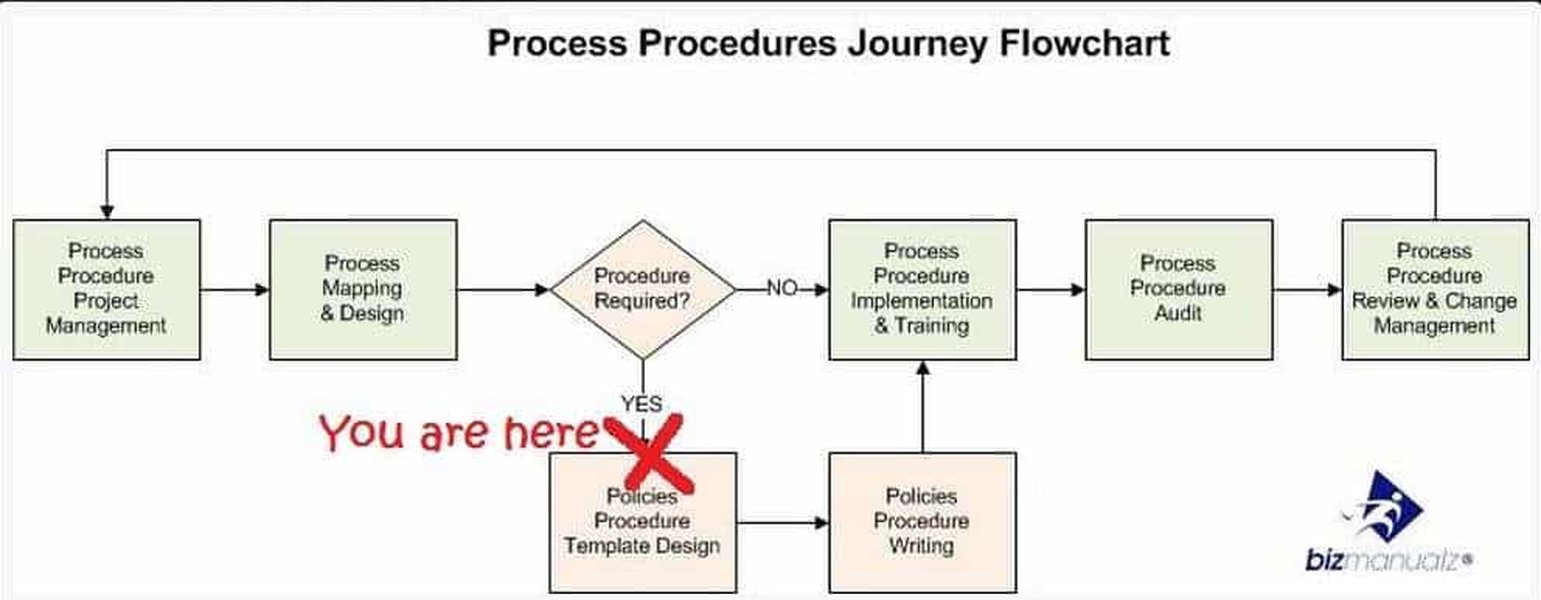
Visualizing a process can help in structuring your approach to using LLMs.
Ethical Considerations and Best Practices
Using AI to assist in writing a coursebook comes with ethical considerations that should not be overlooked.
Authorship and Attribution
It is important to be transparent about the use of AI in creating your coursebook. While the LLM can generate content, the overall structure, organization, pedagogical approach, and final editing are contributions from the human author. Policies from organizations like the Authors Guild and publishers like Wiley provide guidance on disclosing AI assistance.
Accuracy and Bias
LLMs can sometimes generate inaccurate or biased information. It is your responsibility to carefully review and verify all content generated by the LLM to ensure its accuracy and freedom from bias. Do not blindly accept the LLM's output.
Originality and Plagiarism
While LLMs generate novel text, their output is based on the data they were trained on. There is a potential for generated content to be similar to existing material. It's crucial to review the generated content for originality and avoid any form of plagiarism. Using the LLM as a tool to assist your writing, rather than having it write the entire coursebook independently, helps mitigate this risk.
Data Privacy
Be mindful of the data you share with the LLM, especially if your coursebook contains sensitive or confidential information. Understand the LLM provider's data usage policies.
By being aware of and addressing these ethical considerations, you can use LLMs responsibly in your coursebook creation process.
Frequently Asked Questions
Can an LLM write an entire coursebook for me?
While LLMs can generate significant amounts of text, it is not recommended to rely on them to write an entire coursebook independently. Human expertise is essential for structuring the content, ensuring pedagogical soundness, maintaining accuracy, and adding the necessary depth and nuance for effective learning.
How can I ensure the LLM considers the steps a student will take to learn?
You can guide the LLM by explicitly referencing instructional design principles and frameworks in your prompts. Ask it to suggest learning activities, examples, and explanations that facilitate understanding and application, mirroring the learner's journey through the topic.
Should I ask for content and style at the same time?
A phased approach is generally more effective. Focus on generating the core content and structure first, and then refine the style, tone, and language in subsequent iterations. This allows for greater control over each aspect of the writing process.
What are the key stages of using an LLM for coursebook writing?
Key stages include defining the scope and structure, generating core content, integrating instructional design principles, refining style and tone, and thorough human review and editing.
Are there ethical concerns when using LLMs for educational content?
Yes, ethical considerations include transparency about AI assistance, ensuring accuracy and avoiding bias, maintaining originality, and protecting data privacy.
References
 amazon.com
Last updated April 25, 2025