
Unveiling the Missing Piece: How Categorization Transforms UTXO Blockchain Government Tracking
Discover how adding categorization capability to UTXO-based government spending systems creates unprecedented financial transparency and accountability
Essential Benefits of UTXO Categorization for Government Spending
- Enhanced Governance: Categorization enables precise classification of every government expenditure, creating an unprecedented level of financial transparency and accountability
- Data-Driven Decision Making: Organized transaction data allows for comprehensive analytics and trend identification, empowering informed budgeting and resource allocation
- Simplified Auditing: Categorized transactions streamline compliance verification and automate regulatory reporting, significantly reducing administrative overhead
Understanding UTXO Categorization for Government Spending
The UTXO (Unspent Transaction Output) blockchain model already offers significant advantages for tracking government spending through its inherent transparency, security, and immutability features. However, incorporating robust categorization capabilities enhances these benefits exponentially, transforming how governments manage and report financial transactions.
Categorization in UTXO blockchain systems involves tagging each transaction with specific metadata identifiers, such as department, project type, budget allocation, geographic region, or expenditure purpose. This systematic organization of financial data enables powerful insights that would otherwise remain obscured in traditional financial systems or even in basic blockchain implementations.
The Mechanics of UTXO Categorization
Unlike account-based blockchain systems where balances are stored at addresses, the UTXO model tracks individual transaction outputs. This granular approach is inherently suited for categorization because each transaction output can carry metadata with category information. When government agencies initiate transactions, they can include standardized category codes that permanently associate that spending with specific departmental, programmatic, or functional classifications.
These categorized UTXOs create a multidimensional financial tracking system where each expenditure is simultaneously:
- Immutably recorded on the blockchain
- Precisely categorized by purpose, department, and function
- Instantly available for real-time reporting and analysis
- Permanently linked in a traceable chain from budget allocation to final expenditure
Granular Budget Tracking and Analysis
With categorization, government spending can be monitored at unprecedented levels of detail. Officials can instantly visualize spending patterns across different categories, comparing actual expenditures against budgeted allocations in real-time. This enables prompt identification of budget overruns, underspending, or misallocations before they become significant financial issues.
Real-World Application Example
Consider a national infrastructure development program with multiple projects across different regions. With categorized UTXO tracking, each transaction can be tagged with relevant metadata such as:
- Project identifier
- Geographic location
- Expenditure type (materials, labor, consulting)
- Funding source
- Implementing agency
This categorization allows officials to generate instant reports showing spending efficiency across regions, identify projects exceeding budgets, and ensure equitable distribution of resources—all while maintaining the core benefits of blockchain immutability and transparency.
Key Benefits of Categorization in UTXO Government Spending
Enhanced Financial Analysis and Decision Making
Categorization transforms raw financial data into actionable intelligence. By systematically organizing transactions, governments can perform sophisticated analyses:
Comparative Analysis
Officials can readily compare spending across departments, regions, or time periods, identifying patterns, inefficiencies, or opportunities for optimization. For example, comparing healthcare expenditures between different regions can highlight disparities in resource allocation or efficiency.
Trend Identification
With categorized historical data, governments can identify spending trends, seasonal patterns, and long-term fiscal trajectories, enabling more accurate forecasting and proactive financial management.
Performance Evaluation
Categorized spending data linked to outcome metrics allows for robust performance evaluation, helping identify programs delivering strong returns on investment versus those requiring adjustment or elimination.
Streamlined Compliance and Auditing
One of the most significant advantages of categorized UTXO tracking is the dramatic simplification of compliance verification and auditing processes.
Automated Compliance Checks
Smart contracts can be programmed to verify that transactions comply with predetermined rules for specific categories. For instance, educational funding might be restricted to approved vendors or specific types of expenditures, with automated verification occurring at the transaction level.
Simplified Audit Trails
Auditors can filter transactions by category, dramatically reducing the time and resources required for comprehensive reviews. Rather than manually sorting through thousands of transactions, they can instantly access precisely categorized subsets of spending data.
Regulatory Reporting
Categorized transaction data simplifies the generation of regulatory reports, as data can be automatically compiled according to required classifications without manual intervention or interpretation.
Improved Public Transparency and Trust
Categorization makes government spending more accessible and understandable to citizens, fostering increased trust in public institutions.
Intuitive Financial Dashboards
Categorized data enables the creation of user-friendly public dashboards where citizens can explore government spending in categories that make intuitive sense, such as healthcare, education, or infrastructure, rather than navigating technical financial codes.
Enhanced Accountability
When citizens can easily track spending in categories they care about, public officials become more accountable for financial decisions. This visibility can reduce corruption and mismanagement while encouraging efficient resource allocation.
Participatory Budgeting Support
Categorized spending data can support participatory budgeting initiatives by providing citizens with accessible information about historical spending patterns, enabling more informed input on future budget priorities.
Implementing UTXO Categorization: Technical Considerations
| Implementation Aspect | Technical Approach | Benefits | Challenges |
|---|---|---|---|
| Metadata Structure | JSON tags embedded in transaction data | Flexible, extensible, machine-readable | Size limitations, standardization needs |
| Category Standardization | Predefined taxonomy with hierarchical structure | Consistent reporting, cross-agency compatibility | Requires governance process for updates |
| Query Performance | Indexed category data in companion databases | Fast retrieval, complex analytics support | Synchronization requirements, additional infrastructure |
| Smart Contract Integration | Category-based logic for automated compliance | Rule enforcement, automated reporting | Complexity, update management |
| Legacy System Integration | API bridges with translation layers | Compatibility with existing financial systems | Technical debt, maintenance overhead |
Category Schema Development
Successful implementation requires thoughtful development of categorization schemas that balance:
- Granularity: Categories must be specific enough to provide meaningful insights without becoming unwieldy
- Standardization: Consistent application across departments ensures data comparability
- Flexibility: The system must accommodate new categories as government priorities evolve
- Compatibility: Categories should align with existing financial reporting requirements
Visual Examples of UTXO Categorization for Government Spending
The following images demonstrate how categorization enhances the utility of UTXO blockchain systems for government spending tracking:

This diagram illustrates how UTXO transactions flow through a blockchain system. When applied to government spending, each of these transaction outputs can be tagged with category metadata, enabling precise tracking of funds as they move between departments or are spent on specific projects.
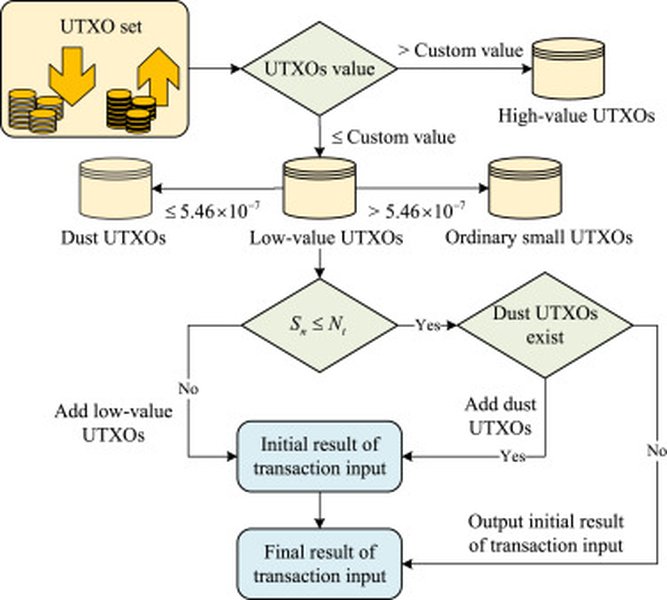
This architectural diagram shows how UTXO processing can be structured for efficient data handling. For government spending categorization, this architecture can be extended with category-specific indexing and processing layers that enable rapid querying of transactions by department, project, or expenditure type.
This video provides insights into tracking government spending from watchdogs GAO and Taxpayers for Common Sense. The categorization capabilities of UTXO blockchain systems can dramatically enhance these existing oversight approaches by providing granular, real-time data organized into meaningful categories.
Frequently Asked Questions
References
- Unveiling the Power of UTXO Blockchains: The Future of Transparent Government Spending - Ithy
- Understanding UTXO Model for Blockchain Systems - Investopedia
-
What is UTXO: Detailed Explanation of the UTXO Model - Horizen
- What is a Smart Contract: Understanding the Role in Blockchain Technology - ConsenSys
-
Blockchain Implementation in Government and Public Sectors - BuiltIn
Recommended Queries
Last updated April 3, 2025