
Unraveling the Enigma of "$veri": Context is King for Its Correct Value
Deciphering the multifaceted meanings and implications of "$veri" across programming, health, and finance.
The question of what the "value of $veri" should be if used correctly is intriguing because "$veri" itself is not a universally defined term with a singular, inherent value. Its meaning and correct usage are profoundly context-dependent. This means that for "$veri" to have a "correct" value, one must first specify the domain or field in which it is being used. Without this crucial context, any assigned value would be speculative.
Key Insights into "$veri"
- Contextual Ambiguity: The term "$veri" lacks a fixed, universal definition, meaning its "value" changes dramatically based on the specific domain (e.g., programming, health, finance, linguistics).
- Programming Variable: In scripting languages like PHP or Perl, "$veri" would denote a variable whose value is determined by program logic and assignments, making it dynamic and non-fixed.
- Hardware Description Language (Verilog): The "$" prefix is typically reserved for system tasks in Verilog, making "$veri" an invalid or syntactically incorrect variable name. Valid variables in Verilog do not use this prefix.
- Brand/Concept Recognition: "Veri" as a brand name, such as in the Veri metabolic health program, represents a service or concept (e.g., "true" or "genuine" data), not a quantifiable value.
- Cryptocurrency Ticker: In the financial world, "VERI" (without the dollar sign prefix) is the ticker symbol for Veritaseum, a cryptocurrency whose value is its fluctuating market price.
The Multifaceted Nature of "$veri"
The term "$veri" presents a fascinating case study in how context dictates meaning and "value." Depending on the field, "$veri" can refer to a programming construct, a brand, a linguistic root, or even a financial asset. Each interpretation demands a different understanding of what its "correct value" entails.
"$veri" in the Realm of Programming
When "$veri" appears with a dollar sign prefix, the most immediate association, particularly in programming contexts, is with a variable. However, the interpretation varies significantly across different programming paradigms and languages.
Scripting Languages: Where "$veri" Could Be a Valid Variable
In certain scripting languages, such as PHP or Perl, the dollar sign ($) is a conventional prefix for variables. In such environments, "$veri" would simply be a user-defined variable. Its value would not be inherent but would be assigned by the programmer through explicit statements within the program's logic. This value could be an integer, a string, a boolean, or any other data type supported by the language. For example:
    // In PHP
    $veri = "Hello World"; // $veri holds a string value
    echo $veri; // Outputs: Hello World

    // In Perl
    my $veri = 123; # $veri holds an integer value
    print $veri; # Outputs: 123
In these cases, the "correct" value of "$veri" is whatever is assigned to it to fulfill the program's intended function. Without a specific program or script, no fixed "correct" value exists.
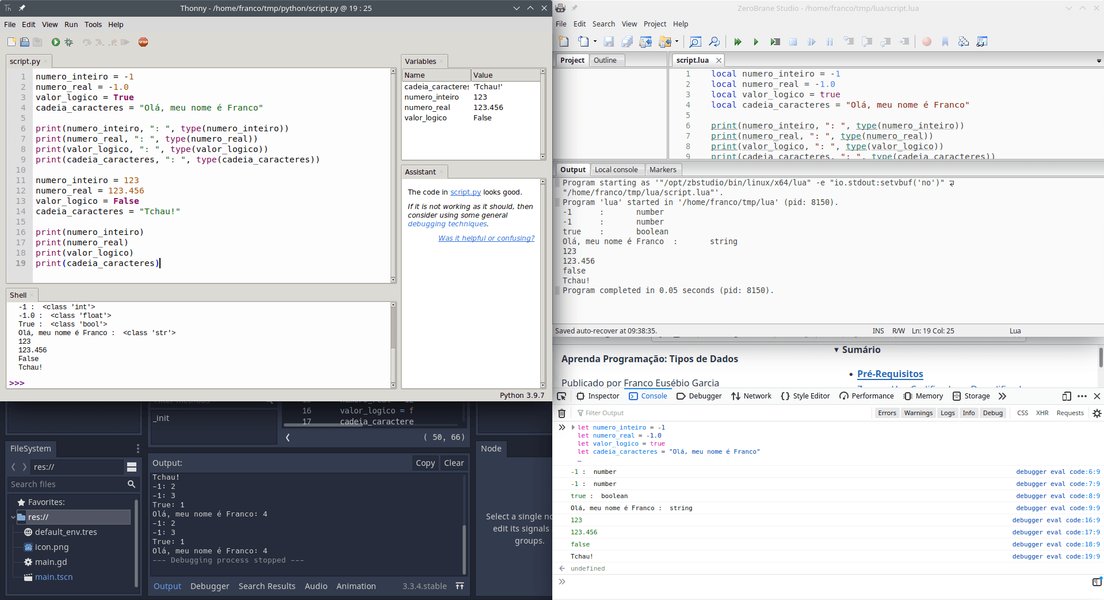
Illustration depicting variable declaration syntax across various programming languages.
Hardware Description Languages (HDL): Verilog's Strict Syntax
In contrast to scripting languages, hardware description languages (HDLs) like Verilog have very strict syntax rules. In Verilog, the dollar sign ($) is specifically reserved for system tasks and functions (e.g., $display, $random, $finish). It is not used as a prefix for declaring user-defined variables or signals. Attempting to declare a variable named "$veri" in Verilog would typically result in a syntax error.
Verilog variables are declared without the dollar sign, using keywords like reg, wire, integer, or real. For instance, a valid variable declaration would be reg veri_signal; or integer veri_counter;. The value of such variables depends on their data type, initialization, and subsequent assignments within procedural blocks (e.g., always or initial blocks) or through continuous assignments (assign statements for wire types). Uninitialized variables in Verilog typically default to an 'x' (unknown) value, emphasizing the need for explicit initialization for correct behavior.
Therefore, if the query implies a Verilog context, "$veri" is incorrectly used, and its "value" would be undefined due to a syntax error rather than a meaningful assignment.
"Veri" as a Brand or Concept
Beyond programming, "Veri" is also a notable brand name in the health and wellness sector. The "Veri" program focuses on metabolic health, utilizing continuous glucose monitoring (CGM) technology to provide users with insights into how diet, exercise, sleep, and stress impact their blood sugar levels. In this context, the "value" of "Veri" is not numerical but conceptual.
It metaphorically refers to "true," "genuine," or "real" data and personalized insights that empower individuals to improve their health. The program's value lies in its ability to translate complex biological data into actionable feedback, guiding users towards healthier lifestyle choices. There is no quantifiable dollar value attached to the name "Veri" itself in this domain; rather, its value is derived from the service it provides and the health outcomes it aims to facilitate.
"VERI" in the Financial Market: Cryptocurrency
In the world of finance, "VERI" (without the dollar sign prefix) serves as the ticker symbol for Veritaseum, a blockchain-based fintech software. Veritaseum aims to decentralize global peer-to-peer (P2P) capital markets and offers digital asset research. The "value" of VERI in this context is its live market price, which constantly fluctuates based on supply and demand, trading volume, market sentiment, and broader cryptocurrency trends. For instance, as of June 04, 2025, its value might be around $25.56 USD, but this is a dynamic figure, subject to rapid change. The Securities and Exchange Commission (SEC) has also filed charges against Veritaseum and its founder, which can impact its market value and perception.
The Linguistic and Etymological Roots of "Veri"
The word "veri" has linguistic origins, stemming from the Latin word "verus," meaning "true," "genuine," or "real." This etymological root often influences the conceptual branding of companies or products named "Veri," suggesting authenticity and reliability. As a given name, "Veri" also conveys meanings of truth and purity. In English, "veri" is a common misspelling of "very," an adverb used to emphasize adjectives and adverbs (e.g., "very cold," "very quickly"). In this linguistic sense, "very" does not have a numerical or variable "value"; it merely serves to intensify meaning.
Understanding Variable Behavior: A Mindmap
To further illustrate the fundamental concepts of variables and their values, especially relevant to the programming interpretations of "$veri," here is a mindmap. This diagram outlines how variables are declared, assigned, and how their values are managed in a generic programming context, which helps clarify what "correct usage" implies.
var_name"] id5["JavaScript:
let/const/var"] id6["C/C++:
data_type var_name"] id7["PHP:
$var_name"] id8["Data Types"] id9["Integer
(Whole numbers)"] id10["Float/Real
(Decimal numbers)"] id11["String
(Text)"] id12["Boolean
(True/False)"] id13["Assignment"] id14["Initial Value"] id15["Explicit Initialization
(e.g., = 0)"] id16["Default/Unknown
(e.g., 'x' in Verilog if uninitialized)"] id17["Reassignment"] id18["Updating Value
(Dynamic nature)"] id19["Procedural
(Sequential, in blocks)"] id20["Continuous
(Real-time, for nets)"] id21["Scope"] id22["Local
(Within function/block)"] id23["Global
(Accessible everywhere)"] id24["Block Scope
(e.g., let/const in JS)"] id25["Correct Usage"] id26["Consistency"] id27["Matching Data Type"] id28["Purposeful Naming"] id29["Readability"] id30["Avoid Errors"] id31["Undefined Variables"] id32["Type Mismatch"] id33["Syntax Adherence"]
Comparative Analysis: "Value" Across Contexts
To better understand the disparate "values" of "$veri" (or "Veri") across its various interpretations, the following table provides a concise comparative analysis.
| Context | Interpretation of "$veri" | Type of "Value" | How Value is Determined/Used | Correct Usage Implications |
|---|---|---|---|---|
| Scripting Languages (e.g., PHP, Perl) | A variable named "$veri" | Dynamic, assigned data (numeric, string, boolean, etc.) | Set by programmer's assignment; changes during program execution. | Assign a value that aligns with program logic; ensure variable scope. |
| Hardware Description Languages (Verilog) | Syntactically incorrect as a variable name; "$" is for system tasks. | Undefined (due to syntax error) or a specific system task/function. | Not applicable for a user-defined variable. System tasks have predefined functions. | Do not use "$"; declare variables as reg, wire, integer, etc., and assign values procedurally or continuously. |
| Health & Wellness (Veri App) | A brand name ("Veri") | Conceptual: "true," "genuine," "personalized insights" | Derived from the quality of health data and actionable advice provided by the program. | Refers to the service's efficacy and reliability in improving metabolic health. |
| Cryptocurrency (Veritaseum) | A ticker symbol ("VERI") | Financial: market price (fluctuating) | Determined by market supply and demand, trading volume, and overall cryptocurrency market dynamics. | Value is speculative; depends on investment strategy and market analysis. |
| Linguistic (English) | Misspelling of "very" | Emphatic (intensifying) adverb | Modifies adjectives or adverbs to indicate a high degree; no numerical value. | Correct spelling is "very"; use to intensify descriptions (e.g., "very good"). |
Illustrating Contextual Impact with a Radar Chart
The radar chart below visually represents how different contexts significantly alter the "value" or interpretation of "$veri." Each spoke represents a dimension of meaning, and the data points indicate the perceived relevance or impact of "$veri" within that context. This chart helps to illustrate the fundamental idea that without context, the concept of a "correct value" for "$veri" is meaningless.
Understanding Variables: A Visual Deep Dive
To further illustrate the concept of variables and their values, especially in the context of programming, this video provides a detailed explanation. It covers how variables store data and how their values can be manipulated, which is crucial for understanding what the "value of $veri" means if it refers to a variable in a coding environment.
A detailed explanation of variables in Lua programming, illustrating how data is stored and used.
This video from the Lua Tutorial series highlights the fundamental concepts of declaring and using variables. It demonstrates how variables serve as containers for data, which can then be referenced and manipulated throughout a script. The principles discussed, such as assigning initial values and updating them, are universally applicable across many programming languages, including those where a syntax like "$veri" might be valid for a variable name. Understanding these basics is essential to grasp how the "value" of any variable, including a hypothetical "$veri", is dynamically determined by the program's logic and execution flow.
Frequently Asked Questions (FAQ)
What does "$" signify in programming variable names?
Can "$veri" have a fixed numerical value?
Is "$veri" a valid variable name in Verilog?
What is the "Veri" health program?
How is "VERI" valued as a cryptocurrency?
Conclusion
In summary, the "correct value of $veri" is entirely dependent on the specific context in which it is used. If it refers to a variable in a scripting language like PHP or Perl, its value is determined by explicit assignment within the program's logic. In hardware description languages like Verilog, the use of "$" in "$veri" would render it syntactically invalid as a variable name, as "$" is reserved for system tasks. Beyond programming, "Veri" can signify a health and wellness brand embodying "true" or "genuine" data insights, or it can refer to "VERI" as the ticker symbol for a cryptocurrency, whose value is a dynamic market price. Ultimately, without specifying the domain, any attempt to define a singular "correct value" for "$veri" is impossible, highlighting the critical role of context in language and technology.
Recommended Further Queries
- Understanding variable scope in different programming languages
- Introduction to Verilog syntax and data types
- How continuous glucose monitoring (CGM) benefits metabolic health
- Basics of cryptocurrency market capitalization and valuation