
Enhancing Nausea Management with the Visual Analogue Scale
Discover how the VAS can provide a clear, quantified measure of nausea and vomiting severity.
Key Insights at a Glance
- Standardized Measurement – The VAS provides a consistent method for assessing nausea intensity.
- Clinical Thresholds – Defined cut-offs enable actionable treatment decisions.
- Versatile Applications – Widely used in emergency, postoperative, and chemotherapy contexts.
Understanding the Visual Analogue Scale (VAS)
The Visual Analogue Scale (VAS) is a well-established tool used broadly in clinical settings to measure the severity of subjective symptoms, particularly nausea and vomiting. Recognized for its simplicity and reliability, the VAS allows patients to express their symptom intensity along a continuous line, typically measured in either centimeters or millimeters. The endpoints of this scale are anchored by subjective descriptors, such as “no nausea” on one end and “unbearable nausea” or “worst possible nausea” on the other. By marking a point along the line that corresponds to their perceived symptom intensity, patients help clinicians quantify and track the severity of nausea or vomiting over time.
Origins and Rationale
The rationale behind the VAS is its ability to capture the continuous nature of subjective experiences like nausea. Unlike categorical scales that restrict responses to predefined levels (e.g., mild, moderate, severe), the VAS permits a more refined assessment by capturing minute variations in symptom intensity. This refined measurement not only aids in evaluating baseline symptoms but also in monitoring responses to therapeutic interventions. Its simplicity ensures ease-of-use for patients across various ages and backgrounds and has proven beneficial in settings where rapid and accurate symptom assessment is crucial.
Clinical Implementation and Research Applications
How the VAS Works
The typical VAS format is a horizontal line, usually 10 cm (100 mm) in length, with endpoints representing the extremes of the symptom being measured:
- Left End (0 mm): Indicates the absence of nausea or vomiting.
- Right End (100 mm): Denotes the most intense or unbearable level of nausea.
Patients place a mark on the line corresponding to their current level of distress. The distance from the 'no symptom' end to the patient's mark is then measured. In research and clinical practice, changes as small as 15 mm have been identified as clinically significant in many settings. This method of measurement facilitates objective comparison of subjective symptoms.
Clinical Thresholds and Interpretation
Interpretation of VAS scores is critical to ensuring proper clinical responses. For instance, several studies have proposed clinically significant thresholds:
- A score of less than 5 mm often represents an absence of nausea.
- Scores under 25 mm can be considered insignificant or mild nausea.
- Moderate to severe nausea typically correlates with scores greater than 70 mm on a 100-mm scale.
In emergency settings, a median VAS score has been used to differentiate between none, mild, moderate, and severe nausea, with some research suggesting that a score around 20-22 mm may call for clinical intervention. This threshold facilitates timely decision-making regarding the administration of antiemetic medications. Furthermore, in postoperative and chemotherapy settings, the VAS has been employed to assess the effectiveness of treatments—allowing healthcare providers to quantify improvements or declines in a patient’s condition.
Strengths and Limitations of the VAS
Advantages
One of the primary strengths of the VAS is its simplicity. The one-dimensional nature of the scale ensures that it is easy for patients to grasp without extensive instruction. It is particularly useful across diverse patient populations, making it a versatile instrument in:
- Patient Self-Assessment: Enables individuals to self-report their symptom severity accurately.
- Treatment Monitoring: Provides a reliable metric to assess the efficacy of interventions over time.
- Research Standardization: Facilitates uniform data collection in clinical trials comparing antiemetic therapies.
Limitations
Despite its many advantages, the VAS does have some limitations. Since it is a subjective measure, variations in individual interpretation of what constitutes “no nausea” or “extreme nausea” can occur. Additionally, a patient’s ability to comprehend and accurately mark the scale may be influenced by factors such as age, cognitive function, or literacy. Cultural differences in describing symptom severity might also affect how different populations use the scale. Thus, while the VAS is invaluable, it is often employed in conjunction with other scales like verbal descriptors or Likert scales to provide a more comprehensive assessment of nausea severity.
Comparative Analysis with Other Measurement Tools
Comparison with Adjectival and Numerical Rating Scales
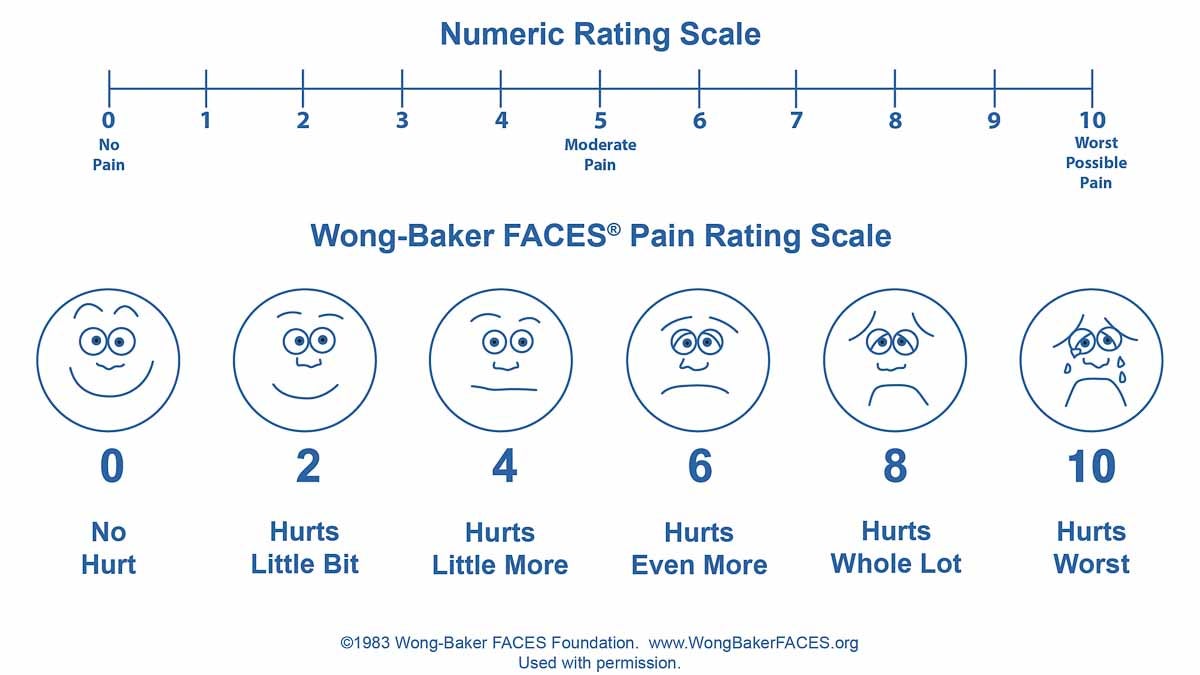
Although the VAS is predominantly favored for its continuous nature, it is beneficial to compare it to other common symptom assessment tools used in clinical practice:
| Parameter | Visual Analogue Scale (VAS) | Numerical Rating Scale (NRS) | Verbal Descriptor Scale (VDS) |
|---|---|---|---|
| Format | A continuous line (typically 100 mm long) | A discrete scale, e.g., 0 to 10 | Descriptive categories such as none, mild, moderate, severe |
| Sensitivity | High – captures subtle changes in symptom intensity | Moderate – limited by discrete intervals | Low – relies on subjective interpretation of descriptors |
| Ease of Use | Simple, though requires a measuring tool | Easy to administer and understand | Very straightforward, but less precise |
| Inter-rater Variability | Moderate, due to patient subjective perceptions | Low to moderate | Potentially high variability |
Each of these scales has its unique merits. The VAS stands out because of its ability to detect incremental changes in symptom severity, which is particularly important in monitoring the effects of antiemetic treatments in real time.
Integration in Patient Care Protocols
The comprehensive use of the VAS in clinical protocols supports healthcare providers in making data-driven decisions. When managing nausea and vomiting, a quantified measurement like the VAS is frequently used to:
- Adjust medication dosages or timing based on the change in VAS scores to enhance treatment outcomes.
- Evaluate the pharmacological efficacy of various antiemetic agents in clinical trials.
- Provide a baseline for comparing changes in patient symptoms before and after treatment interventions.
In settings such as postoperative recovery and chemotherapy, this ongoing monitoring is vital to adapt care plans on a case-by-case basis, ensuring both patient comfort and the efficient use of healthcare resources.
Research Evidence and Validation
Empirical Support for the VAS
Extensive research validates the reliability and sensitivity of the VAS as a measure of nausea and vomiting. Multiple studies have correlated changes in VAS scores with clinical decisions such as the administration of rescue medication. For instance, a change of approximately 15 mm on a 100-mm VAS is considered clinically significant in demonstrating a meaningful reduction in symptom intensity. Different patient populations, including those in emergency departments and postoperative recovery areas, have benefited from its use as seen in various research reports.
Utilization in Diverse Clinical Settings
The VAS is not limited to hospital or emergency contexts. It has been effectively employed in monitoring symptoms in patients undergoing:
- Chemotherapy: Where managing nausea and vomiting is critical in maintaining quality of life.
- General practice and outpatient clinics: To assess ongoing or episodic nausea.
- Acute care settings: Particularly for rapid evaluations in an emergency context, where swift symptom quantification can guide immediate treatment.
Clinical trials utilizing the VAS have contributed to standardized protocols that compare the relative performance of various antiemetic drugs. This standardized method has allowed for reproducible and comparable results across different studies internationally.
Practical Tips for Clinicians and Researchers
Implementing the VAS in Clinical Practice
For clinicians aiming to utilize the VAS effectively, consider these practical tips:
- Clear Instructions: Ensure that patients understand the endpoints of the scale through verbal explanation and visual demonstration.
- Consistent Measurement: Use a standardized method to measure the distance in millimeters from the "no symptom" end to the patient’s mark.
- Repeat Measurements: In cases requiring ongoing monitoring, consider repeated VAS assessments to track the progress of symptom resolution or deterioration.
- Complementary Assessments: Whenever possible, complement VAS data with other scales such as numerical rating scales or verbal descriptors to capture a holistic view of the patient’s experience.
Best Practices for Data Interpretation
In research settings, consistency in interpretation is key. Document the baseline VAS score at the time of initial assessment and follow up with subsequent measurements. Consider using changes in scores to assess:
- Treatment Efficacy: Determine whether a change of 15-22 mm is observed post-intervention, ensuring that this change is both statistically and clinically significant.
- Patient Stratification: Use initial VAS scores to categorize patients into different risk groups to tailor interventions better.
- Quality of Life Assessments: Integrate VAS data with patient-reported outcomes in broader quality of life evaluations.
Innovative Uses and Future Directions
Expanding Beyond Traditional Settings
While the traditional use of the VAS has been predominantly in clinical environments such as emergency departments and postoperative settings, its adaptability has encouraged exploration into other areas. Ongoing research is examining its utility in new directions, such as:
- Evaluating symptom progression in chronic conditions where nausea is a recurring issue.
- Integration with digital health platforms, where patients may record their VAS scores electronically, leading to remote patient monitoring and telemedicine applications.
- Use in pediatric populations, where visual cues and simplified scales can be adapted to better suit developmental stages.
Technological Integration
With the advent of smart devices and wearable technologies, there is potential to integrate VAS measurements into mobile applications. Such digital integrations can facilitate real-time monitoring and data aggregation, which is particularly beneficial for clinical trials and population health studies. This integration could further refine our understanding of nausea dynamics and enable tailored interventions based on continuous symptom tracking.
References
- Use of the Visual Analog Scale to Rate and Monitor Severity of Nausea in the Emergency Department - Wiley Online Library
- Measuring Nausea on a Visual-Analog Scale - NEJM Journal Watch
- Assessment of Postoperative Nausea Using a Visual Analogue Scale - PubMed
- Evaluation of the Visual Analog Score for Acute Symptoms - PLOS One
-
Clinically Significant Changes in Nausea Measured on a Visual Analog Scale - ScienceDirect
Recommended Related Queries
Last updated March 25, 2025