
Mastering VC Analysis: A Framework for Evaluating an Autonomous Maritime Startup
A step-by-step guide to applying your Coursera skills in a real-world venture capital evaluation scenario.
Key Highlights for Your Analysis
As you develop your example VC evaluation, focus on these critical aspects to demonstrate your analytical prowess:
- Integrated Skill Application: Showcase how foundational finance, financial modeling, valuation techniques, and VC principles from your Coursera courses cohesively inform your analysis of the Autonomous Unmanned Maritime Vehicle (AUMV) startup.
- In-Depth AUMV Sector Focus: Tailor your analysis to the specifics of the AUMV industry, considering its unique technological challenges, market drivers (U.S. Navy, offshore energy), regulatory landscape (e.g., IMO autonomy levels), and competitive dynamics.
- Data-Driven Thesis: Ground your investment thesis in robust financial projections, thorough market sizing (TAM, SAM, SOM), comprehensive risk assessment, and justifiable valuation methodologies, clearly articulating your assumptions and rationale.
Comprehensive Framework for Your VC Evaluation
Introduction: Setting the Stage for Your AUMV Startup Analysis
This framework is designed to help you structure an exemplary venture capital (VC) evaluation of a startup developing autonomous unmanned maritime vehicles (AUMVs) for the U.S. Navy and the offshore energy sector. By systematically applying the competencies gained from your Coursera curriculum, you'll create a comprehensive analysis that showcases your foundational skills as a VC analyst. This structured approach will guide you from initial data organization through financial modeling, valuation, risk assessment, and finally, to the development of a well-reasoned investment thesis.
Step 1: Core Finance & Excel – Laying the Groundwork
This initial step focuses on establishing a solid financial foundation for your analysis, leveraging skills in data management and fundamental accounting principles.
Excel Skills – Macquarie: Mastering Your Data Toolkit
Your proficiency in Excel is paramount for organizing the multifaceted data involved in a startup evaluation. Apply skills from this course to:
- Data Collection & Structuring: Compile all relevant startup information—such as projected R&D costs for autonomous navigation systems, potential U.S. Navy contract values, and offshore energy sector market data—into well-organized Excel workbooks. Use features like named ranges, tables, and data validation to ensure data integrity.
- Dynamic Worksheets: Create dynamic input sheets for key assumptions (e.g., AUMV production costs, software development timelines, sales projections). Employ functions like
INDEX-MATCH,SUMIFS, and pivot tables to efficiently manipulate and summarize data. - Preliminary Dashboards: Consider developing a simple dashboard to track initial financial inputs or key operational metrics for the AUMV startup, such as development milestones or expressions of interest from potential clients.
Financial Accounting – Wharton: Understanding the Financial Language
A strong grasp of financial accounting principles is crucial for interpreting and projecting the AUMV startup's financial health. Utilize concepts from this course to:
- Interpret Financial Statements: Understand how to read and interpret any available historical financial data, or to structure pro-forma statements accurately.
- Build Initial Projected Statements: Construct preliminary versions of the Income Statement, Balance Sheet, and Cash Flow Statement. Focus on:
- Revenue Recognition: Consider how revenue will be recognized from diverse sources like long-term defense contracts, sales/leasing of AUMVs to energy companies, or potential data-as-a-service (DaaS) models.
- Cost Accounting: Accurately categorize and project costs related to R&D (significant for AUMV tech), manufacturing, deployment, and operations.
- Capital Expenditures & Assets: Account for investments in AUMV prototypes, specialized manufacturing equipment, and intellectual property.
- Working Capital: Estimate needs for inventory (if applicable), receivables from large clients, and payables to suppliers.
- Sector-Specific Considerations: Apply accounting conventions relevant to the defense and industrial tech sectors, such as the capitalization of development costs or specific requirements for government contract accounting.
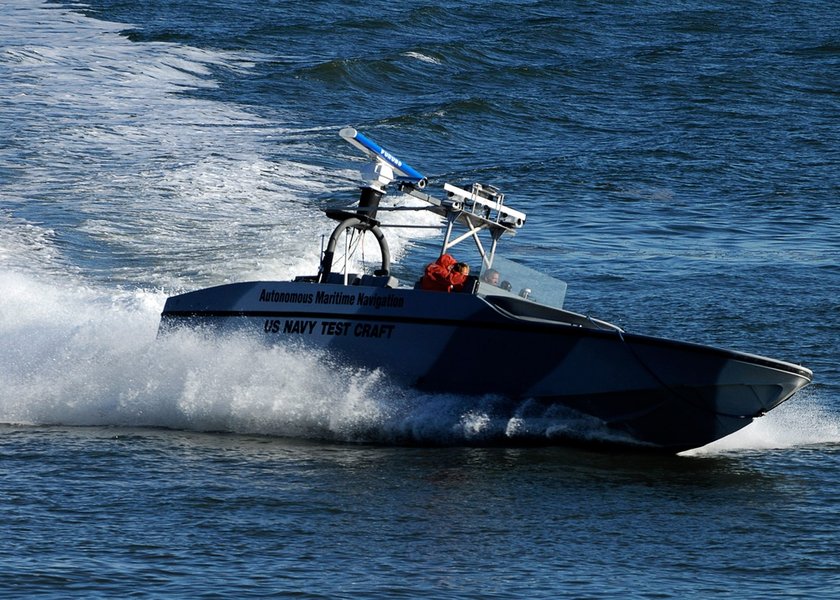
A U.S. Navy demonstration of an autonomous unmanned surface vehicle, showcasing the type of technology your analysis will cover.
Step 2: Modeling & Analysis – Projecting Future Performance
With foundational data organized, this step involves building dynamic financial models and conducting in-depth analyses to forecast the startup's trajectory and assess its viability.
Financial Modeling – Wharton: Building Robust Projections
This course equips you with the skills to create comprehensive financial models that form the quantitative backbone of your VC evaluation. Focus on:
- Integrated Three-Statement Model: Develop a fully linked model connecting the Income Statement, Balance Sheet, and Cash Flow Statement. Ensure that assumptions drive changes consistently across all statements.
- Bottom-Up Forecasting: Project revenues based on specific, quantifiable drivers rather than high-level market share assumptions. For the AUMV startup, this could involve:
- Number of AUMV units sold or leased annually to naval and energy clients.
- Average contract value and duration.
- Pricing for ongoing service, maintenance, and data analytics support.
- Cost Structure Modeling: Detail fixed versus variable costs. Model operating expenses such as R&D for AI and autonomy software, sales and marketing to specialized clients, and general administrative costs. Project cost of goods sold (COGS) for AUMV manufacturing and deployment.
- Scenario and Sensitivity Analysis: Build functionality into your model to test the impact of changes in key assumptions (e.g., success rate of securing Navy contracts, fluctuations in component costs, delays in technology development) on financial outcomes like cash runway and profitability.
Financial Analysis – UIUC: Deriving Actionable Insights
Leverage financial analysis techniques to interpret your model's outputs and assess the AUMV startup's financial health and market opportunity:
- Ratio Analysis: Calculate and interpret key financial ratios, such as:
- Liquidity Ratios: Current Ratio, Quick Ratio to assess short-term solvency.
- Profitability Ratios: Gross Margin, Net Margin (once revenue is projected).
- Efficiency Ratios: Relevant if there are early operational metrics.
- Burn Rate and Runway: Critical for early-stage, pre-revenue, or R&D-intensive startups.
- Key Performance Indicators (KPIs): Identify and project KPIs relevant to an AUMV business. These might include Customer Acquisition Cost (CAC) for high-value contracts, Lifetime Value (LTV) of a naval or energy sector client, R&D spend as a percentage of total expenses, or technology development milestones.
- Market Sizing (TAM, SAM, SOM):
- Total Addressable Market (TAM): Estimate the global market for autonomous maritime solutions across defense, offshore energy, and potentially other adjacent sectors. (e.g., reports suggest the global autonomous maritime vehicle industry was valued over $6 billion in 2021, projected to exceed $10 billion by 2030).
- Serviceable Available Market (SAM): Narrow this down to the segment the startup can realistically serve with its specific AUMV technology and focus (e.g., U.S. Navy and specific sub-segments of the offshore energy market).
- Serviceable Obtainable Market (SOM): Project the portion of SAM the startup can realistically capture in a 3-5 year timeframe, considering its competitive advantages and go-to-market strategy. Justify these assumptions clearly.
Visualizing Key Evaluation Metrics: AUMV Startup Scorecard
This radar chart offers a visual representation of a hypothetical AUMV startup's strengths and weaknesses across key evaluation criteria. As a VC analyst, you would populate such a chart based on your in-depth due diligence. The scores are illustrative (on a scale of 1 to 10, where 10 is best), representing potential outcomes from conservative to optimistic scenarios. This helps in quickly identifying areas of concern or significant potential, facilitating discussion and decision-making. Note that for visual clarity, the scale begins at 3.
Step 3: Valuation & VC – Determining Worth and Investment Potential
The final step involves synthesizing your analysis to determine the startup's potential value and articulate a clear investment thesis, incorporating specialized VC methodologies.
Startup Valuation – Duke: Establishing a Value Range
Valuing early-stage, technology-intensive startups like an AUMV developer is challenging. This course provides foundational valuation techniques:
- Venture Capital (VC) Method: Estimate a potential exit valuation (e.g., acquisition by a defense prime or large energy tech company in 5-7 years) and discount it back to a present value, considering the high required rate of return for VC investments.
- Comparable Company Analysis (Comps): Identify publicly traded companies or precedent M&A transactions involving similar (though perhaps not identical) autonomous vehicle, robotics, or specialized maritime technology firms. Use relevant multiples (e.g., EV/Revenue, if applicable), acknowledging limitations for pre-revenue startups.
- Pre-Money and Post-Money Valuation: Clearly understand and calculate these concepts in the context of a potential investment round.
Advanced Valuation – Erasmus: Refining the Valuation Approach
Build upon foundational techniques with more sophisticated valuation concepts:
- Discounted Cash Flow (DCF) Analysis: While challenging for early-stage startups due to high uncertainty in cash flow projections, constructing a DCF model demonstrates analytical rigor. Clearly state all assumptions, particularly regarding growth rates, terminal value, and the discount rate (which should be high to reflect risk). Emphasize that the DCF provides a reference point sensitive to inputs.
- Real Options Analysis (Conceptual): Consider if the AUMV startup possesses significant real options, such as the potential to pivot its technology to new applications or markets, or the value of follow-on R&D projects. This is often a qualitative overlay rather than a precise calculation at this stage.
- Risk-Adjusted Valuation: Ensure that the chosen discount rates or valuation multiples inherently account for the specific risks associated with the AUMV startup (technological, market, execution).
PE & VC – Bocconi: Crafting the Investment Thesis
This course helps you synthesize all your findings into a coherent investment decision-making framework:
- Due Diligence Focus: Understand the key areas of due diligence relevant to an AUMV startup:
- Technology: Maturity, defensibility (IP), scalability, reliability of autonomous systems.
- Team: Experience in relevant fields (robotics, AI, maritime engineering, defense/energy sectors), execution capability, entrepreneurial drive.
- Market: Depth of understanding of U.S. Navy and offshore energy needs, customer validation, competitive positioning.
- Regulatory Landscape: Awareness of IMO guidelines, naval certifications, and other maritime regulations. The International Maritime Organization (IMO) defines four levels of autonomy for maritime vehicles, which will influence development and deployment.
- Risk Assessment and Mitigation: Systematically identify and analyze key risks (technical, market, competitive, execution, regulatory, geopolitical). For each significant risk, discuss potential mitigation strategies the startup could employ.
- Investment Thesis Development: Articulate a clear and compelling investment thesis. This should answer: Why this startup? Why now? What is the unique opportunity? How does it create substantial value? What are the potential returns and exit routes (e.g., acquisition by defense contractor, energy major, or IPO)?
- Recommendation: Conclude with a clear recommendation (e.g., invest, pass, or conduct further specific due diligence) based on your risk/reward analysis.
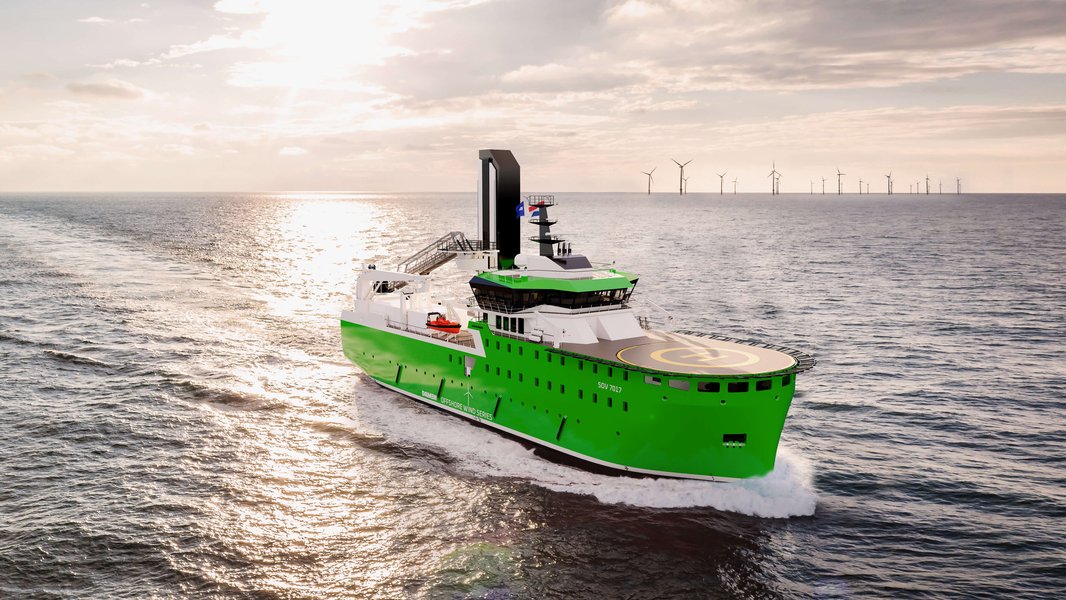
Autonomous and specialized vessels, like this electric SOV concept for the offshore wind sector, highlight the evolving needs in markets your target startup could serve.
Mapping Coursera Competencies to Your AUMV Startup Evaluation
The following table outlines how the key competencies from your selected Coursera courses can be directly applied to the venture capital evaluation of an autonomous unmanned maritime vehicle (AUMV) startup targeting the U.S. Navy and offshore energy sectors. This structured approach ensures a comprehensive analysis, demonstrating a well-rounded skill set.
| Coursera Course | Key Competencies | Practical Application in AUMV Startup Evaluation |
|---|---|---|
| Excel Skills – Macquarie | Data organization, formula mastery (VLOOKUP, INDEX-MATCH, pivot tables), dynamic model building, data validation, dashboard creation. | Structure all financial data for the AUMV startup; build input sheets for assumptions (e.g., R&D costs, contract values); create dashboards to track KPIs like development milestones or pre-order figures. |
| Financial Accounting – Wharton | Understanding financial statements (Income Statement, Balance Sheet, Cash Flow), revenue recognition principles, cost accounting, capitalization of R&D. | Prepare initial projected financial statements for the AUMV startup; correctly account for long-term R&D investments in autonomous tech and revenue from complex U.S. Navy or offshore energy contracts. |
| Financial Modeling – Wharton | Three-statement financial modeling, linking assumptions to projections, bottom-up forecasting, scenario and sensitivity analysis. | Develop an integrated financial model projecting 5-7 years of financials; forecast revenue based on AUMV unit sales, service contracts for data/surveillance, and maintenance; model costs for manufacturing, deployment, and ongoing R&D for AI and autonomy features. Perform sensitivity analysis on contract win rates or material costs. |
| Financial Analysis – UIUC | Ratio analysis (liquidity, profitability, efficiency), KPI identification and tracking, market sizing (TAM, SAM, SOM), risk assessment through financial metrics. | Calculate and interpret key financial ratios (e.g., burn rate, runway, gross margin per AUMV). Identify relevant KPIs (e.g., customer acquisition cost for new naval/energy clients, lifetime value of contracts). Estimate TAM/SAM/SOM for AUMVs in defense and offshore energy, considering market growth drivers like increased maritime surveillance needs and offshore infrastructure. |
| Startup Valuation – Duke | Venture Capital (VC) method, comparable company analysis, precedent transactions, understanding pre-money and post-money valuations. | Apply the VC method to estimate a valuation range based on potential exit scenarios (e.g., acquisition by a major defense contractor or energy services company). Research comparable AUMV or robotics company valuations. |
| Advanced Valuation – Erasmus | Discounted Cash Flow (DCF) analysis with risk adjustments, real options valuation, understanding of different valuation multiples. | Construct a DCF model (acknowledging high uncertainty for early-stage tech) for the AUMV startup, using appropriate discount rates reflecting technological and market risks. Consider if real options (e.g., ability to expand into new maritime applications) add value. |
| PE & VC – Bocconi | Due diligence processes, risk assessment (market, technology, team, execution, regulatory), investment thesis development, understanding deal structures and exit strategies. | Conduct thorough due diligence on the AUMV startup’s technology (e.g., autonomy levels, sensor suites, data security for naval applications), team expertise, competitive landscape, and regulatory hurdles (e.g., IMO guidelines, naval certifications). Synthesize findings into a compelling investment thesis outlining the opportunity, risks, and potential returns. |
Structuring Your Analysis: A Mindmap Overview
This mindmap provides a visual representation of the key components and logical flow of your venture capital evaluation for the AUMV startup. It helps organize your thoughts and ensure all critical areas are covered in your analysis, from initial market assessment to the final investment recommendation.
(e.g., Increased Autonomy Demand, Defense Modernization, Offshore Energy Expansion)"] id2c["Competitive Landscape
(Incumbents, New Entrants, Differentiation)"] id2d["Regulatory Environment (IMO Levels, Naval Standards, Environmental Regs)"] id3["3. Company Deep Dive"] id3a["Technology & Product Assessment
(Innovation, Maturity, Scalability, IP)"] id3b["Business Model & Revenue Streams
(Sales, Leasing, Service Contracts, Data)"] id3c["Team Evaluation
(Expertise, Experience, Execution Capability)"] id3d["Strategic Partnerships & Traction"] id4["4. Financial Modeling & Analysis"] id4a["Historical Financials (if available)"] id4b["Key Assumptions (Growth Rates, Pricing, Costs, Capex)"] id4c["Projected Financial Statements
(Income Statement, Balance Sheet, Cash Flow Statement - 3-5 Years)"] id4d["Key Performance Indicators (KPIs)
(e.g., Burn Rate, Runway, Unit Economics, CAC, LTV)"] id4e["Sensitivity & Scenario Analysis"] id4f["Funding Requirements & Use of Funds"] id5["5. Valuation"] id5a["Valuation Methodologies Employed
(VC Method, DCF, Comparables - with justifications)"] id5b["Key Valuation Assumptions & Drivers"] id5c["Proposed Valuation Range (Pre-money/Post-money)"] id6["6. Risk Assessment & Mitigation"] id6a["Technological Risks (Development, Reliability, Cybersecurity)"] id6b["Market Risks (Adoption Rate, Competition, Budget Cycles)"] id6c["Execution Risks (Team, Operational, Scalability)"] id6d["Financial Risks (Funding, Profitability)"] id6e["Regulatory & Geopolitical Risks"] id6f["Proposed Mitigation Strategies"] id7["7. Investment Thesis & Recommendation"] id7a["Summary of Investment Opportunity"] id7b["Key Strengths & Differentiators of the Startup"] id7c["Alignment with VC Investment Criteria"] id7d["Potential Return Profile & Exit Strategies"] id7e["Final Recommendation (Invest, Pass, Further Diligence Areas)"] id7f["Proposed Deal Terms (if applicable)"]
Exploring the AUMV Landscape: Relevant Technologies
Understanding the current state and future potential of autonomous maritime vehicles is crucial for evaluating a startup in this sector. The following video showcases various types of autonomous surface vehicles (USVs) and their applications, providing valuable context for the technological landscape your target startup operates within. It illustrates the diversity of designs and capabilities, from surveillance and data collection to more complex operational tasks, relevant for both naval and commercial offshore energy markets. AI-powered data analysis tools are also enhancing the potential to derive useful insights from AMV-collected data.
Frequently Asked Questions (FAQ)
Recommended Next Steps
To further deepen your understanding and enhance your example analysis, consider exploring these related topics:
- How to conduct due diligence on the intellectual property of an AUMV startup?
- What are the specific KPIs for a startup selling AUMVs to military versus commercial clients?
- Explore the impact of geopolitical factors on investment in defense-focused AUMV technology.
- Analyze the competitive landscape of established defense contractors versus new entrants in the AUMV market.
References
The following resources provide valuable insights and data relevant to financial modeling, startup valuation, and the autonomous maritime vehicle sector. Your knowledge cutoff is Tuesday, 2025-05-20.
Last updated May 20, 2025