
Understanding Vector Projections and Averages
Intuitive Insights into Vector Coordinates
Key Takeaways
- Vector Projection Fundamentals: Understanding how a vector projects onto a unit vector reveals the component of the original vector in a specific direction.
- Unit Vector Symmetry: When projecting onto a unit vector with equal components, the projection coordinates reflect the average of the original vector's coordinates.
- Geometric Interpretation: Visualizing vector projections as "shadows" helps in comprehending the distribution of a vector's magnitude across different directions.
Vector Projection Basics
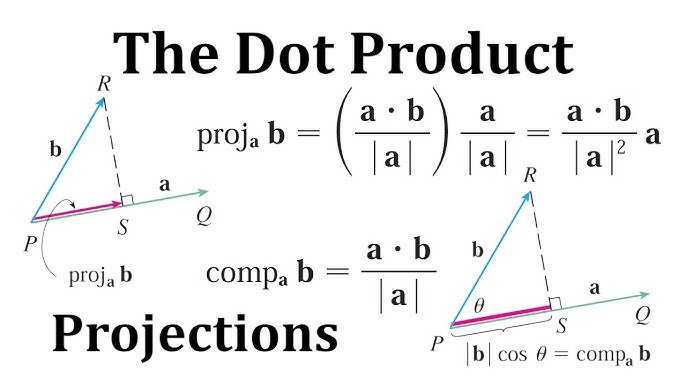
Vector projection is a fundamental concept in linear algebra that involves projecting one vector onto another. Specifically, projecting a vector u onto a unit vector v provides a new vector that represents the component of u in the direction of v. Mathematically, the projection is given by:
Projection Formula:
\[
\text{proj}_{\mathbf{v}} \mathbf{u} = (\mathbf{u} \cdot \mathbf{v}) \mathbf{v}
\]
Here, ⋅ denotes the dot product between vectors u and v. The resulting vector lies along v and represents the "shadow" of u in the direction of v.
Scalar Projection and Its Significance
The scalar projection, often referred to as the component of u along v, is the magnitude of the projection vector. For a unit vector v, the scalar projection simplifies to the dot product:
\[ \text{Scalar Projection} = \mathbf{u} \cdot \mathbf{v} \]
This scalar value indicates how much of u lies in the direction of v.
Projection Onto a Symmetric Unit Vector
To intuitively grasp why the coordinate of the projection vector onto a unit vector can be considered an average of the original vector's coordinates, consider projecting onto a unit vector with equal components. Let's delve into this with a concrete example.
2D Example: Projection onto a 45° Line
Imagine you have a vector v in two-dimensional space, represented as v = (x, y). We choose to project this vector onto the unit vector u = (1/√2, 1/√2), which lies at a 45° angle to both the x and y-axes.
Step-by-Step Projection
The projection of v onto u is computed as:
\[ \text{proj}_{\mathbf{u}} \mathbf{v} = (\mathbf{v} \cdot \mathbf{u}) \mathbf{u} \]
Calculating the dot product:
\[ \mathbf{v} \cdot \mathbf{u} = x \left(\frac{1}{\sqrt{2}}\right) + y \left(\frac{1}{\sqrt{2}}\right) = \frac{x + y}{\sqrt{2}} \]
Thus, the projection vector becomes:
\[ \text{proj}_{\mathbf{u}} \mathbf{v} = \left( \frac{x + y}{\sqrt{2}} \right) \left( \frac{1}{\sqrt{2}}, \frac{1}{\sqrt{2}} \right) = \left( \frac{x + y}{2}, \frac{x + y}{2} \right) \]
Notice that both coordinates of the projection vector are equal to (x + y)/2, which is the arithmetic mean (average) of the original vector's x and y components.
Interpretation of the Projection
This result demonstrates that projecting onto a unit vector with equal components effectively averages the original vector's coordinates. The projection "collapses" the original vector onto the line defined by the unit vector, distributing the combined influence of all original coordinates equally.
Generalizing to N Dimensions
Extending this intuition to n-dimensional space, consider a unit vector u where each component is 1/√n. Projecting any vector v = (x₁, x₂, ..., xₙ) onto u yields:
\[ \text{proj}_{\mathbf{u}} \mathbf{v} = \left( \frac{x₁ + x₂ + \ldots + xₙ}{\sqrt{n}} \right) \left( \frac{1}{\sqrt{n}}, \frac{1}{\sqrt{n}}, \ldots, \frac{1}{\sqrt{n}} \right) = \left( \frac{x₁ + x₂ + \ldots + xₙ}{n}, \ldots, \frac{x₁ + x₂ + \ldots + xₙ}{n} \right) \]
Each coordinate of the projection vector is exactly the average of the original vector's coordinates. This showcases that the projection onto a symmetric unit vector treats each original coordinate equally, resulting in their average.
Geometric Interpretation
Visualizing vector projections can significantly enhance understanding. Think of the projection as casting a shadow of the original vector onto the direction defined by the unit vector.
Projection as a "Shadow"
When light shines perpendicularly onto a vector, the resulting shadow on the unit vector's line represents the projection. This "shadow" embodies the component of the original vector in the direction of the unit vector.
Equal Distribution on Projection
For a unit vector that equally weighs all coordinates (like u = (1/√n, ..., 1/√n)), the shadow distributes the original vector's magnitude equally across all dimensions. This equal distribution inherently involves averaging the contributions from each coordinate.
Energy Distribution Interpretation
Another perspective involves considering the "energy" or "magnitude" of a vector. The projection captures how much of this energy lies in a specific direction. When projecting onto a symmetric unit vector, this energy is an average representation across all directions, mirroring the averaging of coordinates.
Mathematical Insights
Delving deeper into the mathematics reinforces the intuitive understanding of vector projections as averages of coordinates.
Dot Product as a Weighted Sum
The dot product u · v fundamentally acts as a weighted sum of the components of v, where the weights are the components of u. When u is a unit vector with equal components, each component of v is weighted equally, leading to an average-like behavior.
Normalization and Averaging
The normalization of u ensures that the sum of the squares of its components equals one. This normalization maintains the scale of the projection, preserving the average-like properties when projecting onto u.
Projection Matrix Representation
For more abstract understanding, consider the projection matrix P that projects any vector onto u:
\[ P = \mathbf{u} \mathbf{u}^T \]
Applying this matrix to a vector v yields:
\[ P\mathbf{v} = \mathbf{u} (\mathbf{u} \cdot \mathbf{v}) \]
This operation consolidates the original vector's components into a single aggregated value along u's direction, akin to taking an average.
Practical Applications
Understanding the relationship between vector projections and averages has practical implications in various fields such as data analysis, computer graphics, and physics.
Data Analysis and Dimensionality Reduction
In data analysis, projections are used in techniques like Principal Component Analysis (PCA) to reduce dimensionality. By projecting high-dimensional data onto a unit vector that represents the principal component, we essentially capture the average behavior of the data along that direction.
Principal Component Analysis (PCA)
PCA identifies the directions (principal components) that maximize the variance in the data. Projecting data points onto these components involves calculating averages of the data's coordinates weighted by the principal component vectors, mirroring the vector projection concepts discussed earlier.
Computer Graphics and Animation
In computer graphics, vector projections are fundamental in rendering, shading, and simulating realistic movements. By projecting light vectors onto surface normals, for instance, the average intensity and color of light impacting a surface can be calculated.
Shading Techniques
Shading models like Lambertian reflectance use projections to determine how light averages across a surface, creating realistic lighting effects in 3D models.
Physics and Engineering
In physics, projections are used to resolve forces into components, analyze motion, and study energy distribution. For example, decomposing a force vector into horizontal and vertical components involves projecting it onto unit vectors aligned with the respective axes.
Force Decomposition
Resolving gravitational and normal forces in equilibrium problems relies on projecting the net force vector onto coordinate axes, facilitating the calculation of average effects in each direction.
Illustrative Example
To solidify the understanding, let's examine a detailed example illustrating the projection of a vector onto a symmetric unit vector and how it represents the average of the original vector's coordinates.
Example: 3D Vector Projection
Consider a three-dimensional vector v = (3, 6, 9). We aim to project this vector onto the unit vector u = (1/√3, 1/√3, 1/√3), which equally weights each of the x, y, and z components.
Calculation Steps
| Step | Calculation | Result |
|---|---|---|
| 1. Dot Product | v · u = 3*(1/√3) + 6*(1/√3) + 9*(1/√3) | (3 + 6 + 9)/√3 = 18/√3 = 6√3 |
| 2. Projection Vector | proju(v) = (v · u) * u | 6√3 * (1/√3, 1/√3, 1/√3) = (6, 6, 6) |
| 3. Averaging Coordinates | Average of (3, 6, 9) = (3 + 6 + 9)/3 | 6 |
The projection vector is (6, 6, 6), where each component is the average of the original vector's components (which is 6). This example clearly illustrates how projecting onto a symmetric unit vector results in a vector where each coordinate reflects the average of the original vector's coordinates.
Advanced Considerations
While the projection onto symmetric unit vectors yields an average, it's essential to recognize that this behavior is specific to such unit vectors. Projections onto arbitrary unit vectors do not generally produce averages of the original vector's coordinates.
Asymmetrical Unit Vectors
Consider a unit vector u = (1, 0) in two-dimensional space. Projecting a vector v = (x, y) onto u results in:
\[ \text{proj}_{\mathbf{u}} \mathbf{v} = (x, 0) \]
Here, the projection retains the original vector's x-coordinate but disregards the y-coordinate. This projection does not represent an average of x and y; instead, it solely reflects the component along the x-axis.
Implications of Unit Vector Orientation
The orientation of the unit vector dictates how the original vector's components contribute to the projection. Only when the unit vector's components are equal does the projection coordinate equate to the average of the original coordinates.
Weighted Averages Through Projection
Projections can also represent weighted averages when the unit vector's components are not equal but sum to specific weights. This allows for more nuanced aggregations of vector components based on desired weightings.
Custom Weighting Schemes
By designing unit vectors with specific weight distributions, one can project vectors in a manner that reflects targeted averaging or emphasis on certain dimensions over others.
Conclusion
The intuitive understanding that the coordinate of a projection vector onto a symmetric unit vector represents the average of the original vector's coordinates is rooted in the fundamental properties of vector projection and the geometric interpretation of "shadowing" a vector. When the unit vector weights all original coordinates equally, the projection naturally consolidates these into their arithmetic mean. This concept not only aids in visualizing vector behaviors but also finds practical applications across diverse scientific and engineering disciplines. Recognizing the conditions under which projections yield averages enhances one's ability to leverage vector mathematics effectively in both theoretical and applied contexts.
References
Last updated February 17, 2025