
Unlocking Your Path to 70kg: A Personalized Timeline for Your Vegan Weight Loss Journey
Discover realistic projections, key influencing factors, and actionable strategies tailored to your progress and goals as a 41-year-old vegan.
Highlights: Your Journey at a Glance
- Understanding Your Progress: You've lost 4.9 kg in 12 days, a rapid initial phase. Your more recent trend shows a loss of 0.6 kg in the last 5 days (approximately 0.12 kg/day).
- Projected Timeline: To lose the remaining 4.1 kg, estimates range from a very optimistic ~10 days (if initial rapid loss continued, which is unlikely) to a more sustainable 4.5 to 9 weeks, depending on maintaining a healthy rate.
- Key Success Factors: Age-related metabolic changes, the specifics of your vegan diet, consistency in habits, and incorporating strength training will be crucial for steady, long-term success.
Your Weight Loss Journey So Far: Analyzing Your Progress
Understanding your recent weight changes is the first step in projecting your timeline to reach your 70kg goal. You're 41 years old, 173 cm tall, and follow a vegan diet. Here's a look at your progress from May 5, 2025, to May 17, 2025.
Initial Observations
Your provided weight log shows:
- Starting weight (May 5, 2025): 79.0 kg
- Current weight (May 17, 2025): 74.1 kg
- Total weight lost: 4.9 kg
- Duration: 12 days
This represents a significant initial weight loss. It's common for the first phase of a new dietary or lifestyle change to result in a more rapid drop, partly due to water weight and glycogen depletion, especially when transitioning to or optimizing a vegan diet that might be lower in overall calories and sodium.
Calculating Your Progress Rates
Overall Average Rate:
Over the entire 12-day period, your average daily weight loss was approximately:
\[ \frac{79.0 \text{ kg} - 74.1 \text{ kg}}{12 \text{ days}} = \frac{4.9 \text{ kg}}{12 \text{ days}} \approx 0.408 \text{ kg/day} \]
This is a rapid rate, equivalent to about 2.86 kg per week.
Recent Trend:
Looking at your weight loss from May 13, 2025 (74.7 kg) to May 17, 2025 (74.1 kg):
- Weight lost: 0.6 kg
- Duration: 5 days (counting data points from the 13th to the 17th)
This gives an average daily weight loss of:
\[ \frac{0.6 \text{ kg}}{5 \text{ days}} = 0.12 \text{ kg/day} \]
This more recent rate of 0.12 kg/day (or approximately 0.84 kg/week) is slower than the initial overall average but aligns more closely with generally recommended sustainable weight loss rates.
Projecting Your Path to 70kg
You currently weigh 74.1 kg and aim to reach 70 kg, meaning you have 4.1 kg left to lose. Based on different rates of weight loss, here are some potential timelines. It's important to remember that weight loss is rarely linear.
| Scenario | Projected Rate of Loss | Estimated Time to Lose 4.1 kg | Potential Target Date (from May 17, 2025) | Notes |
|---|---|---|---|---|
| Based on Overall Average (Rapid Initial Phase) | ~0.41 kg/day | ~10 days | Around May 27, 2025 | Highly optimistic; this rate often includes initial water loss and is typically not sustained long-term. |
| Based on Recent Trend | ~0.12 kg/day | ~34 days (approx. 5 weeks) | Around June 20, 2025 | Reflects your more current, potentially more sustainable pace. |
| Healthy Sustainable Rate (CDC Lower Guideline) | 0.45 kg/week (~0.064 kg/day) | ~9.1 weeks (approx. 2 months) | Around mid-July 2025 | A common recommendation for healthy, lasting weight loss. |
| Healthy Sustainable Rate (CDC Upper Guideline) | 0.9 kg/week (~0.128 kg/day) | ~4.6 weeks (just over 1 month) | Around late June 2025 | An ambitious yet achievable healthy rate, similar to your recent trend. |
While the rapid initial loss might suggest a quick path to your goal, focusing on a sustainable rate like your recent trend (0.12 kg/day) or the CDC-recommended 0.45-0.9 kg per week is generally more realistic and healthier for long-term success.
Key Factors Shaping Your Timeline
Several individual factors will influence how quickly and sustainably you reach your goal:
The Age Factor: Navigating Weight Loss in Your 40s
At 41, you might find weight loss presents different challenges and opportunities compared to earlier years. Metabolism naturally tends to slow down with age, partly due to a gradual decline in muscle mass (sarcopenia), which can begin around age 30 and accelerate after 40. This means your body might burn fewer calories at rest. However, this is not an insurmountable barrier! Strategies like incorporating regular strength training to build and maintain muscle mass become particularly important. Studies show that adults in their 40s can achieve significant and sustained weight loss with consistent effort and tailored strategies.
The Vegan Advantage: Leveraging Plant-Based Nutrition
Following a vegan diet can be highly conducive to weight loss. Plant-based diets are often naturally higher in fiber and lower in calorie density, which can help you feel fuller on fewer calories. This often leads to a spontaneous reduction in calorie intake. However, "vegan" doesn't automatically mean "healthy" or "low-calorie." It's important to focus on whole, unprocessed plant foods like fruits, vegetables, legumes, whole grains, nuts, and seeds, while being mindful of portion sizes and avoiding excessive intake of processed vegan alternatives or high-calorie liquid foods (e.g., sugary drinks, excessive oils). Ensuring adequate protein intake from plant sources is also key for satiety and muscle preservation during weight loss.
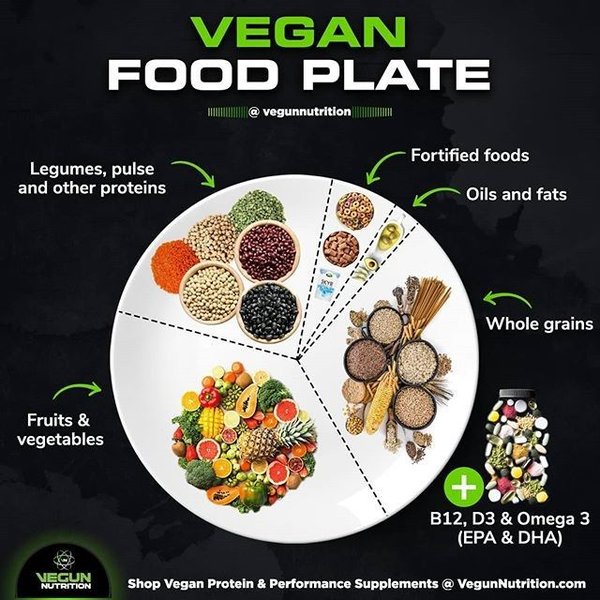
A visual guide to a balanced vegan plate, emphasizing whole foods.
Metabolic Realities: Understanding How Your Body Adapts
As you lose weight, your body undergoes metabolic adaptations. Your Basal Metabolic Rate (BMR)—the number of calories your body burns at rest—may decrease. This is because a lighter body requires less energy to function, and sometimes due to a loss of muscle mass if not actively preserved. This adaptation can cause weight loss to slow down over time. It's a natural process, not a sign of failure. Recognizing this can help you adjust your strategies, perhaps by fine-tuning your calorie intake or increasing physical activity, rather than becoming discouraged.
The Non-Linear Path: Embracing Fluctuations and Plateaus
Your weight loss journey will likely not be a straight line downwards. Daily fluctuations in weight are normal due to changes in water retention, bowel movements, and glycogen stores. Don't be disheartened by small day-to-day increases or periods where the scale doesn't move (plateaus). Plateaus are common and can last for days or even weeks. They often signify that your body is adjusting. Staying consistent with healthy habits during these times is crucial for eventually breaking through the plateau.
Visualizing Key Weight Management Components
Effective and sustainable weight management relies on a combination of interconnected factors. The radar chart below illustrates how different components might contribute to various weight loss scenarios. A balanced approach, emphasizing consistency across all areas, is generally optimal for long-term success. The "Recommended Sustainable Approach" reflects a balanced effort, while other profiles show how an imbalance might affect outcomes.
Scale: Values from 3 (Low Effort/Effectiveness) to 10 (High Effort/Effectiveness). The chart illustrates hypothetical relative importance and balance rather than absolute measures.
Expert Insights: Weight Management Strategies for Your 40s
Losing weight after 40 can indeed feel different, but it's entirely achievable with the right knowledge and strategies. Factors like hormonal changes, shifts in metabolism, and lifestyle demands can play a role. The video below, "Losing Weight Over 40 - Why It's Harder and What To Do..." by Jessica Valant, a physical therapist and Pilates teacher, offers valuable perspectives on these challenges and practical advice on how to navigate them effectively. Understanding these nuances can empower you to make informed choices and tailor your approach for optimal results.
Key takeaways often include the heightened importance of strength training to combat muscle loss, focusing on nutrient-dense foods to support overall health and satiety, managing stress, and prioritizing sleep—all of which contribute significantly to successful weight management in this life stage.
Holistic Blueprint for Sustainable Success
Achieving and maintaining your goal weight of 70kg involves a multi-faceted approach. This mindmap outlines the key interconnected areas to focus on for your vegan weight loss journey at age 41. Success isn't just about one element, but how they work together.
(Moderate, not extreme)"] id1b["Whole Plant Foods
(Fruits, Vegetables, Legumes, Whole Grains)"] id1c["Adequate Plant-Based Protein
(Satiety, Muscle Support)"] id1d["Sufficient Hydration"] id1e["Mindful Eating Practices"] id1f["Limit Processed Vegan Foods &
Excess Liquid Calories"] id2["Physical Activity"] id2a["Strength Training
(2-3 times/week to build/preserve muscle)"] id2b["Cardiovascular Exercise
(Regularly for calorie expenditure & heart health)"] id2c["Overall Consistency
(Making activity a regular habit)"] id3["Lifestyle & Well-being"] id3a["Age-Specific Considerations (41 y.o.)
- Awareness of metabolic shifts
- Focus on muscle preservation"] id3b["Quality Sleep
(7-9 hours for recovery & hormone balance)"] id3c["Stress Management Techniques"] id3d["Patience & Persistence
(Embrace the journey, not just the destination)"] id4["Monitoring & Adaptation"] id4a["Realistic Expectations
(Weight loss is non-linear; anticipate plateaus)"] id4b["Track Progress (Weight, Measurements, How you feel)"] id4c["Be Prepared to Adjust Strategy
(If progress stalls for extended periods)"]
By addressing these areas—your vegan diet, consistent exercise, lifestyle factors pertinent to your age, and a mindset of patience and adaptability—you'll be well-equipped not only to reach 70kg but also to maintain your health and well-being long-term.
Frequently Asked Questions (FAQ)
Recommended Further Exploration
- How can I optimize my vegan diet for sustainable weight loss and muscle maintenance after 40?
- What are the best strength training exercises for someone in their 40s looking to boost metabolism?
- How do I accurately track my calorie intake and expenditure on a vegan diet?
- What are effective strategies for overcoming weight loss plateaus when following a plant-based diet?
References
Last updated May 17, 2025