
Clarification on the Mention of Vent Hole in IS 3224
Understanding Vent Hole Provisions in the Valve Fittings Standard
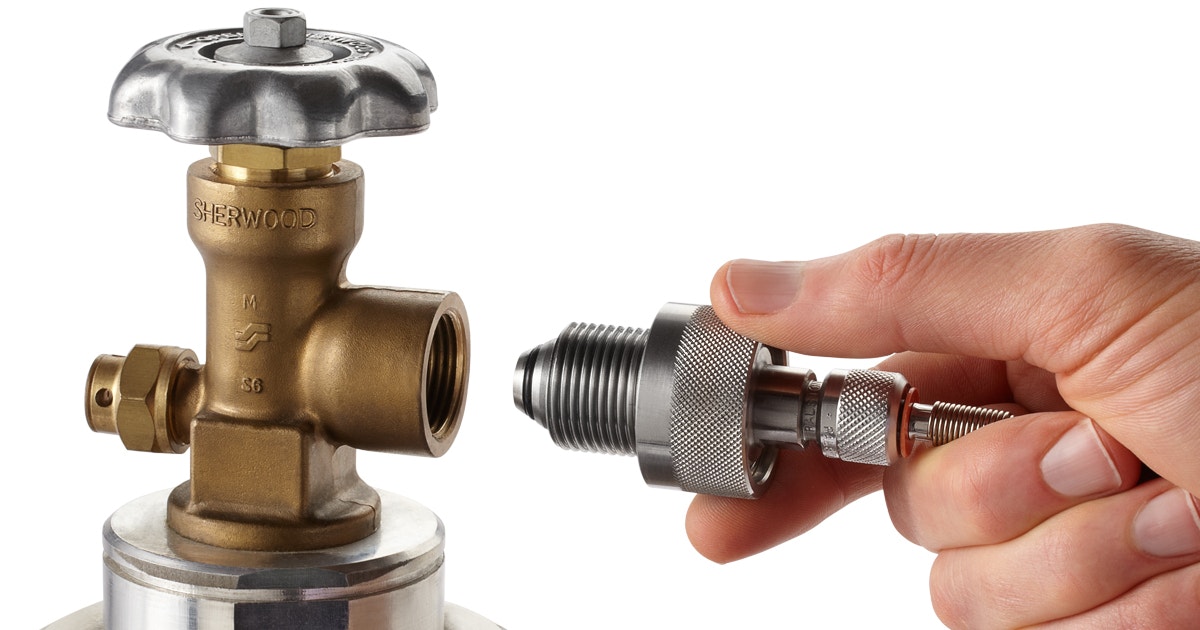
Key Takeaways
- Clarification of Scope: IS 3224:2021 pertains specifically to valve fittings for compressed gas cylinders (excluding LPG cylinders).
- Vent Hole Context: While some references imply that a vent hole is mentioned within the standard, the detail is either minimal or integrated as part of broader safety or testing provisions.
- Need for Direct Examination: For precise details regarding the vent hole specification, it is advisable to consult the full text of the standard or contact the Bureau of Indian Standards directly.
Overview of IS 3224:2021
The Indian Standard IS 3224:2021 is a specification for valve fittings used on compressed gas cylinders. It excludes those valves utilized for liquefied petroleum gas (LPG) cylinders and focuses on ensuring the safety, interchangeability, and proper performance of valve components. As the fourth revision of the earlier 2002 standard, it incorporates updates and amendments following technological advances and a better understanding of safety requirements in handling compressed gases.
This standard is comprehensive with regard to design, dimensional criteria for inlet taper threads, and the performance requirements for valve fittings. However, certain aspects such as safety management features may be mentioned only peripherally when they concern overall operational integrity and protection from accidental overpressure or leakage.
Exploring the Vent Hole Mention
Context and General Interpretation
In some technical discussions and secondary sources, there is an indication that the concept of a "vent hole" is addressed in IS 3224:2021. Typically, when vent hole features are integrated into standards related to compressed gas valves, they serve to provide a controlled path for pressure relief in cases of overpressure. This functionality is critical in mitigating risks, such as accidental rupture or explosion, by allowing safe venting of gas in emergency conditions.
It is important to note that while some commentators have asserted that a vent hole is explicitly mentioned in IS 3224:2021, other analyses of the standard have failed to locate a detailed, stand-alone clause solely dedicated to a vent hole. This discrepancy arises perhaps from differing interpretations or access to various excerpts of the full standard document.
Inspection of the Standard’s Provisions
A close examination of IS 3224:2021 reveals that its primary focus is on ensuring that valve fittings meet stringent safety and mechanical performance criteria. As part of its broad scope in managing safety features associated with handling compressed gases, the standard briefly touches upon aspects that could encompass venting provisions. For instance, some safety tests and design guidelines may implicitly require certain features that allow for controlled pressure release. However, unlike specifications that exclusively detail vent hole dimensions or placement, IS 3224 is organized around the overall performance of the valve system.
Many of the design tests stipulated within the standard involve checking how the valve behaves under various pressure conditions, and it is conceivable that a vent hole would function as a part of the pressure management system. Yet, the standard does not include extensive commentary or directly number a clause with the title “vent hole” or "venting" that details its specific design parameters.
Contrasting Interpretations
Interpretation Suggesting Vent Hole Mention
One interpretation found in some discussions indicates that the standard includes a mention of a vent hole in the context of testing procedures or design features. Proponents of this view argue that the provision for a vent hole, while not elaborated in significant detail, forms an implicit part of ensuring safety, particularly for the prevention of pressure build-up. Such provisions are assumed to be incorporated as part of the mandatory testing protocols applicable to the valve fittings.
This interpretation underscores the importance of safety devices in gas cylinder systems, where even minimal features such as a vent hole contribute to the overall fail-safe design. Notwithstanding, the absence of explicitly demarcated information on the vent hole means that these references are inferred rather than directly quoted.
Interpretation That Finds No Specific Vent Hole Reference
In contrast, a more rigorous review of the documented sections of IS 3224:2021 by some experts reveals that there is no clear, delineated section that focuses exclusively on vent holes. Rather, the standard enumerates test procedures and design criteria that ensure the valve fitting meets safety thresholds. Under this interpretation, any features that function analogously to a vent hole are treated as integrated parts of the overall system design and are not isolated in the structure of the standard.
This reading is supported by the fact that the standard includes extensive cross-references to other related documents addressing mechanical specifications, impact testing, and compatibility requirements. The omission of a detailed clause on vent holes might be by design, since the standard seeks to harmonize various safety assurances without delving into minute features that might be covered under broader engineering guidelines or complementary standards.
Technical Aspects of Venting in Valve Fittings
Underlying Principles of Venting
In many engineering applications involving gas cylinders, venting mechanisms are integral to ensuring safe operation under abnormal conditions. The vent hole typically acts as a pressure relief point designed to discharge excess gas when the internal pressure exceeds safe limits. Even if such a vent is not the focal point of the IS 3224:2021 standard, its role is supported by general practices in mechanical and safety engineering.
The integrated approach of IS 3224:2021 ensures that overall product safety is provided through a combination of design features. These include:
| Feature | Description |
|---|---|
| Inlet Taper Thread Dimensions | Standardizes the connection to gas cylinders, ensuring a secure and leak-free fit. |
| Outlet Specifications | Regulates the dispensing mechanism and controls the flow of gas. |
| Safety Testing Procedures | Includes tests that simulate overpressure conditions, which may indirectly assess the venting efficiency. |
| Interchangeability Features | Ensures that different parts can be used safely across designs, implicitly covering venting attributes where applicable. |
Collectively, these aspects underline the holistic approach taken by the standard. Even if a vent hole is not singled out in a dedicated section, its functionality is presumed to be supported by the overall safety testing and design criteria.
Interpreting Safety and Design Compliance
The IS 3224:2021 standard is a benchmark for ensuring that valve fittings conform to established safety guidelines. Part of this involves healthcare measures that inherently consider aspects such as venting: a necessary safety feature that may not receive direct narration but is embedded within the framework of ensuring safe pressure management. In effect, valve fittings that incorporate proper venting mechanisms are considered to be in compliance if they meet the test thresholds and performance parameters defined in the standard.
Professionals in the field might therefore conclude that the vent hole, while not expressly elaborated upon, is a component of the overall valve design and is implicitly validated through the standard’s rigorous testing protocols. Hence, when practitioners refer to vent hole provisions in IS 3224:2021, they often rely on a conceptual understanding that such safety measures are inherently part of the designed functionality.
Best Practices and Recommendations
Consulting Official Documentation
The best practice for resolving any ambiguity regarding the presence or detailed specifications of a vent hole in IS 3224:2021 is to refer directly to the full text of the standard. Given that secondary interpretations can sometimes vary, accessing the complete document from the Bureau of Indian Standards or an authorized distributor would provide definitive clarity.
Additionally, reaching out to relevant technical boards or committees responsible for maintaining these standards can yield nuanced insights and official commentary on whether any vent hole-specific guidelines exist, and if so, under what sections they are addressed.
Industry Feedback and Interpretation
Industry feedback often highlights that valve fittings are expected to incorporate multiple safety features, of which the venting mechanism is a critical part. Despite the lack of a prominently isolated clause titled “vent hole,” practitioners know that device qualification under this standard implies that all necessary safety considerations—including venting for pressure management—are factored into performance tests.
Therefore, if you are involved in design, manufacturing, or quality assurance in this field, it is advisable to:
- Review the complete standard: Obtain the full text from the official sources.
- Engage with experts: Consult technical committees or industry experts who have practical knowledge of the standard’s implementations.
- Leverage supplementary documents: Many times, guidelines for venting in gas cylinders may be detailed in related standards or best practice documents adopted by regulatory bodies.
Implications for Manufacturers and Engineers
For manufacturers and engineers working on valve fittings for compressed gas cylinders, understanding the implicit requirements is as important as explicit clauses in the standard. Even if the vent hole is not demarcated in a standalone section, design integrity is maintained by adhering to the complete set of tests and measurements described. This integration ensures that safety is not compromised by the absence of a detailed vent hole specification.
Consequently, when validating the design of a valve fitting, engineers should consider:
- Ensuring that the testing procedures for overpressure conditions are robust and simulate realistic scenarios.
- Confirming that all safety features, including any passive venting mechanisms, meet or exceed the required performance thresholds.
- Documenting testing processes and results comprehensively to verify compliance with the overall safety objectives stated in the standard.
Detailed Analysis: Integrated Safety and the Role of Venting
Systematic Safety Approach
The conceptual integration of safety features in product standards like IS 3224:2021 often involves combining multiple aspects of design into a single framework. In this systematic approach, vent holes—or similar pressure relief features—are not isolated design elements. Instead, they are embedded within a comprehensive safety regime that addresses:
- Pressure Management: Ensuring that any abnormal increase in internal pressure triggers a safe release mechanism.
- Structural Integrity: Testing the durability and proper sealing of fittings under varying operational conditions.
- Interchangeability and Standardization: Guaranteeing that components from different manufacturers meet consistent safety criteria, inherently accommodating features like vent holes where required.
This overarching method of safety ensures that even if a specific feature is not singled out in the document, its functionality remains intact as part of the validated design process along with associated testing regimes.
Practical Considerations for Field Application
In practice, valve fittings that comply with IS 3224:2021 are expected to perform reliably under all conditions, including those that might necessitate a venting action. While the standard itself may not delineate specific dimensions or positions for a vent hole, the inherent requirement for safe pressure management implies that any valve safely releasing excess pressure (through venting) is fulfilling a part of the standard's goals.
Practitioners should, therefore, focus on:
- Verifying that the valve fitting includes an effective strategy for handling transient overpressure events.
- Ensuring that product testing mimics real-world operating conditions to validate this aspect of safety.
- Implementing industry best practices in design documentation and quality control to cover any venting functionalities not explicitly itemized in the standard.
Conclusion
In summary, while there is some discourse suggesting that the term "vent hole" might be mentioned within the framework of IS 3224:2021, a detailed and explicit clause solely dedicated to vent holes is not readily apparent in most direct examinations of the standard. The comprehensive safety and design criteria of the standard imply that any necessary venting mechanisms are incorporated as part of the overall valve fitting design process. Therefore, to obtain precise information regarding any vent hole specifications, it is highly recommended that stakeholders consult the full text of IS 3224:2021 or reach out directly to the Bureau of Indian Standards.
This integrated approach ensures that while the venting function is essential for safety, it is treated as part of the broader suite of design and testing requirements rather than as an isolated detail. Manufacturers, engineers, and safety personnel should use this understanding in their product development and compliance procedures.
References
- BIS Standard Document - Bureau of Indian Standards
- IS 3224:2021 Standard Overview - BIS Connect
- IS 3224:2021 Standard Preview - BSBE Edge
More
Last updated February 18, 2025