
Ventilation Requirements Calculation
A Comprehensive Analysis of Ventilation for Office, Retail, and Classroom Spaces
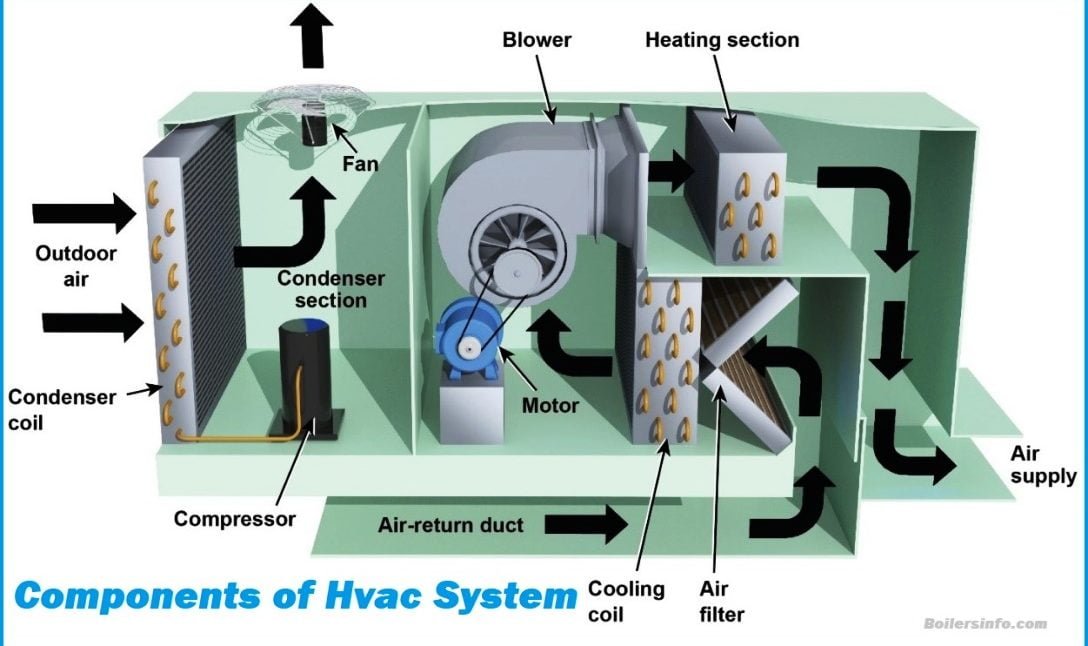
Key Highlights
- Occupant-Based Ventilation: Ventilation rates are calculated by multiplying the number of occupants with a standard-specific CFM value.
- Standard Variations: Different guidelines (such as ASHRAE standards) suggest various rates, influencing total required CFM.
- Contextual Adjustments: Floor area, air distribution effectiveness, and local building codes may further refine the base calculations.
Introduction
Proper ventilation is crucial for maintaining healthy indoor air quality. It prevents the buildup of contaminants, moderates temperature, and ensures a comfortable environment for occupants. Ventilation requirements are generally determined by multiplying the number of occupants by an industry-standard ventilation rate expressed in cubic feet per minute (CFM). However, these rates can vary based on the type of building and its use. In this detailed analysis, we calculate the minimum required ventilation for three different scenarios: office space within a commercial building, a retail sales area, and a classroom within an educational facility.
Understanding Ventilation Standards
Ventilation standards are derived from guidelines such as those provided by the American Society of Heating, Refrigeration and Air-Conditioning Engineers (ASHRAE) and regional building codes. These standards define the minimum CFM (cubic feet per minute) provided per person, ensuring sufficient air exchange rates to dilute and remove airborne contaminants.
Although specific CFM rates vary by building type and occupant activity, common approaches include occupational-based rates (e.g., 15-20 CFM per person in offices), with adjustments based on specific environmental and regulatory requirements. Factors like the floor area and the type of activities performed in the space may add additional ventilation considerations.
Calculating Ventilation for Each Space
1. Office Buildings - Office Space
For office spaces, several standards suggest different ventilation rates. A frequently cited standard recommends a ventilation rate of approximately 20 CFM per person. More conservative approaches might employ a rate of 17 CFM per person, while other sources suggest a range of 5 to 10 CFM for light activity offices.
Using a rate of 20 CFM per person for calculation, we have:
Calculation: 25 occupants x 20 CFM/person = 500 CFM total required ventilation.
Alternatively, using 17 CFM per person:
25 occupants x 17 CFM/person = 425 CFM total required ventilation.
The 20 CFM value is more commonly aligned with current ASHRAE recommendations, which are based on providing adequate dilution of indoor pollutants.
2. Retail Sales Spaces
Retail environments differ in their demands because they often experience higher occupant densities and increased activity levels. Standard recommendations vary from 7.5 CFM per person to 15 CFM per person. For a robust scenario evaluation, using the upper standard:
Calculation with 15 CFM/person: 150 occupants x 15 CFM/person = 2250 CFM total required ventilation.
For a moderate scenario using 10 CFM per person, the calculation would be:
150 occupants x 10 CFM/person = 1500 CFM total required ventilation.
Given the necessity to maintain high indoor air quality in bustling retail areas, the more conservative calculation of 2250 CFM is generally preferred to account for increased activity and potential pollutant load.
3. Educational Facilities - Classrooms (age 9 plus)
Classrooms require enhanced ventilation due to the increased metabolic activity and the need for optimal learning conditions. ASHRAE standards for educational spaces recommend around 15 CFM per person, while other sources suggest rates between 12.5 and 15 CFM per person.
Using a widely accepted value of 15 CFM per person:
Calculation: 42 occupants x 15 CFM/person = 630 CFM total required ventilation.
If one uses a slightly lower rate, say 12.5 CFM per person, then:
42 occupants x 12.5 CFM/person = 525 CFM total required ventilation.
The 15 CFM value is typically recommended to ensure adequate removal of CO₂ and other contaminants, especially in densely occupied settings like classrooms.
Comparison Table of Calculations
Below is a summary table that consolidates the different ventilation rate calculations for the three scenarios, providing a comparative insight into how varying the per-person CFM can affect overall ventilation requirements.
| Building Type & Space Type | Occupant Count | Floor Area (sqft) | Ventilation Rate (CFM/person) | Total Ventilation (CFM) |
|---|---|---|---|---|
| Office Buildings - Office Space | 25 | 5000 | 20 (alternative: 17) | 500 (alternatively 425) |
| Retail Sales | 150 | 10000 | 15 (alternative: 10) | 2250 (alternatively 1500) |
| Educational Facilities - Classrooms (age 9 plus) | 42 | 1200 | 15 (alternative: 12.5) | 630 (alternatively 525) |
Deep Dive into Ventilation Considerations
Beyond basic calculations, there are several crucial factors to consider:
Standards and Regulations
Industry standards play a significant role in determining the required ventilation rates. ASHRAE Standard 62.1 is one of the most widely accepted guidelines that specify the minimum ventilation rates necessary for acceptable indoor air quality. Various jurisdictions adopt or modify these standards to suit local environmental and usage conditions. It is imperative to reference local building codes when finalizing design parameters.
Activity Levels and Occupancy Patterns
Not all environments are utilized in the same manner. For example, an office largely occupied by desk-bound workers may require a ventilation rate on the lower end of the recommended spectrum. In contrast, environments with higher physical activity or intermittent dense occupancy, such as retail spaces and classrooms, benefit from higher ventilation rates. Activities that generate more pollutants or heat, including heavy machinery operation or high-energy consumer exchanges, necessitate improved air exchange and filtration.
Air Distribution Effectiveness
The calculations presented here assume that air is distributed uniformly throughout the space. However, factors such as the layout of the building, location of supply and exhaust vents, and air distribution effectiveness can influence the overall performance of a ventilation system. A commonly cited adjustment factor is to divide the calculated CFM by an effectiveness value (often around 0.7) to account for non-uniformity in air distribution.
For instance, if a calculated ventilation requirement is 500 CFM and the air distribution effectiveness is 0.7, the adjusted requirement would be:
Adjusted Ventilation = 500 CFM / 0.7 ≈ 714 CFM
Proper system design should include detailed assessment of airflow paths and potential dead zones where air might not circulate well.
Energy Efficiency and Demand Control Ventilation (DCV)
Modern ventilation strategy often leverages demand control ventilation (DCV) systems. These systems adjust the ventilation rate based on the actual number of occupants or detected CO₂ levels. By doing so, buildings can achieve substantial energy savings while ensuring that occupants receive sufficient fresh air, particularly during periods of low occupancy.
DCV systems employ sensors and automated controls to vary the airflow dynamically, thereby maintaining indoor air quality without over-ventilating. This technology is especially valuable in fluctuating environments such as retail spaces and educational facilities where occupant densities can vary throughout the day.
Local Codes and Specific Building Characteristics
Although generic calculations provide a solid starting point, the final design must also consider local building codes which may impose additional requirements on ventilation. These regulations might adjust base CFM requirements, specify additional measures like filtration efficiencies, or incorporate special provisions for particular building uses. In addition, factors such as floor area, ceiling height, and building geometry can influence the design specifications for effective ventilation.
In office buildings, for example, a spacious layout or a modern open-plan design may require multiple supply and exhaust points to ensure consistent air exchange. Retail areas often have unique challenges due to variable occupancy and potential heat loads from lighting and equipment. Classrooms, where students and teachers spend several hours together, demand thorough consideration of both air quality and thermal comfort.
Practical Application and Recommendations
In practice, the following consolidated ventilation recommendations can serve as a guideline:
- Office Space (25 occupants, 5000 sqft): Aim for approximately 500 CFM total ventilation using a rate of 20 CFM per person. Adjustments can be made based on air distribution efficiency.
- Retail Sales (150 occupants, 10000 sqft): A target of around 2250 CFM is advisable using a 15 CFM per person guideline. This value ensures that heightened activity levels and variable occupancy are adequately addressed.
- Classrooms (42 occupants, 1200 sqft): Approximately 630 CFM total ventilation is recommended using a 15 CFM per person rate, which is critical for maintaining a healthy learning environment.
It is important to note that these are baseline calculations and that final design should be validated by a certified HVAC consultant or engineer who can incorporate all pertinent variables including real-time sensor data, actual occupancy profiles, and specific local regulatory requirements.
Conclusion and Final Thoughts
Determining the required ventilation for different spaces is a multifaceted process that goes beyond simple multiplication of the occupant count with a fixed CFM value. While our calculations provide a solid baseline—500 CFM for office spaces, 2250 CFM for retail sales areas, and 630 CFM for classrooms—many additional factors influence the final ventilation design. These factors include adherence to established standards (like ASHRAE 62.1), local building codes, the effectiveness of air distribution, and energy efficiency considerations through demand control ventilation systems.
For optimal indoor air quality, it is essential to consider a comprehensive approach that includes these variables. This not only helps ensure the health and comfort of occupants but also supports sustainability goals by preventing unnecessary energy expenditure. It is highly recommended to undertake a detailed analysis specific to your building’s layout and usage pattern, ideally in consultation with industry professionals, to fine-tune these base calculations.
References
- Office Ventilation Requirements - AirFixture
- Ventilation Requirements for Commercial Buildings - 1 Source Mechanical
- How to Calculate Ventilation Air - MEP Academy
- ASHRAE CO₂ Standards for Classrooms - CO2 Meter
- Indoor Air Quality Design Tools - EPA
Recommended Related Queries
Last updated February 27, 2025