
Unveiling Advanced Strategies for Vessel Sound Detection
Discover signal processing, machine learning, and integrated techniques for precise acoustic analysis
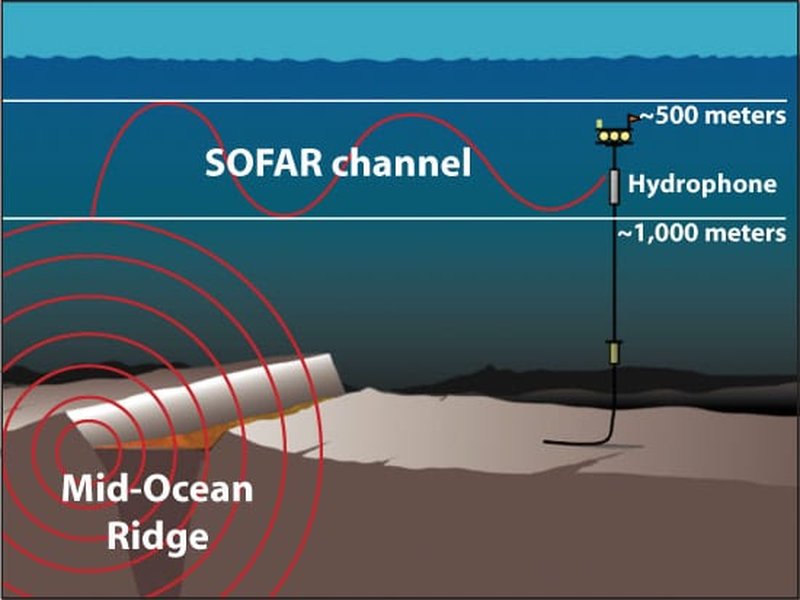
Key Highlights
- Innovative Signal Processing: Leverage FFT, wavelet transforms, and amplitude thresholding methods.
- Advanced Machine Learning: Utilize DEMON algorithms, convolutional neural networks, and deep scanning techniques.
- Integrated Sensor Technologies: Combine hydrophone arrays, pre-processing techniques, and sophisticated software tools.
Overview
Detecting vessel sounds in an audio file requires a multifaceted approach that blends traditional signal processing with modern machine learning algorithms. Vessel noise is characterized by unique acoustic signatures that evolve over time and frequency, requiring methods that can adapt to both abrupt and gradually shifting sound patterns. The best strategies involve holistic analysis combining acoustic signature analysis, energy detection, and advanced classification methods.
Core Approaches to Vessel Sound Detection
1. Signal Processing Techniques
Signal processing methods serve as the foundation for detecting vessel sounds. These techniques primarily decompose the audio signal to reveal underlying structures and frequency patterns. The most common methods include:
- Fast Fourier Transform (FFT): By converting the time-domain audio signal into a frequency-domain representation, FFT allows identification of specific frequency components typical of vessel noise, such as low-frequency hums or high-frequency harmonics.
- Wavelet Transforms: Unlike FFT, wavelet analysis provides time-frequency localization and is particularly adept at capturing transient features and slowly evolving sounds, making it ideal for marine acoustic environments.
- Energy Detectors: These detectors monitor peaks or “lumps” of energy in the signal. They are sensitive to rapid changes, although their performance might be compromised in the presence of slowly increasing noise background levels.
- Hilbert Transform and Marginal Spectrum Analysis: Decomposing signals using techniques like Hilbert Marginal Spectrum can help isolate vessel sounds from background noise by discriminating between low and high resonance components.
2. Deep Learning and Machine Learning Techniques
Modern detection strategies leverage deep learning algorithms to automatically identify vessel sounds in large audio datasets. Key techniques include:
- Convolutional Neural Networks (CNNs): CNNs capture spatial hierarchies in spectrogram representations of audio signals. They are particularly effective when trained on comprehensive datasets that include various vessel sound profiles.
- Recurrent Neural Networks (RNNs): RNNs and their variants (e.g., LSTM networks) analyze sequential data to track temporal dependencies in sound patterns, making them valuable for detecting gradual changes as vessels approach.
- Detection of Envelope Modulation on Noise (DEMON): DEMON is a specialized algorithm that enhances audio frequencies characteristic of vessel emissions to generate an acoustic signature which can then be classified automatically.
- Hybrid Approaches: Integrating traditional feature extraction (using FFT or wavelet methods) with deep learning classification offers robust performance under varied acoustic conditions.
3. Integrated Sensor and Data Fusion Approaches
Beyond algorithmic processing, coupling sensor data significantly enhances detection accuracy. This includes:
- Hydrophone Arrays: Arrays of hydrophones capture spatially diverse data, enabling directional filtering and source localization which improves the accuracy of vessel sound detection.
- Acoustic Databases: Utilizing established databases such as ShipsEar, which collect a variety of vessel noise profiles, supports machine learning models by providing extensive training data across different sound environments.
- Pre-Processing Techniques: Noise filtering and normalization before feature extraction are critical to improving the signal-to-noise ratio, especially in noisy marine environments.
- Multi-Modal Integration: Combining audio data with visual data (obtained from underwater cameras) can further refine detection, particularly in complex scenarios where acoustic noise masking is significant.
Technical Implementation and Practical Steps
Implementing a robust vessel sound detection system involves a series of carefully orchestrated steps:
Step-by-Step Process
Step 1: Data Collection and Pre-Processing
The first stage is acquiring high-quality audio recordings using underwater acoustic recorders or hydrophone arrays. Pre-processing involves cleaning the data through noise filtering, normalization, and segmentation into manageable time frames. This stage is crucial for isolating potential vessel sound signatures from background noise.
Step 2: Feature Extraction
Once the audio is pre-processed, extracting meaningful features is the next key step. Using FFT and wavelet transforms, you can generate spectrograms and power spectra that reveal consistent patterns and peaks associated with vessel activity. The DEMON algorithm further refines these features by emphasizing the modulation in the audio envelope.
Step 3: Classification and Detection
With the features in hand, machine learning models, including CNNs and RNNs, are trained on labeled datasets to distinguish vessel sounds from other acoustic signals. A hybrid approach, which combines traditional threshold-based methods and deep learning classification, yields the most reliable detection rates. Techniques such as support vector machines and ensemble methods like random forests are also employed in certain implementations.
Step 4: Post-Processing and Verification
Following detection, post-processing techniques are applied to verify and validate the presence of vessel sounds. This may involve cross-referencing detected events with visual data, validating against acoustic databases, or employing additional statistical analyses to reduce false positives.
Example Workflow Table
| Stage | Method/Technique | Purpose |
|---|---|---|
| Pre-Processing | Noise Filtering, Signal Normalization | Enhance signal-to-noise ratio |
| Feature Extraction | FFT, Wavelet Transforms, DEMON | Extract spectral patterns and acoustic signatures |
| Classification | CNNs, RNNs, SVMs | Differentiate vessel sounds from background noise |
| Post-Processing | Statistical Verification, Data Fusion | Reduce false positives and confirm detections |
| Sensing | Hydrophone Arrays, Multi-modal Integration | Improve spatial detection and validation |
Visualizing the Detection Strategy
Radar Chart Overview
Below is a radar chart representing various aspects of vehicle sound detection strategies. The chart shows the effectiveness of different techniques including FFT analysis, wavelet transforms, DEMON algorithm, deep learning methods, and sensor integration.
Mermaid Mindmap Diagram
The mindmap below outlines the primary components of vessel sound detection. It illustrates the flow from raw acoustic data processing to the final classification and verification steps.
Practical Code Example
Below is an example code snippet in Python that demonstrates a basic framework for detecting vessel sounds using feature extraction and a machine learning classifier:
# Example Code for Vessel Sound Detection
import librosa
import numpy as np
from sklearn.model_selection import train_test_split
from sklearn.ensemble import RandomForestClassifier

# Function to extract MFCC features from an audio file
def extract_features(file_path):
    signal, sr = librosa.load(file_path, sr=None)
    mfccs = librosa.feature.mfcc(y=signal, sr=sr, n_mfcc=13)
    return np.mean(mfccs, axis=1)

# Load features and labels from dataset (placeholder for actual file list)
files = ["path_to_file1.wav", "path_to_file2.wav"]
X, y = [], []

for file in files:
    features = extract_features(file)
    X.append(features)
    # Assume label 1: vessel sound, 0: no vessel sound
    y.append(1 if "vessel" in file else 0)

X_train, X_test, y_train, y_test = train_test_split(X, y, test_size=0.3, random_state=42)
clf = RandomForestClassifier()
clf.fit(X_train, y_train)

accuracy = clf.score(X_test, y_test)
print("Model Accuracy: {:.2f}".format(accuracy))
Supplementary Visual Content
To further illustrate how vessel sound detection works in a real-world scenario, please view the video below. This video explains underwater acoustics and the application of sonar in marine environments, offering insights into how acoustic data is captured and processed.
Frequently Asked Questions (FAQ)
What is the role of FFT in vessel sound detection?
How does the DEMON algorithm function in this context?
What advantages do deep learning models offer?
How do hydrophone arrays enhance detection?
References
- Automatic Vessel Signature Detection - Wiley
- Using PAMGuard for Vessel Detection - Bioacoustics Stack Exchange
- Deep-Learning-Based Method for Vessel Detection - PLOS ONE
- HMM for Underwater Noise Recognition - Oxford Academic
-
Impact of Vessel Traffic Noise on Marine Life - NCBI
Recommended Queries for Further Exploration
Last updated April 1, 2025