
Curious Underwater Sound Tracking Explained
Discover cutting-edge methods to detect vessel sounds and estimate their distance with precision
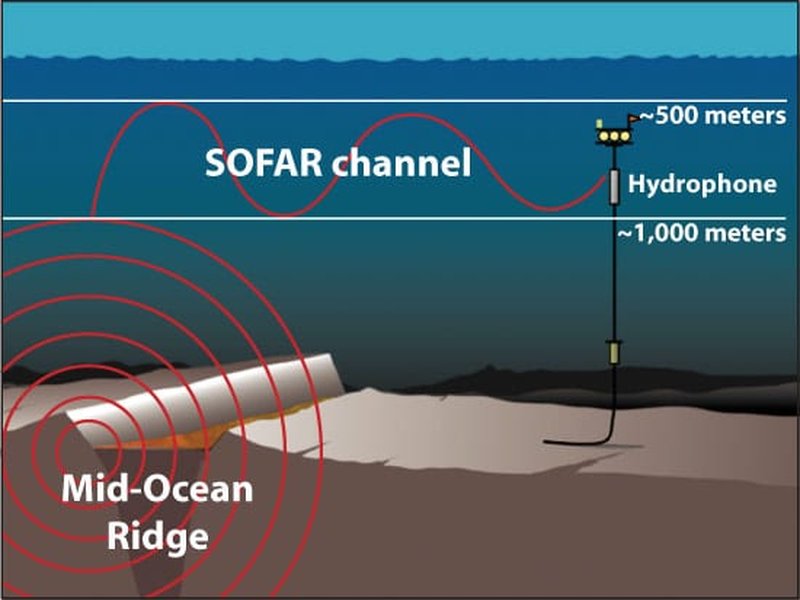
Key Insights
- Deploy Optimal Hydrophone Arrays to capture directional signals and enable time-difference analysis.
- Utilize Advanced Signal Processing for robust extraction of vessel-specific frequency and temporal features.
- Integrate Machine Learning to classify vessel sounds and enhance distance estimation accuracy.
Methodology for Detecting Vessel Sounds and Estimating Distance
The best approach to detect vessel sounds and estimate their distance from a hydrophone involves a combination of strategic hydrophone deployments, sophisticated signal processing techniques, and modern machine learning algorithms. This integrated system not only isolates vessel-produced noise amidst background signals but also leverages time-difference and spectral decay methods to quantify the distance between the vessel and the sensor.
Hydrophone Array Deployment and Environmental Considerations
Proper placement of hydrophone arrays is paramount in underwater acoustic monitoring. Arrays can be arranged in linear or volumetric configurations – linear arrays are typically towed or suspended, while volumetric arrays enable three-dimensional localization. These setups allow the use of Time Difference of Arrival (TDOA) methodologies; measuring the time delays between the arrival of sound signals at different sensors enables triangulation of the vessel’s position.
Array Configurations and Environmental Factors
In addition to spatial arrangement, environmental parameters such as sea depth, water temperature, and salinity significantly affect sound propagation. By carefully calibrating the hydrophone system in accordance with these factors, detection performance is optimized and the accuracy of distance estimation is greatly enhanced.
Advanced Signal Processing Techniques
Once the hydrophones capture the acoustic signals, advanced signal processing techniques are applied to extract distinguishing features indicative of vessel sounds. These techniques include:
- Time-Domain Analysis: Monitoring sound pressure levels to identify peaks that likely originate from vessel engines.
- Frequency-Domain Analysis: Utilizing Fast Fourier Transform (FFT) to reveal distinct frequency patterns and tonal signatures characteristic of vessel operations.
- Envelope Detection (DEMON Algorithm): Detecting the modulations on noise, a robust approach in isolating vessel generated signals even amidst considerable ambient noise.
- Doppler Shift Analysis: Exploiting frequency changes due to relative movement, which aids in calculating the vessel’s speed and contributes to distance estimation.
By combining these approaches, an accurate extraction of key acoustic features is achieved, forming the foundation for distinguishing vessel presence and facilitating precise distance calculations.
Distance Estimation Techniques
Distance estimation is conducted by evaluating two principal strategies:
- Time of Arrival (ToA) and TDOA Analysis: With multiple hydrophones, the slight differences in arrival times enable triangulation. This method calculates the distance from known sensor positions to the noise source.
- Sound Intensity Decay Modeling: Sound decreases in intensity as it travels through water. By calibrating the system with known distances, deviations in sound level can be used to approximate the range of the vessel.
When augmented by Doppler effect analysis, assessing the frequency shifts also provides valuable insight regarding movement dynamics, further refining distance determinations.
Integrating Machine Learning for Enhanced Detection
Machine learning has become an essential tool in modern acoustic monitoring. Neural networks, particularly Convolutional Neural Networks (CNNs), are trained on large datasets of underwater sounds to automatically classify various acoustic events. In our context, machine learning enhances detection by:
- Learning from labeled datasets that distinguish between vessel sounds and natural marine ambient noise.
- Continuously adapting as new acoustic data is processed, thereby reducing false positives.
- Providing confidence levels for each detection, which assists in subsequent distance estimation based on signal integrity.
Role of Machine Learning
The inclusion of machine learning enriches the system by ensuring that detection and distance estimation remain robust even in dynamically varying underwater environments. This includes automated pre-processing, feature extraction, and classification, all of which contribute to a highly accurate and responsive detection system.
Practical Implementation and Data Analysis Workflow
An effective deployment involves several coherent steps:
- Acoustic Data Collection: Continuous monitoring through hydrophone arrays, ensuring the capture of high-quality underwater sounds.
- Pre-Processing and Filtering: Noise reduction via band-pass filtering and adaptive filtering techniques to enhance the signal-to-noise ratio.
- Feature Extraction: Employing FFT, DEMON, and Doppler analysis for isolating the spectral and temporal characteristics of vessel sounds.
- Machine Learning Classification: Feeding extracted features into neural network models for reliable vessel identification.
- Distance Estimation: Utilizing TDOA combined with intensity decay and Doppler analyses to triangulate the precise range to the vessel.
This systematic workflow results in a highly efficient and accurate system for underwater vessel detection and distance measurement.
Data Analysis Visualization
The radar chart below visualizes the contribution of different techniques to both detection and distance estimation. It reflects an analysis of effectiveness across various domains such as hydrophone array performance, time and frequency domain analysis, Doppler shifts, and machine learning classification.
Conceptual Mindmap
The mindmap below summarizes the approach, detailing how hydrophone arrays, advanced signal processing, distance estimation techniques, and machine learning converge to detect vessel sounds and determine their range effectively.
Comparative Analysis Table
The table below provides a summary overview of key techniques used for vessel sound detection and distance estimation, highlighting their individual roles and advantages.
| Technique | Description | Key Advantage |
|---|---|---|
| Hydrophone Arrays | Multiple sensors placed for directional capture and TDOA analysis. | Precise spatial localization and triangulation. |
| Time-Domain Analysis | Monitors signal peaks for initial vessel detection. | Fast identification of high-energy vessel sounds. |
| Frequency-Domain Analysis | Uses FFT to extract unique frequency signatures. | Accurate identification of vessel-specific acoustic patterns. |
| Doppler Analysis | Evaluates frequency shifts from vessel movement. | Enables estimation of relative speed and distance. |
| Machine Learning | Automates classification using trained neural networks. | High accuracy with reduced false positives. |
Educational Video Demonstration
The video below demonstrates the operational principles of hydrophone systems and provides real-world insights into underwater acoustic detection. It is a practical illustration of how advanced sensors capture and analyze underwater sounds.
Frequently Asked Questions (FAQ)
What role do hydrophone arrays play in vessel sound detection?
How does machine learning enhance the detection process?
Why is Doppler analysis important for distance estimation?
References
- Technology of Hydrophones - NOAA Ocean Explorer
- Passive Acoustic Technologies - NOAA Fisheries
- Detecting Radiated Noise - Clear Seas
- Hydrophone Applications - Teledyne Marine
- Acoustic Vessel Detection Research - OUP Academic
Recommended Related Queries
Last updated April 1, 2025