
The Dawn of the Viking Age: A Ballad of Old
A lyrical journey through the events that sparked a legendary era
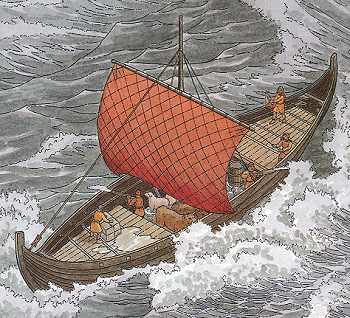
Highlights
- The raid on Lindisfarne in 793 AD: A turning point in maritime history.
- The exploration, trading, and raiding spirit that defined the Norsemen.
- The cultural and mythological influences that continue to inspire legends today.
Introduction
Across the misty, rugged coasts of Scandinavia, a new era emerged. The Viking Age transformed the known world with its blend of fierce raiding, extraordinary maritime prowess, and vibrant cultural interactions. This lyrical ballad commemorates the initiation of the Viking Age, capturing its essence from the notorious raid on Lindisfarne to the legacy of longships and legends that have resonated through the halls of time.
The Ballad of the Viking Dawn
Verse I: The Call of the North
In ancient times when winter wind did wail,
And frost crowned every tale,
There came the sound of oars upon the tide,
A harbinger on life's wild ride.
From fjords where glaciers carved the land,
Born of ice and earth so grand,
Warriors emerged with hearts afire,
Bound by fate and fierce desire.
Chorus: Rise of the Northmen
Oh, see the longships slicing seas so deep,
Under midnight suns, they wake from sleep.
With dragons on their prows they steer,
Into legends, without fear.
The Viking Age had set its course,
Born of nature’s untamed force.
From sacred lands to foreign shores,
Their echoes ring forevermore.
Verse II: The First Strike
In the year of seven-ninety-three,
A monastery by the rolling sea,
Lindisfarne felt a dreadful blow,
As Viking oars began to row.
Not mere marauders, but seekers of fate,
They struck at the gate of heaven’s gate.
Their iron will clashed with sacred trust,
Igniting a fire in the heart of dust.
Bridge: Winds of Change
The northern winds did whisper clear,
Of fortunes far and destinies near.
Born from hardship and nature's call,
Vikings rose, refusing to fall.
Tales of gods and ancestors old,
In sagas and runes their stories told.
Odin’s wisdom and Thor’s might,
Guided them through the longest night.
Chorus: Rise of the Northmen (Reprise)
O’er the depths and across the foam,
They ventured far from home.
With a spirit both wild and keen,
Their legacy forever seen.
Verse III: The Spirit of Adventure
Beyond the raid, there lay a quest,
For lands of promise, the ancient best.
Through icy streams and stormy gale,
They forged a future, destined to prevail.
From the Laurentius of distant shores
To trade winds laden with mystic moors,
The Norsemen sailed with daring hearts,
Playing roles in history's epic parts.
Chorus: Rise of the Northmen (Final)
With a blend of courage and relentless might,
They charted stars in darkened night.
From raiding, trading, and seafaring lore,
Their saga echoes forevermore.
Outro: Eternal Legacy
As centuries pass, the songs remain,
Capturing both sorrow and triumph’s pain.
The Viking Age, a beacon of the past,
Reminds us that legends are built to last.
In every whispered breeze and crashing wave,
Their spirit lives on, bold and brave.
For when the north calls with its mystic charm,
The legacy of the Vikings keeps us warm.
Context and Analysis of the Ballad
Historical Background
The Viking Age is most infamously recognized for its brutal and daring raids, particularly marked by the 793 AD assault on the Lindisfarne monastery. This event is widely regarded as the beginning of an era that fundamentally altered the socio-political landscape of Europe. However, the Viking saga is not solely a tale of destruction; it is equally a story of exploration, trade, and cultural exchange. As depicted in the ballad, the Vikings emerged from a harsh northern environment that spurred a need for expansion, trade, and even survival against adverse climatic conditions.
The ballad captures these themes by interweaving references to both the violent and the exploratory aspects of Viking endeavors. The inciting raid on Lindisfarne symbolizes a break from tradition, a plunge into a new phase of history where Norse warriors extended their influence across far-reaching territories. The arrival of the Vikings on foreign shores was not merely a moment of aggression but also a pivot towards establishing deep-rooted connections that would influence art, trade, and even governance for centuries.
Cultural Influence and Myths
Integral to the Viking identity were their mythological beliefs and cultural narratives. The ballad weaves in these elements by invoking the names of revered gods, like Odin and Thor, whose attributes of wisdom and strength inspired the Norsemen in both battle and exploration. These deities were more than myth; they embodied the values and ideals of a society in constant flux, navigating the duality of awe for natural forces and a relentless desire for conquest and discovery.
Additionally, the inclusion of poetic elements like runes, sagas, and epic storytelling in the ballad serves to immortalize the exploits of these fierce warriors. These narratives fostered a sense of community, shared identity, and historical continuity among the Norse, even as they ventured into unknown territories. The cultural resonance of these stories persists to this day, stirring the imaginations of both scholars and enthusiasts alike.
Maritime Mastery and Technological Innovation
At the heart of the Viking Age was an unparalleled mastery over the sea. Central to this prowess was the design and construction of the longship—sleek, agile vessels optimized for navigating the treacherous waters of the North Atlantic. Their innovative shipbuilding techniques allowed the Vikings to strike swiftly and retreat just as quickly, making them formidable opponents in both trade and combat.
The ballad reflects this aspect through vivid imagery of longships slicing through turbulent waves under the light of the midnight sun. Such depictions pay homage to the maritime technologies that were crucial in extending the Viking reach. The longships were not only vital for raiding but also played a critical role in establishing trade routes that connected disparate regions, laying the groundwork for cultural and economic exchanges that enriched medieval Europe.
Social and Demographic Dynamics
The impetus for Viking expansion was not merely driven by a thirst for conquest but also by profound social and demographic factors. Climatic shifts in Scandinavia led to changes in agricultural productivity and population dynamics, prompting many Norse communities to seek new territories where resources were more abundant. This migration was a complex interplay of survival, competition, and the pursuit of prosperity.
In the ballad, these underlying pressures are subtly referenced as the driving force behind the Viking quest. Far from being a simple quest for plunder, the expansive journeys of the Viking Age were imbued with the hope of a better life—a fresh start in fertile lands, robust trade centers, and opportunities to engage with diverse cultures. This socio-economic motivation provides a nuanced backdrop to the often-romanticized image of the Viking marauder.
An In-Depth Look at Viking Inspiration
A Table of Notable Viking Symbolism
| Symbol | Meaning | Historical Context |
|---|---|---|
| Longship | Maritime prowess and innovation | Enabled swift raids and expansive trade routes |
| Dragon Head Carving | Courage, power, and protection | Decorated the prows to inspire fear and awe |
| Runestones and Runes | Cultural memory and mystical communication | Used to record sagas, laws, and genealogies |
| Mythological Figures (Odin, Thor) | Divine support and guidance | Central to Norse religious beliefs and warrior ethos |
This table encapsulates some of the central symbols associated with the Viking era. Each element not only reflects a practical aspect of Viking society but also signifies deeper cultural and spiritual beliefs that sustained their community through periods of turmoil and expansion.
Musical and Poetic Traditions
The art of storytelling has always been intertwined with the historical narrative of the Vikings. Their sagas and poems played a critical role in preserving memories of battles, voyages, and heroic deeds. The ballad presented here is both a creative expression and a historical document that captures the spirit, values, and ambitions of the Norsemen.
As can be seen in the repetitive chorus and vivid verses, the repetitive structures in the song serve to reinforce crucial themes such as bravery, destiny, and unity with the forces of nature. The poetic devices used—rhyme, rhythm, and imagery—help convey the turbulent yet paradoxically structured nature of the Viking society. These elements underscore the duality of the Vikings as both ruthless raiders and visionary explorers.
The Artistic Legacy of the Viking Age
The cultural footprint of the Viking Age extends far beyond mere historical events. The artistry, craftsmanship, and narrative traditions developed during this period continue to captivate modern artists, musicians, and scholars. The ballad's lyrical quality and emphasis on the saga-like nature of Viking endeavors mirror the oral traditions that kept these histories alive in a predominantly pre-literate society.
Modern renditions of Viking songs and literature frequently incorporate these traditional elements, blending historical accuracy with creative storytelling. The result is a rich, multifaceted tapestry that not only celebrates the daring exploits of the past but also reinterprets them in contemporary forms. This synthesis of old and new ensures that the legacy of the Vikings lives on, inspiring new generations to explore both their cultural heritage and the vast narratives of history.
Integrating Music and History
Structure of the Ballad
The ballad's structure is carefully designed to evoke both emotional and historical resonance. The introduction sets the tone with imagery of harsh northern landscapes and the inevitability of fate. Subsequent verses detail the seminal raid on Lindisfarne, capturing the shock and awe experienced by those who witnessed the beginning of the Viking excursions.
The recurring chorus serves as an anthem, a rallying cry that echoes the unified spirit of the Norsemen. The incorporation of a bridge section provides a reflective cadence, allowing the listener to contemplate the broader implications of Viking ventures—an interplay of human ambition, environmental constraints, and the inexorable march of destiny.
Musical Composition and Lyricism
While the ballad is a written composition, its imagined melody resonates with traditional Nordic music, characterized by modal scales and rhythmic percussion that mirror the cadence of oars in the ocean. The juxtaposition of soft, reflective verses with a recurring, powerful chorus adds depth and a sense of catharsis to the piece.
This lyrical composition not only honors the historical events of the Viking Age but also acts as a vessel for transmitting cultural memory. The carefully chosen words and rhythmic patterns enable the listener to traverse a time where every note carried the weight of fate, every word echoed the valor of warriors, and every refrain was a tribute to the indomitable human spirit.
Final Reflections on the Viking Age and Its Modern Legacy
Impact on Modern Culture
The legacy of the Viking Age continues to shape modern cultural narratives, from literature and music to film and video games. The allure of the Norse explorations, the striking imagery of longships cutting through turbulent seas, and the enduring appeal of heroic sagas have all contributed to a romanticized yet inspiring view of this historical period.
Many contemporary interpretations of Viking culture draw heavily on the rich tapestry of myths, legends, and historical accounts preserved in ancient ballads and sagas. This ballad, with its detailed recounting of the onset of the Viking Age, not only pays homage to that legacy but also invites modern audiences to explore deeper historical truths that have informed a world still fascinated by the spirit of the North.
Synthesis of History and Art
Ultimately, the Viking Age is best understood as a fusion of historical fact and creative myth-making. The balance between accurate historical events—like the meaningful raid on Lindisfarne—and the mythologized portrayal of a fearless, adventurous people fosters a deeper appreciation for how history and art continuously inform and enrich one another.
Through its harmonious blend of narrative, musicality, and historical detail, the ballad serves as a testament to the enduring legacy of the Vikings. It invites listeners and readers alike to not only remember a time when brave warriors set forth into the unknown but also to recognize how that spirit continues to influence modern interpretations of courage, exploration, and cultural identity.
Conclusion and Final Thoughts
In revisiting the origins of the Viking Age through a lyrical narrative, we uncover layers of historical nuance, cultural evolution, and artistic expression that collectively embody the spirit of an era. The ballad encapsulates the fierce beginning marked by the raid on Lindisfarne, the relentless pursuit of adventure, and the intertwining of myth and reality that still captivates our imagination. It stands as both an ode to a time of relentless expansion and as a reminder of the complex interplay between human ambition and the natural world.
The legacy of the Vikings, as portrayed in this song, transcends the merely combative image often associated with them. It reveals a dynamic civilization driven by a quest for survival, enriched by cultural exchanges, and blessed by the creative spark of myth-making. Today, as we explore the historical tapestries woven by these resilient navigators, we are reminded that history, much like a well-crafted ballad, is a layered and evolving narrative that ultimately reflects our shared human experience.
References
Recommended Further Exploration
Last updated February 20, 2025