

Key Insights into the Disk Method
- Fundamental Concept: The Disk Method computes the volume of a solid of revolution by envisioning it as an infinite stack of infinitesimally thin circular disks, each perpendicular to the axis of rotation.
- Core Application: This method is ideal when the region being revolved directly abuts the axis of rotation, creating solid, hole-free cross-sections.
- Distinction from Washer Method: When the revolved region creates a solid with a hole, the Washer Method, a direct extension of the Disk Method, is employed to subtract the volume of the inner "hole."
In the realm of integral calculus, calculating the volume of complex three-dimensional objects can seem daunting. However, the Disk Method provides an elegant and powerful technique for determining the volume of "solids of revolution." These are shapes created by rotating a two-dimensional region around a specified axis. Understanding this method is not only crucial for academic success in calculus but also finds practical applications in various fields, from engineering design to architectural modeling.
What is a Solid of Revolution?
Before diving into the Disk Method, it's essential to grasp what a solid of revolution is. Imagine a flat, two-dimensional shape, such as the area under a curve. If you take this shape and rotate it completely around a straight line (the axis of revolution), the path traced by the shape will form a three-dimensional object. This object is known as a solid of revolution. Common examples include spheres, cones, and cylinders, but the method can calculate volumes of much more intricate forms.
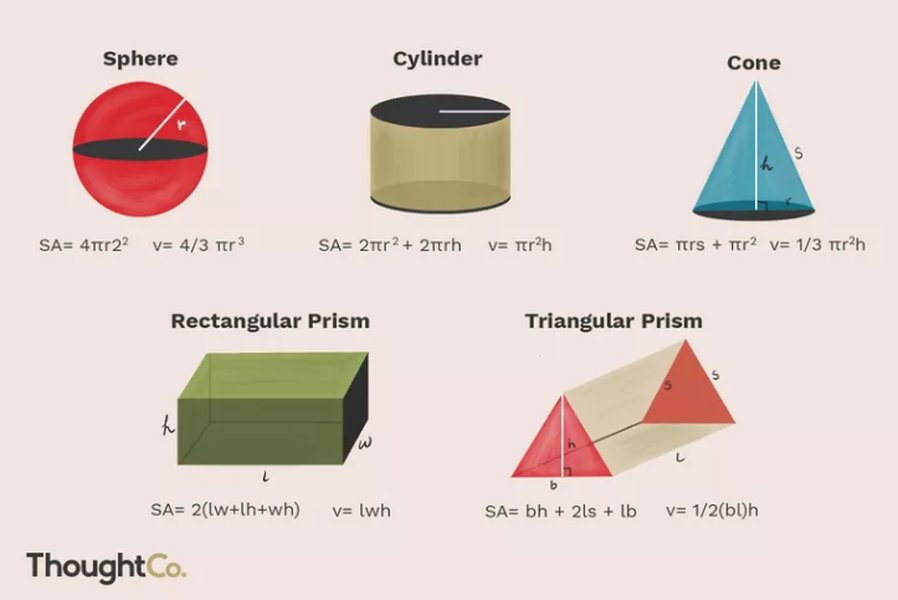
Visual representation of a solid of revolution generated from a 2D region.
The Intuition Behind the Disk Method
The Disk Method is built on a simple yet profound idea: approximating a complex three-dimensional volume with simpler, known volumes. Imagine slicing the solid of revolution into an infinite number of extremely thin circular disks. Each disk has a tiny thickness (either \(dx\) or \(dy\), depending on the axis of rotation) and a specific radius. The volume of each individual disk can be calculated using the formula for the volume of a cylinder: \(V_{disk} = \pi r^2 \times \text{thickness}\). By summing the volumes of all these infinitesimal disks, we can determine the total volume of the solid. This summation process, in the context of calculus, is achieved through definite integration.
Visualizing the Slices
Consider a region bounded by a function \(y = f(x)\), the x-axis, and two vertical lines \(x = a\) and \(x = b\). When this region is rotated around the x-axis, each slice taken perpendicular to the x-axis will be a perfect circle. The radius of this circle at any given point \(x\) will be the function value \(f(x)\). The thickness of this disk is \(dx\). Similarly, if rotating around the y-axis, the radius would be \(x = g(y)\) and the thickness \(dy\).
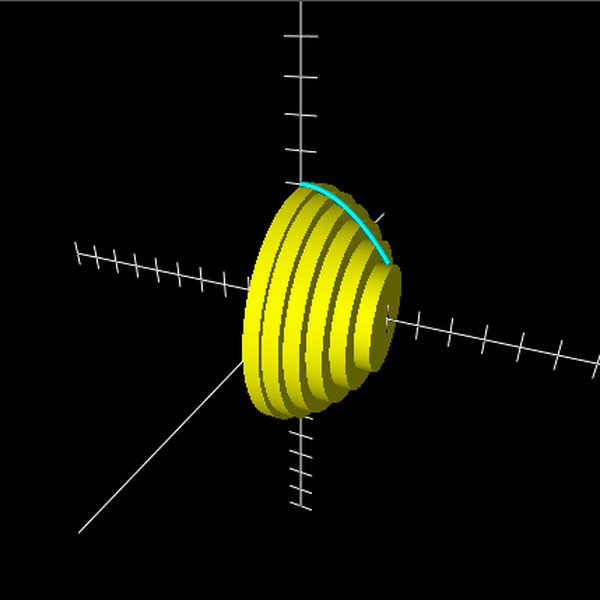
An illustration demonstrating the slicing of a solid into disks.
Core Formulas for the Disk Method
The general formula for the volume \(V\) of a solid of revolution using the Disk Method depends on the axis of rotation.
Rotation Around the X-axis
When a region bounded by \(y = f(x)\), the x-axis, and vertical lines \(x = a\) to \(x = b\) (where \(f(x) \geq 0\)) is rotated around the x-axis, the volume \(V\) is given by:
\[V = \pi \int_a^b [f(x)]^2 \, dx\]In this case, \(f(x)\) represents the radius \(r\) of each disk, and \(dx\) is its infinitesimal thickness.
Rotation Around the Y-axis
If the region is bounded by \(x = g(y)\), the y-axis, and horizontal lines \(y = c\) to \(y = d\) (where \(g(y) \geq 0\)) and is rotated around the y-axis, the volume \(V\) is:
\[V = \pi \int_c^d [g(y)]^2 \, dy\]Here, \(g(y)\) acts as the radius \(r\) of each disk, and \(dy\) is its infinitesimal thickness.
When the Axis is Not a Coordinate Axis
The Disk Method can also be applied when the axis of rotation is a horizontal or vertical line other than the x-axis or y-axis. In such scenarios, the radius of the disk needs to be adjusted. For example, if rotating around the line \(y=k\), the radius would be \(|f(x) - k|\). Similarly, for rotation around \(x=k\), the radius would be \(|g(y) - k|\).
Step-by-Step Application of the Disk Method
Applying the Disk Method systematically ensures accuracy and understanding. Here's a practical guide:
1. Graph the Region
Start by sketching the two-dimensional region that will be revolved. Clearly identify the bounding curves and lines, and shade the region to be rotated. This visual step is crucial for understanding the geometry of the solid.
2. Identify the Axis of Rotation
Determine the line around which the region will be revolved. This will dictate whether you integrate with respect to \(x\) or \(y\), and how you define the radius of your disks.
3. Determine the Variable of Integration and Radius
- If rotating around a horizontal axis (like the x-axis or \(y=k\)), slices will be vertical, and you'll integrate with respect to \(x\). The radius \(r(x)\) will be a function of \(x\).
- If rotating around a vertical axis (like the y-axis or \(x=k\)), slices will be horizontal, and you'll integrate with respect to \(y\). The radius \(r(y)\) will be a function of \(y\).
The radius is the distance from the axis of rotation to the outer boundary of the revolved region. Ensure this distance is always positive or squared to become positive within the integral.
4. Set Up the Integral
Construct the definite integral. The limits of integration will correspond to the bounds of the region along the axis of integration. The integrand will be \(\pi\) times the square of the radius function.
5. Evaluate the Integral
Finally, compute the definite integral to find the total volume of the solid of revolution.
Illustrative Example: Rotating a Parabola
Let's consider an example to solidify the understanding of the Disk Method. Suppose we want to find the volume of the solid generated by revolving the region bounded by \(y = \sqrt{x}\), the x-axis, and the line \(x = 4\) about the x-axis.
- Graph the region: The region is under the curve \(y = \sqrt{x}\) from \(x=0\) to \(x=4\).
- Axis of rotation: The x-axis.
- Variable of integration and radius: Since we're rotating about the x-axis, we'll integrate with respect to \(x\). The radius of each disk at a given \(x\) is \(f(x) = \sqrt{x}\).
- Set up the integral: The limits of integration are from \(0\) to \(4\). \[V = \pi \int_0^4 (\sqrt{x})^2 \, dx\] \[V = \pi \int_0^4 x \, dx\]
- Evaluate the integral: \[V = \pi \left[ \frac{x^2}{2} \right]_0^4\] \[V = \pi \left( \frac{4^2}{2} - \frac{0^2}{2} \right)\] \[V = \pi \left( \frac{16}{2} - 0 \right)\] \[V = 8\pi\]
Therefore, the volume of the solid of revolution is \(8\pi\) cubic units.
Disk Method vs. Washer Method: Understanding the Difference
While the Disk Method is used for solids without holes, its close relative, the Washer Method, addresses solids that have a void in their center. The Washer Method is essentially an extension of the Disk Method.
When the region being revolved is between two curves, say \(y = f(x)\) and \(y = g(x)\) where \(f(x) \geq g(x) \geq 0\), and rotated about the x-axis, a "hole" is formed in the center of the solid. In this scenario, each slice is not a solid disk but a "washer" (a disk with a circular hole in the middle). The volume of such a washer is the volume of the outer disk minus the volume of the inner disk.
The formula for the Washer Method when rotating around the x-axis is:
\[V = \pi \int_a^b ([f(x)]^2 - [g(x)]^2) \, dx\]Here, \(f(x)\) is the outer radius \(R(x)\), and \(g(x)\) is the inner radius \(r(x)\). The Disk Method is a special case of the Washer Method where the inner radius \(g(x)\) is zero.
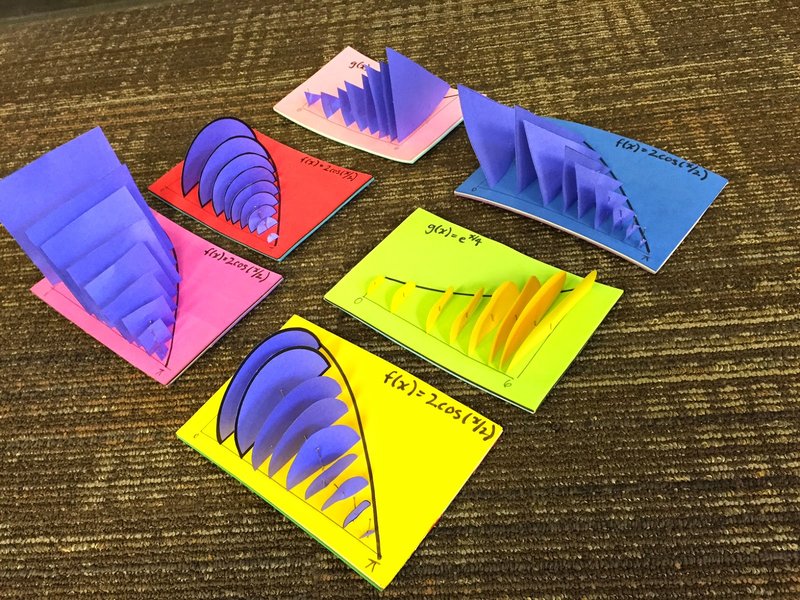
A physical model illustrating the concept of a washer, which is a disk with a hole.
Beyond Disks: The Shell Method
It's important to note that the Disk/Washer Method isn't the only way to calculate volumes of revolution. The Shell Method offers an alternative approach, particularly useful when integrating perpendicular to the axis of rotation is more challenging. While the Disk Method slices perpendicular to the axis of rotation, the Shell Method slices parallel to it. Choosing between the Disk/Washer Method and the Shell Method often depends on the specific functions involved and the axis of rotation to simplify the integration process.
A Mindmap of Volume Calculation Techniques
To provide a holistic view of volume calculation in calculus, here's a mindmap illustrating the relationships between the Disk Method, Washer Method, and Shell Method, and their core characteristics.
This mindmap serves as a quick reference, highlighting the fundamental distinctions and applications of each method for calculating volumes of revolution. It emphasizes that while the Disk Method is foundational, the Washer and Shell Methods provide necessary extensions and alternatives for more complex scenarios.
Video Deep Dive: Understanding Solids of Revolution
To further enhance your understanding, this video provides a detailed explanation of solids of revolution and how the Disk Method is applied. It offers visual examples and clarifies the underlying concepts, making it easier to grasp how two-dimensional regions transform into three-dimensional volumes.
This video explains the concept of solids of revolution, an essential prerequisite for understanding volume calculations.
The video titled "Solid of Revolution (part 1)" from the provided media sources is particularly relevant as it introduces the basic concept of solids of revolution. It sets the stage for understanding how such three-dimensional objects are formed, which is critical before applying methods like the Disk Method to calculate their volumes. Understanding this foundational concept helps visualize the process of rotating a 2D region and how the resulting shape is constructed, thereby making the application of integral calculus methods more intuitive.
Summary of Volume Calculation Methods
Below is a concise table summarizing the key characteristics, formulas, and ideal use cases for the Disk Method, Washer Method, and Shell Method, providing a quick reference for students and practitioners.
| Method | Slicing Orientation (relative to axis) | Cross-section Type | General Formula (X-axis rotation) | Ideal Use Case |
|---|---|---|---|---|
| Disk Method | Perpendicular | Solid Disk | \(V = \pi \int_a^b [f(x)]^2 \, dx\) | Region directly touches the axis of rotation, creating no holes. |
| Washer Method | Perpendicular | Hollow Disk (Washer) | \(V = \pi \int_a^b ([R(x)]^2 - [r(x)]^2) \, dx\) | Region between two curves, forming a hole in the solid. |
| Shell Method | Parallel | Cylindrical Shell | \(V = \int_c^d 2\pi y \cdot h(y) \, dy\) (for x-axis rotation, integrating with y) | When integrating perpendicular to the axis is complex, or when functions are easier to express in terms of the other variable. |
FAQ
What is the primary difference between the Disk Method and the Washer Method?
When should I use the Shell Method instead of the Disk or Washer Method?
Can the Disk Method be used if the axis of rotation is not the x-axis or y-axis?
What does \(f(x)\) represent in the Disk Method formula?
Conclusion
The Disk Method stands as a foundational technique in integral calculus for determining the volume of solids of revolution. By conceptualizing complex three-dimensional shapes as stacks of infinitesimally thin disks, it provides a powerful and intuitive approach to volume calculation. Its direct application for solids without holes, coupled with its extension into the Washer Method for hollow shapes, makes it an indispensable tool. Mastering this method, along with understanding its relation to the Shell Method, equips one with a comprehensive toolkit for tackling a wide array of problems in mathematics, science, and engineering.
Recommended Further Exploration
- How to apply the Washer Method for volumes of revolution?
- Understanding the Shell Method in integral calculus?
- Applications of volumes of revolution in engineering?
- Visualizing solids of revolution with examples?