
Understanding Volumetric Flow vs Mass Flow
Comprehensive Analysis of Flow Measurement Techniques
Key Takeaways
- Volumetric Flow measures the volume of fluid passing through a point per unit time and is influenced by temperature and pressure.
- Mass Flow quantifies the mass of fluid moving through a point per unit time, remaining constant despite changes in temperature and pressure.
- Different flow meters are employed to accurately measure volumetric and mass flow, each utilizing unique physical principles.
1. Introduction to Flow Measurements
Flow measurement is a critical aspect in various industrial applications, ranging from water distribution systems to complex chemical processing plants. Understanding the distinction between volumetric flow and mass flow is essential for selecting the appropriate measurement techniques and ensuring precise control over process parameters.
This comprehensive guide delves into the fundamental differences between volumetric and mass flow, explores the mechanisms by which different flow meters and multivariable transmitters operate, and outlines the requirements necessary for accurate flow calculations.
2. Volumetric Flow vs Mass Flow: Definitions and Differences
2.1 Volumetric Flow
Volumetric Flow refers to the volume of fluid—be it a liquid or gas—that passes through a specific cross-sectional area per unit of time. Common units for expressing volumetric flow include liters per minute (L/min), cubic meters per hour (m³/h), gallons per minute (GPM), and cubic feet per second (ft³/s).
Volumetric flow is inherently dependent on the fluid's temperature and pressure. For gases, changes in temperature can cause expansion or contraction, thereby affecting the volumetric flow rate even if the mass flow remains unchanged. Similarly, pressure variations can alter the fluid's density, impacting the volumetric measurement.
2.2 Mass Flow
Mass Flow quantifies the mass of fluid passing through a given cross-sectional area per unit time. It is typically measured in kilograms per second (kg/s), pounds per minute (lb/min), or grams per hour (g/h). Unlike volumetric flow, mass flow is not affected by changes in temperature and pressure because it directly measures the quantity of matter being transported.
This characteristic makes mass flow a more reliable metric in applications where fluid density varies due to fluctuating environmental conditions. It ensures consistency and accuracy in processes that require precise mass control, such as chemical reactions, fuel systems, and HVAC applications.
2.3 Key Differences
| Aspect | Volumetric Flow | Mass Flow |
|---|---|---|
| Definition | Volume of fluid per unit time. | Mass of fluid per unit time. |
| Units | L/min, m³/h, GPM | kg/s, lb/min, g/h |
| Dependency | Dependent on temperature and pressure. | Independent of temperature and pressure. |
| Applications | Water distribution, flow balancing in systems with constant density. | Gas processing, chemical reactions, HVAC systems. |
| Measurement Reliability | Can vary with environmental changes. | Maintains consistency despite environmental changes. |
3. Measurement Techniques: Flow Meters and Multivariable Transmitters
3.1 Flow Meters for Volumetric Flow
Several types of flow meters are specifically designed to measure volumetric flow. Each utilizes distinct physical principles to achieve accurate measurements:
- Turbine Flow Meters: These meters contain a turbine that rotates as fluid flows through it. The rotational speed of the turbine is directly proportional to the fluid velocity, allowing for the calculation of volumetric flow.
- Ultrasonic Flow Meters: Ultrasonic meters measure the flow rate by sending sound waves through the fluid and calculating the transit time or Doppler shift caused by the moving fluid.
- Positive Displacement Flow Meters: These meters measure volumetric flow by trapping fixed volumes of fluid and counting the number of times the volume is filled and emptied, providing a direct measure of flow rate.
- Variable Area Flow Meters (Rotameters): Rotameters consist of a tapered tube with a float inside. As the flow rate increases, the float rises in the tube, and its position is used to determine the volumetric flow rate.
- Vortex Flow Meters: These meters measure flow by detecting the frequency of vortices shed by a bluff body placed in the flow path. The vortex frequency is proportional to the velocity of the fluid.
3.2 Flow Meters for Mass Flow
Mass flow measurement requires devices that can directly assess the mass of the fluid passing through. Common types include:
- Coriolis Flow Meters: These meters measure mass flow by detecting the Coriolis force exerted on vibrating tubes through which the fluid flows. The deflection of the tubes correlates directly with the mass flow rate.
- Thermal Mass Flow Meters: These meters determine mass flow by measuring the rate at which heat is absorbed or dissipated by the fluid as it passes over heated sensors. The heat transfer rate is proportional to the mass flow rate.
- Differential Pressure Flow Meters with Compensation: While primarily used for volumetric measurements, when combined with temperature and pressure data, these meters can calculate mass flow by compensating for fluid density variations.
3.3 Multivariable Transmitters
Multivariable transmitters are advanced devices capable of measuring multiple process parameters simultaneously, such as pressure, temperature, and flow rate. These transmitters can integrate data from various sensors to provide comprehensive flow measurements, including both volumetric and mass flow rates.
For instance, a multivariable transmitter might measure the volumetric flow using a velocity-based meter and simultaneously record the temperature and pressure of the fluid. Using the ideal gas law or other fluid-specific equations, it can then calculate the mass flow rate by accounting for changes in fluid density.
3.4 Comparative Analysis of Flow Meters
| Flow Meter Type | Volumetric Flow Measurement | Mass Flow Measurement | Key Features | Typical Applications |
|---|---|---|---|---|
| Turbine Flow Meter | Yes | No | High accuracy, suitable for clean, low viscosity fluids. | Water treatment, chemical processing. |
| Coriolis Flow Meter | Indirectly through calculation | Yes | Direct mass measurement, unaffected by fluid properties. | Petroleum, food and beverage, pharmaceuticals. |
| Ultrasonic Flow Meter | Yes | Indirectly through calculation | Non-intrusive, suitable for large pipes and clean fluids. | Water supply, HVAC systems. |
| Thermal Mass Flow Meter | No | Yes | Ideal for gas mass flow measurements. | HVAC, gas distribution. |
| Positive Displacement Flow Meter | Yes | No | High accuracy for liquids, direct volume measurement. | Oil and gas, chemical industries. |
4. Calculating Volumetric and Mass Flow: Requirements and Considerations
4.1 Calculating Volumetric Flow
To accurately calculate volumetric flow, certain parameters and measurements must be precisely determined:
- Fluid Velocity (v): The speed at which the fluid is moving through the pipe or channel. This can be measured directly using velocity-based flow meters or inferred from other measurements.
- Cross-Sectional Area (A): The area through which the fluid is flowing. For pipes, this is typically calculated using the pipe diameter and the formula for the area of a circle:
$$ A = \pi \left(\frac{d}{2}\right)^2 $$
where \( d \) is the pipe diameter.
- Temperature and Pressure: Especially important for gases, where changes in temperature and pressure can significantly affect volumetric flow due to fluctuations in density.
4.2 Calculating Mass Flow
Mass flow can be calculated directly through mass flow meters or derived from volumetric flow measurements combined with fluid density:
- Direct Measurement: Utilizing mass flow meters like Coriolis or thermal meters provides a direct measurement of mass flow without additional calculations.
- Indirect Measurement: When using volumetric flow meters, mass flow is calculated using the following formula:
$$ \text{Mass Flow Rate (M)} = \text{Volumetric Flow Rate (Q)} \times \text{Fluid Density (\( \rho \))} $$
To accurately perform this calculation, the fluid density must be known. Density can be determined through:
- Pressure and Temperature Measurements: For gases, the ideal gas law is often used:
$$ \rho = \frac{P \times M}{R \times T} $$
where:
- \( P \) = Pressure
- \( M \) = Molar mass of the gas
- \( R \) = Universal gas constant
- \( T \) = Temperature in Kelvin
- Known Density Values: For incompressible fluids like liquids, density is typically constant and can be referenced from standard tables.
4.3 Compensation for Environmental Conditions
Accurate flow measurements, especially for mass flow, require compensation for varying environmental conditions that affect fluid properties:
- Temperature Sensors: Measure the fluid temperature to adjust density calculations accordingly.
- Pressure Sensors: Monitor the fluid pressure to account for changes in density, particularly in gas flow measurements.
Multivariable transmitters integrate these measurements, allowing for real-time adjustments and more accurate mass flow calculations.
4.4 Practical Considerations
- Pipe Diameter and Flow Profile: Accurate knowledge of pipe dimensions and flow profile (laminar vs. turbulent) is essential for precise volumetric flow calculations.
- Fluid Properties: Understanding the fluid's viscosity, density, and compressibility aids in selecting the appropriate flow meter and calculation method.
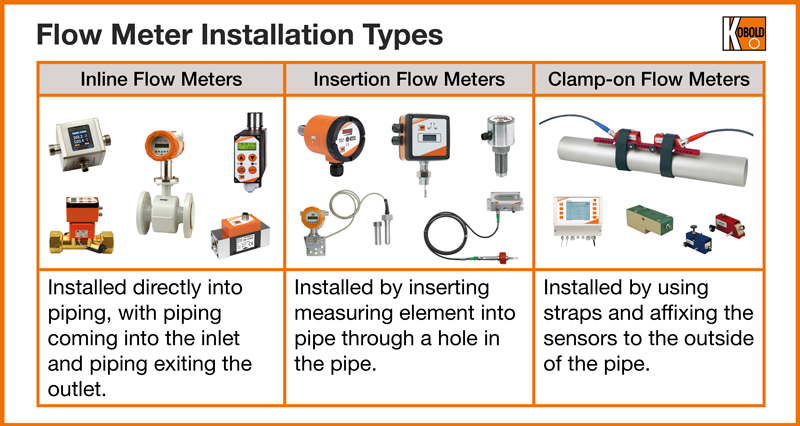
- Installation Conditions: Factors such as pipe orientation, presence of bends, and installation height can influence flow measurement accuracy.
5. Selecting the Appropriate Flow Meter
Choosing the right flow meter depends on several factors, including the type of fluid, required accuracy, installation environment, and specific application needs. Below is a guide to help select the suitable flow meter for either volumetric or mass flow measurements.
5.1 Volumetric Flow Meter Selection
- For Clean, Low-Viscosity Liquids: Turbine and positive displacement meters offer high accuracy and reliability.
- For Large Pipes and Non-Intrusive Measurement: Ultrasonic flow meters are ideal as they do not require any fluid contact.
- For Applications Requiring Low Maintenance: Variable area meters like rotameters are simple and require minimal upkeep.
- For Varying Flow Rates: Vortex flow meters can handle a wide range of flow rates without sacrificing accuracy.
5.2 Mass Flow Meter Selection
-
For Direct Mass Measurement: Coriolis flow meters are the gold standard, providing direct mass flow data with high precision.
-
For Gas Applications: Thermal mass flow meters are well-suited for measuring gases due to their sensitivity to heat transfer.
-
For Applications Needing Both Flow and Density Data: Differential pressure meters with appropriate compensation can be used to derive mass flow.
-
For Complex Systems: Multivariable transmitters offer comprehensive measurement capabilities, integrating multiple parameters for accurate mass flow calculations.
6. Integration of Flow Measurements in Industrial Systems
Accurate flow measurement is pivotal in maintaining the efficiency and safety of industrial processes. Integrating the right flow meters and transmitters ensures that systems operate within desired parameters, minimizing waste and preventing potential hazards.
6.1 Automation and Control Systems
Modern industrial systems increasingly rely on automation to optimize performance. Flow meters and multivariable transmitters play a crucial role in providing real-time data that feeds into control systems. This integration allows for automated adjustments to flow rates, temperature, and pressure, ensuring consistent product quality and operational efficiency.
6.2 Data Acquisition and Monitoring
Data from flow measurements is often collected and analyzed using advanced software platforms. These systems can monitor trends, predict maintenance needs, and facilitate decision-making processes. By leveraging accurate volumetric and mass flow data, industries can enhance their operational strategies and reduce downtime.
6.3 Calibration and Maintenance
Regular calibration of flow meters is essential to maintain measurement accuracy. Factors such as wear and tear, environmental changes, and fluid characteristics can influence meter performance. Implementing a robust maintenance schedule ensures that flow measurements remain reliable over time.
7. Conclusion
Understanding the distinctions between volumetric and mass flow is fundamental for effective flow measurement and control in various industrial applications. Volumetric flow provides insights into the volume of fluid passing through a system, influenced by temperature and pressure changes, whereas mass flow offers a consistent measure of the fluid's mass, independent of environmental conditions.
Selecting the appropriate flow meter—whether it be turbine, Coriolis, ultrasonic, or another type—depends on the specific requirements of the application, including the nature of the fluid, desired accuracy, and operational environment. Integrating these measurement systems with multivariable transmitters and control systems further enhances the capability to monitor and manage flow parameters effectively.
By ensuring accurate flow measurements and understanding the underlying principles, industries can optimize their processes, improve efficiency, and maintain high standards of quality and safety.
References
Last updated January 24, 2025