
System Architecture and Algorithm Analysis for Blockchain Voting Anomaly Detection
A comprehensive exploration of blockchain-based voting security and anomaly detection methods
Key Takeaways
- Decentralized and Immutable Ledger: The blockchain layer ensures data integrity and transparency of vote records while supporting smart contracts for automated rule enforcement.
- Multi-layer Authentication and Voter Interfaces: Secure voter identification and user interfaces combine cryptographic techniques and identity verification methods to safeguard the voting process even before votes reach the blockchain.
- Integrated Anomaly Detection Modules: A combination of statistical, rule-based, and machine learning algorithms process real-time and historical voting data to detect irregularities, fraud attempts, and suspicious patterns with scalability and privacy protection.
Introduction
With the growing demands for robust and transparent electoral systems, blockchain technology has emerged as a promising tool to secure voting processes. The inherent decentralized, immutable, and traceable nature of blockchain provides a solid foundation for voting applications. However, like any complex system, blockchain-based voting is prone to anomalies that can jeopardize its integrity. These anomalies may include duplicate votes, unauthorized vote modification, or coordinated fraudulent attacks.
This comprehensive analysis details the architecture and algorithmic strategies used to detect such anomalies in voting systems that leverage blockchain. The integration of blockchain with advanced anomaly detection algorithms is pivotal for ensuring that every vote is recorded, verifiable, and immune to tampering.
System Architecture Overview
1. Blockchain Network Layer
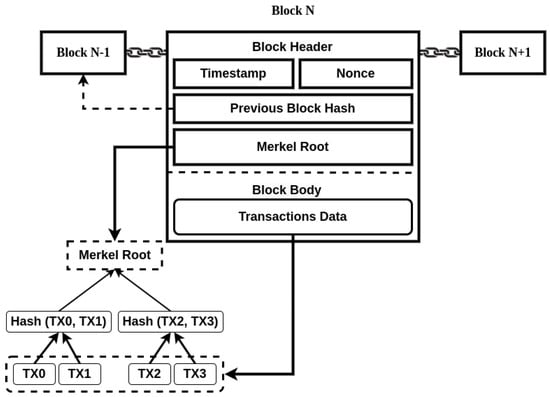
At the core of the system is the blockchain network, which serves as an immutable ledger. Once a vote is recorded on the blockchain, it becomes tamper-evident. Depending on the use case, both public and private blockchain implementations can be employed. Public blockchains offer transparency while private or consortium blockchains deliver enhanced control and scalability.
Smart Contracts and Automated Rules
Smart contracts are self-executing pieces of code deployed on the blockchain. They are used to automate voting rules such as eligibility validation, vote counting, and ensuring that each voter gets only one vote. These contracts can also trigger immediate alerts if they detect abnormal behaviors.
2. Voter Interface and Authentication Module
A secure and highly accessible voter interface is essential. This interface is typically a web or mobile application through which voters cast their ballots. Modern implementations integrate biometric verification, multi-factor authentication, and cryptographic key generation, ensuring that only eligible voters are able to interact with the system.
Local Cryptographic Key Generation
Each voter is assigned a public-private key pair that is used to digitally sign the vote. This ensures both the authenticity of the vote and the voter’s anonymity.
3. Middleware and API Communication
A middleware or API gateway functions as the intermediary between the voter interface and the blockchain nodes. This layer performs preliminary validations such as checking the digital signatures, encrypting vote data, and managing transaction queuing. It also helps to rate-limit transactions during periods of high voting activity to mitigate denial-of-service attacks.
4. Data Storage and Retrieval Module
While votes are permanently recorded on the blockchain, additional off-chain storage solutions may be employed to facilitate efficient data retrieval and analysis. This can include relational databases or distributed storage systems that assist in aggregating voting data for anomaly detection.
5. Anomaly Detection Engine
The anomaly detection engine is a pivotal component embedded within the voting system. Its primary function is to continuously monitor and analyze the voting data captured on the blockchain, both in real time and in historical context, to detect irregularities in voting patterns that might indicate fraudulent behavior.
Real-Time Monitoring and Data Preprocessing
Data from each blockchain transaction is collected via secure APIs and preprocessed to clean and standardize the data. Important features such as transaction timestamps, voter IDs (or cryptographic addresses), geographic data, and voting patterns are extracted. This preprocessing is crucial for the subsequent data analysis steps.
Visualization and Reporting
Visualization modules help election officials interpret complex data and quickly understand the nature of detected anomalies. Interactive dashboards display real-time metrics, alert statuses, and reports documenting instances of abnormal behavior, making decision-making more efficient.
Detailed Anomaly Detection Algorithms
Statistical and Rule-Based Detection
Statistical methods establish baseline patterns of normal voting behavior based on historical data. Techniques such as threshold detection and time-series analysis are employed to monitor the frequency and distribution of votes.
Threshold Detection
This approach involves setting acceptable limits for voting parameters – for example, a maximum number of votes from a single IP address or geographic region within a certain time window. Any deviation producing scores beyond these thresholds triggers an alert.
Duplicate and Temporal Analysis
By examining the transaction times and profile of voting activity, the system can quickly identify anomalies such as duplicate vote submissions or unusually rapid vote casting that deviates from expected human behavior.
Machine Learning-Based Approaches
Advanced machine learning models are integrated into the anomaly detection module to capture subtle complex patterns that may not be noticeable through rule-based methods alone. Both supervised and unsupervised learning methods are employed, though unsupervised learning is particularly useful in this context as it does not require extensive labeled datasets.
Clustering Algorithms
Clustering methods such as k-means, DBSCAN, and spectral clustering are used to segment voting data into distinct groups. Votes that fail to fit within these groups are flagged as potential anomalies. For example, a cluster analysis may reveal a group of transactions with nearly identical timestamps and originating IP ranges, which is unlikely under normal voting conditions.
Isolation Forest
The isolation forest method is an effective unsupervised learning algorithm that isolates anomalies by randomly partitioning the data. This algorithm is particularly scalable and efficient for high-dimensional datasets, such as those generated by large-scale voting systems.
Autoencoders and Deep Learning
Deep learning techniques, including autoencoders, perform dimensionality reduction to capture the most informative features of voting transactions. The reconstruction error produced by an autoencoder when attempting to recreate an input can serve as an indicator of anomalies—a high reconstruction error may signify vote data that deviates from the norm.
Graph-Based Anomaly Detection
Given the nature of transactions in a blockchain where votes can be visualized as nodes and their relationships as edges, graph-based methods are particularly useful. They capture the relationships between voting transactions and reveal clusters of related transactions, enabling the detection of coordinated attacks.
Graph Modeling of Voting Data
In blockchain-based voting systems, each vote is represented as a node in a graph with edges signifying relationships such as similarities in voting times or voter IDs. Analyzing the structure of these graphs helps uncover unusual clusters or patterns that may indicate collusion or fraud.
Network Similarity and Clustering
Techniques such as community detection (e.g., using the Louvain method) assist in identifying densely connected groups of nodes. Sudden changes in a community’s structure or the appearance of new clusters can be indicative of malicious activity.
Implementation Considerations and Challenges
Scalability
As the number of voters and the volume of blockchain data increases, ensuring that the anomaly detection architecture scales is a significant challenge. Here, distributed processing frameworks such as Apache Kafka for data streaming and Spark Streaming for real-time computation can be integrated to manage data systematically.
Privacy and Security
Maintaining voter anonymity while still enabling detailed analysis of voting patterns requires careful handling of data. Cryptographic techniques such as zero-knowledge proofs can be incorporated to allow data verification without revealing sensitive identity details. At the same time, proper encryption and data-minimization techniques ensure that only necessary data is processed in the anomaly detection pipelines.
False Positives and Adaptive Thresholds
In environments with legitimate surges in voting activity (e.g., during high voter turnout), rigid thresholds may incorrectly flag anomalies. Anomaly detection engines must adapt by refining thresholds dynamically based on historical patterns and contextual data. Machine learning models can be retrained periodically to adjust to the evolving characteristics of the voting network.
Interoperability Between On-Chain and Off-Chain Data
Integrating data from the immutable blockchain and the auxiliary off-chain storage systems can present challenges. Ensuring data consistency across these layers is crucial for accurate abnormality analysis. This necessitates robust API connectivity, regular synchronizations, and the use of effective data transformation techniques.
Example Architecture Diagram
The table below provides an overview of the various components in a blockchain-based voting anomaly detection system:
| Component | Function | Technologies/Methods |
|---|---|---|
| Blockchain Ledger | Immutable recording of votes; smart contract automation | Ethereum, Hyperledger; Smart Contracts |
| Voter Interface | Secure vote casting and authentication | Web/Mobile App; Biometric and MFA |
| API Gateway/Middleware | Data encryption, message queuing, preliminary validations | RESTful APIs; Rate-limiting modules |
| Data Storage Module | Off-chain data aggregation for analysis | Relational databases; NoSQL stores |
| Anomaly Detection Engine | Data preprocessing, real-time anomaly detection, reporting | Statistical analysis, Machine Learning, Graph Algorithms |
Conclusion
Effective detection of voting anomalies in a blockchain-based system hinges on a layered architecture that integrates an immutable ledger with secure voter interfaces and robust data analytics. The combination of rule-based, statistical, and machine learning methods provides a comprehensive toolset for identifying and mitigating potential fraudulent activities. Addressing challenges such as scalability, privacy, and dynamic thresholding is essential for achieving a robust and reliable detection system.
As future advancements in distributed ledger technologies and deep learning continue to evolve, integrating adaptive anomaly detection frameworks will further safeguard the integrity of blockchain voting systems, thereby enhancing public trust and electoral security.
References
- DemocracyGuard: Blockchain‐based secure voting framework for digital voting - Wiley Online Library
- Anomaly Detection in Blockchain Networks Using Unsupervised Learning - MDPI
- Blockchain Anomaly Detection Code Repository - GitHub
-
Anomaly Detection in Blockchain Networks: A Comprehensive Survey - IEEE Xplore
- Anomaly Detection in Blockchain Networks Using Unsupervised Learning: A Survey - MDPI
Learn More
Last updated February 18, 2025