
Exploring the Intricate Role of Vice Presidents in Senate Procedures
A deep dive into Nixon and Humphrey’s active role shaping procedural rulings
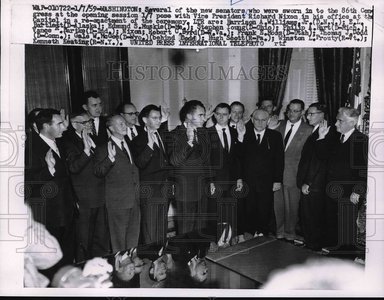
Key Insights at a Glance
- Historical Influence: Nixon and Humphrey leveraged their constitutional authority to shape Senate procedures.
- Active Engagement: Both vice presidents used advisory opinions and procedural rulings to influence legislative debates.
- Institutional Dynamics: Their actions reflected a careful balance between constitutional duty and political strategy.
Scholarly and Legal Perspectives on the Vice President’s Role
Numerous scholarly reviews and legal commentaries have examined the historically embedded role of the Vice President when serving as the presiding officer of the United States Senate. Constitutional provisions designate the Vice President as the President of the Senate, primarily responsible for casting tie-breaking votes. However, as demonstrated by historical figures such as Richard Nixon and Hubert Humphrey, this role has often transcended a purely ceremonial capacity through active engagement in procedural rulings and strategic interventions.
Historical Context and Constitutional Foundations
The U.S. Constitution stipulates that the Vice President shall preside over Senate sessions and has the authority to cast a vote in the event of a tie. This provision, while seemingly straightforward, has allowed vice presidents considerable interpretative latitude within the Senate's procedural framework. In practice, the actions of Nixon and Humphrey illustrate how the vice presidency can be an avenue for exercising substantial influence over legislative procedures. They not only issued advisory opinions on Senate rules but also actively engaged in the procedural process by threatening to utilize their ruling power to guide Senate debates in favor of their administration’s policy goals.
Nixon’s Approach
Richard Nixon’s tenure as Vice President was marked by his assertive use of his procedural authority. Notably, in instances where procedural rules were in transition or subject to interpretation—for example, regarding the application of the cloture requirement—Nixon stepped in to clarify that newly constituted Senates were not automatically bound by the rules established by their predecessor. His opinions not only provided immediate guidance on Senate procedures but also set precedents for how subsequent vice presidents might navigate similar challenges.
Humphrey’s Methodology
Hubert Humphrey demonstrated an equally proactive, albeit distinct, style in his role. Known for his robust personality and legislative acumen, Humphrey actively participated in Senate debates. He frequently used the powers vested in him not merely as a neutral arbiter but as an advocate for the administration’s legislative priorities. His approach often involved issuing pointed rulings and employing procedural maneuvers that underscored the vice president's dual role—as both a guardian of Senate order and as a dynamic participant in political strategy.
Detailed Analysis of Procedural Engagement and Rulings
Scholarly reviews underscore several recurring themes in the historical use of the Vice President’s authority:
- Constitutional Design versus Political Practice: While the Constitution casts the Vice President as a largely impartial presiding officer, historical practice reveals that individuals in this role have often embraced a more partisan and active stance, using procedural rulings as a tool for legislative influence.
- Precedents and Advisory Opinions: Instances of issuing advisory opinions—such as clarifying the status of a Senate at the start of a new Congress—have helped to shape the interpretation and application of Senate rules. These actions, while grounded in constitutional authority, also reflected the political imperatives of the administration.
- Implications for Senate Autonomy: The active engagement in procedural rulings by vice presidents has often prompted debates over the proper balance between executive influence and Senate independence. Analysts and legal scholars note that while such actions can facilitate smoother legislative processes in times of polarized politics, they also raise concerns about the potential erosion of traditional Senate norms.
Structured Overview of Historical Profiles
| Vice President | Notable Actions | Impact on Senate Procedure | Historical Context |
|---|---|---|---|
| Richard Nixon |
|
|
|
| Hubert Humphrey |
|
|
|
In-Depth Discussion of Historical Studies and Reviews
Legal Analysis & Constitutional Implications
The legal scholarship surrounding the vice presidential role as the Senate’s presiding officer often highlights the tension between constitutional intent and practical political realities. Several studies have detailed how Vice Presidents have maneuvered within the established legislative framework:
- Research has shown that prior to the modern era, the role of the Vice President was mostly procedural. However, as political polarization increased, figures like Nixon and Humphrey began to use their limited but potent rules-making authority to tip the balance on key legislative matters.
- Legal commentaries have detailed landmark moments when advisory opinions or ruling decisions by the vice president directly impacted Senate procedural norms. Detailed case analyses reveal that these interventions were not merely technical corrections but strategic actions designed to address political impasses.
- Constitutional debates reflect on the perceived expansion of the vice presidency’s mandate beyond simply breaking ties, suggesting that proactive involvement in Senate rulings may be a natural evolution of this high office during periods requiring decisive action.
Case Studies and Historical Precedents
Multiple historical studies provide insights into the active use of procedural authority by vice presidents:
- One prominent study discusses Nixon’s handling of a parliamentary inquiry in 1957, where his ruling clarified procedural ambiguities regarding the cloture requirement for a newly constituted Senate. This instance is viewed as a turning point, illustrating how vice presidential rulings can set long-lasting precedents in Senate operations.
- Similarly, Humphrey’s interventions in Senate debates during the 1960s have been analyzed as examples of how a vice president can use procedural threats to maintain legislative order while advancing the policy objectives of the executive branch. Scholars note that his approach was characterized by both a deep respect for Senate traditions and a determined effort to protect administration interests.
- Comparative analyses of different vice presidential tenures reveal that while the formal capacity to cast tie-breaking votes has remained unchanged, the practical role of making advisory rulings has evolved considerably, reflecting broader changes in political dynamics, Senate decorum, and the interplay between the executive and legislative branches.
Additional Research Dimensions
Balancing Tradition and Political Strategy
The historical narrative of vice presidential rulings finds its nuances in the delicate balancing act between maintaining longstanding Senate traditions and adapting to emergent political challenges. Academics have long discussed how:
- The advisory and procedural roles once reserved for ensuring smooth legislative operations have evolved into a more dynamic and politically charged tool. This evolution reflects broader trends toward increased political engagement from the executive branch, even in ostensibly non-partisan roles.
- Expanding powers in procedural rulings have not come without controversy. Legal scholars often debate the potential implications for Senate independence, raising questions about the proper limits of executive influence in legislative policymaking.
- Ongoing scholarship continues to explore whether such proactive stances have ultimately benefited the legislative process by ensuring decisive action during periods of crisis, or whether they have contributed to a greater politicization of Senate procedural norms.
References
- Vice President's Role - U.S. Senate
- CRS Reports on Senate Procedures
- Vice President as Presiding Officer - Heritage
- Congressional Record Analysis
- Historical Senate Rulings - The New York Times
Recommended Further Exploration
Last updated March 27, 2025