
Future Trends in VR Urban Planning
Exploring immersive techniques shaping tomorrow’s urban landscapes
Key Highlights
- Immersive Visualization: Transforming design with accurate, interactive city models.
- Enhanced Stakeholder Engagement: Making urban planning participatory and inclusive.
- Integration with Cutting-Edge Technologies: Leveraging BIM, IoT, and digital twin solutions.
Overview of VR in Urban Planning
Virtual reality (VR) technology continues to evolve and increasingly influence the way urban planners design, visualize, and implement urban developments. By using immersive simulations, planners are able to experience and analyze complex urban environments before any physical work begins. This forward-thinking approach enhances the identification of potential issues and optimizes team collaboration. In today’s dynamic urban context, VR is not just a visual aid but a transformative tool combining multiple technologies to create more efficient, sustainable, and community-focused living spaces.
Emerging Trends and Technological Innovations
Immersive Visualization and Simulation
Realistic 3D Modeling
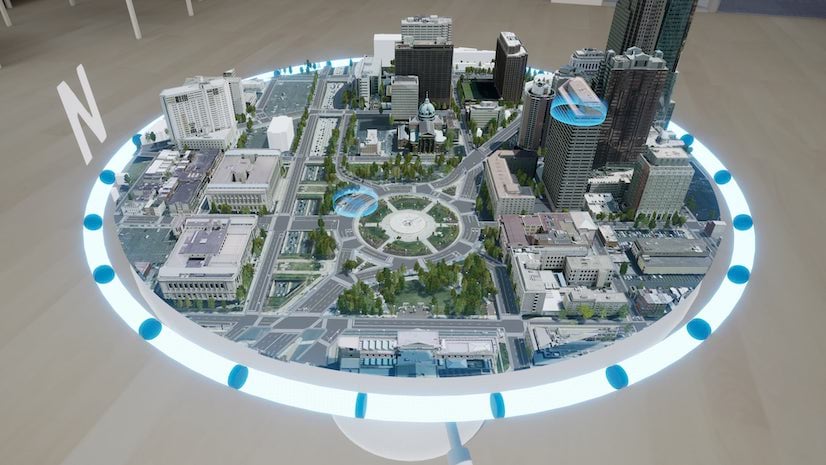
Advances in VR have enabled the creation of highly detailed 3D models that accurately represent urban spaces. These models allow planners and stakeholders to virtually “walk through” proposed developments. Detailed visualization helps in identifying construction conflicts, evaluating aesthetic integrations, and ensuring that infrastructure requirements are met before drawing final blueprints. The immersive experience reduces ambiguities by bridging the gap between design concepts and actual outcomes.
Digital Twin Technology
Digital twin concepts are being integrated with VR to replicate entire urban areas using real-time data. These virtual replicas of physical environments enable continuous monitoring and simulation of urban dynamics. For example, planners can simulate traffic flows, environmental impacts, and even the gradual evolution of city landscapes over time. Such real-time insights empower decision-makers to optimize resource allocation and continually update planning parameters to reflect changing urban conditions.
Enhanced Stakeholder Engagement
Inclusive Participation
One of the most significant benefits of VR in urban planning is its role in democratizing the planning process. By creating immersive simulations, VR facilitates meaningful engagement with all stakeholders, including citizens, local businesses, and governmental bodies. Non-technical participants can experience proposed projects firsthand, understand their implications, and provide feedback. This interactive collaboration helps resolve conflicts early, leading to less resistance and more community-backed projects.
Real-Time Collaboration and Feedback
VR platforms offer the opportunity for real-time collaboration, enabling planners and stakeholders to interact in a shared virtual space. These collaborative platforms allow for immediate modifications and discussions during walkthroughs. For instance, urban experts can assess potential problems, from traffic congestion to environmental hazards, and adjust designs accordingly in a live setting. This immediacy and interactivity drive forward innovative ideas and result in designs that are both visionary and practical.
Integration with Other Smart Technologies
Building Information Modeling (BIM) and IoT
VR is increasingly being used in tandem with Building Information Modeling (BIM), fostering a rich exchange of data between a design plan and its physical realization. BIM provides detailed building analytics that, when integrated into VR, enable immersive monitoring and simulation of urban processes. Moreover, coupling VR with Internet of Things (IoT) sensor data provides planners with comprehensive perspectives on city infrastructure. For example, these integrations help simulate real-world data including energy usage, water supply patterns, and waste management systems, thereby facilitating informed sustainable planning.
Mixed Reality (MR) and AR Integration
The convergence of virtual reality, augmented reality (AR), and mixed reality (MR) is creating hybrid experiences that bring a holistic approach to urban planning. These technologies make it possible to overlay digital data onto physical settings. Urban planners can integrate real-world elements with VR designs, providing stakeholders with augmented overlays that highlight essential insights such as energy efficiency, green space distributions, and transit connectivity.
Sustainability and Smart City Design
Environmental Impact Analysis
Sustainability is a crucial driver in modern urban planning. VR plays a pivotal role in simulating long-term environmental impacts of proposed developments. Urban planners can evaluate the benefits of green spaces, eco-friendly infrastructures, and renewable energy sources. These simulations not only help in designing resilient urban spaces but also aid in balancing ecological considerations with urban growth. Modeling various sustainability scenarios in VR results in data-driven conclusions, ensuring that urban development aligns with environmental conservation goals.
Smart City Infrastructure
The integration of VR with smart city technologies is another significant trend. As urban areas transform with the proliferation of sensors, autonomous systems, and data analytics, VR becomes a critical tool for analyzing these complex networks. Through immersive data visualization, planners can understand the interdependence of various urban systems from transportation networks to emergency services. Digital twins, enhanced with real-time IoT data, empower planners to simulate scenarios including peak traffic conditions and air quality assessments, thereby promoting efficient urban infrastructure management.
Education, Research, and Professional Development
Training in Urban Design and Architecture
Virtual reality is increasingly incorporated into educational environments to train future urban planners and architects. By engaging with immersive simulations, students learn to assess design proposals in a controlled environment. VR-driven training programs provide hands-on experiences where potential design challenges are addressed before they arise in actual projects. This practical learning environment builds a foundation for innovative problem-solving approaches that are directly applicable to real-world urban planning challenges.
Advancing Research and Innovation
The continued advancement of VR technology is fueling rigorous research into urban planning practices. Universities, think tanks, and research institutions are collaborating on studies that explore the optimization of urban spaces using immersive simulations. These research endeavors cover topics such as mixed land use efficiency, integration of renewable energy systems, and disaster mitigation strategies. The shift towards incorporating data analytics and immersive technologies positions VR as a cornerstone in the pursuit of more efficient and sustainable urban environments.
Comprehensive Feature Table
| Feature | Description | Impacts |
|---|---|---|
| Immersive Visualization | High-fidelity 3D models and digital twins that replicate urban landscapes. | Enhanced precision in design and pre-construction problem identification. |
| Stakeholder Engagement | Interactive, participatory virtual environments for feedback and collaboration. | Fosters inclusivity and responsiveness in planning processes. |
| Technology Integration | Combining VR with BIM, IoT, AR, and MR for comprehensive data visualization. | Improved coordination, resource management, and urban sustainability. |
| Sustainable Urban Design | Simulation of environmental impacts and integration of renewable strategies. | Supports resilient, eco-friendly urban growth and infrastructure. |
| Educational Applications | Virtual simulation training for students and professionals in urban planning. | Empowers future generations with hands-on learning experience in real-world scenarios. |
Sector-Specific Applications
Urban Infrastructure Management
VR technology is improving the ability to simulate and analyze critical infrastructure elements of a city. For instance, using VR, planners can study transportation networks, optimize public transit routes, and analyze potential congestion points in real-time simulations. This technology facilitates a detailed examination of urban dynamics, enabling data-driven decisions that enhance overall city functionality.
Disaster Preparedness and Resilience
As the urban environment becomes increasingly complex, planning for natural disasters and other emergencies is paramount. VR simulations offer a realistic environment to model emergency response and disaster management strategies. By virtually testing various scenarios, urban planners can identify vulnerabilities and develop comprehensive contingency plans. These proactive measures aim to minimize damage and ensure the safety and resilience of urban populations.
Public Space Design and Community Wellbeing
The design of public spaces—parks, plazas, and pedestrian zones—plays a critical role in community well-being. VR offers a platform where planners, citizens, and local businesses can collaborate to create harmonious urban spaces that cater to diverse needs. Simulations help visualize natural light, accessibility, and ambient conditions, ensuring that public initiatives not only meet aesthetic standards but also prioritize inclusivity and social connectivity.
Future Prospects and Ongoing Innovations
Looking ahead, it is clear that VR’s role in urban planning will continue to expand, fueled by rapid advancements in related technologies. Economic and social dynamics drive the need for smarter, more sustainable cities, and VR’s capacity to simulate complex urban ecosystems remains unparalleled. With improvements in hardware usability—such as lighter, wireless headsets—and ongoing software innovations, the virtual planning process is becoming more accessible. The urban planning landscape is set to become increasingly data-centric. As more cities invest in IoT infrastructure and big data analytics, VR will be critical in analyzing these large data sets. Planners will have the ability to integrate real-time data into their simulations, ensuring that urban designs are adaptive and responsive to daily changes. This iterative design process not only optimizes immediate planning goals but also facilitates long-term urban sustainability.
Additionally, the democratization of VR technology is expected to lead to more collaborative planning environments. By integrating VR solutions with cloud-based platforms and mobile applications, urban planners will be able to offer interactive sessions accessible to all community members. This trend is likely to dismantle traditional planning hierarchies, replacing them with a more participatory and transparent approach that actively involves residents in shaping their environments.
Continuous research and development initiatives are also paving the way for new applications of VR in urban planning. Pilot projects around the globe are already demonstrating how immersive environments can solve complex urban challenges—from optimizing energy consumption in smart grids to simulating the social impacts of urban renewal projects. These initiatives underscore the transformative potential of VR and signal that the quest for efficient, livable, and sustainable cities is firmly intertwined with advancements in virtual technologies.
References
- Future Trends: The Impact of VR on Urban Planning and Development - VRchitects
- Urban Planning: Harnessing Virtual and Augmented Reality - Eastern Engineering Group
- How will VR change the way we plan smart cities? - Gowling WLG
- Virtual Reality Urban Planning - IEEE Digital Reality
- Virtual Reality and City Planning - xyHt
Recommended Explorations
 planning-org-uploaded-media.s3.amazonaws.com
Last updated March 5, 2025