
The Enduring Legacy of the War on Drugs: A Critical Examination of its History, Impact, and Future
Unpacking a Half-Century of Policy, Punishment, and Profound Societal Consequences
Key Insights into the War on Drugs
- Historical Roots and Intent: The "War on Drugs" was officially declared by President Richard Nixon in June 1971, framing drug abuse as "public enemy number one." However, evidence suggests its underlying motives were often to target and suppress specific communities, particularly the anti-war left and Black Americans.
- Widespread and Detrimental Impacts: For over five decades, this policy has led to mass incarceration, disproportionately affecting minority communities, eroding civil liberties, and fostering powerful drug cartels. Despite trillions of dollars spent, it has largely failed to reduce drug use or make communities safer, instead exacerbating public health crises.
- Shifting Perspectives and Future Directions: There is a growing consensus across the political spectrum that the traditional, punitive approach has failed. A movement towards treating drug use as a public health issue, focusing on treatment and harm reduction, and scaling back carceral policies, including marijuana decriminalization and legalization, represents a crucial pivot for future policy.
The Genesis of a Global Campaign: Declaring War on Drugs
The phrase "War on Drugs" evokes images of concerted government efforts to curb illegal drug use, distribution, and trade. While drug use has been a societal concern for centuries, the formal declaration of a "War on Drugs" by President Richard Nixon in June 1971 marked a pivotal moment in American and, subsequently, global policy. Nixon characterized drug abuse as "public enemy number one," signaling a dramatic shift towards a punitive, enforcement-led approach.
However, the roots of this "war" extend further back. Prior to Nixon's declaration, the United States had a history of drug prohibition, notably with the 1909 Smoking Opium Exclusion Act, which disproportionately targeted Chinese immigrants, and the 1914 Harrison Act, aiming at cocaine distribution. These early policies reveal a pattern of using drug laws to control and punish marginalized groups. The 1960s saw a rise in recreational drug use among young, white, middle-class Americans, which likely contributed to Nixon's emphasis on targeting substance abuse. His administration increased federal funding for drug-control agencies and proposed strict measures, including mandatory prison sentencing for drug crimes. In 1973, the Drug Enforcement Administration (DEA) was created, consolidating federal efforts to combat drug abuse and smuggling.
A striking revelation came from John Ehrlichman, Nixon's domestic policy chief, who admitted in a 1994 interview that the War on Drugs had ulterior motives. He stated, "We knew we couldn’t make it illegal to be either against the war or black, but by getting the public to associate the hippies with marijuana and blacks with heroin, and then criminalizing both heavily, we could disrupt those communities." This candid admission underscores the racial and political motivations that underpinned the policy from its inception, casting a long shadow over its stated objectives.
The Mechanics of Enforcement: Legislation and Agencies
The War on Drugs was not merely a declaration; it was underpinned by significant legislative and institutional changes that dramatically reshaped the American criminal justice system. The Controlled Substances Act (CSA) of 1970, passed shortly before Nixon's official declaration, classified drugs into five "schedules" based on their medical benefits and potential for abuse. This classification, however, often relied more on fear and stigma than on scientific evidence, leading to seemingly arbitrary scheduling. For instance, marijuana and heroin were placed in Schedule I, indicating a high risk for addiction and little evidence of medical benefit, while substances like cough syrup with low levels of codeine were in Schedule V.
This radar chart illustrates the perceived effectiveness and impact of the War on Drugs across various dimensions, highlighting its strengths and severe limitations from multiple perspectives.
The 1980s saw a significant escalation of the War on Drugs under President Ronald Reagan. Reagan greatly expanded its reach, focusing heavily on criminal punishment over treatment. This era witnessed a massive increase in incarcerations for nonviolent drug offenses, soaring from 50,000 in 1980 to 400,000 in 1997. His wife, Nancy Reagan, launched the highly publicized "Just Say No" campaign, a privately funded effort to educate schoolchildren on the dangers of drug use, though its effectiveness remains debated. The Anti-Drug Abuse Act of 1986 further solidified mandatory prison time for certain drug offenses, with some provisions criticized for specifically targeting people of color due to disproportionate sentencing for crack cocaine offenses compared to powder cocaine.
The DEA, established in 1973, grew significantly during this period. Initially operating with a budget of less than $75 million and 1,470 special agents, its budget today exceeds $2 billion, with nearly 5,000 agents. This expansion signifies the immense resources channeled into an enforcement-centric approach, emphasizing arrests and interdiction over public health interventions.
Devastating Repercussions: The Unintended Consequences
Despite its ambitious goals of eradicating social, economic, and health ills associated with drugs, the War on Drugs has largely failed and, in many aspects, has had devastating unintended consequences. The financial cost alone is staggering; the U.S. has spent over a trillion dollars enforcing its drug policy since 1971. Yet, drug use in the U.S. continues to climb, and powerful drug cartels have been fostered and sustained, leading to more hazardous drugs and more lethal drug markets globally.
Mass Incarceration and Racial Disparities
One of the most profound impacts of the War on Drugs has been its contribution to mass incarceration. Millions of people have been sent to prison for low-level drug offenses, significantly eroding civil liberties and civil rights. The United States has one of the largest prison populations in the world, with approximately 2.3 million people behind bars, a triple increase since 1987. A quarter of these incarcerations are for drug offenses. In 2014, nearly half of the 186,000 people in federal prisons were incarcerated on drug-related charges.
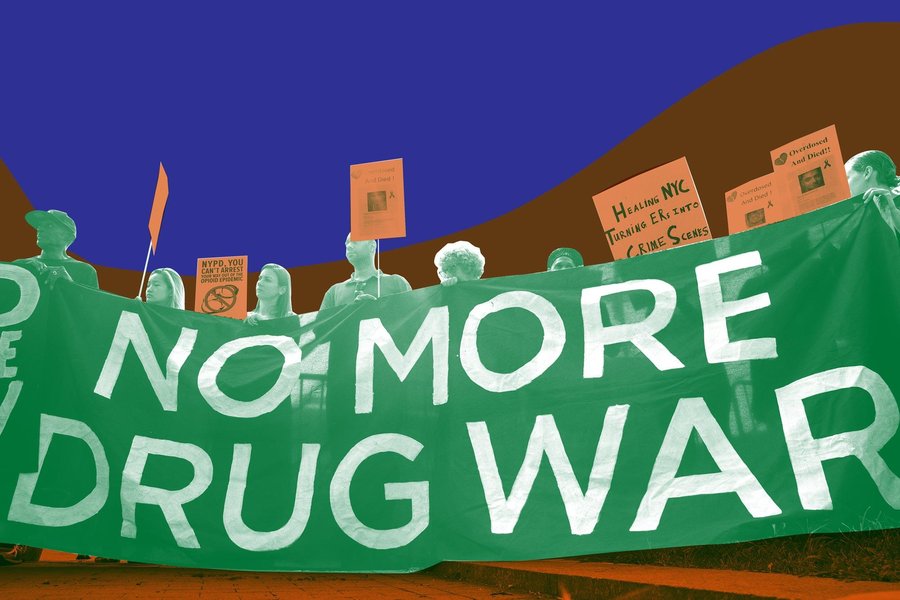
The human cost of the War on Drugs, often leading to protests against its disproportionate impact on marginalized communities.
The racial disparities inherent in drug law enforcement are undeniable. The policy has been described as a "war on people of color, on poor Americans, and so many other marginalized groups." Black and Hispanic men, particularly in neighborhoods like Brownsville in New York City, have faced some of the highest rates of incarceration, often for nonviolent drug crimes. Despite making up a smaller percentage of the U.S. population, Black Americans account for a disproportionate number of drug-related arrests. This discriminatory enforcement has led to an ongoing question of whether the criminal legal system delivers "justice or 'just-us'."
Social and Health Consequences
Beyond incarceration, the War on Drugs has deeply impacted social determinants of health. Drug war logic has become embedded in systems like employment, education, housing, public benefits, family regulation, and healthcare. Individuals with drug convictions often face denial of food stamps, public assistance, driver's licenses, child custody, voting rights, employment, loans, and financial aid. This creates a cycle of disadvantage that extends far beyond the individual, affecting entire families and communities.
The mental health impact is significant, especially for inmates who use drugs, where prevalence of drug use prior to incarceration is high. Furthermore, children of those incarcerated or killed in anti-drug operations, particularly in countries like the Philippines under President Duterte's "war on drugs," suffer profound trauma from witnessing violence against loved ones and lacking specific government programs to address their needs.
The focus on punitive measures rather than public health has exacerbated the drug overdose crisis. Instead of treating drug use as a health condition requiring evidence-based interventions, the emphasis on criminalization has made drug markets more dangerous and hindered access to necessary healthcare and treatment services.
A Shifting Paradigm: Towards Reform and Alternatives
After more than 50 years, there is a growing consensus among policymakers, civil rights organizations, and even some law enforcement officials that the War on Drugs has failed. This recognition is driving a slow but significant pivot towards reform.
Legislative and Judicial Adjustments
Efforts to address the most egregious disparities have begun. The Fair Sentencing Act of 2010 significantly reduced the sentencing disparity between crack and powder cocaine offenses from 100:1 to 18:1, and retroactively applied these guidelines, allowing for the review of thousands of cases. This legislation was a step towards unraveling racially biased anti-drug policies. The ongoing movement towards decriminalization and legalization of marijuana across numerous states is another major step in scaling back incarceration-focused drug control policies, with many states recognizing the potential for lucrative government funding through taxation.
This video from Crash Course Black American History delves into the origins and devastating effects of the War on Drugs, particularly its disproportionate impact on communities of color, providing crucial historical context for understanding its ongoing legacy.
Advocacy for Public Health Approaches
A fundamental reassessment of drug policy is underway, with increasing calls to view drug use and addiction as a public health crisis rather than solely a criminal one. Organizations like the American Civil Liberties Union (ACLU) advocate for ending the War on Drugs and investing resources saved from incarceration into treatment and addiction services, which studies consistently show are more effective than imprisonment. This public health approach emphasizes harm reduction, accessible treatment, and supportive services over punitive measures.
| Aspect of War on Drugs | Traditional Punitive Approach (1970s-2000s) | Emerging Public Health Approach (2010s-Present) |
|---|---|---|
| Primary Goal | Eradicate illegal drug use through increased penalties, enforcement, and incarceration. | Reduce drug-related harm and address addiction through treatment, prevention, and harm reduction. |
| Funding Allocation | Billions to law enforcement agencies (DEA, police), prison systems. | Increased investment in public health services, drug treatment, and community support programs. |
| View of Drug Users | Criminals, offenders to be punished and incarcerated. | Individuals with a health condition, requiring support and medical intervention. |
| Impact on Incarceration | Massive increase in drug-related arrests and prison populations, particularly for nonviolent offenses. | Decriminalization, reduced sentencing, and diversion programs aiming to decrease incarceration rates. |
| Racial Disparities | Exacerbated existing racial biases in the criminal justice system, disproportionately affecting minority communities. | Efforts to reduce racial disparities through sentencing reform, expungement, and equitable enforcement. |
| Civil Liberties | Erosion of civil liberties, including "no-knock" warrants and asset forfeiture. | Focus on restoring civil liberties and protecting individual rights, reevaluating controversial police tactics. |
| Economic Cost | Trillions of dollars spent with limited returns in reducing drug supply or demand. | Advocacy for cost-effective, evidence-based policies that redirect funds from enforcement to effective solutions. |
| International Impact | Contributed to violence, corruption, and human rights abuses in drug-producing and transit countries. | Promotion of international cooperation based on human rights and public health principles. |
| Public Perception | Initial strong public support for a "tough on crime" stance, gradually waning due to perceived failures. | Growing public support for reform, decriminalization, and legalization of certain substances (e.g., marijuana). |
This table provides a comparative overview of the traditional punitive approach of the War on Drugs versus the emerging public health approach, highlighting key shifts in goals, funding, and societal impact.
Challenges and the Path Forward
Despite the growing momentum for reform, significant challenges remain. The legacy of the War on Drugs is deeply embedded in legal frameworks, institutional practices, and societal perceptions. Unraveling decades of racially biased anti-drug policies is a monumental project that requires sustained effort across legislative, judicial, and community fronts.
Continued efforts are needed to implement comprehensive police reform, re-sentencing and expungement for past drug convictions, and ensuring equitable access to emerging industries like legal marijuana. Furthermore, there's a need to address the broader social determinants of health that have been negatively impacted by drug war policies, ensuring that individuals and families affected by addiction receive the support they need rather than punishment.
The shift from a punitive, enforcement-led paradigm to a public health-centered approach is not merely a policy change; it represents a fundamental re-evaluation of how society views and addresses substance use. This transformation requires robust data collection, evidence-based policy making, and a commitment to human rights. The ultimate goal is to create a more just and humane drug policy regime that genuinely promotes the health, safety, and well-being of all communities.
Frequently Asked Questions (FAQ)
What was the primary stated goal of the War on Drugs?
When did the War on Drugs officially begin?
What were some of the unintended consequences of the War on Drugs?
How has the War on Drugs impacted racial minorities?
What is the current trend in drug policy regarding the War on Drugs?
Conclusion
The War on Drugs, spanning over five decades, stands as a critical chapter in global policy, characterized by its immense financial cost, widespread human rights implications, and profound societal consequences. What began as a declared offensive against drug abuse evolved into a complex web of legislative action, heightened enforcement, and discriminatory practices that disproportionately affected marginalized communities. Despite trillions of dollars spent and millions incarcerated, the policy has largely failed to achieve its stated objectives of eradicating drug use or creating safer communities. Instead, it has exacerbated public health crises, fueled organized crime, and eroded civil liberties. However, the growing recognition of these failures has spurred a crucial shift towards reform. A new narrative is emerging, one that champions a public health approach to drug use, prioritizing treatment, harm reduction, and social support over punitive measures. While the path to unraveling decades of entrenched policies is challenging, the momentum towards decriminalization, sentencing reform, and a more humane drug policy offers a promising vision for a future where justice and public health are at the forefront of societal well-being.
Recommended Further Reading
- Explore the historical evolution of US drug policy and its profound racial implications.
- Understand the extensive impact of mass incarceration stemming from the War on Drugs.
- Delve into the comparison between public health and criminalization approaches to drug addiction.
- Analyze the vast economic cost and questionable effectiveness of the War on Drugs.
Referenced Search Results

 cdn.penalreform.org