
Discovering Swirly Water Puzzles
A fun way to understand how computers play with water using tiny Lego pieces
Highlights
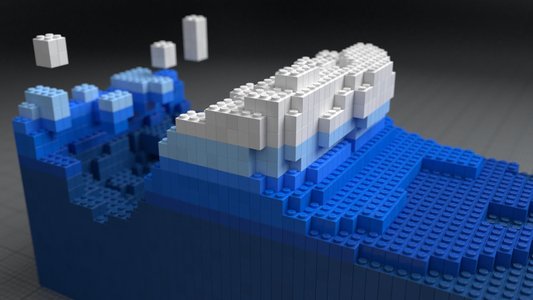
- Tiny Pieces, Big Picture: Dividing water into small pieces is like building with Legos.
- Swirly Patterns Explained: Turbulence is when water or air makes crazy, twisty moves.
- Math and Computers Help: Special math rules let computers predict the twisty water dance.
Understanding Turbulence
Imagine you have a big bowl of water in your bathtub. When you play with the water – maybe by dipping your hand or stirring it with a spoon – you see bubbles, twists, and swirls. This dancing water is what we call turbulence. Turbulence happens when the water (or even the air) moves in a wild, unpredictable way, making lots of little turns and loops. Just like when you swirl around in a pool or run in circles, the water is busy doing special patterns that are super fun to watch, even if they’re a bit hard to understand fully.
Breaking It Down with the Finite Element Method (FEM)
Now, let’s imagine you want to show someone else exactly how your water swirls look when you're having fun. One way to do this is to take a picture of the whole bowl of water at once, but that might miss all the tiny details of your swirls. Instead, think about breaking the water into many, many little Lego bricks. Each Lego piece is like a tiny snapshot of one small part of the water. The method we use to do this on a computer is called the Finite Element Method, or FEM for short.
Breaking Water into Tiny Pieces
Think about your big bowl of water being divided into lots of tiny pieces – each one like a little Lego block. When you have so many blocks, you can look at each one separately instead of trying to understand the whole big bowl at once. This way, you see how one small piece of water moves, and then you figure out how it talks to its nearby pieces. All these tiny movements add up to show the big water swirls that you see.
Using Math – The Secret Recipe
Each of these tiny Lego pieces is not just a random block – it’s part of a puzzle that obeys special math rules. These rules tell us how water flows and dances around. Imagine you have a magic recipe that tells you how to mix ingredients to bake a cake. In our water puzzle, math is that magic recipe. It gives the computer a way to guess how the water moves, even if it's whirling around like magical dancers on your kitchen floor.
Computers and Their Fast Brains
Computers are very smart and super fast at doing many little math problems, just like a race car zooming on a track. Once we break our water into tiny pieces and give the math rules, the computer works very quickly to solve each little puzzle piece about how it moves and changes. It then puts all these little pieces back together to create a beautiful picture of the whole swirling water show. In this way, the computer helps us understand everything by making a big picture from many small parts, just like you might piece together a giant Lego castle from tiny bricks.
A Simple Story of Swirly Patterns and Lego Pieces
Story Time: The Great Water Adventure
Once upon a time, in a bright and cheerful bathtub, there was a big bowl of water. This water loved to dance and swirl every time someone stirred it. One day, a curious little friend wanted to know how the water danced so beautifully. So, the friend imagined that the water was made up of thousands of tiny Lego bricks.
Each Lego brick was a small part of the water that could only move in a few special ways. The little friend pretended each brick followed a secret math rule: “When one piece moves, its neighbor must wiggle just a little bit too!” With that idea, the friend set up a magical computer that could calculate the dance of each little brick.
The computer, with its super-fast thinking, started solving each of the tiny moves piece by piece. Before long, a swirling pattern emerged that showed exactly how the whole bowl of water was dancing. Even though the water looked really wild and twisty, by using these tiny Lego pieces and clever math rules, the friend could watch and understand the entire water dance.
That’s how scientists and engineers use the Finite Element Method – FEM – to understand the complicated dance of water or air. They break a big, messy puzzle into tiny, manageable pieces, solve each small part with the help of math and a computer, and then put it all together to understand the big, beautiful swirl of turbulence.
How Does the Computer Solve the Puzzle?
Imagine a game where you have hundreds of tiny puzzles that need to go together to make a big picture. The computer is like a super-skilled puzzle solver who looks at every tiny piece and knows exactly where it fits. It uses a special set of instructions (the math equations) that tells each piece where to go and how to behave. The result is a picture that shows the twisting, turning paths of the water as it dances in the bowl.
Key Components of Turbulence Simulation Using FEM
Let’s explore some of the key ideas that help us understand turbulence simulation using FEM:
| Component | Description |
|---|---|
| Breaking Into Elements | Dividing the water or air into tiny, manageable pieces, similar to building with Legos. |
| Math Equations | Special rules that tell each little piece how it should move. Think of these as the secret instructions that keep the water dance in order. |
| Computer Simulation | A computer uses these tiny pieces and math rules to work out what happens in the whole fluid, creating a big picture from many little answers. |
| Turbulence | This is the fun, twisty, and unpredictable movement of water or air, much like the dancing patterns you see when you stir water in a bowl. |
| Putting It Together | After solving the small puzzles, the computer puts them together to show the whole swirling and swirling water picture. |
Bringing the Ideas Together
Think about how much fun it is to build a castle with blocks. Each block on its own might be simple, but when you place them together with a plan, you create something amazing. Turbulence simulation using FEM works the same way. Although turbulence (the wild dance of water or air) can be really complicated, FEM breaks it down into smaller, simpler puzzles. Each puzzle is solved by following the math rules, and then all these small solutions are assembled to form a complete picture.
This technique helps grown-ups – like scientists and engineers – to design cool things such as airplanes, cars, and ships. By understanding how water and air twist and turn, they can make these machines move in a smoother way, even when things get really swirly and windy.
More Fun Details on Simulation
Why Small Pieces Matter
Imagine if you tried to color a giant picture with one crayon. It might look messy because you’re not paying attention to the little details. Instead, if you use lots of small crayons to color in tiny sections, you get a much prettier and detailed picture. In simulation, breaking the water into little pieces means the computer can color each part just right, showing the very detailed dance of turbulence.
Math, The Magic of Predicting Movements
Even though the movement of swirly water looks random, it isn’t without rules. The math equations used in FEM act like magical guidelines that predict what each piece will do next. These equations take into account the way water pushes other water and how every tiny piece might affect its neighbor. It’s similar to when you stack blocks carefully, making sure that each one supports the next so the castle stands tall.
Computer's Role in the Adventure
Computers are the real heroes in this adventure. They are incredibly fast at solving puzzles and can handle millions of tiny pieces all at once. When engineers set up a simulation with FEM, they are essentially telling the computer: “Here are your rules and these are your tiny pieces. Show me the magic!” The computer then goes through its calculations and creates beautiful animations or pictures that display how the water or air is swirling, twisting, and dancing.
Real World Examples Inspired by the Simulation
Airplanes and Cars
One cool use of turbulence simulation is in making airplanes fly better and cars drive smoother. When designing these vehicles, engineers need to know how air will flow around them. By using FEM, they can break the air into tiny pieces and simulate how each piece moves. This helps them create shapes that minimize chaos in the air, leading to safer and more efficient travel.
Ships on the Ocean
Similarly, when designing ships, simulations using FEM help predict how waves and water currents move and hit the ship’s hull. This information is essential for making sure the ship can move smoothly through water, even when the waves are high and the water looks very wild. The technique of breaking down the fluid into smaller parts and solving the physics ensures that every twist and turn of the water around the ship is well understood.
Bridges and Buildings
Engineers also use turbulence simulation for designing large structures like bridges and tall buildings. Wind is a fluid, too, and understanding how it swirls and flows around structures can be the difference between a creaky, unsafe design and one that is robust and reliable. FEM allows engineers to predict how wind forces will push against a building, helping them construct safe and durable structures.
Diving Deeper: More About FEM and Turbulence
To bring everything together: turbulence is like a wild dance where water or air spins around in many unpredictable ways. FEM, the Finite Element Method, is a clever way for computers to understand this dance by breaking the fluid into tiny, easy-to-solve pieces. Then, using special math rules, the computer calculates how each tiny piece moves, and finally, puts all these pieces together to create a complete, detailed picture of turbulence.
Whether it’s the frothy swirls in your bathtub, the gusts around a speeding car, or the powerful forces shaping the flight of an airplane, interpreting turbulence using FEM helps scientists and engineers design better, safer, and more efficient machines and structures.
References
-
The Finite Element Method for Fluid Dynamics - ScienceDirect
- Finite Element Method - Wikipedia
- Finite Element Method - COMSOL
-
Stabilized FEM for Turbulence - ScienceDirect
- LES of Multidimensional Turbulent Flow - Hindawi
Recommended Queries for Further Exploration
Last updated March 28, 2025