

Key Insights into Ocean Dynamics
- Waves are born locally from wind, exhibiting a chaotic, choppy nature, and are highly responsive to immediate weather changes.
- Swell originates from distant storms, manifesting as organized, long-period waves that travel vast distances, preserving their energy and direction regardless of local winds.
- Understanding the distinction between waves and swell is crucial for maritime activities, forecasting, and coastal safety, as their interaction defines the overall sea state.
The vast and dynamic expanse of the ocean is a realm of constant motion, sculpted by forces that range from gentle breezes to powerful storms. Among the most fundamental manifestations of this energy are "waves" and "swell." While often used interchangeably in everyday conversation, these terms represent distinct phenomena with crucial differences in their genesis, characteristics, and behavior. A clear understanding of these distinctions is not merely academic; it holds practical significance for anyone engaging with the marine environment, from surfers seeking the perfect ride to mariners navigating treacherous waters, and coastal communities planning for environmental shifts.
The Genesis of Ocean Motion: Local Winds vs. Distant Storms
At the heart of differentiating between waves and swell lies their origin story. This fundamental difference dictates nearly all subsequent characteristics and behaviors.
The Immediate Impact: Understanding Local Wind Waves
When you stand on a beach on a breezy day and observe the agitated surface of the water, you are primarily witnessing "wind waves," often referred to as "sea." These waves are direct products of the local wind blowing over the water's surface. They are characterized by their immediate response to atmospheric conditions.
Characteristics of Wind Waves:
- Local Generation: Wind waves are generated right where you observe them, or very close by.
- Choppy and Disorganized: Due to the variable nature of local winds, these waves tend to be short, steep, and chaotic, often appearing as a confused jumble of peaks and troughs.
- Variable Direction: Their direction is directly influenced by the local wind direction, making them less consistent.
- Shorter Period and Wavelength: The time between successive wave crests (period) and the distance between them (wavelength) are generally shorter compared to swell.
- Ephemeral Nature: Wind waves are highly susceptible to changes in local wind conditions, dissipating quickly if the wind dies down.
An apt visual for wind waves might be the turbulent surface of a lake during a gusty afternoon – constantly changing and somewhat unpredictable.
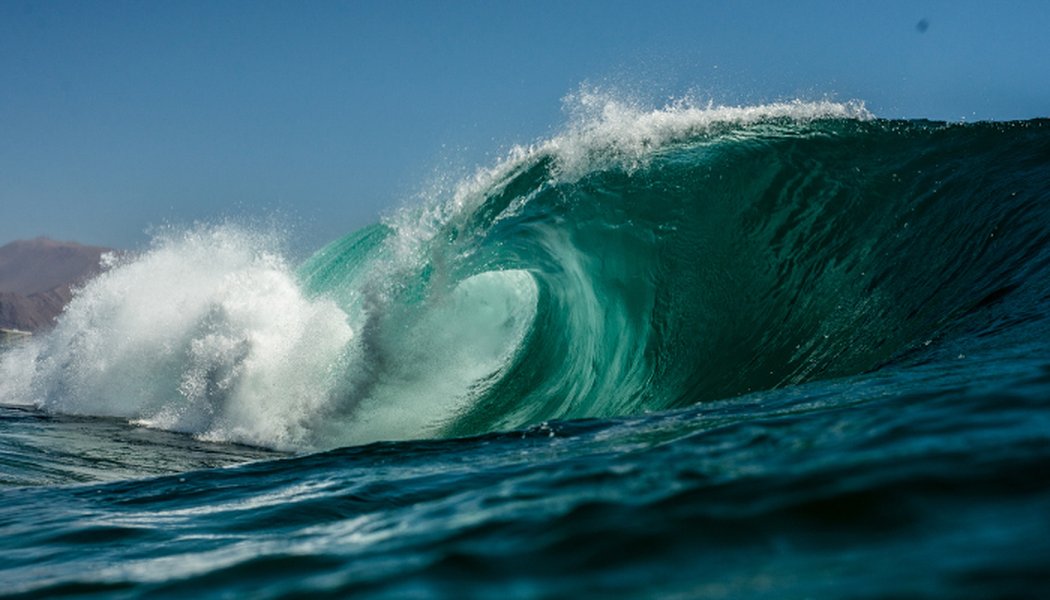
Wind waves displaying their characteristic choppy and short appearance.
The Traveler of the Seas: The Enduring Power of Swell
In stark contrast, "swell" represents the ocean's long-distance travelers. These are waves that have moved away from their stormy birthplace and journeyed across vast expanses of ocean, often thousands of kilometers, to reach a distant shore.
Characteristics of Swell:
- Distant Origin: Swell originates from powerful, sustained winds generated by distant storms or weather systems far out at sea.
- Organized and Smooth: As swell travels away from its source, it sorts itself out by wavelength and period. The chaotic, short-crested waves combine and become longer, smoother, and more uniform.
- Consistent Direction and Period: Swell maintains a remarkably consistent direction and period, even when local winds change. This consistency is a hallmark of swell.
- Longer Period and Wavelength: Swell waves possess significantly longer periods and wavelengths than local wind waves. This extended period indicates the amount of energy they carry.
- Unaffected by Local Wind: Once formed, swell is largely uninfluenced by local winds. It carries its energy efficiently across the ocean until it encounters shallow water or land.
Think of swell as the smooth, rolling undulations of a distant ocean, carrying the memory of a storm long past, gracefully approaching the shore.
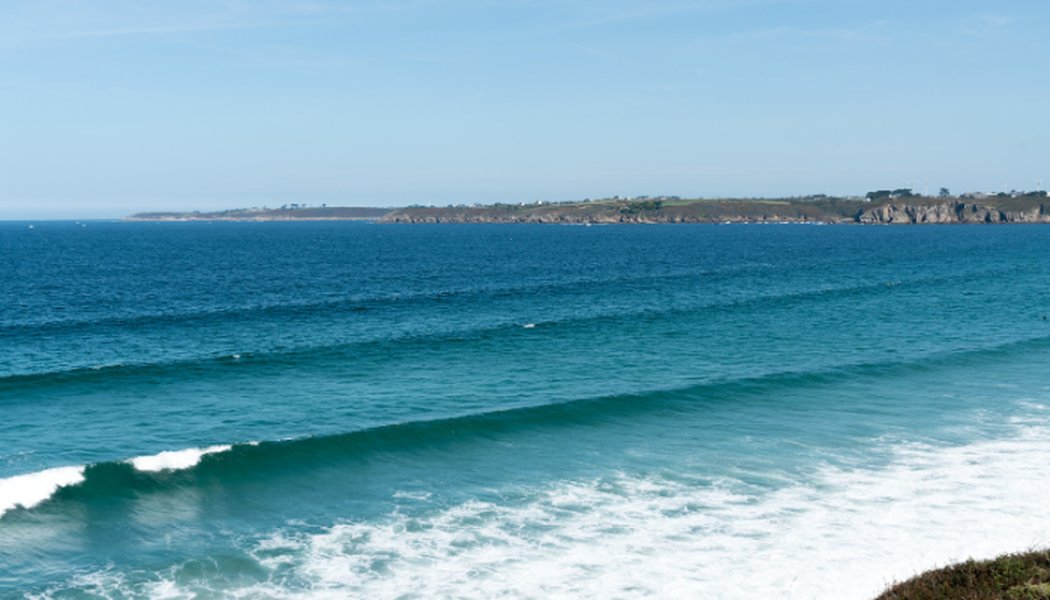
Swell waves exhibiting a more organized and uniform pattern.
Delving Deeper: Key Distinctions and Their Implications
To further solidify the understanding, let's examine the key differentiating factors and their practical consequences.
The Science of Sea State: Period, Wavelength, and Energy
The scientific parameters of wave period and wavelength are critical in distinguishing between wind waves and swell.
- Wave Period: This is the time it takes for two successive wave crests (or troughs) to pass a fixed point. Swell typically has longer periods (e.g., 8-20+ seconds) compared to wind waves (e.g., 2-7 seconds). A longer period indicates a more powerful and energetic wave.
- Wavelength: This is the horizontal distance between two consecutive wave crests. Longer periods correlate with longer wavelengths.
- Energy Propagation: Swell, with its longer period and wavelength, carries energy much more efficiently across the ocean. It loses less energy to friction and dissipation compared to the shorter, choppier wind waves.
Interaction with the Coastline: The Birth of Surf
The behavior of waves and swell changes dramatically as they approach the coast, impacting coastal morphology and creating the surf many enthusiasts seek.
- Swell Interaction: When swell encounters shallower water near the shore, its speed decreases, its wavelength shortens, and its height increases until it becomes unstable and breaks, forming surfable waves. The longer period of swell often leads to more powerful, cleaner, and more organized breaking waves.
- Wind Wave Interaction: Wind waves, being shorter and choppier, tend to break more abruptly and less consistently, often resulting in less defined and more turbulent surf.
The Combined Sea State
It is important to note that the ocean's surface is rarely composed of just one type of wave. Often, a "combined sea" or "sea state" refers to the interaction of both local wind waves and incoming swell. This combination can result in complex and sometimes challenging conditions.
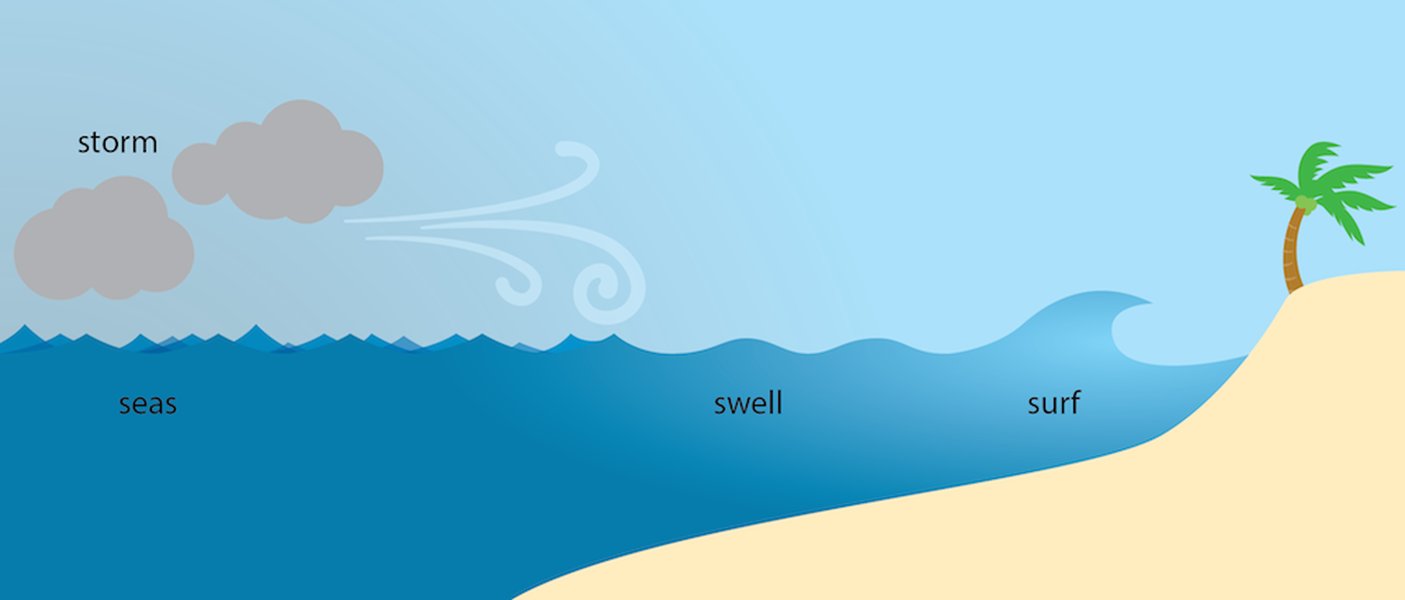
Illustration showing the transition from chaotic sea to organized swell.
A Comparative Overview: Waves vs. Swell
To consolidate the understanding, here's a direct comparison of the primary characteristics:
| Feature | Wind Waves (Sea) | Swell |
|---|---|---|
| Origin | Local winds blowing directly over the water's surface. | Distant storms or weather systems, far out at sea. |
| Appearance | Short, choppy, irregular, and often chaotic. | Long, smooth, uniform, and organized. |
| Behavior | Highly affected by local winds, changes quickly. | Unaffected by local winds once formed, travels long distances, maintains energy. |
| Period & Wavelength | Shorter periods and wavelengths. | Longer periods and wavelengths. |
| Direction | Variable, reflects local wind direction. | Consistent, maintains direction from its origin. |
| Energy | Dissipates relatively quickly. | Carries energy efficiently over vast distances. |
| Impact on Surf | Often leads to turbulent, less organized surf. | Produces cleaner, more powerful, and organized surf. |
The Significance in Marine Activities and Forecasting
Understanding the distinction between waves and swell is not just an academic exercise; it has profound implications for various marine activities and forecasting.
For Mariners: Navigation and Safety
Mariners rely heavily on accurate wave and swell forecasts. Swell can create significant challenges for vessels, even in calm local wind conditions, due to its long period and powerful energy. Understanding the direction and height of swell helps in route planning and avoiding hazardous conditions.
For Surfers: The Quest for the Perfect Wave
Surfers are perhaps the most acutely aware of the difference. The quality and size of surfable waves are predominantly determined by swell characteristics—specifically, swell height, period, and direction. Longer-period swells are highly coveted as they often translate into more powerful, well-formed waves that break cleanly.
For Coastal Planning: Erosion and Resilience
Coastal engineers and planners consider both wind waves and swell when designing coastal defenses and assessing erosion risks. Long-period swells can exert immense force on coastlines, contributing significantly to erosion and impacting coastal infrastructure.
The Journey of Ocean Energy: A Mindmap of Wave Evolution
To further conceptualize the distinct life cycles and influencing factors, let's explore a mindmap illustrating the evolution from initial wind disturbance to the distinct phenomena of waves and swell.
This mindmap outlines the journey from wave generation to their impact on the coast, highlighting the distinct paths and attributes of wind waves and swell. It visually separates their origins, characteristics, propagation, and coastal interactions, underscoring their unique contributions to the marine environment.
Diving into the "Swell" in English Usage
Beyond its specific oceanographic meaning, the term "swell" also has other applications in the English language. It's a versatile word that can function as a verb, noun, or even an outdated adjective, depending on context.
"Swell" as a Verb: Expansion and Growth
The primary non-oceanographic meaning of "swell" as a verb is to increase in size, volume, or amount, often gradually. This can apply to physical objects, body parts, or even abstract concepts.
- Physical expansion: "Her ankle began to swell after the sprain."
- Increase in number or volume: "The crowd swelled as more people arrived."
- Emotional intensification: "His heart swelled with pride."
"Swell" as a Noun: A Bulge or Increase
As a noun, "swell" can refer to a bulge or an increase, mirroring its verbal meaning.
- A physical bulge: "The doctor examined the swell on her knee."
- A gradual increase: "There was a swell of emotion in the room."
"Swell" as an Adjective: Dated Excellence
Less common in modern English, "swell" can also be an adjective meaning "excellent" or "great." This usage is largely considered dated or informal.
- "That's a swell idea!" (Meaning: a great idea).
- "We had a swell time at the party." (Meaning: a wonderful time).
This video from "Confusing English Words - Swell, Swollen, Swallow, Swelling" helps clarify the various meanings and forms of the word "swell" and its derivatives, particularly in the context of physical expansion.
FAQ: Frequently Asked Questions About Waves and Swell
What is the main difference between a wave and a swell?
Can you have swell without local wind?
Why is swell important for surfing?
What is "combined seas"?
How do oceanographers measure waves and swell?
Conclusion: A Symphony of Ocean Forces
In conclusion, while the terms "waves" and "swell" may be colloquially intertwined, they represent distinct physical phenomena driven by different forces and exhibiting unique characteristics. Wind waves are the immediate, localized response to atmospheric conditions, typically appearing choppy and disorganized. Swell, conversely, is the product of powerful, distant storms, carrying energy across vast oceans as organized, smooth, and predictable wave trains. Understanding this fundamental distinction is paramount for safe navigation, successful marine activities, accurate forecasting, and a deeper appreciation of the ocean's intricate and powerful dynamics. The ocean is a symphony of these forces, each playing a critical role in shaping its surface and impacting our interactions with it.
Recommended Further Exploration
- How do different types of waves impact coastal erosion?
- What is the role of wave period in surf quality?
- How are ocean waves and swell forecasted for marine activities?
- What are the safety implications of swell for maritime navigation?