

Key Insights into Connected Speech Pronunciation
- Dynamic Pronunciation: English words, especially function words, possess both "weak" and "strong" forms, which are dynamically applied in connected speech based on stress and context.
- Fluency and Intelligibility: Utilizing weak forms is essential for sounding natural and achieving the characteristic rhythm of English, while overuse of strong forms can make speech sound robotic or unnatural.
- Contextual Nuance: Strong forms are reserved for emphasis, isolation, or when a word carries significant meaning, whereas weak forms, often characterized by the schwa sound, enable smoother, faster speech.
In the intricate tapestry of spoken English, the way words are pronounced is far from static. Instead, they adapt and transform based on their role within a sentence, how they connect with other words, and the overall emphasis a speaker wishes to convey. This phenomenon is broadly categorized into "weak forms" and "strong forms" – a fundamental aspect of connected speech that profoundly impacts both native speaker comprehension and learner fluency.
Understanding and applying these forms is not merely an academic exercise; it is a gateway to more natural-sounding English, improved listening comprehension, and enhanced speaking proficiency. When words are spoken in isolation, they typically take on their full, dictionary pronunciation. However, in the continuous flow of conversation, many words undergo a reduction, becoming shorter, less distinct, and often featuring the ubiquitous schwa sound. This dynamic interplay between weak and strong forms is what gives English its characteristic rhythm and allows for efficient communication.
Reduced Pronunciations for Smooth Conversational Flow
Weak forms represent the reduced, unstressed pronunciations of words, predominantly function words. These are the grammatical glue of sentences—articles, prepositions, pronouns, conjunctions, and auxiliary verbs—which, in the absence of specific emphasis, are streamlined to allow the more meaningful content words to stand out. The primary mechanism for this reduction is often the substitution of clear, full vowels with the schwa sound (/ə/), a neutral "uh" sound, or sometimes a short 'i' vowel. This linguistic phenomenon is critical for achieving the natural rhythm and speed of spoken English.
Characteristics of Weak Forms
- Stress Reduction: They are inherently unstressed, occurring when a word is not the focus of attention.
- Vowel Weakening: Often involve the use of the schwa sound (/ə/) or other reduced vowel sounds, making them quicker and flatter.
- Sound Dropping: In some instances, entire sounds or even syllables can be dropped to further aid fluidity. For example, "him" might become 'im, or "her" as 'er.
- Frequency: Weak forms are far more common in everyday, fluent conversation than their strong counterparts, making up a significant portion of spoken English.
- Intelligibility: Counterintuitively, using weak forms is vital for natural-sounding English. Speakers who exclusively use strong forms often sound unnatural, robotic, or even difficult to understand to native speakers.
Approximately 30 common English words frequently appear in their weak forms, demonstrating their pervasive role in the language. These words, when unstressed, become almost inaudible or blend seamlessly into the surrounding sounds, contributing to the "stress-timed" nature of English, where stressed syllables occur at roughly equal intervals.
Full Pronunciations for Impact and Specificity
In contrast to weak forms, strong forms represent the full, dictionary pronunciations of words. They are used when a word needs to be highlighted, emphasized, or spoken in isolation. This typically involves clear, distinct vowel sounds, and the pronunciation is often longer and louder than its weak counterpart.
When Strong Forms Take Center Stage
- Emphasis or Contrast: When a speaker wants to draw attention to a particular word, perhaps to correct a misunderstanding or to convey a specific emotion. For example, "I said to go, not from."
- Isolation: When a word is spoken by itself, such as when practicing pronunciation, listing items, or stating a word out of context.
- End of a Sentence: Function words that appear at the very end of a sentence often revert to their strong form because they carry more weight in that position. For instance, "Who is that for?" where "for" would be pronounced strongly.
- Content Words: Nouns, main verbs, adjectives, adverbs, and question words are generally considered content words and almost always retain their strong forms, as they carry the primary meaning of the sentence.
- Clarity and Formal Speech: In situations demanding absolute clarity, such as formal presentations or when teaching, strong forms are more prevalent.
While weak forms dominate fluent speech, strong forms are crucial for conveying specific nuances and ensuring that important information is not lost. The ability to switch between these forms effortlessly is a hallmark of native-like fluency.
The Dynamic Dance of Sounds in Fluent English
Connected speech is the natural, continuous flow of spoken language where individual words merge, influencing each other's pronunciation. The interplay of weak and strong forms is a cornerstone of this phenomenon, alongside other processes such as linking, elision, and assimilation. These processes work in conjunction with weak forms to create the characteristic rhythm and musicality of English.
Consider the phrase "fish and chips." In isolated pronunciation, "and" would be /ænd/. However, in connected speech, it typically reduces to /ən/ or even /n̩/, becoming "fish 'n' chips." Similarly, "going to" often transforms into "gonna" or "want to" into "wanna," demonstrating elision and reduction.
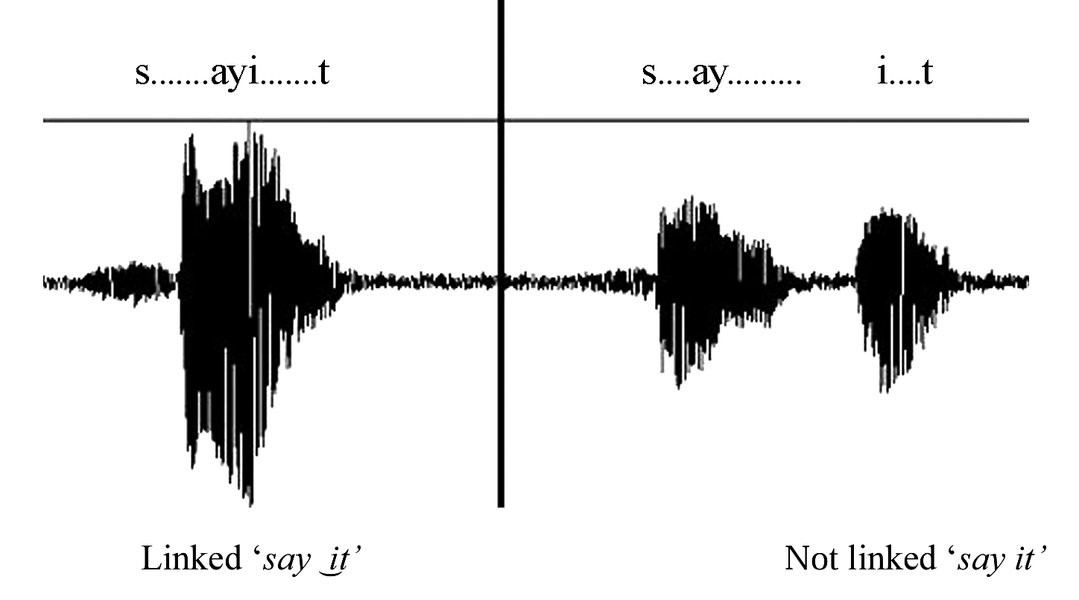
Visualizing the connection between words in linked speech patterns.
This dynamic adjustment serves several purposes: it makes speech more efficient, reduces articulatory effort, and contributes to the natural stress-timed rhythm of English. For non-native speakers, understanding these shifts is paramount for comprehending fast-paced conversations and for developing a more authentic pronunciation.
Observing the Transformation of Common Words
To truly grasp the concept, let's examine how some common words oscillate between their strong and weak forms:
| Word | Strong Form (IPA) | Weak Form (IPA) | Context for Weak Form | Context for Strong Form |
|---|---|---|---|---|
| a | /eɪ/ | /ə/ | "I need a pen." (/ə/) | "Is that 'A' or 'B'?" (/eɪ/) |
| the | /ðiː/ (before vowels), /ðə/ (before consonants) | /ðə/ (most common) | "Pass me the book." (/ðə/) | "This is the one!" (/ðiː/) |
| to | /tuː/ | /tə/ | "I'm going to town." (/tə/) | "Who did you give it to?" (/tuː/) |
| and | /ænd/ | /ən/, /n̩/ | "Bread and butter." (/ən/) | "I like apples and I like pears." (/ænd/) |
| can | /kæn/ | /kən/ | "I can help you." (/kən/) | "Yes, I can!" (/kæn/) |
| for | /fɔː/ | /fə/ | "This is for you." (/fə/) | "What was that for?" (/fɔː/) |
| have | /hæv/ | /həv/, /əv/ | "I have finished." (/həv/) | "Do you have any money?" (/hæv/) |
This table illustrates how context dictates pronunciation, emphasizing the dynamic nature of English phonetics.
Bridging the Gap to Native-Like Fluency
For individuals learning English, the distinction between weak and strong forms is a significant hurdle and an essential key to unlocking greater fluency and comprehension. Non-native speakers often tend to overuse strong forms, leading to speech that sounds hesitant, unnatural, or overly formal. This can hinder their ability to be understood by native speakers and also make it harder for them to grasp rapidly spoken English, where weak forms are prevalent.
Practical Strategies for Mastery
- Active Listening: Pay close attention to how native speakers pronounce function words in natural conversation. Podcasts, movies, and everyday interactions are invaluable resources.
- Shadowing: Imitate native speakers by "shadowing" their speech—listening and repeating immediately. This helps internalize the rhythm and natural reductions.
- Focused Drills: Practice switching between weak and strong forms for common function words in different sentence contexts.
- Identify Function vs. Content Words: Consciously distinguish between words that carry meaning (content words) and those that serve grammatical functions (function words). Prioritize weak forms for the latter when not emphasizing.
- Embrace the Schwa: Recognize the schwa sound as a core element of weak forms and practice producing it naturally.
Beyond Weak and Strong: A Mindmap of Interconnected Phenomena
Weak and strong forms are integral to connected speech, but they don't operate in isolation. Several other phonetic processes interact with them, further shaping the sound of fluent English. This mindmap illustrates these interconnected phenomena, providing a holistic view of how sounds modify in continuous discourse.
This mindmap shows how weak and strong forms are just one piece of a larger puzzle. Linking, elision, assimilation, and catenation all contribute to the fluidity of natural speech, working in concert with the reduction of weak forms and the prominence of strong forms to create the characteristic sound of spoken English.
Enhancing Communication Through Phonetic Awareness
The ability to effectively use and recognize weak and strong forms is not just about sounding "native"; it's about making communication more efficient and less taxing for both the speaker and the listener. When speakers correctly employ weak forms, they conserve energy and maintain a natural pace, which in turn makes their speech easier for listeners to process. Conversely, listening comprehension is significantly boosted when a learner is attuned to these phonetic shifts, allowing them to decode rapidly spoken sentences without getting stuck on every single word's full pronunciation.
Consider the cumulative effect: consistently mispronouncing weak forms can lead to a monotonic delivery that lacks the natural ebb and flow of English. This can make the speaker's message harder to follow and may even convey an unintended sense of rigidity or lack of confidence. On the listening side, an unfamiliarity with weak forms can cause crucial function words to "disappear" for the listener, leading to gaps in understanding and a constant effort to parse individual words rather than comprehending the message as a whole.
This video explains the difference between strong and weak forms, providing practical examples to illustrate how they function in English pronunciation. It's a valuable resource for understanding the concepts discussed.
The provided video, "STRONG vs WEAK FORMS || English Pronunciation Explained," offers a visual and auditory demonstration of these concepts. It delves into how these forms manifest in spoken English, offering concrete examples that reinforce the theoretical explanations. Watching and mimicking such examples can be a powerful tool for learners to internalize these crucial pronunciation rules.
Frequently Asked Questions About Weak and Strong Forms
What is the main difference between weak and strong forms?
Why are weak forms important in English?
When should I use a strong form?
Can using only strong forms make my English harder to understand?
What is the schwa sound and how does it relate to weak forms?
Conclusion: Embracing the Nuances of Spoken English
The concepts of weak and strong forms are fundamental to mastering English pronunciation and developing authentic fluency. They highlight the dynamic nature of spoken language, where words are not static entities but flexible sounds that adapt to their context within a sentence. By understanding when and how to apply these forms, learners can significantly enhance their listening comprehension, sound more natural and confident in their speaking, and ultimately bridge the gap to more effective communication with native speakers. The journey to mastering connected speech is an ongoing process of active listening, imitation, and conscious practice, but the rewards—in terms of improved intelligibility and naturalness—are substantial.
Recommended Further Exploration
- How to practice English connected speech for fluency
- The role of the schwa sound in English pronunciation
- Common weak forms in English and their usage
- Connected speech phenomena beyond weak and strong forms