
Unlock the Secrets to Flawless Webpage Citations: Your Ultimate Guide
Navigating the complexities of academic referencing for online sources made simple, covering various styles and scenarios.
Key Insights at a Glance
- Clarity is Key: The first step is to identify *which* page you intend to cite. If it's a specific URL, you'll need its details. If it's this current interaction, the approach differs.
- Style Matters: Common citation styles like APA and MLA have distinct rules for web sources. Essential elements typically include author, date, title, website name, and URL.
- Evolving Norms: Citing AI-generated content, like this conversation, is an emerging area. We'll explore how to adapt existing guidelines for such unique digital resources.
Understanding "This Page": Clarifying Your Citation Needs
When you ask for a citation for "this page," it's important to clarify what specific page you're referring to. Are you thinking of:
- A particular website or webpage for which you have the URL?
- This current interaction with me, Ithy, an AI assistant?
The method of citation will vary based on your answer. If you have a specific URL in mind, providing it would allow for a precise citation. However, this guide will equip you with the knowledge to cite virtually any webpage, including how to approach citing an AI interaction like this one.
General Principles of Citing a Webpage
Citing a webpage correctly is crucial for academic integrity. It acknowledges the original creators, allows readers to find your sources, and lends credibility to your work. Generally, a citation has two components:
- In-text citation: A brief reference within the body of your paper that points to the full citation.
- Full reference entry: A detailed listing in your bibliography (e.g., "References" in APA, "Works Cited" in MLA) that provides all the information needed to locate the source.
The specific information required and its formatting depend heavily on the citation style you are using (e.g., APA, MLA, Chicago, Harvard).
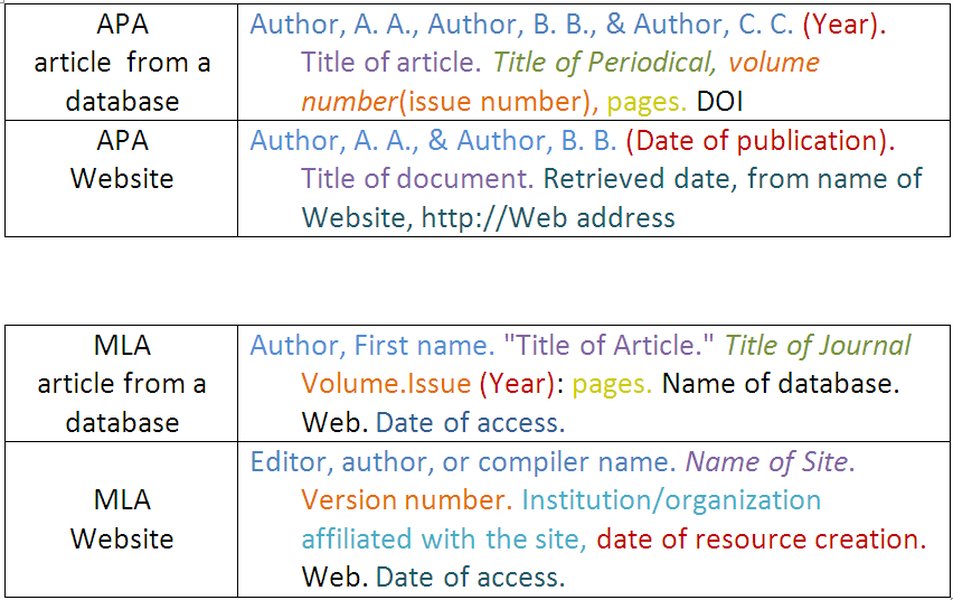
Core components often include author, title, source, and date.
Citing a Standard Webpage: A Deep Dive
Let's explore how to cite standard webpages using two of the most common academic styles: APA (7th Edition) and MLA (9th Edition).
APA Style (7th Edition)
The American Psychological Association (APA) style is widely used in social sciences. It emphasizes the author and date of publication.
Key Elements for Reference List Entry
- Author: Last name, followed by first and middle initials (if available). For organizations, use the full name.
- Date: Year of publication. For webpages, include the specific date (Year, Month Day) if available.
- Title: Title of the webpage or document. Use sentence case (capitalize only the first word of the title and subtitle, and any proper nouns). Italicize the title if the work stands alone (e.g., a report); otherwise, do not italicize.
- Website Name: The name of the overall website. This is given in plain text after the title of the page.
- URL: The direct web address. Do not put a period after the URL.
Basic Format (Reference List)
Author, A. A. (Year, Month Day). Title of page in sentence case. Website Name. URL
If the author is an organization:
Organization Name. (Year, Month Day). Title of page in sentence case. URL (Note: If the website name is the same as the organization, it is often omitted to avoid repetition, and the website name element is then skipped before the URL).
Examples
With an individual author:
Smith, J. (2023, June 15). The future of renewable energy. GreenTech Insights. https://www.example.com/future-renewable-energy
With a group author (organization):
World Health Organization. (2022, October 7). Global pandemic preparedness. https://www.who.int/pandemic-preparedness
No author (page title moves to author position):
Understanding climate change impacts. (2024, January 22). Environmental Protection Agency. https://www.epa.gov/climate-impacts
In-Text Citations
- Parenthetical: (Author, Year) or (Organization, Year)
Example: (Smith, 2023) or (World Health Organization, 2022) - Narrative: Author (Year) or Organization (Year)
Example: Smith (2023) states... or According to the World Health Organization (2022)... - No author: Use a shortened version of the title in italics.
Example: (Understanding Climate Change, 2024) - Direct quotes from unpaginated sources: Include a paragraph number (para.), section heading, or a shortened heading.
Example: (Smith, 2023, para. 4) or (Smith, 2023, Introduction section)
Special Considerations
- Retrieval Dates: APA 7th edition generally does not require retrieval dates for webpages unless the content is designed to change frequently and the page is not archived. If needed, format as: Retrieved Month Day, YYYY, from URL.
- Missing Date: If no publication date is available, use "(n.d.)" for "no date."
MLA Style (9th Edition)
The Modern Language Association (MLA) style is commonly used in the humanities. It focuses on the author and the "container" of the source (e.g., the website).
Key Elements for Works Cited Entry
- Author: Full name (Last Name, First Name).
- Title of the Page: In quotation marks, using title case (capitalize principal words).
- Title of the Website: In italics, using title case.
- Publisher or Sponsor: If different from the website name (often omitted if the website title is essentially the publisher).
- Publication Date: Day Month Year (e.g., 15 June 2023).
- URL: The web address. Omit "http://" or "https://". A period usually follows the URL.
- Date of Access (Optional): Can be included if the content is likely to change or if no publication date is available. Format: Accessed Day Month Year.
Basic Format (Works Cited)
Author Last Name, First Name. "Title of Web Page." Name of Website, Publication Date, URL. Accessed Date (optional).
Examples
With an individual author:
Doe, Jane. "Literary Themes in Modern Novels." Literature Review Online, 10 Nov. 2023, www.example.com/literary-themes. Accessed 12 May 2025.
No author (page title moves to author position):
"Guidelines for Ethical Research." Research Ethics Portal, 20 July 2022, www.example.com/ethical-research-guidelines.
In-Text Citations
- Usually the author's last name in parentheses: (Doe).
- If page numbers are available (rare for webpages), include them: (Doe 3).
- If no author, use a shortened version of the page title in quotation marks: ("Literary Themes").
Special Considerations
- Missing Date: If no publication date is available, you might use "n.d." for "no date," or provide the website's copyright year if available. An access date becomes more important in such cases.
- Containers: MLA emphasizes the concept of "containers." A webpage ("Title of Web Page") is contained within a larger website (Name of Website).
Visualizing Citation Elements: A Comparative Overview
Different citation styles prioritize various elements of a source. The radar chart below offers a visual comparison of how APA, MLA, Chicago (Notes-Bibliography style for web sources), and Harvard styles tend to emphasize certain components like author prominence, date, URL, and title formatting. This is a generalized view to illustrate tendencies rather than strict rules, as nuances exist within each style.
This chart helps illustrate, for example, that APA and Harvard place strong emphasis on the author and publication date, while MLA might show more detailed attention to title punctuation and the distinction between the page and the overall website (container).
Navigating the Citation Landscape: A Mindmap
To further clarify the process, the mindmap below outlines the key considerations and components involved in citing web sources, from understanding your specific needs to applying the rules of common citation styles.
This mindmap illustrates the decision-making process and the structural elements you need to consider for accurate web citations.
What If "This Page" Refers to Our Current Interaction?
If by "this page" you mean the current conversation we are having, citing an interaction with an AI like me, Ithy, requires a slightly different approach. Formal guidelines from major citation style manuals for AI-generated content are still evolving. However, you can adapt existing webpage citation formats.
When citing AI-generated content, transparency is key. You should generally indicate that the content was generated by an AI and provide as much information as possible to help a reader understand the source. Here's how you might adapt APA and MLA styles for this interaction, assuming the date of interaction is May 12, 2025:
Adapted APA Style for AI Interaction
You would typically list the AI developer/company as the author and provide a descriptive title for the content generated.
- Author: The entity responsible for the AI (e.g., if I were developed by a company named 'Intelligent Thinkers Inc.', that would be the author. For models like ChatGPT, OpenAI is used). For this interaction, let's use a placeholder for my developer or the platform.
- Date: The date of the interaction.
- Title: A descriptive title for the interaction or the specific information cited. Italicize it.
- Source/Publisher: The name of the AI tool or platform.
- URL: If the interaction has a persistent URL, include it. If not, you might note the platform.
Example:
AI Provider Name. (2025, May 12). AI assistant response on webpage citation [Large language model]. Platform Name. (If a direct URL is available, use it. Otherwise, describe the source like this if no URL is possible, though a URL is always preferred for web content).
If you were to cite this specific interaction with "Ithy", and assuming Ithy is the name of the AI platform/service:
Ithy. (2025, May 12). Conversation about citing web pages. [AI chat]. Retrieved from [URL of this interaction, if applicable, or name of the service if no direct URL]
Some style guides, like APA's own blog on citing ChatGPT, suggest treating the AI model's developer as the author and the AI tool's name as part of the title or description. For example:
OpenAI. (2025, May 12). [Descriptive title of the chat session]. ChatGPT. [URL if available]
Adapted MLA Style for AI Interaction
MLA recommends including the AI tool's name and a description of the query if helpful.
- "Author": Often, the prompt you used can be part of the title, or the AI developer can be listed.
- "Title of source": A description of the generated content or your prompt.
- Title of container (the AI tool): The name of the AI model/platform.
- Version: If applicable (e.g., GPT-4).
- Publisher: The company that created the AI.
- Date: The date the content was generated.
- URL: If available.
Example (based on MLA guidance for citing AI):
"Citation guidance for a webpage." Prompt to Ithy, 12 May 2025, Ithy AI, [URL if available, or platform name].
Or, following advice similar to citing software:
Ithy. Version [if known]. AI Provider Name, 12 May 2025, [URL of interaction or platform].
It's advisable to check the latest guidelines from the specific style manual you are using or consult your instructor, as recommendations for citing AI are continuously being updated.
This video provides a beginner-friendly overview of citation and referencing principles, which are foundational to citing any source, including web content.
Key Differences Summarized: APA vs. MLA for Webpages
The table below highlights some of the primary distinctions between APA and MLA styles when citing webpages. Understanding these differences can help you choose and apply the correct format for your needs.
| Feature | APA (7th Edition) | MLA (9th Edition) |
|---|---|---|
| Author Format | Last Name, F. M. (Initials for first and middle names) | Last Name, First Name (Full first name, middle initial optional) |
| Date Format | (Year, Month Day). For example: (2023, June 15). | Day Month Year. For example: 15 June 2023. |
| Page Title Formatting | Sentence case. Italicized if the work is standalone (e.g., a whole report); otherwise, not italicized. Example: The impact of social media. or The impact of social media. | Title case, in quotation marks. Example: "The Impact of Social Media." |
| Website Title Formatting | Plain text, title case. Example: Global News Today. | Italicized, title case. Example: Global News Today. |
| URL | Include full URL. No period at the end unless it's part of the URL. | Include URL (typically without http:// or https://). Usually followed by a period. |
| In-Text Citation | (Author, Year). Example: (Smith, 2023). For no author: (Shortened Title, Year). | (Author PageNumber) or (Author). Example: (Smith 12) or (Smith). For no author: ("Shortened Title"). |
| Retrieval Date | Generally not required unless the source material is designed to change over time and is not archived. Example: Retrieved May 12, 2025, from URL. | Optional, but recommended for websites with content that may change or if no publication date is available. Format: Accessed Day Month Year. |
Frequently Asked Questions (FAQ)
What if the webpage has no author?
If a webpage does not list an individual author, you typically start the citation with the title of the page.
- APA: Move the title of the webpage to the author position, followed by the date. If the title is italicized in the reference (e.g., a standalone report), use italics. For an article on a website, the title is not italicized. In-text, use a few words of the title (italicized if it's italicized in the reference) and the year. Example Reference: Title of page. (Year, Month Day). Website Name. URL. In-text: (Title of Page, Year).
- MLA: Begin the Works Cited entry with the "Title of the Web Page" in quotation marks. In-text, use a shortened version of the title in quotation marks. Example Works Cited: "Title of Web Page." Name of Website, Date, URL. In-text: ("Title of Web Page").
- If the author is an organization or group, use the organization's name as the author.
What if there's no publication date on the webpage?
If you cannot find a publication or last updated date on a webpage:
- APA: Use "(n.d.)" which stands for "no date" in place of the year. Example: Author, A. A. (n.d.). Title of page. Website Name. URL.
- MLA: You can use "n.d." for "no date" or omit the date element if truly unavailable. In such cases, providing an access date (the date you viewed the page) becomes more important. Example: Author, Last Name. "Title of Web Page." Name of Website, URL. Accessed Day Month Year.
- Always look carefully for a date, often found at the top or bottom of the page, sometimes near a copyright notice.
When should I include a retrieval date or access date?
The inclusion of a retrieval or access date depends on the citation style and the nature of the source:
- APA (7th ed.): Retrieval dates are generally only needed if the source material is designed to change over time (e.g., a wiki, a frequently updated news site without stable archived versions, a social media profile) AND the page is not archived. If the page has a clear publication or update date and is relatively stable, a retrieval date is usually not necessary. Format: Retrieved Month Day, YYYY, from URL.
- MLA (9th ed.): MLA generally considers the access date optional but recommends including it if the webpage lacks a publication date, or if the content is likely to change or be updated. It helps the reader understand the version of the page you consulted. Format: Accessed Day Month Year.
Are online citation generators reliable?
Online citation generators (like Citation Machine, EasyBib, Scribbr, ZoteroBib) can be very helpful tools for creating citations quickly. They can save time by automatically formatting references based on a URL or other input information.
However, they are not infallible.
- They may misinterpret data from a webpage or use outdated style rules.
- They might not correctly handle missing information (e.g., no author, no date) according to the specific style guide's nuances.
- The accuracy of the generated citation depends on the information available on the webpage and the sophistication of the generator's algorithm.
Best Practice: Always double-check citations created by a generator against the official style manual (e.g., the APA Publication Manual, the MLA Handbook) or reputable online guides like the Purdue OWL. Use them as a starting point, but take responsibility for the final accuracy of your citations.
Recommended Further Exploration
- How do I cite a PDF document found online in APA style?
- What are the rules for citing a blog post versus a news article from a website in MLA?
- Can you explain how to cite a YouTube video or other online media in Chicago style?
- What is the best way to manage and organize all my sources and citations for a research paper?
References
Last updated May 12, 2025