
Unlock Calm and Focus: Your Expert-Crafted Weekly Plan for a 5.5-Year-Old with ADHD
Navigate the week with structure, positivity, and activities tailored for your child's success.
Parenting a young child with Attention-Deficit/Hyperactivity Disorder (ADHD) presents unique challenges and rewards. A structured, predictable weekly plan is one of the most powerful tools you can implement. For a 5.5-year-old boy, consistency helps manage core ADHD symptoms like inattention, hyperactivity, and impulsivity, reducing stress for both him and the family. This guide offers a comprehensive, adaptable weekly framework built on expert recommendations, designed to foster focus, cooperation, and well-being.
Plan Highlights: Keys to Success
- Structured Routines are Essential: Predictable daily schedules for mornings, afternoons, and evenings provide security and help children with ADHD anticipate transitions, reducing anxiety and meltdowns.
- Visual Aids Make a Difference: Young children with ADHD often benefit significantly from visual schedules (charts with pictures or icons) that make time and tasks more concrete and easier to follow.
- Positive Approaches Foster Growth: Focus on positive reinforcement, praise for effort, clear communication, and incorporating enjoyable activities to build self-esteem and encourage desired behaviors.
Why Structure is a Superpower for Kids with ADHD
Understanding the Need for Predictability
Children with ADHD often struggle with executive functions – the mental skills needed for planning, organizing, focusing, and managing emotions. A lack of structure can feel chaotic and overwhelming, exacerbating symptoms. Consistent routines provide an external framework that helps compensate for these internal challenges. Knowing "what comes next" reduces uncertainty and anxiety, making transitions between activities smoother. It helps children develop a sense of time, improves their ability to follow directions, and fosters independence as they learn to navigate their day more effectively.
The Power of Visual Learning
Many children with ADHD are strong visual learners. Abstract concepts like time or multi-step instructions can be difficult to grasp. Visual schedules, using pictures, icons, or checklists, transform these abstract ideas into tangible guides. Seeing the sequence of activities laid out clearly helps them understand expectations, prepare for what's coming, and track their progress, leading to greater cooperation and less resistance.
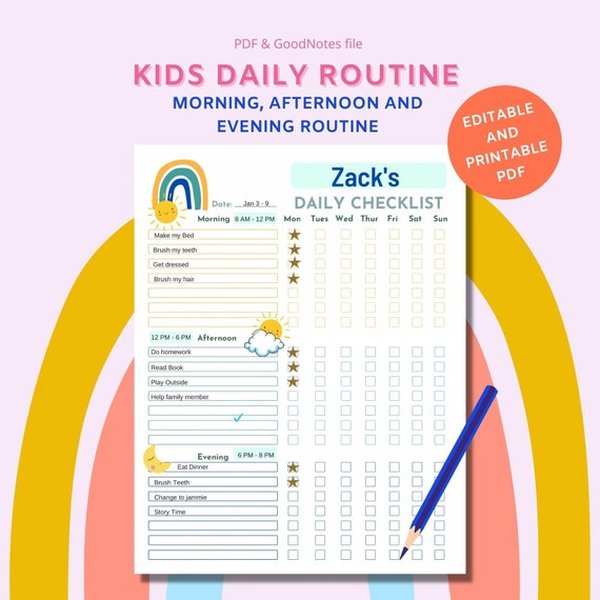
Example of a visual daily routine chart, a helpful tool for children with ADHD.
Core Principles for Your Weekly Plan
Building an effective plan involves integrating several key principles tailored to the needs of a young child with ADHD:
- Consistency is Crucial: Stick to core routines (wake-up, meals, bedtime) as consistently as possible, even on weekends, to regulate the body clock and set expectations.
- Use Visual Aids: Implement visual schedules, checklists, or routine charts. Place them where your child can easily see and refer to them.
- Short, Manageable Blocks: Break down tasks and activities into shorter segments (e.g., 15-20 minutes) with clear start and end points. Incorporate frequent breaks, especially during activities requiring sustained focus.
- Prioritize Physical Activity: Schedule regular opportunities for movement and exercise (at least 60 minutes daily) to help manage hyperactivity, improve focus, and release pent-up energy. Outdoor play is often ideal.
- Embrace Positive Reinforcement: Focus on catching your child being good. Offer specific praise for effort and cooperation ("Great job putting your blocks away!"). Use reward systems like sticker charts or earning privileges for following routines or completing tasks.
- Master Calm Transitions: Prepare your child for changes in activity by giving clear warnings (e.g., "In 5 minutes, it will be time to clean up"). Use timers (visual or auditory) to signal transitions.
- Focus on Sleep and Nutrition: Ensure a consistent, early bedtime and a calming wind-down routine. Provide balanced meals and snacks, emphasizing protein and limiting sugar, which can impact behavior and focus.
- Maintain Flexibility: While structure is key, life happens. Be prepared to adjust the schedule as needed based on your child's energy levels, mood, or unexpected events. Review the plan together weekly or bi-weekly.
- Involve Your Child: Whenever possible, involve your son in creating parts of the schedule or choosing between acceptable activity options. This fosters a sense of ownership and cooperation.
Crafting the Daily Routine: A Step-by-Step Framework
Here’s a template for a daily routine, adaptable for weekdays and weekends. Remember to use visual aids and timers to support each step.
Morning Routine (Approx. 6:30/7:00 AM - 8:30 AM)
Mornings can set the tone for the entire day. A calm, predictable start is vital.
- Consistent Wake-Up: Aim for the same wake-up time daily.
- Hygiene & Getting Dressed: Follow a simple sequence (e.g., toilet, wash face, brush teeth, get dressed). Lay out clothes the night before to minimize morning decisions. Use a visual checklist.
- Breakfast: Offer a protein-rich breakfast to support focus. Sit together if possible.
- Medication (if applicable): Administer medication at the same time each morning.
- Preparation: Quickly review the visual schedule for the day. Pack backpack (if applicable, ideally done the night before).
- Transition Cue: Use a timer or song to signal it's time to leave for school or start the day's activities.
Daytime / School / Activity Time (Approx. 8:30 AM - 3:00 PM)
Structure this block around school/preschool or planned home activities.
- Structured Learning/Play: If at home, break activities into short, focused blocks (15-20 min) followed by short breaks (5 min). Alternate between sit-down tasks (puzzles, drawing, simple learning games) and movement activities.
- Physical Activity: Ensure significant time for active play, preferably outdoors. Running, climbing, biking, or ball games are great options.
- Snack Time: Schedule healthy snacks.
- Social Interaction: Encourage positive interaction during playdates or family time. Practice simple social skills like sharing or taking turns.
- Quiet/Calm Time: After lunch or high-energy play, incorporate a period of quiet activity like reading books together, listening to calm music, or doing puzzles. This helps with self-regulation. If naps are still part of the routine, maintain consistency.
Afternoon Routine (Approx. 3:00 PM - 6:00 PM)
Manage the transition from school or structured activities to home life.
- Welcome Home Routine: Have a consistent sequence (e.g., unpack bag, wash hands, have a snack).
- Downtime/Play: Allow some time for free play or preferred activities to decompress. Outdoor time is often beneficial here too.
- Structured Activity/Chores: Engage in a short, structured activity like helping with an age-appropriate chore (setting the table, tidying toys) or a focused game. Use rewards for completion.
- Limited Screen Time: If screen time is allowed, schedule a specific, limited duration (e.g., 30 minutes) and use a timer. Choose educational or interactive content where possible. Give clear warnings before it ends.
- Family Connection: Spend some quality time connecting – talking about the day, playing a quick game, or preparing dinner together.
Evening Routine (Approx. 6:00 PM - 8:00 PM)
Focus on winding down to prepare for a restful night's sleep.
- Dinner: Eat dinner around the same time each evening. Encourage family conversation. Keep mealtime positive.
- Wind-Down Activities: Transition to calm activities like a warm bath, quiet play (building blocks, drawing), reading stories, or listening to soft music. Avoid stimulating activities or screens close to bedtime.
- Bedtime Preparation: Follow a consistent sequence (e.g., pajamas, brush teeth, final toilet trip).
- Bedtime Story/Cuddle Time: A calming ritual like reading a book or cuddling helps signal sleep time.
- Consistent Lights Out: Aim for the same bedtime each night, ensuring adequate sleep (typically 10-12 hours for this age). Keep the bedroom cool, dark, and quiet.
Visualizing the Week: A Mindmap Overview
This mindmap provides a visual summary of the core components integrated into a successful weekly plan for managing ADHD in a young child. It highlights the interconnectedness of daily structure, strategic approaches, and supportive tools.
(Wake-up, Hygiene, Breakfast, Prep)"] id1b["Daytime Activities
(School/Learning, Play, Physical Activity, Quiet Time)"] id1c["Afternoon Routine
(Snack, Decompress, Chores, Connection)"] id1d["Evening Routine
(Dinner, Wind-Down, Bedtime Prep, Sleep)"] id2["Key Strategies"] id2a["Consistency
(Predictability reduces anxiety)"] id2b["Positive Reinforcement
(Praise, Rewards, Focus on Effort)"] id2c["Clear Communication
(Simple instructions, Warnings)"] id2d["Flexibility
(Adapt as needed)"] id2e["Emotional Regulation Support
(Calm responses, Co-regulation)"] id3["Essential Activities"] id3a["Physical Exercise
(Min 60 mins/day, Outdoor play)"] id3b["Structured Learning
(Short bursts, Breaks)"] id3c["Creative & Sensory Play
(Arts, Crafts, Tactile experiences)"] id3d["Calm-Down Time
(Reading, Music, Puzzles)"] id3e["Family Bonding
(Shared meals, Playtime)"] id4["Helpful Tools"] id4a["Visual Schedules
(Pictures, Icons, Charts)"] id4b["Timers
(Visual or Auditory for transitions)"] id4c["Reward Systems
(Sticker charts, Token economies)"] id4d["Checklists
(For multi-step routines)"] id5["Weekend Adaptations"] id5a["Maintain Core Routines
(Meals, Sleep)"] id5b["Incorporate Fun Outings
(Parks, Zoo, Playdates)"] id5c["Balance Structure & Flexibility"] id5d["Prepare for Upcoming Week"]
Behavioral Strategies and Positive Parenting Tips
Implementing the schedule effectively often involves specific behavioral approaches:
- Give Clear, Simple Directions: Break down instructions into single steps. Gain eye contact before speaking.
- Use "When... Then..." Statements: Frame requests positively, e.g., "When you put your shoes on, then we can go to the park."
- Offer Choices: Provide limited, acceptable choices to give your child a sense of control, e.g., "Do you want to wear the blue shirt or the red shirt?"
- Catch Them Being Good: Actively look for opportunities to praise positive behavior and effort, no matter how small. Be specific: "I love how you waited your turn!"
- Use Planned Ignoring: For minor attention-seeking behaviors, sometimes planned ignoring (while ensuring safety) can be effective. Give attention immediately when the desired behavior occurs.
- Stay Calm: Children with ADHD can be sensitive to parental stress. Model calm responses, even when feeling frustrated. Take deep breaths or step away for a moment if needed.
- Problem-Solve Together: When challenges arise, talk about them later during a calm moment. Brainstorm solutions together.
- Parent Self-Care: Parenting a child with ADHD can be demanding. Remember to take care of your own well-being. Seek support from partners, friends, support groups, or professionals when needed.
Activity Ideas: Fueling Fun and Focus
Incorporate a variety of activities that cater to your son's interests and help manage ADHD symptoms:
Types of Beneficial Activities
- Physical Activities: Essential for energy release and focus. Examples: Running, jumping, swimming, martial arts (like Taekwondo, which emphasizes discipline), team sports (start with shorter seasons/less complex rules), bike riding, playground play.
- Structured Play: Activities with clear rules and goals. Examples: Board games, card games, building sets (LEGOs), puzzles.
- Creative Outlets: Allow for self-expression and can be calming. Examples: Drawing, painting, play-doh, music and movement, simple crafts.
- Sensory Play: Can be grounding and help with regulation. Examples: Sandboxes, water tables, textured toys, kinetic sand.
- Nature Exploration: Spending time outdoors can improve focus and reduce stress. Examples: Nature walks, gardening, visiting parks.
- Quiet Time Activities: Important for winding down and self-regulation. Examples: Reading books, listening to audio stories or calm music, looking at picture books.

Sports and physical activities offer numerous benefits for children with ADHD.
Activity Benefit Radar Chart
Different activities offer varying benefits for managing ADHD symptoms. This chart provides a visual representation of how common activity types might rate across key areas like focus enhancement, energy release, emotional regulation, social skills practice, and fostering independence. Note that individual responses can vary.
Sample Weekly Schedule Outline
This table provides a high-level view of how the daily structure can be applied throughout the week, with slight variations for weekends. Remember to personalize this based on your family's specific needs and your child's school schedule.
| Day | Morning Focus (7 AM - 9 AM) | Midday Focus (9 AM - 3 PM) | Afternoon/Evening Focus (3 PM - 8 PM) | Key Strategy Highlight |
|---|---|---|---|---|
| Monday | Consistent routine, Prepare for school/activity, Visual schedule check | School/Structured learning, Outdoor play break, Social interaction practice | Snack, Decompress (quiet play), Family dinner, Calm wind-down routine | Consistency in transitions |
| Tuesday | Routine reinforcement, Positive start affirmation | School/Learning activity (focus task + break), Physical activity (e.g., music & movement) | Homework-like task (short), Creative play, Reading time, Bedtime routine | Positive reinforcement for task completion |
| Wednesday | Routine, Pack special item for school/activity (if applicable) | School/Activity, Possible playdate/social skills focus, Outdoor time | Snack, Free play, Simple chore with reward, Family dinner, Bath time fun | Clear communication & choices |
| Thursday | Routine, Check-in on feelings (using chart?) | School/Learning, Nature walk or extended playground time | Snack, Sensory play activity, Limited screen time (timer!), Wind-down | Prioritizing physical activity |
| Friday | Routine, Celebrate making it through the week! | School/Activity, Fun Friday learning game or craft | Snack, Relaxed playtime, Family activity (e.g., movie night intro), Early wind-down start | Flexibility within structure |
| Saturday | Slightly later wake-up (optional, but keep consistent), Relaxed breakfast | Family outing (park, zoo, museum) with planned breaks, Lots of physical activity | Quiet downtime post-outing, Special family dinner or game night | Balancing fun with routine needs |
| Sunday | Relaxed morning routine, Special breakfast (e.g., pancakes) | Lower-key activities (crafts, reading, calm play), Prepare for the week (review schedule, lay out clothes) | Tidy-up time (short, with help), Relaxing family time, Consistent early bedtime routine | Preparation & Reset for the week |
Helpful Video Resource: Setting Up Routines
Visual guides and expert advice can be incredibly helpful. This video from GoodRx Health provides practical tips on establishing effective morning and evening routines for children with ADHD, reinforcing many of the principles discussed here.
Creating ADHD Routines for Children | GoodRx (Source: YouTube)
Frequently Asked Questions (FAQ)
How do I handle resistance to the schedule?
Start small and be consistent. Involve your child in creating parts of the schedule where possible. Offer choices within the routine (e.g., "Do you want to brush your teeth before or after putting on pajamas?"). Use positive reinforcement and rewards for cooperation. Acknowledge their feelings ("I know it's hard to stop playing, but it's time for dinner now") but hold the boundary calmly and firmly. If resistance is high, review if the schedule needs adjustment (e.g., are activity blocks too long?).
How long should activities or tasks be for a 5.5-year-old?
Keep focused tasks short, generally around 15-20 minutes for this age, followed by a short break (5 minutes) involving movement or a preferred activity. Observe your child's attention span and adjust accordingly. Free play or physical activity can be longer blocks.
What if we miss part of the routine or have an 'off' day?
Don't aim for perfection! Life happens. The goal is consistency, not rigidity. If you miss part of the routine, simply get back on track with the next scheduled activity as calmly as possible. Avoid making a big deal out of it. Acknowledge that everyone has off days and focus on resetting for the next routine or the next day. Self-compassion is important.
Should screen time be included in the schedule?
If you allow screen time, it's best to schedule it for a specific, limited duration and use timers. Avoid screen time close to bedtime as it can interfere with sleep. Opt for educational or interactive content when possible. Be mindful that excessive screen time can sometimes exacerbate ADHD symptoms like inattention or impulsivity for some children.
Recommended Next Steps
To deepen your understanding and find more tailored strategies, consider exploring these related topics:
- What are the most effective positive reinforcement techniques for young children with ADHD?
- How can I create engaging visual schedules specifically for a 5-year-old with ADHD?
- What are the best strategies for managing transitions and preventing meltdowns in children with ADHD?
- How do diet and sleep specifically impact ADHD symptoms in young children?
References
 amazon.com
Last updated May 4, 2025