
Understanding Western and Eastern Heritage: A Blend of Values and Traditions
Exploring the Roots and Characteristics of Distinct Cultural Landscapes
Key Insights
- Western Heritage is often understood through the lens of Judeo-Christian values and Anglo-American traditions, emphasizing individualism, justice, and liberal democracy.
- The concept of Judeo-Christian values, while debated, is frequently associated with the moral and ethical foundations of Western societies, including principles of compassion and community.
- Anglo-American traditions, stemming from British influence in the Americas, have significantly shaped legal systems, political institutions, and social customs in countries like the United States and Canada.
- Eastern Heritage encompasses a diverse range of cultures in Asia and the Middle East, often prioritizing social harmony, collective well-being, and respect for authority, contrasting with Western individualism.
The terms "Western heritage" and "Eastern heritage" are broad classifications used to describe the distinct cultural, historical, and philosophical landscapes of different regions of the world. While these terms are generalizations and encompass immense diversity within each category, they offer a framework for understanding some fundamental differences in values, traditions, and societal structures. Western heritage is frequently discussed in relation to its roots in Judeo-Christian values and Anglo-American traditions, which have profoundly influenced its development. Eastern heritage, on the other hand, draws upon a multitude of rich and ancient traditions from Asia and the Middle East.
The Foundations of Western Heritage
Western heritage is a complex tapestry woven from various historical threads, with significant contributions from Greco-Roman antiquity, the Enlightenment, and notably, Judeo-Christian values and Anglo-American traditions. The concept of "the West" itself is fluid and has evolved over time, generally encompassing Europe, North America, Australia, and New Zealand.
Judeo-Christian Values: A Moral Compass?
The influence of Judeo-Christian values on Western civilization is a widely discussed topic. This perspective suggests that the ethical and moral frameworks derived from Judaism and Christianity have provided a foundational basis for many Western societal norms and legal principles. Key tenets often attributed to this influence include the emphasis on the inherent dignity of the individual, concepts of justice and righteousness, compassion, and the importance of community.
Historically, religious institutions played a central role in the development of education, law, and social welfare in Western societies. The Ten Commandments, for instance, are seen by some as a direct precursor to many Western legal codes, emphasizing prohibitions against theft, murder, and perjury. The Christian emphasis on charity and care for the less fortunate is also cited as an influence on the development of social support systems and humanitarian efforts.
However, it is important to acknowledge that the extent and nature of this influence are debated. Some scholars argue that attributing Western values solely to Judeo-Christian roots oversimplifies the complex historical development of Western thought, which also incorporated significant contributions from Greek philosophy, Roman law, and later, the Enlightenment's emphasis on reason and secularism. The term "Judeo-Christian" itself gained prominence in the mid-20th century, particularly in American political discourse, and its use can sometimes be seen as a way to define a particular cultural identity.
Examples of Judeo-Christian Influence:
- The development of legal systems based on principles of justice and fairness.
- The establishment of institutions focused on education and social welfare by religious organizations.
- The philosophical underpinnings of human rights, emphasizing the intrinsic value of each individual.
- The tradition of charitable giving and social responsibility.
Anglo-American Traditions: Shaping Institutions and Customs
Anglo-American traditions refer to the cultural, linguistic, legal, and political heritage stemming from English colonization and influence in the Americas, primarily in the United States and Canada. These traditions have profoundly shaped the institutions and customs of these nations.
A cornerstone of Anglo-American tradition is the common law legal system, which originated in England and is based on precedent and judicial decisions. This contrasts with civil law systems, which are based on codified statutes. The emphasis on individual rights and liberties, as enshrined in documents like the U.S. Bill of Rights, also has roots in English legal and philosophical traditions, such as the Magna Carta and the writings of Enlightenment thinkers like John Locke.
Political institutions in Anglo-American countries often reflect the British parliamentary system, adapted to local contexts. Concepts like representative government, the separation of powers, and the protection of individual freedoms are central to this heritage. Furthermore, social customs, norms of etiquette, and even leisure activities in Anglo-American cultures often show a clear lineage to British practices.

An image possibly depicting a building with architectural styles associated with Western heritage.
Examples of Anglo-American Traditions:
- The common law legal system and the principle of judicial precedent.
- Parliamentary or representative forms of government.
- Emphasis on individual rights and freedoms.
- Specific social customs and etiquette (e.g., queuing, certain forms of politeness).
- Popular sports and pastimes (e.g., baseball and American football evolved from English games).
Exploring Eastern Heritage
Eastern heritage is incredibly diverse, encompassing the vast and varied cultures of Asia and the Middle East. Unlike the relatively more unified historical trajectory of Western Europe, the East is characterized by a multitude of distinct civilizations, languages, religions, and philosophical traditions. Therefore, discussing a single "Eastern heritage" is a simplification, and it is more accurate to think in terms of various Eastern heritages.
Despite this diversity, some broad characteristics and values are often highlighted when contrasting Eastern cultures with Western ones. These often relate to societal structures, interpersonal relationships, and philosophical outlooks.
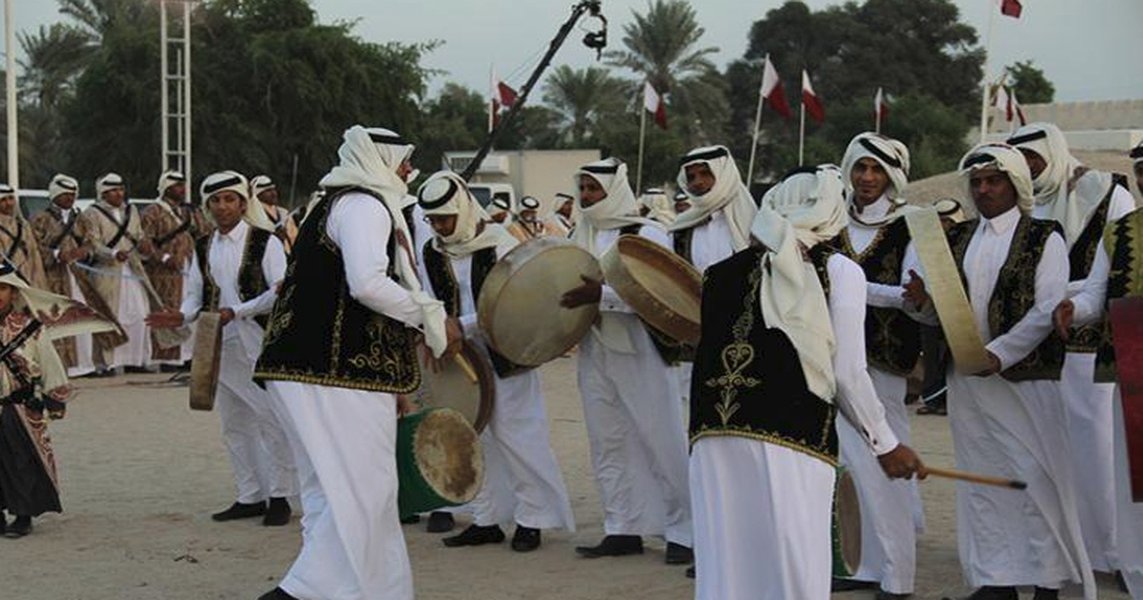
An image representing the cultural heritage of the Middle East, possibly showing historical artifacts or architecture.
Key Characteristics of Eastern Heritage (Generalizations):
While acknowledging the immense diversity, some common themes can be observed across various Eastern cultures, often contrasting with the prevalent individualism in the West. These include:
Emphasis on Collectivism and Social Harmony:
Many Eastern cultures place a strong emphasis on the group rather than the individual. Family, community, and societal well-being are often prioritized over individual desires and achievements. Maintaining social harmony and avoiding conflict are highly valued.
Respect for Authority and Hierarchy:
Respect for elders, authority figures, and established hierarchies is a significant aspect of many Eastern traditions. This can influence social interactions, decision-making processes, and organizational structures.
Importance of Tradition and History:
Eastern cultures often have a deep reverence for tradition, history, and ancestral wisdom. The past is seen as a guide for the present and future, and cultural practices are often passed down through generations with little alteration.
Different Philosophical and Religious Frameworks:
Eastern heritage is shaped by a wide array of philosophical and religious traditions, including Buddhism, Hinduism, Confucianism, Taoism, Islam, and various indigenous belief systems. These systems offer diverse perspectives on the meaning of life, ethics, and the relationship between humanity and the divine or natural world.

An image depicting the cultural heritage of North East India, potentially showing traditional dress or a cultural event.
Comparison and Contrast
Comparing and contrasting Western heritage, rooted in Judeo-Christian values and Anglo-American traditions, with Eastern heritage reveals significant differences in core values, societal organization, and cultural outlooks. It's important to remember these are broad comparisons and do not apply uniformly to every individual or group within these vast regions.
Core Values: Individualism vs. Collectivism
One of the most frequently cited differences lies in the emphasis on individualism in the West versus collectivism in many Eastern cultures. Western heritage, influenced by concepts of individual rights and freedoms, often encourages self-reliance, personal achievement, and independent thought. Eastern heritage, in contrast, often prioritizes the needs and harmony of the group, with individual identity being closely tied to family, community, or nation.
Societal Structures and Governance
Western political systems, particularly those influenced by Anglo-American traditions, tend towards liberal democracies with an emphasis on representative government, the rule of law, and the protection of minority rights. While diverse forms of governance exist in the East, historical systems have often been characterized by more centralized authority and a greater emphasis on social order and stability.
Approaches to Ethics and Morality
While both Western and Eastern traditions possess rich ethical frameworks, their foundations and emphasis can differ. Western ethics, influenced by Judeo-Christian thought and Enlightenment philosophy, often focus on universal principles, individual rights, and a sense of moral obligation. Eastern ethical systems, shaped by philosophies like Confucianism or Buddhism, may place greater emphasis on relational harmony, social duties, and the cultivation of virtues within a specific social context.
Perception of Time and Progress
Western cultures often have a linear perception of time, with a focus on progress, innovation, and future achievement. There is often a drive for change and improvement. Many Eastern traditions, while not static, may place a greater value on continuity, tradition, and cycles, with a deeper connection to the past.
Visualizing Cultural Dimensions
To illustrate some of these potential differences in a simplified way, we can use a radar chart. This chart attempts to visualize generalized tendencies across several cultural dimensions, keeping in mind that these are broad strokes and do not capture the nuances within each heritage. The data points represent a subjective interpretation based on common observations and do not reflect empirical measurements.
This radar chart attempts to visually represent the general tendencies discussed, with higher values indicating a stronger emphasis on that dimension within the respective heritage. As you can see, Western heritage is depicted with a higher emphasis on individualism, rights, and a linear time orientation, while Eastern heritage shows a stronger emphasis on collectivism, duties, and a more cyclical time orientation. The communication styles are also presented as a point of contrast, with Western cultures often perceived as more direct and Eastern cultures more indirect, although this varies greatly within each region.
Summary of Comparisons:
| Aspect | Western Heritage | Eastern Heritage |
|---|---|---|
| Core Values | Individualism, Rights, Justice | Collectivism, Harmony, Duties |
| Societal Structure | Often democratic, emphasis on individual liberty | Diverse, can emphasize social order and hierarchy |
| Legal System (Anglo-American Influence) | Common Law (precedent-based) | Diverse, often Civil Law (code-based) |
| Philosophical/Religious Influences | Judaism, Christianity, Greek Philosophy, Enlightenment | Buddhism, Hinduism, Confucianism, Taoism, Islam, etc. |
| Time Perception | Linear, focus on progress and future | Diverse, can be more cyclical, value on tradition and past |
| Communication Style | Often more direct | Often more indirect (varies) |
It is crucial to reiterate that these are generalizations and should not be used to stereotype individuals or entire populations. Both Western and Eastern societies are dynamic and constantly evolving, with increasing globalization leading to greater cultural exchange and blending of traditions.
The Influence of Heritage on Modern Identity
Cultural heritage plays a significant role in shaping modern identities, both at the individual and collective levels. For individuals, heritage can provide a sense of belonging, continuity, and a framework for understanding their place in the world. It influences values, beliefs, and behaviors.
At a collective level, shared heritage can foster social cohesion and a sense of national or group identity. It can also be a source of both pride and conflict, particularly in multicultural societies or when historical narratives differ.
The interplay between Western and Eastern heritages in the modern world is complex. Globalization has led to the spread of Western cultural products and ideas to the East, and vice versa. This cultural exchange can lead to both hybridization and tension as different value systems interact.
Frequently Asked Questions
Recommended Further Exploration
- Explore the impact of Greek philosophy on Western thought.
- Learn about the diversity of Asian cultures.
- Understand the history and principles of common law.
- Investigate the dynamics of cultural exchange between East and West.
References
 emersongreenblog.wordpress.com
Last updated May 20, 2025