
WF₆ Reaction with Aluminum: A Comprehensive Analysis
Exploring the Chemistry Behind Tungsten Deposition in Semiconductor Manufacturing
Key Takeaways
- Efficient Tungsten Deposition: The reaction between tungsten hexafluoride (WF₆) and aluminum (Al) facilitates the deposition of high-purity tungsten layers essential for semiconductor interconnects.
- Volatile Byproducts Management: Formation of volatile aluminum subfluorides (AlFₓ) ensures a clean deposition process by allowing easy removal of byproducts from the reaction chamber.
- Process Optimization Challenges: Controlling reaction parameters such as temperature and pressure is crucial to prevent the formation of passivating layers and ensure uniform thin film growth.
Introduction
The reaction between tungsten hexafluoride (WF₆) and aluminum (Al) plays a pivotal role in the semiconductor manufacturing industry, particularly in the deposition of tungsten (W) layers through chemical vapor deposition (CVD) and atomic layer deposition (ALD) processes. Tungsten is favored in semiconductor applications for its excellent electrical conductivity, high melting point, and resistance to electromigration, making it an ideal material for interconnects and vias within integrated circuits.
Chemical Reaction Details
Reaction Mechanism
The interaction between WF₆ and aluminum is a redox reaction where tungsten transitions from a +6 oxidation state in WF₆ to its elemental state, while aluminum is oxidized to form aluminum fluorides. This exothermic reaction typically occurs at elevated temperatures, enhancing the kinetics and facilitating the formation of a uniform tungsten layer on the aluminum substrate.
Overall Reaction Equation
The stoichiometric representation of the reaction is as follows:
$$2 \, \text{WF}_6 + 2 \, \text{Al} \rightarrow 2 \, \text{W} + 2 \, \text{AlF}_3$$
Applications in Semiconductor Manufacturing
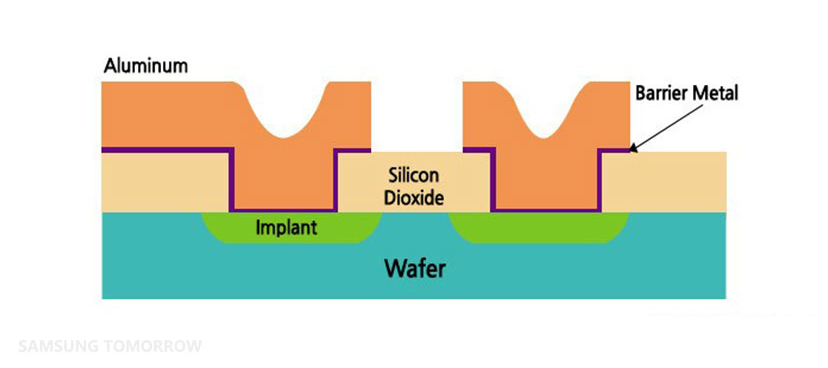
In the realm of semiconductor fabrication, the WF₆-Al reaction is integral to the deposition of tungsten layers on aluminum-containing substrates. The tungsten serves as a conductive pathway, crucial for the functioning of integrated circuits. This process is employed to create reliable interconnects that withstand the thermal and electrical stresses inherent in modern electronic devices.
Process Parameters
Optimizing the conditions under which WF₆ reacts with aluminum is essential for achieving high-quality tungsten deposition. Key parameters include temperature, pressure, gas flow rates, and the presence of co-reactants such as silane (SiH₄), which may be introduced to aid the deposition process.
| Parameter | Typical Range | Impact on Reaction |
|---|---|---|
| Temperature | 300°C - 600°C | Influences reaction kinetics and film uniformity |
| Pressure | 1 Torr - 100 Torr | Affects gas phase reactions and deposition rates |
| Gas Flow Rate | 50 sccm - 500 sccm | Controls the availability of reactants and removal of byproducts |
| Co-reactants | Optional (e.g., SiH₄) | Enhances film properties and deposition control |
Advantages and Challenges
Advantages
- High-Purity Tungsten Layers: The WF₆-Al reaction yields metallic tungsten with minimal impurities, ensuring superior electrical and mechanical properties.
- Scalability: The process is compatible with large-scale manufacturing, making it suitable for mass production of semiconductor devices.
- Volatile Byproducts: Production of volatile aluminum subfluorides (AlFₓ) allows for the easy evacuation of byproducts, maintaining chamber cleanliness and reducing contamination risks.
Challenges
- Passivating Layer Formation: AlFₓ can form a passivating layer on the aluminum surface, potentially inhibiting further deposition if not properly managed.
- Sensitivity to Reaction Conditions: The reaction is highly sensitive to variables such as temperature, pressure, and impurities, necessitating precise control to ensure uniform deposition.
- Safety Concerns: WF₆ is a highly corrosive and toxic substance. Its reaction with moisture can produce hazardous byproducts like hydrogen fluoride (HF), requiring stringent safety protocols.
Safety and Reactivity Precautions
Handling WF₆ demands meticulous safety measures due to its reactive and corrosive nature. Proper ventilation, protective equipment, and gas handling systems are imperative to prevent exposure and accidental release. Additionally, reaction chambers must be designed to withstand corrosive byproducts and facilitate the safe removal of gaseous aluminum subfluorides.
Optimization Techniques
To mitigate challenges associated with the WF₆-Al reaction, several optimization strategies are employed:
- Temperature Control: Maintaining optimal temperatures ensures the reaction proceeds efficiently without excessive formation of passivating layers.
- Pressure Regulation: Fine-tuning pressure levels aids in controlling gas flow dynamics and deposition rates.
- Co-reactant Utilization: Introducing co-reactants like silane (SiH₄) can enhance film properties and prevent unwanted layer formation.
- Chamber Design Enhancements: Implementing advanced reactor designs facilitates uniform gas distribution and effective byproduct removal.
Detailed Reaction Mechanism
The reaction between WF₆ and aluminum involves several microscopic steps that contribute to the overall deposition process:
Surface Adsorption
WF₆ molecules adsorb onto the aluminum surface, positioning themselves for the subsequent redox reaction. The surface characteristics of aluminum, such as its crystallographic orientation and purity, significantly influence adsorption efficiency.
Redox Transformation
Following adsorption, tungsten is reduced from its +6 oxidation state in WF₆ to elemental tungsten. Concurrently, aluminum is oxidized, forming aluminum fluoride compounds. This redox transformation is facilitated by the high reactivity of WF₆ and the reducing nature of aluminum.
Layer Formation
As tungsten is deposited, it aggregates to form a continuous metallic layer. The self-limiting nature of the reaction ensures that the tungsten layer grows uniformly, provided that reaction parameters are meticulously controlled.
Impact on Semiconductor Device Performance
The quality and integrity of the tungsten layers deposited via the WF₆-Al reaction have profound implications for semiconductor device performance:
- Electrical Conductivity: High-purity tungsten ensures minimal resistive losses, enhancing the efficiency of electrical pathways within integrated circuits.
- Thermal Stability: Tungsten's high melting point contributes to the thermal stability of interconnects, preventing failures under operational stresses.
- Reliability: Resistance to electromigration mitigates the risk of conductive pathway degradation over time, ensuring long-term device reliability.
Advanced Deposition Techniques
Modern semiconductor fabrication leverages advanced deposition techniques to optimize the WF₆-Al reaction:
Atomic Layer Deposition (ALD)
ALD allows for atomic-scale control over tungsten layer thickness, enabling the fabrication of ultra-thin and conformal films crucial for nanoscale device architectures.
Pulsed Chemical Vapor Deposition (P-CVD)
P-CVD involves pulsing the WF₆ and aluminum precursors sequentially, enhancing layer uniformity and reducing defects compared to continuous flow methods.
Environmental and Sustainability Considerations
With increasing focus on sustainable manufacturing practices, the WF₆-Al reaction process incorporates measures to minimize environmental impact:
- Byproduct Recycling: Implementing systems to capture and recycle volatile aluminum subfluorides reduces waste and resource consumption.
- Energy Efficiency: Optimizing reaction conditions to lower temperature and pressure requirements contributes to energy conservation.
- Emission Controls: Advanced filtration and gas treatment technologies prevent the release of hazardous byproducts into the environment.
Future Perspectives
As semiconductor devices continue to scale down in size and complexity, the role of tungsten deposition processes like the WF₆-Al reaction becomes increasingly critical. Future advancements are anticipated in the following areas:
-
Enhanced Process Control: Development of real-time monitoring and feedback systems to dynamically adjust reaction parameters for optimal deposition.
-
Material Innovations: Exploration of alternative precursors and co-reactants to improve deposition efficiency and film properties.
-
Integration with Emerging Technologies: Adapting the WF₆-Al reaction process for integration with novel semiconductor architectures, such as 3D stacking and flexible electronics.
Conclusion
The reaction between tungsten hexafluoride (WF₆) and aluminum (Al) is a cornerstone in the deposition of tungsten layers for semiconductor manufacturing. By facilitating the formation of high-purity tungsten with controlled thickness and uniformity, this reaction underpins the reliability and performance of modern electronic devices. While the process offers significant advantages, including efficient deposition and volatile byproduct management, it also presents challenges related to passivating layer formation and safety concerns. Ongoing advancements in process optimization, safety protocols, and environmental sustainability are essential to harness the full potential of the WF₆-Al reaction in advancing semiconductor technology.
References
Last updated January 23, 2025