
Unlocking the World of CLOs: What Are Collateralized Loan Obligations?
Dive into the structure, benefits, and risks of these complex financial instruments pooling corporate loans.
Key Insights into CLOs
- Structured Finance Vehicle: CLOs pool primarily leveraged corporate loans (often below investment grade) and repackage them into securities sold to investors in different risk layers called tranches.
- Active Management: Unlike some other securitized products, CLOs are actively managed by portfolio managers who can buy and sell underlying loans to optimize performance and mitigate risk.
- Tiered Risk & Return: The tranche structure (ranging from senior AAA to junior/equity) allocates risk and return differently, offering varying levels of protection and yield to suit diverse investor appetites.
Decoding Collateralized Loan Obligations (CLOs)
A Collateralized Loan Obligation, commonly known as a CLO, is a sophisticated type of structured financial security. It operates by bundling together a diverse portfolio of loans—predominantly leveraged loans extended to corporations, often those with credit ratings below investment grade—and then issuing debt securities backed by this pool of loans to investors. Think of it as a dedicated company (a Special Purpose Vehicle or SPV) created solely to acquire these loans and finance the purchase by selling different types of notes (securities) to investors.
This process is a form of securitization, where the cash flows generated from the interest and principal payments on the underlying corporate loans are collected and distributed to the holders of the CLO securities according to a predefined priority structure.
The Anatomy of a CLO: How It's Built
Understanding the structure of a CLO is key to grasping its function and associated risk/return profiles. Here’s a breakdown:
1. The Collateral Pool: The Foundation
The core of a CLO is its portfolio of underlying assets. These are typically:
- Leveraged Loans: Loans made to companies that already carry significant debt, often with below-investment-grade credit ratings (rated BB+ or lower).
- Senior Secured Loans: A large portion usually consists of first-lien senior secured loans, meaning they have the highest priority claim on the borrower's assets in case of default. Some CLOs might also include second-lien or unsecured loans.
- Diversification: A typical CLO portfolio contains loans from 150-250 different borrowers across various industries to spread risk.
- Floating Rates: Most leveraged loans have floating interest rates (e.g., tied to SOFR or EURIBOR), which helps protect the CLO and its investors from rising interest rate risk compared to fixed-rate assets.
2. The Special Purpose Vehicle (SPV): The Issuer
A legally distinct entity, the SPV, is established by the CLO manager. This SPV buys the portfolio of loans from banks or the open market. It then issues the CLO securities (notes or tranches) to investors, using the proceeds to pay for the loans. The SPV legally owns the loans, isolating them from the originating banks or the CLO manager.
3. The Tranche Structure: Layering Risk and Return
The securities issued by the SPV are divided into different classes or "tranches," each carrying a different level of credit risk and offering a corresponding return. This tiered structure is crucial:
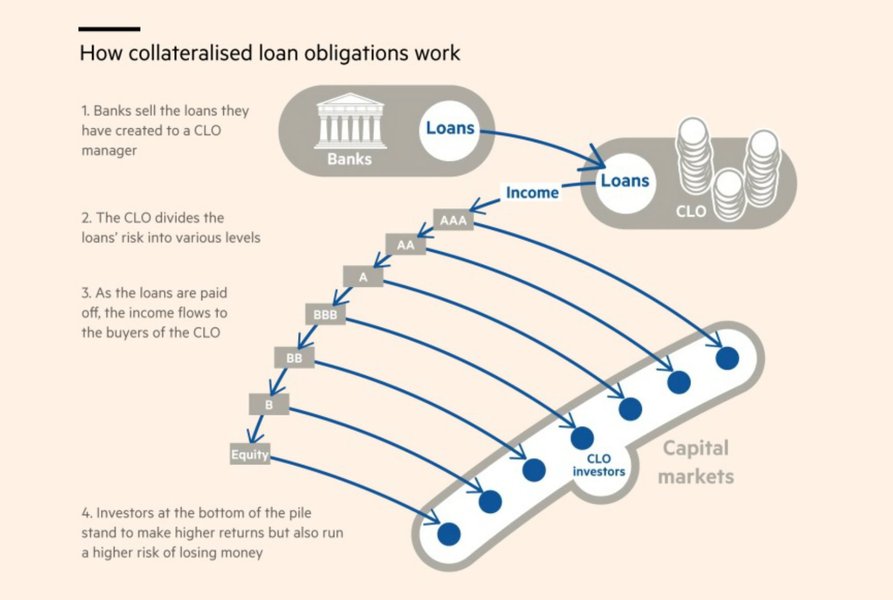
Typical CLO Structure Illustrating Debt and Equity Tranches
- Senior Tranches (e.g., AAA, AA-rated): These are the highest-rated and safest tranches. They have first priority on receiving payments from the loan pool and are the most protected against losses from loan defaults. Consequently, they offer the lowest yields.
- Mezzanine Tranches (e.g., A, BBB, BB-rated): Sitting below the senior tranches, these offer higher yields to compensate for their increased risk exposure. They absorb losses only after the equity and lower-rated tranches are wiped out.
- Equity Tranche (Unrated): This is the lowest and riskiest tranche. Equity holders receive any residual cash flows only after all debt tranches have been paid. They bear the first losses if loans default but have the potential for the highest returns if the underlying portfolio performs well.
This hierarchical system, often called the "waterfall," dictates how cash flows from the loan repayments are distributed. Interest and principal payments flow down from the top (senior) to the bottom (equity), and losses flow up from the bottom.
4. Active Management: Optimizing the Portfolio
A defining feature of CLOs is that they are actively managed. A dedicated CLO manager is responsible for selecting and purchasing the initial loan portfolio and then actively trading loans within the portfolio during the CLO's "reinvestment period" (typically the first few years). The manager aims to:
- Maintain or improve the credit quality of the portfolio.
- Maximize returns for the investors, especially the equity tranche holders.
- Ensure the portfolio complies with various tests and covenants regarding diversification, credit quality, and concentration limits.
Visualizing the CLO Ecosystem
To better understand the interconnected components of a Collateralized Loan Obligation, the following mindmap illustrates the key elements and their relationships within the CLO structure.
(Below Investment Grade)"] id1a2["Primarily Senior Secured"] id1a3["Floating Rate Nature"] id1a4["Diversified Portfolio
(150-250 Loans)"] id1b["Special Purpose Vehicle (SPV)"] id1b1["Legal Issuer of CLO Securities"] id1b2["Acquires & Holds Loans"] id1c["Tranche Structure"] id1c1["Senior Tranches (AAA/AA)"] id1c1a["Lowest Risk, Lowest Yield"] id1c1b["Highest Payment Priority"] id1c2["Mezzanine Tranches (A/BBB/BB)"] id1c2a["Moderate Risk & Yield"] id1c3["Equity Tranche (Unrated)"] id1c3a["Highest Risk, Highest Potential Yield"] id1c3b["First Loss Position"] id1c3c["Residual Cash Flow Recipient"] id2["Core Processes"] id2a["Securitization"] id2a1["Pooling Loans"] id2a2["Issuing Securities"] id2b["Active Management"] id2b1["CLO Manager Role"] id2b2["Buying/Selling Loans"] id2b3["Portfolio Optimization"] id2b4["Monitoring Covenants"] id2c["Cash Flow Waterfall"] id2c1["Distribution Priority"] id2c2["Interest & Principal Payments"] id2c3["Loss Allocation"] id3["Participants"] id3a["Borrowers (Corporations)"] id3b["Originating Banks"] id3c["CLO Manager"] id3d["Investors (Institutions, Funds)"]
This mindmap outlines the flow from the underlying loans, through the SPV and tranching mechanism, to the active management and cash distribution processes that define a CLO.
Understanding CLO Tranche Characteristics
The different tranches within a CLO offer distinct profiles to investors. The radar chart below provides a comparative view of typical characteristics across Senior (AAA-rated), Mezzanine (BBB-rated), and Equity tranches based on key factors. Note that these are illustrative representations rather than precise data points.
As illustrated, senior tranches prioritize safety and payment certainty, offering lower yields. Conversely, the equity tranche assumes the most risk for the potential of higher returns. Mezzanine tranches provide a balance between the two extremes. Investors select tranches based on their specific risk tolerance and return objectives.
Benefits of Investing in CLOs
CLOs have become popular investment vehicles for several reasons:
- Attractive Yields: CLOs, particularly the mezzanine and equity tranches, typically offer higher yields compared to other corporate debt instruments of similar ratings, partly due to the underlying risk of leveraged loans and the complexity premium.
- Floating Rate Exposure: Since the underlying loans are mostly floating-rate, CLO payments adjust with benchmark rates. This offers investors a degree of protection against rising interest rates.
- Diversification: Investing in a CLO provides exposure to a broad basket of corporate loans across different issuers and industries, reducing concentration risk compared to investing in individual loans.
- Strong Structural Protections (especially for Senior Tranches): Features like subordination (the waterfall structure), overcollateralization (holding more assets than debt issued), and diversification requirements provide significant credit protection, particularly for senior noteholders. Historically, highly-rated CLO tranches (AAA/AA) have experienced very low default rates.
- Active Management Advantage: The CLO manager's ability to trade loans can help mitigate losses from deteriorating credits and potentially enhance returns by capitalizing on market opportunities.
Risks Associated with CLOs
Despite their benefits, CLOs also carry inherent risks:
- Credit Risk: The primary risk stems from the possibility of defaults in the underlying pool of leveraged loans, which are issued to less creditworthy companies. Losses are absorbed first by the equity tranche and then move up the capital structure.
- Market and Liquidity Risk: CLO tranches, especially mezzanine and equity pieces, can be less liquid than more standard corporate bonds. During times of market stress, selling CLO positions quickly or without significant price concessions can be challenging.
- Complexity: The intricate structure and the behavior of the underlying loan pool can make CLOs difficult to analyze and value, requiring specialized expertise.
- Manager Risk: The performance of a CLO is heavily dependent on the skill and decisions of the CLO manager. Poor management can lead to subpar returns or increased losses.
- Interest Rate Sensitivity: While floating rates offer protection, the basis risk (mismatch between loan benchmark rates and CLO liability rates) and the impact of rate changes on borrower health can still affect performance.
CLOs in Context: Comparison with Other Structured Products
CLOs belong to the broader family of structured finance products but have distinct characteristics compared to instruments like Collateralized Debt Obligations (CDOs) and Collateralized Mortgage Obligations (CMOs).
| Feature | Collateralized Loan Obligation (CLO) | Collateralized Debt Obligation (CDO) | Collateralized Mortgage Obligation (CMO) |
|---|---|---|---|
| Primary Underlying Assets | Corporate Leveraged Loans (Senior Secured, Floating Rate) | Diverse Debt Assets (Bonds, Loans, ABS, other CDOs, Mortgages - pre-2008 often subprime) | Mortgage Loans (Residential or Commercial) |
| Management Style | Actively Managed (Manager trades assets) | Can be Active or Static (Portfolio fixed) | Typically Static (Pool composition generally fixed) |
| Primary Risk Focus | Corporate Credit Default Risk | Varies widely depending on assets (Credit, Market, Correlation Risk) | Mortgage Prepayment Risk & Credit Risk |
| Historical Performance (Post-GFC) | Generally resilient, especially senior tranches; low default rates on AAA/AA. | Performance varies greatly by type; some types (e.g., mortgage-backed CDOs) performed poorly in 2008. | Performance tied to housing market cycles and interest rates. |
| Transparency & Structure | Generally considered more transparent and standardized post-crisis than many pre-crisis CDOs. | Can be highly complex and opaque, especially CDO-squared structures. | Structure focuses on allocating prepayment risk across tranches. |
This table highlights key differences. CLOs are specifically focused on corporate loans and benefit from active management, distinguishing them from the broader and sometimes more complex world of CDOs, as well as from CMOs which are tied to the real estate market.
Further Insights on CLOs
For a concise video explanation of Collateralized Loan Obligations, the following resource provides a helpful overview, touching upon their structure and the concerns surrounding them:
Collateralized Loan Obligations (CLOs) Explained in One Minute
This video offers a quick summary, complementing the detailed explanation provided here. It touches upon the basic mechanics and why these instruments sometimes draw attention from economists, particularly concerning systemic risk, although modern CLOs have structural features designed to enhance resilience compared to some pre-crisis securitizations.
Frequently Asked Questions about CLOs
What types of loans are typically found in a CLO?
CLOs predominantly hold senior secured leveraged loans issued to corporations, usually those with below-investment-grade credit ratings. These loans are 'senior' because they have priority claim on the borrower's assets in bankruptcy, and 'secured' because they are backed by specific collateral. Most are also 'floating-rate', meaning their interest payments adjust periodically based on a benchmark rate like SOFR.
Who typically invests in CLOs?
Investors in CLOs are typically institutional investors such as insurance companies, pension funds, banks, hedge funds, and asset managers. Different investors target different tranches based on their risk appetite and regulatory requirements. For example, insurance companies might prefer the higher-rated, lower-risk senior tranches, while hedge funds might invest in the higher-yielding, higher-risk equity tranche.
How does the CLO "waterfall" structure work for payments and losses?
The waterfall structure dictates the priority of payments. Interest and principal collected from the underlying loans flow down through the tranches, paying senior tranches first, then mezzanine, and finally the equity tranche (if funds remain). Conversely, if loans default and cause losses, the equity tranche absorbs these losses first, protecting the tranches above it. Losses then move up the structure, impacting mezzanine tranches before senior tranches.
Are CLOs the same as the CDOs implicated in the 2008 financial crisis?
No, while CLOs are a type of CDO, they differ significantly, especially from the mortgage-backed CDOs prominent in the 2008 crisis. CLOs are backed by corporate loans, not mortgages. They are actively managed, providing flexibility to respond to changing credit conditions. Post-crisis CLOs also generally have stricter structural protections (like higher overcollateralization) and greater transparency. Historically, CLOs, particularly senior tranches, have shown much lower default rates compared to the notorious subprime mortgage CDOs.
Recommended Further Exploration
- Explore a detailed comparison of the risk and return profiles across different CLO tranches.
- Investigate the specific role and impact of active management on CLO performance and stability.
- Learn about how Collateralized Loan Obligations have historically performed during periods of economic stress.
- Understand the key differences between cash flow CLOs and synthetic Collateralized Debt Obligations.
References
Last updated May 1, 2025