
What Do You Meme?
An engaging look into the party game that sparks creativity and laughter
Highlights
- Humorous Gameplay: Players combine caption cards with photo cards to create memes that win rounds based on humor.
- Multiple Editions: The game is available in various editions including a family-friendly version and an adult version with mature content.
- Versatility and Social Fun: Ideal for party nights, family gatherings, and social events owing to its creative and replayable design.
Introduction to What Do You Meme?
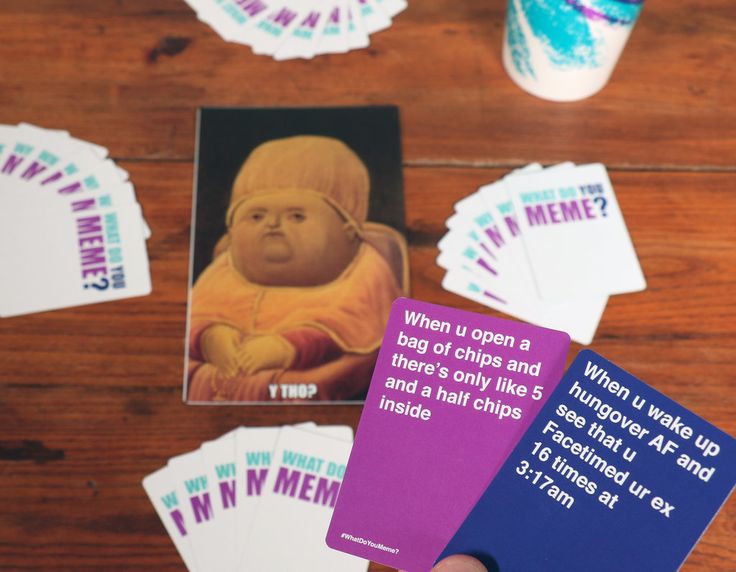
What Do You Meme? is a party card game that has captivated players of all ages by channeling the essence of meme culture into an engaging and competitive format. The game invites participants to leverage their wit and creative humor by pairing caption cards with photo cards that typically feature familiar images and meme icons. With its roots in the social media era, the game resonates particularly well with millennials and Gen Z, while its various editions ensure that it is accessible and enjoyable for different groups, including families.
The concept behind What Do You Meme? is simple yet effective: it combines familiar internet imagery with humorous phrases, challenging players to create the funniest meme combinations. Each round, a designated judge chooses the best meme crafted by the other players, making game dynamics unpredictable and entertaining. Beyond its humor, this game functions as a social lubricant, making it a popular choice for game nights, parties, and other social gatherings.
Gameplay and Mechanics
Basic Rules and Structure
The gameplay of What Do You Meme? is designed to be straightforward yet flexible enough to encourage creativity and laughter. The game typically supports 3-20 players, although it works best with 4-6 participants for balanced competition. Every round follows a systematic process, ensuring that everyone gets a chance to both participate in meme-making and judge the humor of their peers.
The Role of the Judge
In each round, one player is chosen to be the judge. The judge’s critical role is to evaluate the meme combinations submitted by the other players by selecting the funniest or most clever caption that best complements the photo card displayed. The judge's decision is decisive, and the player whose caption is selected wins the round, earning a point or receiving the photo card as a marker of success.
Player Participation
All non-judging players are provided with a hand of caption cards that contain witty, humorous, or sometimes edgy phrases. Once the judge reveals a photo card on an easel or similar display, each player must choose one caption card that they believe turns the photo into a hilarious meme. These captions are submitted face-down to ensure each participant’s choice remains concealed until the judge reviews them.
The dynamic of having a rotating judge introduces a level of unpredictability, as different individuals may appreciate different types of humor. This rotation also ensures that every player gets an opportunity to influence the game’s outcome not only by creating memes but also by judging them.
Game Rounds and Winning
A round in What Do You Meme? begins with the selection of the judge, followed by the display of a photo card. The other players then have a set amount of time to select their caption card that, when paired with the photo, forms a meme. After all submissions are collected, the judge evaluates the memes based on their humor, cleverness, and overall impact, then chooses a winner.
The player who wins the round typically receives the photo card as a scoring token. The game proceeds for a predetermined number of rounds or until one or more players achieve a target score. Winning ultimately depends on understanding the preferences of the judge—this may mean the game sometimes rewards not just cleverness, but also the ability to tailor humor to the tastes of whoever is judging.
Replayability and Variations
What Do You Meme? is celebrated for its high replayability. Many players return to the game because every round produces new meme combinations that can be outrageous, surprising, or even controversial. The game’s inherent design encourages creative thinking, as it allows players to explore different angles of humor. Given the subjective nature of comedy, no two rounds are ever the same, which keeps the gameplay fresh and engaging.
Several variations of the game exist, including themed editions that cater to specific interests or offer alternative visual content. For instance, there is a Family Edition that is carefully curated to be appropriate for younger audiences, featuring PG-rated captions and images suitable for all ages, along with a Core Game version meant for adults where humor can be more adventurous.
Components and Editions
Core Components Common to All Editions
Across its different versions, What Do You Meme? remains consistent in offering key components that serve as the building blocks of gameplay. These include a deck of caption cards, a deck of photo cards, and an easel for displaying photo cards during gameplay. The standard adult version generally includes:
- A set of 360 caption cards that contain a mix of witty, sarcastic, and edgy humor.
- A set of 75 photo cards that feature iconic images drawn from popular memes or culturally significant visuals.
- An easel that serves as a display platform for the current photo card, ensuring that all players can clearly see and interact with it.
Family Edition vs. Core Game Edition
To cater to diverse audiences, What Do You Meme? is available in several editions:
- Core Game (Adult Version): This edition is designed for a mature audience (generally ages 17+). It includes humor and references that may be considered edgy or inappropriate for younger players. With photo cards often being derived from popular internet memes and caption cards that contain mature language, this version suits adult parties and social gatherings.
- Family Edition: This version is suitable for a broader age range starting from 8 years old. The caption cards and photo cards in the Family Edition are curated to be family-friendly, ensuring that the content is appropriate for all players. The tone remains humorous but avoids any mature or potentially controversial references.
Detailed Look at Game Components
Below is a table that clearly outlines the components associated with both the Core Game and the Family Edition:
| Component | Core Game (Adult Version) | Family Edition |
|---|---|---|
| Caption Cards | 360 cards with edgy and mature humor | 300 cards with PG-rated content |
| Photo Cards | 75 cards featuring iconic internet memes and images | 108 cards featuring family-friendly images |
| Display Easel | Included for photo card display | Included for photo card display |
| Number of Players | Best with 4-6 players; supports 3-20 players | Best with 4-6 players; supports 3-20 players |
| Game Duration | Approximately 15 minutes per game session | Approximately 15 minutes per game session |
The table above provides a clear and concise summary of the various components, making it easy for players to understand which edition might best suit their needs.
Cultural Impact and Social Dynamics
Reflection of Meme Culture
What Do You Meme? is not just a game; it is a cultural phenomenon that reflects the rapid evolution of internet humor. Memes have become a cornerstone of online communication, representing shared experiences and cultural touchstones, and this game encapsulates that movement by allowing players to craft their own memes in a fun, competitive setting.
The game taps into familiar imagery and humor prevalent in social media, providing players with a platform to express their creativity in a context that is both modern and relatable. The melding of visual media with text-based humor mirrors the way memes proliferate online—merging relatable images with concise, often witty text to create content that resonates quickly with audiences.
Enhancing Social Interactions
One of the game’s strongest points is its ability to facilitate social interactions. What Do You Meme? is designed as a party game that encourages dialogue, laughter, and even playful banter amongst players. When friends, family, or colleagues gather to play, the game often becomes a catalyst for discussions that extend beyond the rounds themselves.
The judging process, in particular, plays a crucial role in driving conversation. With each judge bringing their own sense of humor to the table, discussions about why a particular meme was deemed the funniest can often lead to insights into differing perspectives on humor. This creates an inclusive environment where creative expression is celebrated, and personal tastes are shared openly.
Team-Building and Ice-Breaking
Organizations and social groups sometimes use What Do You Meme? as an unexpected tool for team building. The game’s informal structure and reliance on humor can help break the ice in settings that might otherwise be tense or overly formal. By encouraging participants to let their guard down and engage in light-hearted competition, the game fosters a sense of camaraderie among players.
Furthermore, through creating and critiquing memes, players can explore how humor can be subjective, which in turn nurtures an appreciation for diversity in thought and opinion. Such experiences not only contribute to personal enjoyment but also strengthen social bonds.
Strategic Insights and Winning Tips
Understanding the Judge
In What Do You Meme?, success often hinges on understanding the preferences and personality of the judge for any given round. Each judge’s sense of humor can vary widely; therefore, tailoring your caption card choice to match their taste can significantly increase your chances of winning. Observing past choices and reactions when you or others play can offer valuable insights into which types of humor a particular judge appreciates.
Adapting Your Strategy
To excel in the game, players should remain adaptable. While a caption that might be a hit with one judge could be puzzling to another, adaptability is key. During early rounds, experiment with different types of captions—ranging from sarcastic wit to subtle puns—to gauge what tends to resonate with the group.
Another strategic element involves timing and the element of surprise. If you have a set of caption cards that are particularly edgy or surprising, saving them for a round when the judge seems to favor bold humor can be advantageous. As the game progresses, keeping track of which cards have been played and understanding the evolving tone can provide a significant edge.
Leveraging Creativity
One of the most enjoyable aspects of What Do You Meme? is the creative freedom it offers. The game encourages players to think outside the box and often rewards those who can merge seemingly unrelated ideas into a coherent, humorous meme. The imaginative process not only makes the game fun but also serves as a creative exercise, pushing participants to rethink conventional interpretations of everyday images.
Creativity in this game also means being open to risk-taking when selecting your caption cards. The unexpected can sometimes be the most humorous, and taking a risk with a caption that might initially seem outlandish can pay off if it strikes a chord with the judge.
Analysis of Game Editions and Their Market Appeal
Adult vs. Family Play
What Do You Meme? offers two distinct editions that cater to different audiences. The adult version is crafted with the intent of appealing to people who appreciate humor that pushes boundaries. It includes caption cards with material that might be considered provocative or mature, embodying the spirit of edgy internet humor.
Conversely, the Family Edition is designed to include content that is appropriate for younger audiences. By curating caption cards and photo cards that are PG-rated, the Family Edition offers an opportunity for families to engage in creative humor without the risk of crossing lines that might be inappropriate for children. This careful segmentation ensures that the game remains accessible across different social settings without alienating any particular demographic.
Market Impact and Cultural Relevance
Since its inception, What Do You Meme? has garnered significant attention and rapidly become a staple in the party game genre. Its ability to tap into meme culture—a vibrant and ever-changing facet of modern communication—has contributed to its widespread popularity. The game’s commercial success can be attributed to its multi-faceted appeal: it is as much a canvas for personal creativity as it is a competitive game.
The divergence into distinct editions has allowed the game to achieve a broad market appeal. Adults might relish the freedom to engage with humor in a less restrictive context, while families appreciate a fun and safe environment to enjoy an evening together. This dual appeal keeps the game relevant in diverse cultural settings, ensuring longevity in a market that is constantly evolving.
Comparative Interests and Social Dynamics in Gameplay
Examining Similar Party Games
What Do You Meme? shares similar gameplay concepts with other popular party games that emphasize creative responses and humor, such as Apples to Apples and Cards Against Humanity. Yet, What Do You Meme? distinguishes itself by directly integrating elements of internet culture, offering players familiar visual references and meme constructs that resonate with the digital age.
When compared to other games, the focus on image-caption pairing creates a dynamic that is both visually engaging and mentally stimulating. The direct emulation of meme creation makes it uniquely interactive, as players find themselves combining digital culture with real-life social interactions in a playful setting.
User Experience and Social Interaction
Observations from numerous game sessions reveal that What Do You Meme? fosters not only humor but also a sense of unity and participation among players. The casual yet competitive environment encourages dialogue, spark creative discussions about various internet trends, and often leads to lasting memories. Social interactions are further enhanced by playful teasing, discussions over what makes a meme humorous, and debates over cultural references in the captions.
In many cases, the game becomes a springboard for creative storytelling as players draw on personal experiences and cultural touchstones beyond what is printed on the cards. Such interactions enrich the experience and can lead to broader conversations that extend well beyond the confines of the game.
Creating an Inclusive Atmosphere at Parties and Gatherings
Encouraging Participation
One major reason behind the game’s success is its capacity to create an inclusive atmosphere that invites participation from everyone in a group. With humor being inherently subjective, What Do You Meme? allows players to experience a diversity of opinions, encouraging those who are typically quieter to contribute when they believe they have the winning meme.
The game’s structure—comprising a rotating judge and secret caption submissions—helps mitigate social pressure while still cultivating an environment of spirited competition. This format means that, regardless of one’s role, every player experiences the thrill of both contributing to the collective fun and enjoying the art of humor.
Adaptability for Various Occasions
Whether it’s a casual night out with friends, a family reunion, or even a structured team-building session at work, What Do You Meme? adapts well to any scenario. For a casual gathering, the game serves as a conversation starter and a means to unwind. At family events, its Family Edition ensures that humor is shared in a safe and inclusive environment. Additionally, its flexible rules allow for modifications and house rules, meaning that groups can tailor the game to fit their specific needs and preferences.
This adaptability not only enhances its appeal but also contributes to the game’s longevity. Even after repeated plays, the creativity required in pairing captions with memes means that each session remains unique and engaging. The game’s ability to seamlessly transition between various social contexts is one of the key factors behind its persistent popularity.
Advanced Strategies and Tactical Play
Anticipating Judge Preferences
The tactical component of What Do You Meme? often revolves around the player’s ability to anticipate the judge’s humor preferences. Since the outcome of each round is heavily dependent on the judge’s subjective opinion, successful players tend to observe patterns in judging behavior over multiple rounds. They learn to identify the type of humor—be it surreal, dark, slapstick, or clever wordplay—that tends to win rounds.
This attentive observation can then inform a more refined strategy for subsequent rounds. For example, if a judge has historically favored subtle puns over overtly bizarre statements, adapting submission choices to match this preference can help secure more wins. Over time, this strategic interplay makes the game not only about chance but also about understanding and predicting social cues.
Creative Risk Management
While understanding the judge is vital, players also need to balance the creative risk associated with certain caption cards. Innovative or unconventional choices might sometimes result in big wins if executed right, but they also carry the risk of misunderstanding if the humor does not align with the judge’s taste.
A successful player is one who masters the art of deciding which cards to play when and with whom. By maintaining a diverse set of strategies that span from safe, mainstream humor to bold, unexpected plays, one can navigate the delicate balance between creative risk and reward. This balance is what keeps the game both challenging and deeply engaging as it evolves with each round.
Extending the Experience Beyond the Game
Community and Online Engagement
The impact of What Do You Meme? extends beyond physical game nights; its influence can also be seen in online communities. Players frequently share their favorite meme creations on social media platforms, further blurring the line between the game and the digital meme culture it emulates. This cross-medium presence helps create a vibrant community that celebrates humor in all its forms.
Online discussions and forums dedicated to the game provide a space for enthusiasts to swap strategies, share memorable game moments, and even submit suggestions for new caption or photo cards. Such community engagement not only helps perpetuate interest in the game but also contributes to its evolution, ensuring that each edition remains relevant in an ever-changing digital landscape.
Integration with Digital Media
In recent editions, there have been inventive integrations with digital media, such as including GIFs along with photo cards to add another layer of humor and versatility to the game. These expansions not only cater to a tech-savvy audience but also enable players to engage with the game on multiple sensory levels, blending visual artistry with the immediacy of humorous captions.
The ability to incorporate multimedia elements has allowed What Do You Meme? to evolve with the times, further cementing its status as a game that captures the spirit of our digital age while remaining accessible and entertaining.
Conclusion and Final Thoughts
In summary, What Do You Meme? is much more than a card game—it is a dynamic expression of modern humor and creativity. With its engaging blend of visual stimuli and witty, often irreverent captions, the game provides an accessible and fun way to explore the integral role of memes in contemporary culture. Its simple yet versatile format allows for a variety of play styles and has made it a popular choice for diverse audiences ranging from casual parties to family gatherings.
Whether you prefer the adult-oriented version with its edgy humor or the Family Edition that keeps the content wholesome, the game adapts to its audience in a way that bridges generational and cultural gaps. Strategic gameplay elements, such as anticipating the judge's preferences and managing creative risks, add layers of complexity that extend the enjoyment far beyond a simple round of cards.
Ultimately, What Do You Meme? stands as a testament to how traditional tabletop games can evolve by embracing the zeitgeist of digital meme culture. It not only entertains but also fosters an environment of collaborative creativity and social interaction that can enrich any gathering. The blend of humor, strategy, and cultural commentary makes it a unique and enduring addition to the realm of party games.
References
- What Do You Meme? - BoardGameGeek
- How to Play What Do You Meme? - wikiHow
- WHAT DO YOU MEME? Core Game (New Edition) - Amazon
- What Do You Meme? Official Game Rules
- What Do You Meme? Family Edition
Recommended
Last updated February 20, 2025