
A Day Without Dollars: Exploring the Impact of a Global Buying Pause
Unpacking the economic and social ripple effects of a single day without consumer spending.
Key Insights from a Hypothetical No-Buy Day
- Immediate Disruption: A sudden halt in consumer spending, even for a single day, would cause immediate disruption across various sectors, particularly retail and food services, potentially leading to significant, albeit temporary, financial losses for businesses.
- Symbolic vs. Economic Impact: While a one-day "no buy" event might have a limited long-term macroeconomic impact due to deferred purchases, its symbolic significance as a protest against consumerism and a call for mindful spending could be substantial.
- Highlighting Economic Dependence: Such a day would starkly highlight the global economy's heavy reliance on continuous consumer activity, revealing vulnerabilities in supply chains and business models built on constant purchasing.
The idea of a day where everyone refrains from buying anything is a fascinating thought experiment that brings into sharp focus the intricate workings of our consumer-driven economy. While a truly universal and complete halt in purchasing for a full 24 hours is highly improbable in the real world, exploring its potential consequences provides valuable insights into the mechanics of commerce, supply chains, and consumer behavior. This hypothetical scenario allows us to examine the immediate disruptions, the short-term economic tremors, and the broader implications for a society deeply intertwined with the act of buying and selling.
At its core, consumer spending is the engine of modern economies. In the United States, for example, personal consumption expenditures consistently make up a significant portion—nearly 70%—of the Gross Domestic Product (GDP). This statistic underscores the profound impact individual purchasing decisions have on national economic health. Therefore, imagining a day without any such transactions is to imagine this primary engine momentarily sputtering to a halt.

A visual representation of the potential stillness if businesses experienced a day without customers.
The Immediate Fallout: A Jolt to the System
If a global "no buy" day were to occur, the most immediate and visible effects would be felt by businesses, particularly those in the retail and food service sectors. Shops would be empty, cash registers silent, and online shopping carts abandoned. Restaurants would have no diners, and many perishable goods would likely go to waste. This sudden lack of demand would create an immediate disruption in the flow of goods and services.
For large retailers and online marketplaces accustomed to processing millions of transactions daily, a day without purchases would represent a significant, albeit perhaps not catastrophic in the long term, loss of revenue for that specific period. Small businesses, however, with tighter margins and less cash reserves, could feel the pinch more acutely. A single day of zero sales could impact their ability to cover immediate expenses.
Beyond the direct loss of sales, there would be logistical challenges. Supply chains are optimized for continuous movement of goods based on predictable demand. A sudden cessation of buying would mean goods intended for sale that day would remain unsold, potentially leading to storage issues or the need to rapidly adjust future orders. This could have a ripple effect back up the supply chain to manufacturers and raw material providers, although the impact of a single day would likely be minimal beyond the initial point of sale.
Economic Tremors: More Than Just a Blip?
While a single day's absence of buying might not trigger a full-blown economic collapse, it would certainly register as a noticeable tremor. Economic indicators that track daily or weekly sales figures would show a dramatic dip. This would likely cause concern among economists and policymakers, highlighting the fragility of systems reliant on constant consumption.
The question arises: would this lost day of spending simply be recouped the following day? In many cases, yes. People would still need to buy groceries, fill their cars with gas, or make essential purchases. Non-essential purchases might be postponed rather than cancelled entirely. This deferred demand could lead to a surge in buying on the subsequent days, effectively smoothing out the initial dip over a slightly longer period. However, some impulse purchases or dining-out experiences might be lost opportunities that wouldn't be fully recovered.
The impact on financial markets could also be observed. Companies that rely heavily on daily sales might see a temporary dip in their stock prices as investors react to the lack of activity. This underscores how quickly market sentiment can be influenced by perceived changes in consumer behavior, even if temporary.
The Concept of Buy Nothing Day
The idea of abstaining from shopping for a day is not purely hypothetical; it's the core principle behind "Buy Nothing Day." This international day of protest against consumerism is typically held the day after U.S. Thanksgiving (Black Friday) in North America, the UK, Finland, and Sweden, coinciding with one of the busiest shopping days of the year. Its purpose is largely symbolic – to encourage people to reflect on their consumption habits and the environmental and social impacts of overconsumption. While Buy Nothing Day sees participation from many, it is far from a universal halt in spending, limiting its overall economic impact but reinforcing its message.
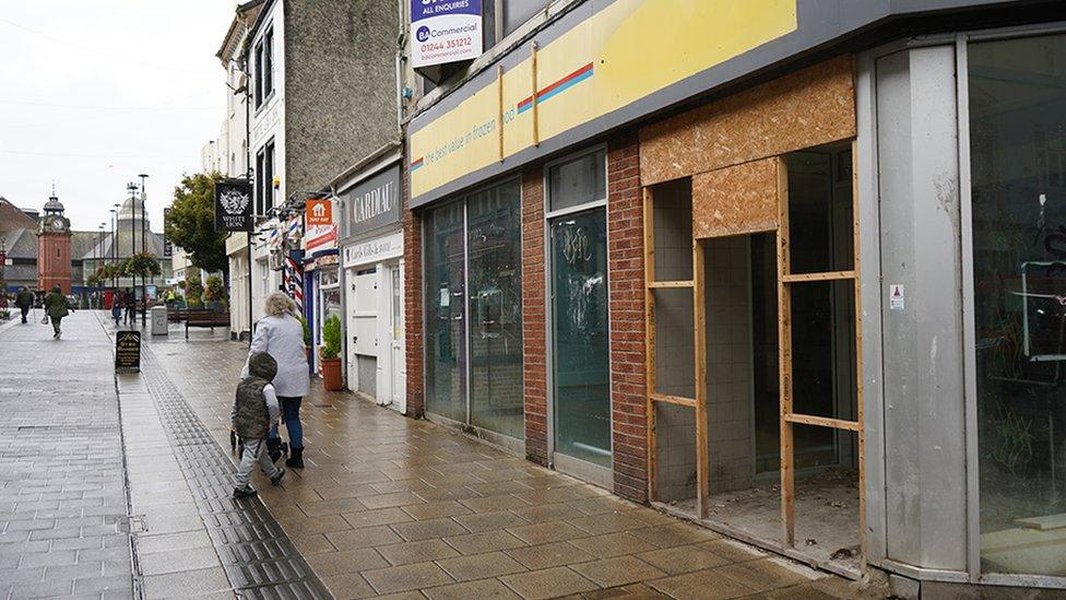
Depicting a high street potentially impacted by reduced consumer activity.
Beyond the Transaction: Social and Psychological Effects
A day without buying would also have interesting social and psychological dimensions. For individuals, it could be an opportunity to pause and consider their relationship with consumption. The "no buy" challenge, often undertaken for longer periods like a month or a year, is a growing trend where participants commit to avoiding non-essential purchases. This movement highlights a desire among some consumers to save money, reduce waste, and become more mindful about their spending habits. A single day without buying could serve as a brief introduction to this mindset.
On a societal level, a collective decision to not buy could be interpreted as a powerful statement about consumer power. It could demonstrate that consumers, by withholding their purchasing power, can draw attention to issues related to production, labor practices, or environmental sustainability. While one day might not force systemic change, it could act as a catalyst for broader conversations and shifts in consumer consciousness.
The Psychology of Buying
Understanding why people buy things, even things they don't necessarily need, sheds light on what a "no buy" day pushes against. The Diderot Effect, for instance, describes how acquiring a new possession can create a spiral of consumption, leading to the purchase of more new things to complement the initial item. Impulse buying is another significant factor, driven by immediate desires or external stimuli. A day of forced non-consumption could help individuals become more aware of these psychological triggers and potentially lead to more intentional spending in the future.
Potential Long-Term Implications (if extended or repeated)
While the effects of a single day are likely to be temporary, considering the implications of repeated or extended periods of widespread non-consumption offers a glimpse into more significant economic shifts. If consumers consistently reduced their spending, businesses would be forced to adapt. This could lead to decreased production, job losses in certain sectors, and a slowdown in economic growth as measured by traditional metrics like GDP.
However, it could also incentivize businesses to explore more sustainable models, focus on quality and durability over disposable goods, and prioritize ethical sourcing and labor practices. A sustained shift in consumer behavior towards mindful consumption could drive innovation in areas like repair and reuse, sharing economies, and localized production.
The stock market would also react more drastically to prolonged periods of reduced spending. Companies whose revenues are directly tied to consumer purchases would see sustained downward pressure on their stock prices. This could lead to a broader market downturn as investor confidence wanes in a low-consumption environment.
Economic Adaptation
Markets are inherently adaptive. If demand for certain goods or services falls, prices typically decrease to attract buyers. If demand disappears entirely for a prolonged period, it signals to the market that these goods or services are not needed. This can lead to resources being reallocated to produce things that are in demand, or to the development of new industries that cater to changing consumer preferences, perhaps towards experiences, sustainability, or necessary goods.

Illustrating the potential long-term consequences for retail spaces if consumer habits significantly change.
Illustrative Table of Short-Term Impacts
To further illustrate the immediate impacts of a hypothetical single day without buying, consider the following table outlining the effects on different sectors:
| Sector | Immediate Impact of a One-Day Buying Halt | Potential for Recovery on Subsequent Days |
|---|---|---|
| Retail (Non-Essential) | Significant loss of daily sales; potential for perishable goods waste. | High potential for deferred purchases to occur later. |
| Food Services (Restaurants/Cafes) | Complete halt in dine-in and take-out sales; high potential for food waste. | Moderate potential for some deferred dining experiences, but likely not full recovery of lost sales. |
| Grocery Stores (Essential) | Significant drop in sales, though likely less drastic than non-essentials as people stock up before/after. | High potential for deferred purchases of essentials to occur later. |
| Transportation (Gas Stations/Public Transit) | Reduced fuel sales; decreased public transit usage. | High potential for deferred fuel purchases; public transit usage may rebound with return to normal activity. |
| Online Retail | Zero sales transactions for the day. | High potential for deferred online orders to be placed later. |
| Service Industry (Haircuts, etc.) | Appointments cancelled or not booked for the day. | Low to moderate potential for recovery as appointments are often scheduled; some lost opportunities. |
This table highlights that while the immediate impact would be widespread, the ability for sectors to recover lost revenue varies depending on the nature of the goods or services provided.
Frequently Asked Questions (FAQ)
Would a single "no buy" day cause a recession?
It is highly unlikely that a single day without buying would cause a recession. A recession is typically defined by a significant decline in economic activity spread across the economy, lasting more than a few months, normally visible in real GDP, real income, employment, industrial production, and wholesale-retail sales. While a no-buy day would cause a temporary dip in economic indicators, it would not have the sustained impact needed to trigger a recession, especially if purchases are simply deferred.
Would people starve if nobody bought food for one day?
No, a single day without buying would not lead to widespread starvation. Most households have food supplies that would last for at least a day. While restaurants and food vendors might face immediate issues with perishable stock, the overall food supply chain would not collapse from a single day's disruption. Essential services related to food production and distribution would likely still function, even if retail purchases halt.
What is the difference between a "no buy" day and a "no buy" challenge/year?
A "no buy" day is typically a one-time, often symbolic event aimed at raising awareness about consumerism. A "no buy" challenge or year is a personal commitment to refrain from purchasing non-essential items for a defined, longer period. The challenge is more focused on personal finance, saving money, reducing waste, and changing individual consumption habits, while the day is often a form of protest or collective statement.
How does consumer spending impact the stock market?
Consumer spending has a significant impact on the stock market because the revenues and profits of many publicly traded companies are directly tied to consumer purchases. Strong consumer spending generally leads to higher company profits, which can drive up stock prices. Conversely, a slowdown in consumer spending can negatively impact company performance and lead to a decline in stock valuations. Consumer sentiment, or how confident consumers feel about the economy and their own financial situation, is a key indicator that investors watch closely.
References
Last updated April 19, 2025