
Unleashing the World of Dogs: Your Comprehensive Guide
Exploring the History, Biology, and Diversity of Canines
Key Insights into Our Canine Companions
- Domesticated Descendants: Dogs are scientifically known as Canis lupus familiaris, a domesticated subspecies of the gray wolf, with their history of coexisting with humans spanning over 14,000 years.
- Incredible Diversity: With hundreds of distinct breeds recognized worldwide, dogs exhibit a remarkable range of physical traits, temperaments, and specialized abilities, a result of selective breeding by humans for various tasks.
- More Than Just Pets: Beyond their role as beloved companions, dogs serve crucial functions in human society, including assistance roles, search and rescue, herding, guarding, and even contributing to medical detection.
Defining "Dog": A Scientific Perspective
A dog, scientifically referred to as Canis lupus familiaris, is a domesticated mammal belonging to the family Canidae and the order Carnivora. They are considered a subspecies of the gray wolf (Canis lupus). This classification highlights their close genetic relationship to wolves, from which they diverged through a long process of domestication.
The journey from wild wolf to domestic dog is a fascinating one, believed to have begun over 14,000 years ago, even before the advent of agriculture. This domestication process wasn't a single event but a gradual evolution of the relationship between humans and wolves, likely starting with wolves scavenging near human settlements and eventually leading to a symbiotic relationship where humans encouraged their presence and began selective breeding for desired traits.
The Evolutionary Path: From Wolf to Companion
The domestication of the dog is a cornerstone of human history, representing the first instance of humans taming an animal species. While the exact timeline and specific wolf population from which modern dogs descended are subjects of ongoing scientific research, DNA evidence suggests a divergence from an extinct wolf population between 27,000 and 40,000 years ago. Early archaeological evidence, such as the Bonn–Oberkassel dog remains dating back 14,000 to 15,000 years, provides concrete proof of domesticated dogs living alongside humans.
As they evolved from their wolf ancestors, dogs underwent significant physical and behavioral changes. Their skulls, teeth, and paws generally became smaller. Importantly, they developed a unique ability to understand and communicate with humans, a key factor in their successful integration into human society and earning them the title of "man's best friend."
A World of Diversity: Exploring Dog Breeds
One of the most striking characteristics of dogs is the incredible diversity seen across their many breeds. This vast array of shapes, sizes, colors, and temperaments is a direct result of thousands of years of selective breeding by humans. People purposefully bred dogs for specific tasks, leading to the development of breeds suited for hunting, herding, guarding, pulling loads, and companionship.
There are hundreds of distinct dog breeds recognized worldwide by organizations like the American Kennel Club (AKC). These breeds are often grouped into categories based on their original purpose or characteristics. Some common classifications include:
Common Dog Breed Groups
- Sporting Group: Dogs bred for hunting game, often with strong retrieving instincts (e.g., Labrador Retrievers, Golden Retrievers).
- Hound Group: Dogs used for hunting by scent or sight (e.g., Beagles, Basset Hounds).
- Working Group: Dogs bred to perform various jobs, such as guarding, pulling, and rescue (e.g., Boxers, Great Danes).
- Terrier Group: Energetic and feisty dogs originally bred for hunting vermin (e.g., Jack Russell Terriers, Scottish Terriers).
- Toy Group: Small companion dogs often bred for their portable size and affectionate nature (e.g., Chihuahuas, Poodles).
- Non-Sporting Group: A diverse group of dogs that don't fit neatly into other categories, often bred for companionship or specific tasks (e.g., Bulldogs, Poodles).
- Herding Group: Dogs specifically bred to move livestock (e.g., German Shepherds, Border Collies).
This selective breeding has resulted in breeds with specialized skills and physical attributes. For example, the Basenji is known for its yodel-like sound instead of a bark, and Dalmatians are famously born without their spots.
Here's an image showcasing the diversity of dog breeds:
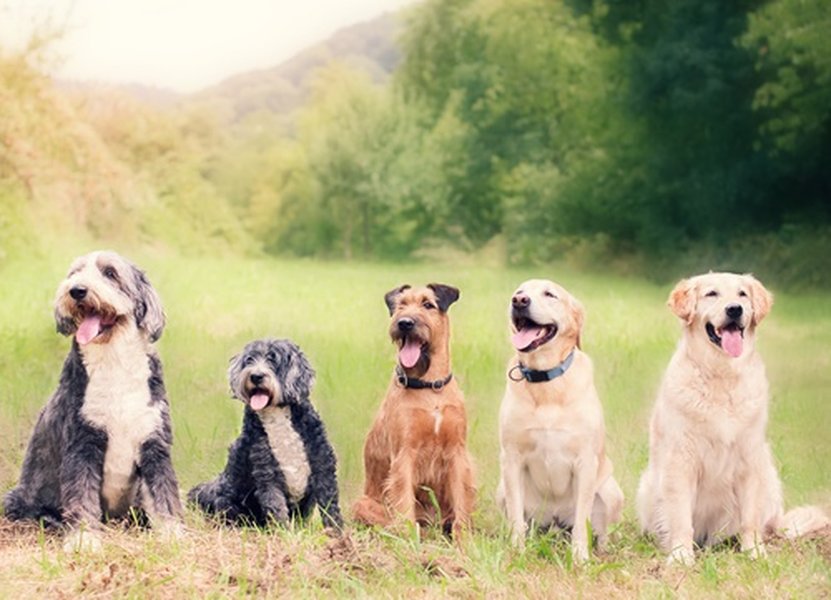
A collection of various dog breeds showcasing their different appearances.
Physical Attributes and Sensory Capabilities
Despite the wide variation among breeds, dogs share fundamental physical characteristics. They typically have the same number of bones (excluding the tail), powerful jaws equipped with around 42 teeth, and well-developed senses.
Remarkable Senses
- Sense of Smell: Dogs possess an extraordinary sense of smell, estimated to be anywhere from 10,000 to 100,000 times better than that of humans. This superior olfactory ability is utilized in various working roles, including detecting explosives, narcotics, and even certain medical conditions. Bloodhounds, in particular, have a sense of smell so acute it can be used as evidence in court.
- Hearing: Dogs also have a keen sense of hearing, capable of detecting a wider range of frequencies than humans.
- Sight: While their visual acuity is generally considered inferior to humans, dogs have better low-light vision and are more adept at detecting motion.
Dogs also use their whiskers as sensory tools, helping them navigate their environment by detecting changes in air currents, which provides information about nearby objects.
Communication and Behavior
Dogs communicate in a variety of ways, both with each other and with humans. Their communication methods include:
Canine Communication Methods
- Eye gaze
- Facial expressions
- Vocalization (barking, whining, howling)
- Body posture and movements (tail wags, ear position, stance)
- Gustatory communication (scents, pheromones, and taste, such as scent marking through urination)
Understanding canine body language is crucial for safe and effective interaction with dogs. Different postures and signals can indicate a dog's emotional state, intentions, and level of comfort.
Here is a video that delves into understanding dog body language:
This video provides insights into interpreting dog body language, an important aspect of understanding canine communication.
Dogs also demonstrate remarkable cognitive abilities. Studies have shown they can learn by inference and some have demonstrated the ability to learn and identify the labels of numerous objects.
The Role of Dogs in Human Society
For millennia, dogs have played diverse and vital roles in human society, evolving from working partners to beloved family members. The global dog population is vast, estimated to be between 700 million and 1 billion.
Working Dogs
Historically, dogs were primarily bred for their working capabilities. These roles continue to be important today:
-
Hunting: Assisting humans in locating and retrieving game.
-
Herding: Managing and moving livestock.
-
Guarding: Protecting property and people.
-
Pulling Loads: Used for transportation and carrying goods in various climates.
Assistance and Service Dogs
In modern times, dogs are extensively trained to provide assistance to humans with disabilities. This includes guide dogs for the visually impaired, hearing dogs for the deaf, and service dogs for individuals with mobility issues or other medical conditions.
Search and Rescue
A dog's incredible sense of smell makes them invaluable in search and rescue operations, helping to locate missing persons in various environments.
Therapy and Emotional Support
Dogs also play a significant role in providing emotional support and therapeutic benefits to humans in settings such as hospitals, schools, and nursing homes.
Companionship
Perhaps the most common role of dogs today is that of companion animals. Their loyalty, playfulness, and affection make them cherished members of families worldwide. In the United States, dogs are the most popular pet, residing in a significant percentage of households.
While many dogs are pets, a large number also live as stray or feral animals, adapting to environments near human populations without direct human care.
Health and Lifespan
The health and lifespan of a dog can vary significantly depending on factors such as breed, size, genetics, diet, and overall care. Smaller breeds generally tend to have longer lifespans than larger breeds. While the average lifespan of a dog is around 12 years, some have been known to live well over 20 years.
Veterinary care, including vaccinations and regular check-ups, is essential for maintaining a dog's health. Vaccinations against diseases like distemper, hepatitis, parainfluenza, and parvovirus are crucial, particularly for puppies.
Here is a table summarizing some key facts about dogs:
| Scientific Name | Ancestry | Average Lifespan | Number of Breeds | Key Trait |
|---|---|---|---|---|
| Canis lupus familiaris | Gray Wolf (extinct population) | Around 12 years (varies by breed) | Over 400 recognized breeds | Exceptional sense of smell |
Understanding the specific needs of different breeds and individual dogs is vital for providing appropriate care and ensuring a healthy and happy life.
Here's an image related to dog lifespan:

Research is ongoing to understand factors influencing dog lifespan across breeds.
Frequently Asked Questions About Dogs
What is the scientific name of a dog?
The scientific name for a domestic dog is Canis lupus familiaris.
Where do dogs come from?
Dogs are domesticated descendants of an extinct population of gray wolves.
How many dog breeds are there?
There are over 400 recognized distinct dog breeds worldwide.
Are dogs related to foxes and jackals?
Yes, dogs are related to foxes and jackals as they all belong to the family Canidae.
What is a group of puppies called?
A group of puppies is called a litter.
How long have dogs lived with humans?
Dogs have lived with humans for over 14,000 years.
What are some common roles of dogs in society?
Dogs serve as pets, working animals (hunting, herding, guarding), assistance animals, search and rescue dogs, and therapy dogs.
References
Last updated April 24, 2025