
Unlock the Secrets of the Humble Apple: More Than Just a Fruit!
Discover the fascinating world of apples, from their ancient origins and nutritional power to their diverse varieties and cultural impact.
Highlights: Key Apple Insights
- Botanical Wonder: Apples are pome fruits from the rose family (Rosaceae), originating in Central Asia thousands of years ago.
- Nutritional Powerhouse: Packed with fiber (especially pectin), Vitamin C, and antioxidants, apples support heart, gut, and overall health while being low in calories.
- Global Staple: With thousands of varieties grown worldwide, apples are a major global crop, enjoyed fresh, cooked, and processed in countless ways.
What Exactly is an Apple?
Defining This Popular Fruit
An apple is a widely recognized and consumed edible fruit produced by the apple tree, scientifically known as Malus domestica or related species within the *Malus* genus. It belongs to the Rosaceae family, making it a relative of pears, peaches, plums, cherries, and even roses. Apples are classified botanically as **pome fruits**. This means the fleshy part we typically eat develops not just from the flower's ovary, but primarily from the surrounding receptacle tissue, which swells to enclose the central core containing the seeds.
Originating in the mountainous regions of Central Asia, specifically modern-day Kazakhstan, apples have been cultivated by humans for thousands of years, dating back to at least 6500 BCE. Through trade routes like the Silk Road and later colonial expansion, apple cultivation spread across Asia, Europe, and eventually to the Americas and other parts of the world, making it one of the most globally cultivated fruits today.
Botanical Characteristics and Fun Facts
Exploring the Apple's Structure and Unique Traits

A crisp, red apple ready for eating.
The Fruit
A typical apple is roundish, though shapes can vary slightly by variety, ranging in diameter from about 2.5 to 12 cm (1 to 5 inches). It features a smooth skin that comes in a spectrum of colors – red, green, yellow, pink, or even multicolored patterns and stripes. Some varieties may have a naturally waxy coating or a rougher, brownish texture known as russeting. Beneath the skin lies the crisp, juicy flesh, typically white or pale cream in color. At the center is the core, which consists of tougher carpels forming 3-5 seed chambers, each potentially holding small, dark brown or black seeds, often called "pips."
The Tree
Apple trees (*Malus domestica*) are deciduous, meaning they shed their leaves annually. They bloom in the spring, producing beautiful white or pinkish blossoms. If successfully pollinated (often by bees), these flowers develop into fruits over the summer, ripening typically in late summer or autumn, depending on the variety and climate. It takes the energy produced by approximately 50 leaves to grow just one apple! Modern orchards often utilize dwarfing rootstocks, which help control the tree's size, making harvesting easier and allowing trees to bear fruit sooner.
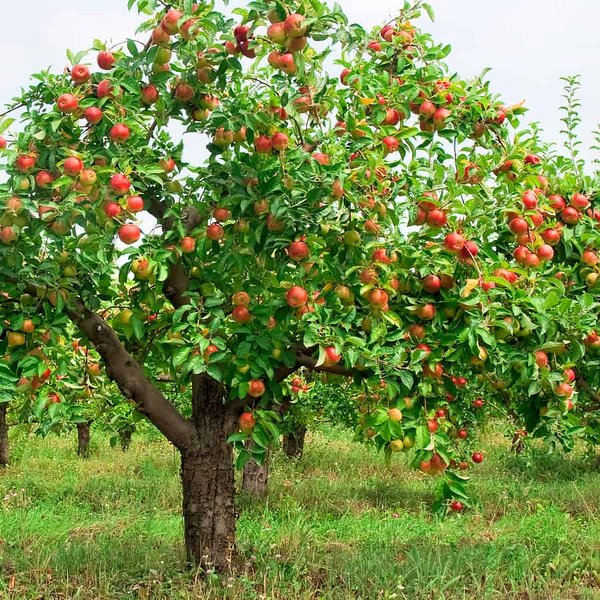
An apple tree heavy with fruit during harvest season.
Why Do Apples Float?
One intriguing fact about apples is their buoyancy. Apples float in water because approximately 25% of their volume is air trapped within the intercellular spaces of the flesh. This high air content makes them less dense than water, causing them to float – a property famously utilized in the game of apple bobbing.
Nutritional Profile: An Apple a Day...
Unpacking the Health Components of Apples
Apples are renowned for their health benefits, largely due to their impressive nutritional profile. They are relatively low in calories yet rich in essential nutrients, making them an excellent addition to a balanced diet. The popular adage "an apple a day keeps the doctor away," while perhaps an oversimplification, reflects the fruit's long-standing association with good health.
Key Nutrients
Apples are a significant source of dietary fiber, particularly soluble fiber like **pectin**. Pectin is known for its role in supporting digestive health and regulating blood sugar levels. Much of the fiber, along with many antioxidants, is concentrated in the skin, highlighting the benefit of eating apples whole. They also provide a good amount of **Vitamin C**, an essential antioxidant important for immune function and skin health, as well as potassium and Vitamin K.
Beyond vitamins and fiber, apples contain various beneficial plant compounds, including **antioxidants** like quercetin, catechin, procyanidins, and chlorogenic acid. These compounds help protect the body's cells from damage caused by free radicals and inflammation.
Nutritional Breakdown Table
The following table outlines the approximate nutritional content of one medium-sized apple (about 182 grams):
| Nutrient | Amount per Medium Apple (approx.) | Key Benefit |
|---|---|---|
| Calories | ~95 kcal (can range from 80-100 kcal) | Low-calorie energy source |
| Carbohydrates | ~25 grams | Provides energy (includes natural sugars) |
| Dietary Fiber | ~4 grams | Aids digestion, promotes fullness, helps regulate blood sugar |
| Protein | ~0.5 - 1 gram | Minor protein source |
| Fat | < 0.5 grams | Virtually fat-free |
| Vitamin C | ~8.4 mg (approx. 9% Daily Value) | Antioxidant, immune support |
| Potassium | ~195 mg (approx. 4% Daily Value) | Supports heart health, fluid balance |
| Pectin (Soluble Fiber) | Significant amount | Lowers cholesterol, prebiotic effects |
| Antioxidants (e.g., Quercetin) | Varies by type/part | Cellular protection, anti-inflammatory |
Health Benefits of Eating Apples
How Apples Contribute to Well-being
Regular consumption of apples is linked to numerous health benefits, supported by scientific research. Their unique combination of fiber, vitamins, and antioxidants works synergistically to promote health and potentially reduce the risk of various chronic diseases.
Heart Health
The soluble fiber (pectin) in apples can help lower levels of LDL ("bad") cholesterol in the blood. Antioxidants, particularly flavonoids, may also contribute to cardiovascular health by reducing blood pressure, preventing plaque buildup in arteries, and lowering inflammation.
Digestive and Gut Health
Apple fiber aids digestion by promoting regular bowel movements and preventing constipation. Furthermore, pectin acts as a prebiotic, feeding beneficial bacteria in the gut microbiome, which is crucial for overall digestive health and immune function.
Weight Management
Being high in fiber and water content, apples are filling yet low in calories. Eating an apple can increase satiety, helping to control appetite and potentially supporting weight management efforts as part of a healthy diet.
Blood Sugar Control
The fiber in apples helps slow down the digestion and absorption of sugar, leading to a more gradual rise in blood sugar levels after eating. Some studies suggest that the polyphenols in apples may also improve insulin sensitivity, potentially lowering the risk of developing type 2 diabetes.
Potential Cancer Prevention
The antioxidant and anti-inflammatory compounds found in apples may play a role in protecting cells from oxidative damage, a factor linked to cancer development. Some observational studies have associated higher apple intake with a reduced risk of certain types of cancer, although more research is needed.
Brain Health
Antioxidants like quercetin found in apples may help protect brain cells from oxidative stress, potentially reducing the risk of neurodegenerative diseases like Alzheimer's. Animal studies have shown links between apple consumption and improved memory function.
Apple Varieties and Attributes
A World of Flavors and Textures
There are thousands of known apple cultivars (varieties) worldwide – estimates range from over 7,500 to potentially more, though only a fraction are grown commercially on a large scale. These varieties differ significantly in taste (sweet, tart, balanced), texture (crisp, tender, mealy), skin color, size, shape, and suitability for different uses (eating fresh, cooking, baking, cider making).
Some popular examples include:
- Red Delicious: Mildly sweet, often thick-skinned, best for fresh eating.
- Granny Smith: Very tart and crisp, excellent for baking and eating fresh.
- Gala: Crisp, juicy, and sweet, great all-purpose apple.
- Fuji: Very sweet and crisp, good for snacking and salads.
- Honeycrisp: Explosively crisp, sweet-tart flavor, premium fresh-eating apple.
- Golden Delicious: Sweet, thin-skinned, versatile for eating fresh or cooking.
Comparing Apple Varieties Radar Chart
This chart provides a visual comparison of subjective attributes for a few popular apple varieties. Ratings are on a scale where higher numbers indicate a stronger presence of the attribute (e.g., higher sweetness, greater crispness). Note that taste and texture can vary based on ripeness and growing conditions.
Mindmap Overview of the Apple
Visualizing Key Apple Concepts
This mindmap provides a hierarchical overview of the core topics discussed regarding apples, branching out from the central concept to cover its definition, biology, nutritional aspects, health impacts, cultivation, common uses, and diverse varieties.
(Skin, Flesh, Core, Seeds)"] id2d["Floats (25% Air)"] id3["Nutritional Value"] id3a["Low Calorie (~95 kcal)"] id3b["High Fiber (Pectin)"] id3c["Vitamin C"] id3d["Potassium"] id3e["Antioxidants (Quercetin, etc.)"] id3f["Mostly in Skin"] id4["Health Benefits"] id4a["Heart Health (Cholesterol)"] id4b["Gut Health (Prebiotic)"] id4c["Weight Management"] id4d["Blood Sugar Control"] id4e["Potential Cancer Prevention"] id4f["Brain Health"] id5["Cultivation & Production"] id5a["Thousands of Varieties"] id5b["Top Producers (China, USA)"] id5c["USA Production (Washington State)"] id5d["Tree Maturity (3-10 years)"] id5e["Pomology (Science of Growing)"] id6["Uses & Consumption"] id6a["Eaten Fresh"] id6b["Cooking & Baking (Pies, Sauce)"] id6c["Juice & Cider"] id6d["High US Consumption (~20 lbs fresh/year)"] id7["Cultural Significance"] id7a["'An apple a day...'"] id7b["Symbolism (Health, Knowledge)"] id7c["Historical Tidbits"]
Cultivation, Production, and Consumption
From Orchard to Table
Growing Apples
The science of growing apples is called **pomology**. Apple trees require specific climate conditions, typically thriving in temperate regions with cold winters (for dormancy) and moderate summers. Factors like sunlight exposure, soil quality, water availability, and proper pruning significantly impact fruit production. Depending on the variety and rootstock used, it can take several years for a newly planted tree to bear a substantial amount of fruit. Dwarf varieties might start producing in 3-5 years, while standard-sized trees can take 8-10 years or more to reach full production.
Global Production
Apples are a major global agricultural commodity. China is by far the world's largest producer, followed by countries like the United States, Turkey, Poland, and Italy. Apples account for roughly half of the world's deciduous fruit tree production. In the United States, while apples can technically be grown in all 50 states, commercial production is concentrated in specific regions. Washington State leads dramatically, producing about 68% of the country's apples, thanks to its favorable climate.
Consumption Patterns
Apples are incredibly versatile and consumed in many forms. They are popular eaten fresh as a snack, sliced in salads, or incorporated into desserts like pies, crisps, and cakes. They are also processed into applesauce, apple juice, apple cider (both sweet and hard), apple butter, and vinegar. In the U.S., apples are the second most popular fresh fruit after bananas. The average American consumes nearly 20 pounds of fresh apples annually, with total consumption significantly higher when processed forms are included. About 60% of the U.S. apple crop is typically consumed as fresh fruit.
Apple Facts Explored
Learn More About This Famous Fruit
This video provides a concise overview of interesting facts about apples, covering aspects of their history, biology, and cultural relevance, similar to many of the points discussed here.
The video touches on the famous saying associating apples with health and delves into other fascinating tidbits, reinforcing why apples are considered one of the world's most well-known and appreciated fruits.
Frequently Asked Questions about Apples
What is pectin and why is it important?
Pectin is a type of soluble dietary fiber found naturally in apples, particularly concentrated in the skin and core. It's important because it acts as a prebiotic (food for beneficial gut bacteria), helps lower LDL ("bad") cholesterol levels, aids in stabilizing blood sugar, and contributes to feelings of fullness, which can assist with weight management. Pectin is also extracted and used commercially as a gelling agent in jams and jellies.
How many apple varieties are there really?
There are thousands of known apple varieties (cultivars) worldwide, with estimates often cited as over 7,500. However, only a relatively small number, perhaps around 100, are grown commercially on a large scale in major producing regions like the U.S. Many varieties are heritage or heirloom types grown in smaller orchards or specific regions.
Are crabapples related to regular apples? Are they edible?
Yes, crabapples are members of the same genus (*Malus*) as cultivated apples (*Malus domestica*). In fact, some wild crabapple species are ancestors of modern apples. Crabapples are generally much smaller and significantly more tart or astringent than eating apples. While they are technically edible (not poisonous), their intense flavor makes them unsuitable for eating raw for most people. However, they are often used to make jellies, preserves, or cider, where their tartness and high pectin content are advantageous.
Why do apples float in water?
Apples float because a significant portion of their internal volume, estimated to be around 25%, consists of air trapped within the spaces between the fruit's cells. This air makes the overall density of the apple less than the density of water, causing it to be buoyant.
Recommended Reading
- What are the different types of apples and their uses?
- Explore the detailed nutritional breakdown of an apple, including micronutrients.
- How does apple consumption affect gut health and the microbiome?
- Learn about the history of apple cultivation and its spread across the world.
References
Last updated May 1, 2025