
Arthropods: Earth's Most Diverse Animal Kingdom Conquerors
Discover the remarkable creatures that make up over 80% of all known animal species and have dominated Earth for over 500 million years
Key Insights About Arthropods
- Evolutionary Champions: Arthropods comprise approximately 80-84% of all known animal species on Earth, making them the most diverse and successful animal phylum.
- Ancient Survivors: With ancestors dating back 530 million years to the Cambrian period, arthropods have proven remarkably adaptable to changing environments.
- Biological Innovation: Their unique exoskeleton, jointed limbs, and segmented body plan enabled arthropods to colonize virtually every habitat on the planet.
What Are Arthropods?
Arthropods are invertebrate animals belonging to the phylum Arthropoda—the largest and most diverse phylum in the animal kingdom. The term "arthropod" comes from the Greek words "arthron" (joint) and "pous" (foot), referring to their characteristic jointed limbs. These remarkable creatures have conquered nearly every habitat on Earth, from the deepest oceans to the highest mountains, and from scorching deserts to freezing tundras.
With over a million described species (and many more yet to be discovered), arthropods represent approximately 80-84% of all known animal life. Their evolutionary success stems from their highly adaptable body plan, which has allowed them to thrive for over 500 million years through multiple mass extinction events.
Defining Characteristics of Arthropods
Exoskeleton: Their Protective Armor
One of the most distinctive features of arthropods is their hard external skeleton or exoskeleton. This protective covering is primarily composed of chitin, a tough, flexible polysaccharide, and is often reinforced with proteins and sometimes mineralized with calcium carbonate (particularly in crustaceans). The exoskeleton serves multiple functions:
- Provides structural support for muscle attachment
- Protects internal organs from predators and environmental hazards
- Prevents water loss in terrestrial species
- Creates a framework for precise movement
However, this rigid covering presents a challenge: it cannot grow with the animal. To accommodate growth, arthropods must periodically shed their exoskeleton through a process called molting or ecdysis, revealing a new, larger exoskeleton underneath that expands before hardening.
Segmentation: Building Blocks of the Body
Arthropods have segmented bodies, with each segment potentially bearing a pair of appendages. These segments are often grouped into functional units or tagmata, such as the head, thorax, and abdomen in insects. In many arthropods, some segments may fuse together during development, but their segmented origin remains evident in their nervous system and developing embryos.
Jointed Appendages: Tools for Success
The hallmark feature that gives arthropods their name is their jointed appendages. These specialized limbs can be modified for various functions including:
- Walking, swimming, or jumping (legs)
- Feeding and prey capture (mouthparts)
- Sensing the environment (antennae)
- Reproduction (specialized genital appendages)
- Defense (claws, stingers)
This modular design has allowed arthropods to adapt to countless ecological niches, contributing significantly to their evolutionary success.
Other Important Characteristics
- Open Circulatory System: Most arthropods have an open circulatory system where hemolymph (their equivalent of blood) circulates freely around internal organs within a body cavity called the hemocoel.
- Specialized Respiratory Systems: Depending on their habitat, arthropods breathe through various structures including gills (aquatic species), book lungs (some arachnids), or tracheal systems (insects and some other terrestrial arthropods).
- Complex Sensory Organs: Arthropods possess sophisticated sensory systems, including compound eyes, simple eyes (ocelli), chemoreceptors, and mechanoreceptors.
- Bilateral Symmetry: Their bodies show bilateral symmetry, meaning the left and right sides mirror each other.
Major Groups of Arthropods
The phylum Arthropoda comprises several major groups, each with distinctive features and evolutionary histories:
| Group | Key Characteristics | Examples | Habitat | Ecological Significance |
|---|---|---|---|---|
| Insects (Hexapoda) | Six legs, three body regions (head, thorax, abdomen), typically with wings, one pair of antennae | Bees, butterflies, beetles, ants, flies, grasshoppers | Predominantly terrestrial, some freshwater | Pollinators, decomposers, major food source for other animals, agricultural pests and beneficials |
| Arachnids (Chelicerata) | Eight legs, two body regions (cephalothorax, abdomen), no antennae, chelicerae (fangs) | Spiders, scorpions, ticks, mites, harvestmen | Mostly terrestrial | Predators, decomposers, parasites, silk producers |
| Crustaceans (Crustacea) | Typically 10+ legs, two pairs of antennae, mostly with gills | Crabs, lobsters, shrimp, crayfish, barnacles, copepods | Predominantly aquatic (marine and freshwater) | Ocean filterers, decomposers, crucial marine food web components |
| Myriapods | Many paired legs (one or two pairs per segment), long bodies | Centipedes (predators) and millipedes (detritivores) | Terrestrial, often in leaf litter or soil | Soil ecosystem engineers, predators of small invertebrates |
Comparative Analysis: Arthropod Adaptations
Different arthropod groups have evolved specialized adaptations for their specific ecological niches. The following radar chart illustrates how various arthropod groups compare across important adaptive traits:
This chart illustrates the relative strengths of different arthropod groups across key adaptive traits. Insects excel in sensory capabilities, reproductive output, and habitat range, explaining their extraordinary diversity. Arachnids dominate in predatory adaptations, while crustaceans show strong defensive structures. Myriapods, though less specialized in many areas, maintain their own ecological niche through steady performance across categories.
Evolutionary Success and Classification
The arthropod lineage has a remarkable evolutionary history stretching back over 500 million years. Their body plan has proven extraordinarily adaptable, allowing them to diversify into countless ecological niches. The following mindmap illustrates the classification of major arthropod groups and their key evolutionary innovations:
Web-spinning, venom"] Scorpions["Scorpions
Pincers, stinger"] Mites["Mites & Ticks
Parasitism, small size"] Horseshoe_Crabs["Horseshoe Crabs
Living fossils, blue blood"] Sea_Spiders["Sea Spiders
Marine predators"] Crustaceans["Crustaceans"] Decapods["Decapods
Crabs, lobsters, shrimp"] Isopods["Isopods
Pillbugs, aquatic forms"] Barnacles["Barnacles
Sessile filter feeders"] Copepods["Copepods
Tiny ocean plankton"] Hexapods["Hexapods"] Insects["Insects"] Beetles["Beetles
Hardened forewings"] Flies["Flies
Single pair of wings"] Butterflies["Butterflies & Moths
Scale-covered wings"] Bees["Bees, Wasps, Ants
Social structures"] Springtails["Springtails
Soil decomposers"] Myriapods["Myriapods"] Centipedes["Centipedes
Venomous predators"] Millipedes["Millipedes
Plant material decomposers"]
This mindmap showcases the incredible diversity within Arthropoda and highlights some of the specialized adaptations that have contributed to the success of various groups. Each branch represents a major evolutionary pathway with unique innovations that allowed arthropods to exploit different environments and resources.
Ecological Importance of Arthropods
Arthropods play crucial roles in virtually all terrestrial and aquatic ecosystems:
As Pollinators
Insects, particularly bees, butterflies, moths, and flies, are essential pollinators for approximately 80% of flowering plants, including many important food crops. The economic value of insect pollination services is estimated in the hundreds of billions of dollars annually.
In Food Webs
Arthropods form critical links in food webs as both consumers and prey. They serve as food sources for numerous vertebrates, including birds, reptiles, amphibians, and mammals. In aquatic systems, crustaceans like krill are keystone species supporting entire marine food webs.
As Decomposers
Many arthropods function as decomposers, breaking down dead organic matter and recycling nutrients back into ecosystems. Millipedes, woodlice, and various insects play vital roles in soil formation and nutrient cycling.
As Ecosystem Engineers
Some arthropods physically modify their environments, creating habitats for other organisms. For instance, coral-associated crustaceans help maintain coral health, while burrowing arthropods aerate soils and enhance water penetration.
Human Relationships with Arthropods
Arthropods have complex relationships with humans:
- Beneficial: Pollination services, biological pest control, food sources (shrimp, crab, lobster), silk production, honey production
- Harmful: Agricultural pests, disease vectors (mosquitoes, ticks), venomous species
- Scientific: Model organisms for research (fruit flies), biomedical applications (horseshoe crab blood in medical testing)
Visual Gallery: The Diversity of Arthropods
Arthropods exhibit incredible diversity in form, function, and appearance. These images showcase some of the remarkable variation found within this phylum:
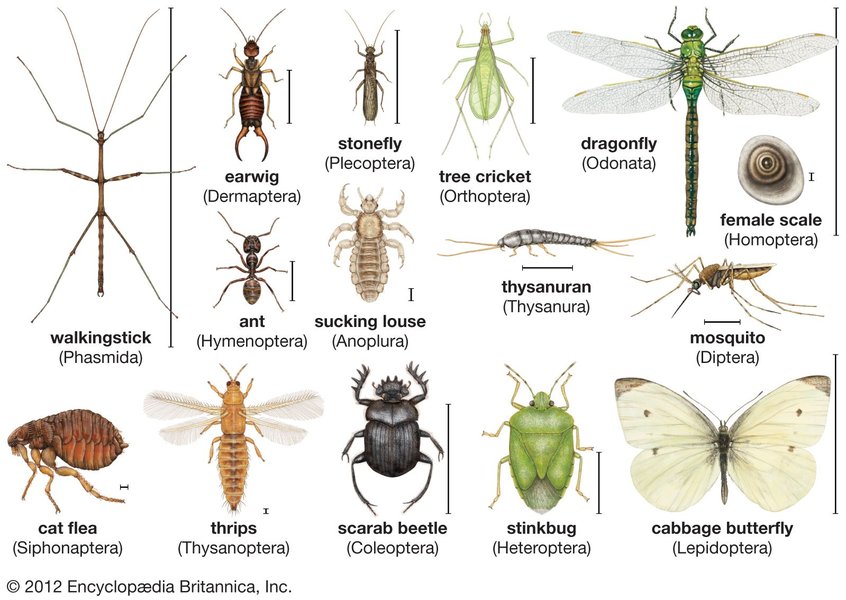
A collection showing the incredible diversity of insect forms and colors, representing just a fraction of arthropod diversity.

Representatives from major arthropod groups showing their distinctive body plans and adaptations.
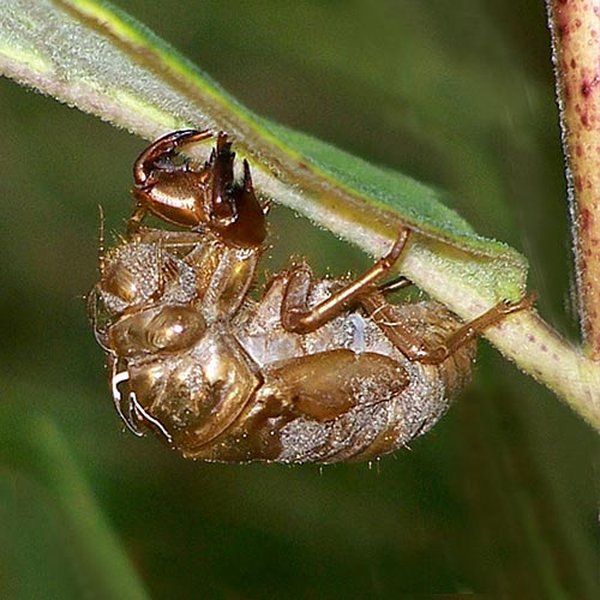
A cicada exoskeleton left behind after molting—a remarkable example of the arthropod growth process.
Video Exploration: Understanding Arthropods
This informative video from the Smithsonian provides a clear introduction to what makes an arthropod unique, with examples from the Smithsonian's Insect Zoo. Dan Babbitt, the zoo's manager, explains the key characteristics that define the phylum Arthropoda and showcases the diversity within this remarkable group of animals.
Frequently Asked Questions About Arthropods
References
- Arthropod - Definition, Examples, Characteristics, Classes, Groups - Britannica
- Arthropod - Wikipedia
- Phylum Arthropoda - Exploring Our Fluid Earth
- What are Arthropods? - Australian Museum
- Arthropods Examples: Examples Of Arthropods From Around The World - Active Wild
- Arthropod - Definition, Classification & Examples - Biology Dictionary
- What are Arthropods? - All The Science
Recommended Explorations
Last updated April 6, 2025