
Understanding the Power of Distributed Processing
Dividing and Conquering Complex Computational Tasks Across Multiple Systems
Key Insights into Distributed Processing
- Task Distribution: Distributed processing involves breaking down a large or complex task into smaller, manageable functions or segments.
- Networked Collaboration: These smaller task segments are then distributed across multiple interconnected computers or processors (nodes) within a network.
- Parallel Execution: The key benefit is that these nodes work simultaneously to execute their assigned segments, dramatically accelerating the overall completion time compared to relying on a single, centralized system.
Distributed processing is a computing model that leverages the power of multiple interconnected computer systems to work collaboratively on a single task. Instead of relying on a single, powerful central computer, the workload is divided among various machines that communicate and coordinate to achieve a common goal. This approach offers significant advantages in handling complex computations, large datasets, and applications requiring high availability and scalability.
Defining Distributed Processing
A Collaborative Approach to Computation
At its core, distributed processing means utilizing more than one processor or computer to perform the processing for an individual task. This can range from multiple cores within a single computer to numerous independent machines connected across a network. The fundamental idea is to distribute the computational load, allowing different parts of a data processing task or a complex application to be executed simultaneously across multiple computing resources.
Think of it like a team project where a large assignment is broken down into smaller parts, and each team member works on their assigned section concurrently. In the world of computing, these "team members" are the individual processors or computers, and they communicate with each other to share information and coordinate their efforts to complete the overall "assignment."
The term "distributed processing" is closely related to and often used interchangeably with "distributed computing." Both concepts revolve around the idea of using multiple interconnected computational units to solve a problem. Historically, the term "distributed" often referred to computers physically dispersed across a geographical area. However, today, it's used in a broader sense, even encompassing autonomous processes running on the same physical computer that interact by passing messages.
How Does Distributed Processing Work?
Breaking Down Tasks for Parallel Execution
The operational principle of distributed processing involves taking a complex computing task and dividing it among a network of individual machines, often referred to as nodes. These nodes then complete their assigned portion of the task and send the results back to be compiled into a single, seamless output. This parallel execution of tasks across multiple nodes is what makes distributed processing significantly faster than sequential processing on a single system.
The process typically involves a managing application or system that coordinates the distribution of tasks and the collection of results. The individual nodes communicate with each other to synchronize their activities and share necessary data. The efficiency of distributed processing heavily relies on effective communication and coordination mechanisms between the nodes.
Consider the rendering of a video. Instead of a single computer processing each frame sequentially, a distributed processing system can assign different frames or sections of frames to multiple computers on a network. Each computer renders its assigned portion simultaneously, and then these rendered parts are combined to produce the final video. This dramatically reduces the time required for the rendering process.
Distributed processing requires a network of individual workers or nodes capable of receiving, processing, and returning segments of a task. The architecture can vary, but a common approach involves client-server models where clients request tasks from servers that manage the distribution and collection of work.
Key Components and Characteristics
Building Blocks of Distributed Systems
A distributed computing system is composed of several key components that work together to enable distributed processing:
Devices or Systems (Nodes)
These are the individual computers, servers, or other networking devices that possess their own processing capabilities and potentially store and manage their own data. They are the "workers" of the distributed system, executing the assigned tasks.
Network
The network is the communication medium that connects the different devices or systems. It allows nodes to exchange messages, data, and coordination signals. The efficiency and reliability of the network are crucial for the performance of the distributed system.
Distributed System Software (Middleware)
This layer of software enables the computers to coordinate their activities and share resources. Middleware acts as a communication medium between applications running on different nodes, facilitating seamless interaction and data exchange.
Database
In many distributed data processing scenarios, a distributed database is used to store and manage the data that is being processed across the network of nodes.
Distributed systems are characterized by several key properties:
Multiple Devices or Systems
Processing and data storage are spread across numerous interconnected devices.
Concurrency
Multiple processes or users can access and interact with the system simultaneously from different locations.
Scalability
The system can easily accommodate an increasing number of users, tasks, or data by adding more nodes or resources to the network.
Fault Tolerance/Reliability
The failure of a single node or component does not cause the entire system to fail. The workload can be redistributed among the remaining operational nodes, ensuring continued availability.
Here's a table summarizing the core concepts:
| Concept | Description |
|---|---|
| Distributed Processing | Executing a single task across multiple interconnected processors or computers. |
| Distributed System | A collection of independent computers that appear as a single coherent system to the user, facilitating distributed processing. |
| Nodes | Individual computers or processors within a distributed system. |
| Parallel Execution | Simultaneous execution of different parts of a task on multiple nodes. |
Applications and Examples of Distributed Processing
Powering Modern Technologies
Distributed processing is fundamental to many modern technologies and applications that we use daily. Its ability to handle large-scale computation and data processing makes it indispensable in various fields.
Here are some prominent examples:
Internet and Web Services
The internet itself is a vast distributed system, with web servers distributed globally to handle user requests and deliver content efficiently. Web applications, especially large-scale platforms, rely heavily on distributed architectures to manage user traffic, process data, and ensure high availability.
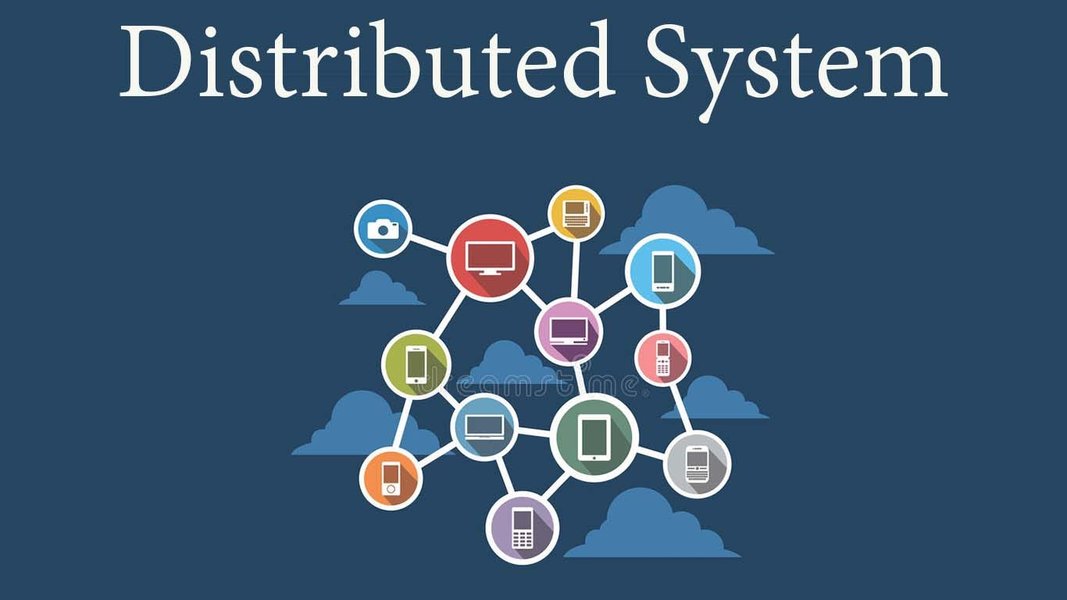
An illustration of interconnected nodes forming a distributed system.
Cloud Computing
Cloud platforms are prime examples of distributed systems. Resources like computing power, storage, and networking are delivered over the internet from a pool of interconnected servers. This allows users to access and utilize resources on demand without managing the underlying infrastructure.
Social Media Platforms
Platforms like Facebook, Twitter, and Instagram handle massive amounts of user data and traffic. They employ distributed systems to store and process this data, manage user interactions, and deliver content in real-time.
Financial Systems
Online banking, stock trading platforms, and payment gateways rely on distributed processing to handle a high volume of transactions securely and efficiently across distributed networks.
Blockchain and Cryptocurrencies
Technologies like Bitcoin and Ethereum are built on distributed ledgers that are maintained across a network of computers. This decentralized approach ensures transparency, security, and immutability of transactions.
Here is a video that further explains distributed computing concepts:
A brief introduction to distributed computing.
Scientific Simulations and Research
Complex scientific simulations, such as climate modeling, molecular dynamics, and genomic analysis, require immense computational power. Distributed processing allows researchers to distribute these computationally intensive tasks across clusters of computers, significantly accelerating the pace of discovery.

Visual collaboration tools often rely on distributed systems to enable real-time interaction among remote participants.
Big Data Processing
Handling and analyzing massive datasets (Big Data) is a core application of distributed processing. Frameworks like Hadoop and Spark are designed to distribute data storage and processing across clusters of machines, enabling efficient analysis of large volumes of information.
Online Gaming and Virtual Reality
Massively multiplayer online games (MMOs) and virtual reality environments require distributed systems to manage a large number of concurrent users, synchronize game states, and provide a responsive experience.
Telecommunications Networks
Modern telecommunications networks, including mobile networks and the infrastructure supporting the internet, are inherently distributed systems that handle vast amounts of data and communication traffic.
Comparing Distributed and Centralized Processing
Decentralization vs. Concentration
Understanding distributed processing is often clarified by contrasting it with centralized processing. In a centralized system, all processing power, data storage, and control are concentrated in a single, powerful computer or server.
Here's a comparison of the two approaches:
Centralized Processing:
- All tasks are performed on a single machine.
- Processing is typically sequential.
- Reliability is dependent on the single system; failure of the central unit leads to system failure.
- Scalability is limited by the capacity of the central system.
- Easier to manage and control due to a single point of authority.
Distributed Processing:
-
Tasks are divided and executed across multiple interconnected machines.
-
Processing occurs in parallel.
-
Improved fault tolerance as the failure of one node doesn't necessarily bring down the entire system.
-
High scalability by adding more nodes to the network.
-
More complex to manage and coordinate due to the distributed nature.
While centralized systems were prevalent in the early days of computing, the increasing demand for processing power, scalability, and reliability has driven the widespread adoption of distributed processing architectures.
Challenges in Distributed Processing
Navigating Complexity and Coordination
Despite its numerous advantages, distributed processing also presents certain challenges:
Coordination and Communication
Ensuring that all nodes work together effectively and communicate reliably is crucial. Managing data consistency, synchronization, and message passing in a distributed environment can be complex.
Fault Tolerance and Error Handling
Designing systems that can handle node failures, network partitions, and other errors gracefully while maintaining data integrity and availability is a significant challenge.
Security
Securing a distributed system with multiple entry points and communication channels is more complex than securing a single centralized system.
Complexity of Development and Management
Developing, deploying, and managing distributed applications and systems can be more complex due to the need to consider the distributed nature and potential failures.
Data Consistency
Ensuring that data remains consistent across all nodes, especially in systems where data is replicated or partitioned, is a critical challenge.
FAQ
Common Questions About Distributed Processing
What is the difference between distributed processing and parallel processing?
While often used interchangeably, there's a subtle distinction. Parallel processing typically refers to using multiple processors within a single computer or a tightly coupled system to execute parts of a program simultaneously, often sharing memory. Distributed processing, on the other hand, involves multiple independent computers connected by a network, each with its own memory, communicating via message passing.
Why is distributed processing important?
Distributed processing is important because it allows for the solution of complex problems and the handling of large datasets that would be impossible or impractical with a single computer. It provides scalability, improved performance, and enhanced reliability, which are essential for modern applications and systems.
What are the benefits of distributed processing?
The primary benefits include increased processing power and speed, improved scalability to handle growing workloads, enhanced reliability and fault tolerance, and better resource utilization by leveraging the collective power of multiple machines.
What are some real-world examples of distributed processing?
Real-world examples include cloud computing platforms, the internet and web services, social media networks, financial trading systems, blockchain technology, scientific research simulations, and big data analytics platforms.
What skills are important for working with distributed systems?
Experience with distributed systems often involves understanding concepts like concurrency, parallel processing, network communication, fault tolerance, distributed databases, and various distributed system architectures and frameworks.
References
 aws.amazon.com
Last updated April 23, 2025