
Unlocking Innovation: A Deep Dive into First Principles Thinking
Discovering the Fundamental Building Blocks of Knowledge and Problem Solving
First principles thinking is a powerful mental model and problem-solving approach that involves breaking down complex ideas, problems, or beliefs into their most fundamental and basic parts. Instead of relying on assumptions, conventional wisdom, or analogy, this method encourages deep questioning and understanding the foundational elements of a given situation or concept. By stripping away everything you assume you know, you can arrive at the core truths and build innovative solutions from the ground up.
Key Highlights of First Principles Thinking
- Deconstruction: It involves breaking down a problem or concept into its absolute basic, undeniable truths or components.
- Questioning Assumptions: It requires challenging every assumption, opinion, or belief surrounding an issue to reveal the fundamental elements.
- Reconstruction: Once the fundamental principles are identified, the process involves building up new knowledge, solutions, or ideas from these basic truths.
Understanding the Core Concept
At its heart, first principles thinking is about starting from the most basic, foundational, and self-evident propositions that cannot be deduced from any other assumption. Think of it as looking at the world like a scientist, where you don't assume anything and instead seek to understand the fundamental truths. This approach is often contrasted with reasoning by analogy, which involves solving problems based on prior assumptions, widely accepted norms, or what others have done before.
Reasoning by analogy can be efficient for making incremental improvements, but it can also limit creativity and lead to optimizing form over function. First principles thinking, on the other hand, allows for breakthroughs and radical innovation by focusing on the core function and building entirely new forms.
Philosophical Roots and Modern Revival
The concept of first principles dates back to ancient Greek philosophy. Aristotle, for example, described a first principle as "the first basis from which a thing is known." In logical systems, a first principle is an axiom that cannot be deduced from any other within that system. René Descartes also discussed the importance of starting with "first causes" to acquire perfect knowledge.
In modern times, first principles thinking has seen a significant resurgence in popularity, largely due to figures like Elon Musk. Musk attributes much of his success at companies like SpaceX and Tesla to his application of first principles thinking, particularly in challenging established industry norms and developing innovative solutions.
The Process of Applying First Principles Thinking
Applying first principles thinking typically involves a systematic process of deconstruction and reconstruction. While the exact steps may vary slightly, the core idea remains the same: identify assumptions, break down the problem, and build up from fundamental truths.
Step 1: Identify and Define Your Current Assumptions
The first crucial step is to become aware of and clearly articulate the assumptions you hold about the problem or situation. These assumptions are often unconscious and can be based on past experiences, societal norms, or industry practices. Questioning these assumptions is vital to breaking free from conventional thinking.
Consider asking yourself questions like:
-
Why do I think this is true?
-
Have I always believed this?
-
What evidence supports this assumption?
Step 2: Breakdown the Problem into Its Fundamental Principles
Once you've identified your assumptions, the next step is to break down the problem into its most basic and fundamental components. These components should be undeniable truths or physical realities, not assumptions or opinions. Think about the core elements that make up the problem or system.
For example, if you're thinking about the cost of a product, instead of assuming the market price is fixed, you would break it down into the raw materials required, the manufacturing processes, the labor costs, and so on.
Step 3: Create New Solutions from Scratch
With the fundamental principles in hand, you can then begin to reason up and create new solutions. By understanding the basic building blocks, you are free to recombine them in novel ways that were not possible when constrained by existing assumptions or analogies. This is where innovation truly happens.
This step involves exploring different possibilities and building solutions based purely on the fundamental truths you've identified. It requires creativity and a willingness to experiment.
Contrasting First Principles Thinking with Reasoning by Analogy
To further understand first principles thinking, it's helpful to contrast it with reasoning by analogy, which is a more common approach to problem-solving. Reasoning by analogy involves comparing a new problem to a similar problem that has already been solved and applying a similar solution.
While analogy can be a quick and efficient way to solve familiar problems, it has limitations. It can lead to incremental improvements rather than disruptive innovation and can blind you to entirely new possibilities. First principles thinking, by forcing you to start from scratch, opens up a wider range of potential solutions.
Here's a simple table illustrating the key differences:
| Feature | First Principles Thinking | Reasoning by Analogy |
|---|---|---|
| Starting Point | Fundamental truths, basic components | Existing solutions, past experiences, assumptions |
| Approach | Deconstruct and reconstruct | Compare and adapt |
| Outcome | Potential for radical innovation and new solutions | Typically incremental improvements |
| Assumptions | Actively questions and discards assumptions | Often relies on existing assumptions |
Real-World Examples of First Principles Thinking
Numerous historical and modern examples demonstrate the power of first principles thinking in driving innovation and solving complex problems.
Elon Musk and SpaceX
One of the most widely cited examples is Elon Musk's approach to reducing the cost of rockets for SpaceX. At the time, the aerospace industry accepted that rockets were inherently expensive. Instead of accepting this assumption, Musk and his team broke down a rocket into its fundamental materials and components (aluminum alloys, carbon fiber, etc.) and the processes required to build them. By understanding the raw material costs and manufacturing processes, they realized they could build rockets for significantly less than the prevailing market price, leading to the development of reusable rockets and dramatically lowering the cost of space travel.
This example highlights how first principles thinking allowed them to bypass the high prices dictated by industry history and create a more effective and cost-efficient solution.
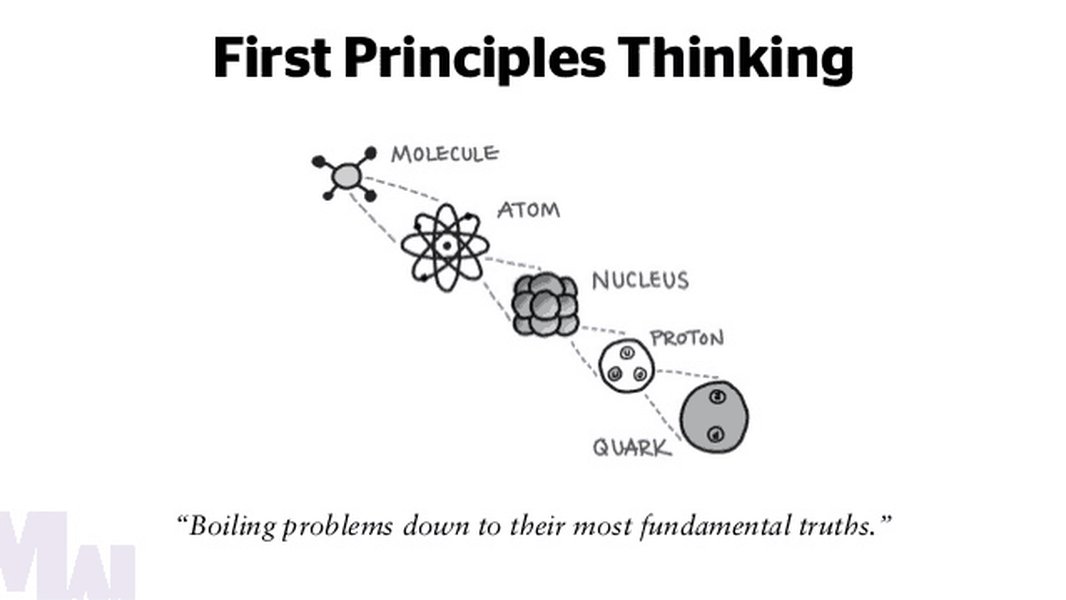
Visualizing the breakdown and rebuilding process in first principles thinking.
Johannes Gutenberg and the Printing Press
Another historical example is Johannes Gutenberg's invention of the printing press in the 15th century. Instead of trying to improve upon existing methods of copying texts by hand (reasoning by analogy), Gutenberg applied first principles thinking. He looked at the fundamental needs: a way to efficiently transfer ink to paper to reproduce text. He then combined existing technologies like the screw presses used for wine and olive oil with the concept of movable metal type, borrowed from coin punches, to create a revolutionary new method of printing. He broke down the process of producing books into its essential components and reassembled them in a novel way.
The Wright Brothers and Flight
Before the Wright brothers, many attempted to achieve flight by mimicking birds. This was reasoning by analogy. The Wright brothers, however, approached the problem from first principles. They studied the fundamental principles of aerodynamics: lift, drag, and propulsion. By understanding these core forces, they were able to engineer a flying machine that worked based on these physical principles, rather than simply imitating nature's form.
Why is First Principles Thinking Important?
First principles thinking is important because it provides a framework for true understanding and unlocks the potential for significant innovation. In a world of increasing complexity and rapid change, relying solely on existing knowledge and conventional wisdom can be limiting.
Fostering Innovation and Creativity
By forcing you to question assumptions and build from the ground up, first principles thinking naturally fosters creativity and leads to innovative solutions. It allows you to see possibilities that are not apparent when you are constrained by existing paradigms.
Deepening Understanding
Breaking down problems to their fundamental truths provides a deeper and more robust understanding of the subject matter. You move beyond superficial knowledge and grasp the underlying principles that govern the system.
Improving Problem-Solving Skills
First principles thinking equips you with a powerful problem-solving methodology. It provides a structured approach to tackling complex issues, allowing you to identify root causes and develop effective solutions.
Making Better Decisions
By understanding the fundamental truths, you can make more informed and rational decisions. You are less likely to be swayed by popular opinion or ingrained biases when your decisions are based on core principles.
How to Cultivate First Principles Thinking
Developing the ability to think in first principles takes practice and a conscious effort to change your thinking habits. Here are some strategies to cultivate this skill:
Embrace the Socratic Method
The Socratic method, with its focus on systematic questioning, is a valuable tool for first principles thinking. Continuously ask "why" to peel back layers of assumptions and get to the core truths. Challenge your own ideas and those of others.
Break Down Complex Problems
When faced with a complex problem, resist the urge to jump to a solution based on what you've seen before. Instead, consciously break it down into smaller, more manageable parts. Identify the fundamental elements at play.
Question Everything
Adopt a mindset of healthy skepticism. Question the status quo, conventional wisdom, and widely accepted beliefs. Don't just accept things at face value; seek to understand the underlying reasons.
Learn Across Disciplines
Innovation often arises from combining ideas from seemingly unrelated fields. Exposing yourself to different areas of knowledge can provide new perspectives and fundamental principles that can be applied to your problem.
Focus on Function Over Form
Be mindful of the tendency to optimize the existing form of something rather than focusing on its core function. When thinking about a solution, prioritize what it needs to *do* rather than how it has traditionally *looked* or been implemented.
Overcoming Obstacles to First Principles Thinking
While powerful, first principles thinking can be challenging. Our brains are wired to use heuristics and analogies to conserve mental energy. Overcoming this natural tendency requires conscious effort.
The Comfort of Analogy
Reasoning by analogy is often faster and easier because it leverages existing knowledge. Shifting to first principles thinking requires more mental effort and can feel uncomfortable initially.
Fear of Being Wrong
Challenging assumptions and building from scratch can feel risky. There's a fear of being wrong or failing when you deviate from established paths.
Lack of Deep Knowledge
To effectively break down a problem into its fundamental principles, you need a certain level of deep knowledge about the domain. Without understanding the basic elements, it's difficult to identify the true first principles.
Overcoming these obstacles requires persistence, a willingness to embrace uncertainty, and a commitment to continuous learning.
First Principles Thinking in Various Fields
The application of first principles thinking extends far beyond science and engineering. It can be a valuable tool in various fields, including business, product development, design, and even personal development.
Business Strategy
In business, first principles thinking can help leaders re-evaluate their models, identify inefficiencies, and discover new market opportunities. Instead of simply following industry trends, they can break down the fundamental needs of their customers and the core processes of their business to build more effective strategies.
Product Development
For product managers and entrepreneurs, first principles thinking is essential for creating truly innovative products. It involves understanding the core problem the product is trying to solve and the fundamental needs of the users, rather than just adding features based on what competitors are doing.
Design Thinking
First principles thinking aligns well with design thinking, which emphasizes understanding user needs and challenging assumptions to create user-centered solutions. Both methodologies encourage a deep dive into the problem space to uncover fundamental insights.
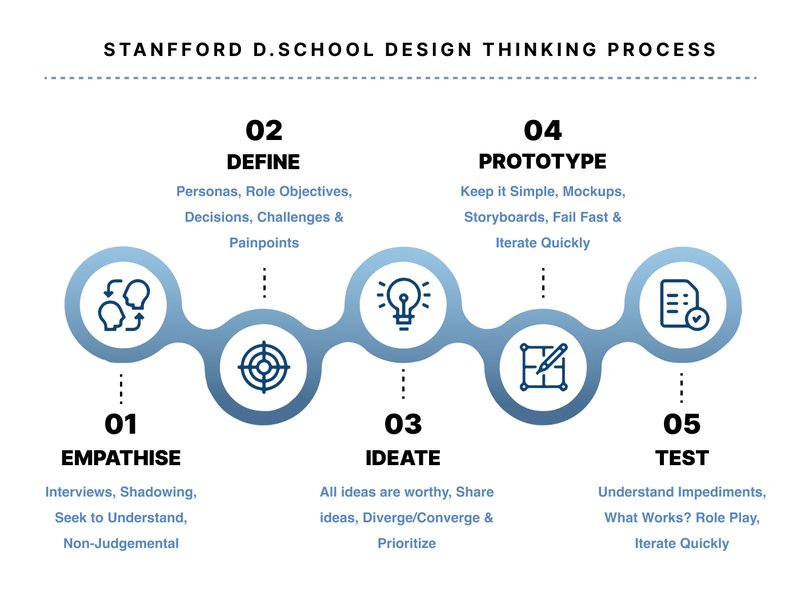
Design thinking often incorporates elements of first principles thinking by focusing on fundamental user needs.
Personal Development
On a personal level, first principles thinking can be used to examine your beliefs, habits, and goals. By breaking them down into their fundamental components, you can gain clarity, challenge limiting beliefs, and build a life aligned with your core values.
Learn More About First Principles Thinking
To delve deeper into first principles thinking, consider watching this video featuring Elon Musk explaining the concept. It provides valuable insights from someone who has successfully applied this approach to achieve remarkable results.
Elon Musk discusses the benefits and application of first principles thinking in an interview with Kevin Rose.
Frequently Asked Questions
What is the main difference between first principles thinking and reasoning by analogy?
The main difference lies in the starting point and approach. First principles thinking starts with fundamental truths and builds up from there, while reasoning by analogy relies on existing solutions and assumptions based on similar problems.
Is first principles thinking always the best approach?
While powerful for innovation and complex problems, first principles thinking can be time-consuming and mentally demanding. Reasoning by analogy is often more efficient for routine problems where established solutions are effective. The key is to know when to apply each approach.
How can I practice first principles thinking in my daily life?
Start by consciously questioning assumptions in everyday situations. When faced with a problem or a common belief, ask "why" repeatedly to get to the underlying reasons. Try breaking down simple processes into their basic steps.
Are there any downsides to first principles thinking?
One potential downside is that it can be inefficient if applied to every single problem. Relying solely on first principles for simple tasks would be overly complex. It's best suited for challenging problems that require innovative solutions.
Does first principles thinking require a lot of knowledge?
While you don't need to be an expert in every field, a certain level of foundational knowledge in the area you are examining is helpful to identify the true first principles. However, the process itself helps deepen your understanding.
References
Last updated May 7, 2025