
Unlocking the Power of the Crowd: What Exactly Is Herd Immunity?
Discover how collective immunity shields entire populations from infectious diseases, even those who can't be vaccinated.
Key Insights into Herd Immunity
- Herd immunity (or community immunity) occurs when a large portion of a population becomes immune to a disease, significantly reducing its ability to spread.
- It provides indirect protection to vulnerable individuals who cannot be vaccinated, such as infants, the elderly, and those with compromised immune systems.
- Vaccination is the safest and most effective way to achieve herd immunity, offering protection without the risks associated with natural infection.
Defining Herd Immunity: The Science of Collective Protection
Herd immunity, also known as population immunity or community immunity, is a fundamental concept in epidemiology. It describes a scenario where a sufficiently high percentage of individuals within a population has developed immunity to an infectious disease. This widespread immunity significantly disrupts the chain of transmission, making it difficult for the disease to spread from person to person. Consequently, even individuals who are not immune themselves receive a level of indirect protection because the likelihood of them encountering an infectious person is greatly reduced.
Think of it like a barrier. When enough people are immune, they act as obstacles, preventing the pathogen from easily finding susceptible hosts. This collective resistance is crucial for controlling outbreaks and protecting public health.
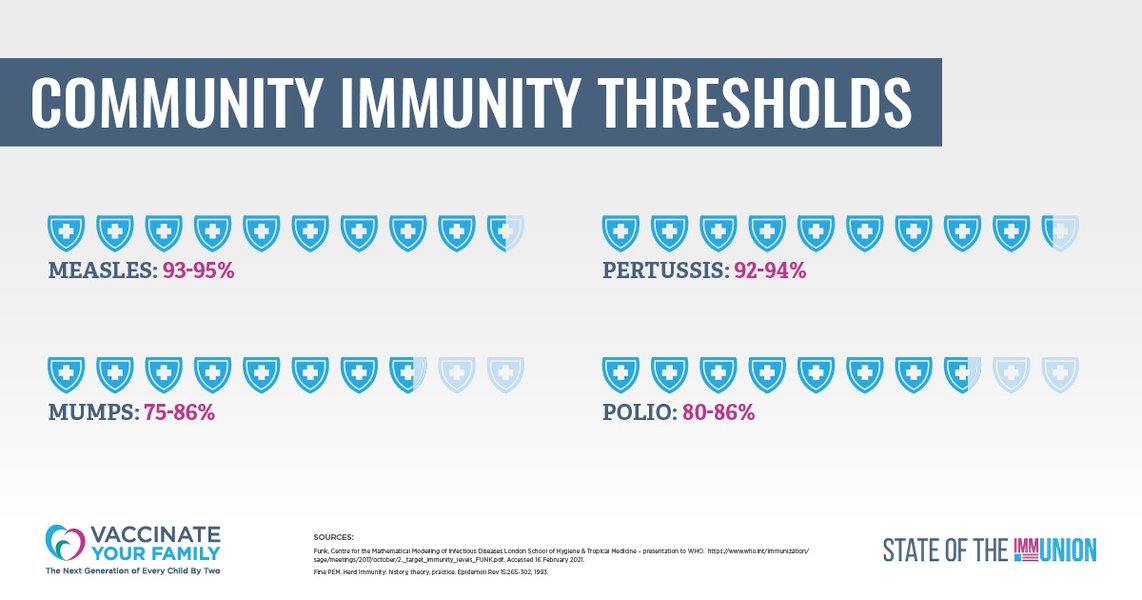
Vaccination builds a protective shield around the community, limiting disease spread.
How Does Herd Immunity Work?
The effectiveness of herd immunity hinges on reducing the number of susceptible individuals below a critical threshold. Every infectious disease has a basic reproduction number, known as \( R_0 \) (R-naught). This value represents the average number of secondary infections produced by a single infected individual in a completely susceptible population.
For a disease to spread and cause an epidemic, \( R_0 \) must be greater than 1. Herd immunity aims to reduce the *effective* reproduction number (often denoted as R or \( R_t \)) to below 1. When \( R < 1 \), each existing infection causes less than one new infection on average, leading the outbreak to decline and eventually die out.
The Herd Immunity Threshold (HIT)
The proportion of the population that needs to be immune to achieve herd immunity is called the Herd Immunity Threshold (HIT). It can be estimated using the \( R_0 \) value with the formula:
\[ \text{HIT} = 1 - \frac{1}{R_0} \]For example:
- If a disease has an \( R_0 \) of 2 (meaning one infected person infects two others on average), the HIT would be \( 1 - 1/2 = 0.5 \), or 50%.
- For a highly contagious disease like measles, with an \( R_0 \) ranging from 12 to 18, the HIT is much higher, typically calculated as \( 1 - 1/12 \approx 0.92 \) to \( 1 - 1/18 \approx 0.94 \). This means around 92-94% of the population needs to be immune to prevent widespread outbreaks.
Achieving and maintaining this threshold is key to leveraging the protective power of herd immunity.
Pathways to Achieving Herd Immunity
Immunity within a population can be established through two primary routes:
1. Vaccination: The Preferred Strategy
Vaccination is widely recognized by public health organizations, including the World Health Organization (WHO), as the safest and most ethical method to achieve herd immunity. Vaccines stimulate the immune system to develop protection against a specific pathogen without causing the disease itself or its potentially severe complications. High vaccination coverage across a population builds collective immunity, interrupting transmission chains and protecting everyone, especially vulnerable groups.
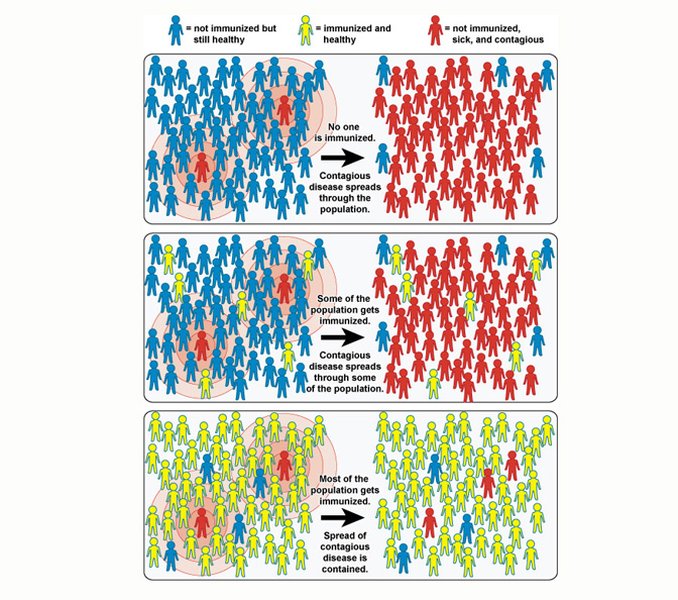
Vaccination helps build immunity across a population, hindering the spread of infectious diseases.
2. Natural Infection: A Risky Alternative
Immunity can also be acquired after recovering from a natural infection. Historically, before vaccines were developed, populations experienced cycles of epidemics where survivors developed immunity. However, relying on natural infection to achieve herd immunity is a dangerous and ethically problematic strategy, particularly for severe diseases like COVID-19. This approach inevitably leads to significant illness, potential long-term health consequences, and preventable deaths. Public health strategies strongly advocate against pursuing herd immunity through uncontrolled transmission.
Passive Immunity
A less common contributor is passive immunity, where antibodies are transferred from one individual to another, such as from mother to baby during pregnancy or through breastfeeding. This provides temporary protection but does not contribute to long-term herd immunity in the same way as vaccination or recovery from infection.
The Crucial Benefits of Herd Immunity
Protecting the Vulnerable
One of the most significant advantages of herd immunity is the indirect protection it offers to individuals who cannot be vaccinated or may not develop a strong immune response. This includes:
- Newborns and infants too young for certain vaccines.
- Elderly individuals whose immune systems may be weaker.
- People with compromised immune systems due to medical conditions (like certain cancers or HIV) or treatments (like chemotherapy or immunosuppressive drugs).
- Individuals with severe allergies to vaccine components.
By reducing the overall circulation of the pathogen, herd immunity creates a safer environment for these vulnerable groups, minimizing their risk of exposure and infection.
Preventing Outbreaks and Epidemics
When herd immunity is established and maintained, it significantly reduces the likelihood of large-scale outbreaks or epidemics. Even if isolated cases occur (e.g., introduced by travel), the disease struggles to gain a foothold and spread widely within the highly immune population. This is fundamental to the success of global efforts to control and even eliminate vaccine-preventable diseases like polio and measles.
Community Well-being
Herd immunity underscores the importance of collective action in public health. High vaccination rates benefit not only the vaccinated individuals but the entire community. It reduces the burden on healthcare systems, minimizes economic disruption caused by widespread illness, and contributes to overall societal health and well-being.
Visualizing Herd Immunity Concepts
Mindmap: Key Aspects of Herd Immunity
This mindmap provides a visual summary of the core concepts related to herd immunity, showing the interconnectedness of its definition, mechanisms, benefits, and challenges.
(Community/Population Immunity)"] id1["Definition"] id1a["Indirect protection via widespread immunity"] id1b["Reduces disease transmission"] id1c["Protects non-immune individuals"] id2["Mechanism"] id2a["Reduces susceptible hosts"] id2b["Interrupts chain of transmission"] id2c["Based on Reproduction Number (R0)"] id2d["Goal: Effective R < 1"] id3["Achieving Immunity"] id3a["Vaccination (Safest & Preferred)"] id3a1["Stimulates immunity without disease"] id3a2["Requires high coverage"] id3b["Natural Infection (Risky)"] id3b1["Immunity post-recovery"] id3b2["Carries health risks (illness, death)"] id3c["Passive Transfer (Temporary)"] id4["Benefits"] id4a["Protects Vulnerable Groups
(Infants, Elderly, Immunocompromised)"] id4b["Prevents large outbreaks/epidemics"] id4c["Reduces healthcare burden"] id4d["Supports disease control/elimination"] id5["Threshold (HIT)"] id5a["Formula: 1 - (1/R0)"] id5b["Varies by disease contagiousness"] id5c["High for measles (~94%)"] id5d["Variable for others (e.g., COVID-19)"] id6["Challenges & Limitations"] id6a["Waning immunity (natural or vaccine)"] id6b["Pathogen evolution (new variants)"] id6c["Vaccine hesitancy / Uneven coverage"] id6d["Requires sustained effort"] id6e["Doesn't apply to non-contagious diseases"]
Challenges and Considerations
While a powerful tool, achieving and maintaining herd immunity isn't always straightforward. Several factors can influence its effectiveness:
Variability Between Diseases
The ease of achieving herd immunity varies significantly depending on the characteristics of the pathogen and the available interventions (like vaccines).
- Contagiousness (\( R_0 \)): Highly contagious diseases require a higher percentage of the population to be immune.
- Vaccine Efficacy: How well vaccines prevent infection and transmission impacts the required coverage levels.
- Duration of Immunity: If immunity (from vaccination or infection) wanes over time, booster doses or repeated efforts may be needed to maintain the threshold.
- Virus Evolution: Pathogens like influenza or SARS-CoV-2 (the virus causing COVID-19) can mutate, potentially creating new variants that evade existing immunity, making sustained herd immunity more challenging.
Comparing Herd Immunity Factors: Measles vs. COVID-19
This radar chart illustrates how different factors compare for two distinct diseases: Measles, for which herd immunity via vaccination has been highly successful, and COVID-19, which presents more complex challenges. The scores (scaled notionally from 3 to 10 for clarity, where higher means 'more challenging' or 'higher requirement') reflect general epidemiological understanding.
As shown, factors like significant immunity waning and vaccine evasion by variants make maintaining herd immunity for diseases like COVID-19 more complex than for measles, which has a relatively stable virus and highly effective, long-lasting vaccines.
Population Behavior and Equity
Vaccine hesitancy, misinformation, and unequal access to vaccines globally can hinder efforts to reach necessary coverage levels. Achieving herd immunity requires high, equitable vaccine uptake across all communities.
Herd Immunity in Action: A Summary Table
This table provides a comparative overview of herd immunity characteristics for selected infectious diseases.
| Disease | Typical R0 Range | Estimated Herd Immunity Threshold (HIT) | Primary Method for Immunity | Key Challenges to Herd Immunity |
|---|---|---|---|---|
| Measles | 12-18 | ~92-95% | Vaccination (MMR) | Requires very high, sustained vaccination coverage; vaccine hesitancy. |
| Polio | 5-7 | ~80-86% | Vaccination (IPV/OPV) | Requires high global vaccination coverage for eradication; access in remote areas. |
| Influenza (Seasonal) | 1-2 | Variable (often <50%, depends on strain) | Vaccination (annual) & Natural Infection | Constant virus evolution (antigenic drift/shift); waning immunity; need for annual vaccines. |
| COVID-19 (SARS-CoV-2) | Variable (e.g., 2-10+, depending on variant) | Variable, generally high (e.g., 70-90%+) | Vaccination & Natural Infection | Emergence of new variants; waning immunity (natural & vaccine); vaccine equity/hesitancy; defining long-term strategy. |
Understanding Herd Immunity: Video Explanation
For a visual explanation of how herd immunity works through vaccination, watch this short animation from the Vaccine Knowledge Project at the University of Oxford. It clearly illustrates how immunizing a significant portion of the population protects the entire community by limiting the pathways for disease spread.
This video effectively demonstrates the concept that when enough individuals are vaccinated, they form a protective barrier, making it difficult for infections to reach those who are unvaccinated or vulnerable.
Frequently Asked Questions (FAQ)
Is herd immunity the same as individual immunity?
Can herd immunity be achieved through natural infection alone?
Why does the herd immunity threshold vary for different diseases?
Does herd immunity mean a disease is completely gone?
Is herd immunity possible for COVID-19?
Recommended Reading
- How is the herd immunity threshold calculated for different infectious diseases?
- What are the specific challenges in achieving and maintaining herd immunity against COVID-19 variants?
- Can you compare the effectiveness and risks of herd immunity achieved through vaccination versus natural infection?
- What impact does vaccine hesitancy have on reaching community immunity goals?
References
 healthunlimitedbiz.wordpress.com
Last updated May 5, 2025