
Unraveling the Enigma of Time: A Comprehensive Exploration
From Philosophical Abstraction to Scientific Measurement, Time's Multifaceted Nature Revealed
Key Highlights of Time's Nature
- Time as Change: At its most fundamental, time is inextricably linked to change. If nothing changes, time, in a physical sense, ceases to have meaning.
- The Arrow of Time: Despite physics equations often being reversible, our universe experiences time as a continuous, irreversible progression from the past to the present and into the future, largely governed by the concept of entropy.
- Relativity and Measurement: While our everyday experience of time is linear and absolute, modern physics, particularly Einstein's theories of relativity, demonstrates that time is relative, affected by motion and gravity, and precisely measured by phenomena like atomic transitions.
The concept of time is one of the most pervasive yet elusive aspects of our reality. It shapes our daily lives, from scheduling appointments to understanding historical events, yet its fundamental nature remains a subject of profound philosophical debate and rigorous scientific inquiry. Across disciplines, time is perceived and defined in diverse ways, ranging from a measurable physical quantity to an intricate human construct.
Defining Time: A Multidisciplinary Perspective
Defining time is a challenge that has perplexed thinkers for millennia. Saint Augustine of Hippo famously mused, "What then is time? If no one asks me, I know: if I wish to explain it to one that asketh, I know not." This sentiment underscores the inherent difficulty in encapsulating such a fundamental concept. However, by examining various perspectives, we can piece together a more comprehensive understanding.
Philosophical Underpinnings of Time
Philosophically, time is often viewed as the continuous progression of existence. It is the framework within which events unfold, moving from a fixed past, through a fleeting present, and into an uncertain future. Some philosophical schools, particularly those rooted in ancient Eastern traditions like Hindu philosophy, espouse a cyclical view of time, where events repeat in predictable patterns, exemplified by the "Kalachakra" or "Wheel of Time." In contrast, many Western philosophies, influenced by Newtonian mechanics, conceive of time as linear and absolute, an empty container independent of the events it holds.
Time as a Human Construct vs. Objective Reality
A significant debate revolves around whether time is an objective reality or a human construct. Some argue that time is merely an "imaginary framework" or "mental space" our minds use to reference events, suggesting it's not something tangible or measurable in itself. This perspective highlights the human brain's role in perceiving and tracking time, often linking it to memory and the distinction of events within an interval. Conversely, the scientific consensus, particularly in physics, treats time as a fundamental, albeit complex, aspect of the universe, measurable and subject to physical laws.
The Scientific Lens: Time in Physics
In physics, time takes on a more concrete, albeit still profound, definition. It is often described operationally as "what a clock reads." This definition, while practical for measurement, acknowledges that the essence of time goes deeper than mere clock readings. The SI base unit of time, the second, is precisely defined by the electronic transition frequency of caesium atoms, allowing for highly accurate atomic clocks.

Measuring the flow of time through various mechanisms.
Time as the Fourth Dimension of Spacetime
Albert Einstein's theories of relativity revolutionized our understanding of time, integrating it with space into a single "spacetime continuum." In this framework, events are assigned four coordinates: three for space and one for time. Crucially, special relativity demonstrated that time intervals can appear lengthened (time dilation) for objects in motion relative to an observer, and general relativity further linked time to gravity, where stronger gravity can cause time to slow down. This means time is not absolute but relative, its measurement varying depending on relative motion or gravitational forces.
Conceptual Representation of Time's Attributes Across Different Perspectives
The radar chart above illustrates a qualitative comparison of how different conceptualizations of time emphasize various attributes. For instance, the "Physical Time" perspective scores high on "Measurability" and "Relativity," reflecting its precise definitions and the effects of time dilation. "Philosophical Time" emphasizes "Continuity" and "Progression," while "Everyday Experience" scores highest on "Linearity" and "Perception," reflecting our intuitive understanding. The "Change-Based Definition" highlights "Relationship to Change" as its core attribute. This chart is an opinionated analysis to showcase the multifaceted nature of time.
The Indivisible Link Between Time and Change
A recurring theme across scientific definitions is the intimate connection between time and change. Many physicists define time as "change, or the interval over which change occurs." If a system is unchanging, it is considered timeless. Time is essential for describing other physical quantities, such as velocity, which measures change in position over time. The "arrow of time" is a concept that describes time's unidirectional progression from past to future, often attributed to the thermodynamic principle of increasing entropy, or disorder, in the universe.
Everyday Experience of Time
Beyond the philosophical and scientific realms, our daily lives are deeply intertwined with time. We perceive time as linear, moving consistently forward. We measure it with clocks and calendars, organizing our lives around minutes, hours, days, and years. This practical application of time is crucial for social coordination, economic activity ("time is money"), and personal reflection. Our perception of time can also be subjective; it can seem to speed up or slow down depending on our engagement and the number of events our brain registers within an interval.
The Measurement and Evolution of Timekeeping
The measurement of time has evolved significantly throughout human history, driven by practical needs in navigation, astronomy, and daily life.
From Celestial Cycles to Atomic Precision
Early civilizations relied on observing periodic natural phenomena—the apparent motion of the sun across the sky, the phases of the moon, and the changing seasons—to track time. These observations led to the development of calendars, mathematical tools for organizing longer intervals. Clocks, as physical mechanisms indicating the passage of time over shorter periods, followed. The precision of timekeeping has advanced dramatically, culminating in modern atomic clocks that measure the electronic transition frequency of caesium atoms with incredible accuracy.
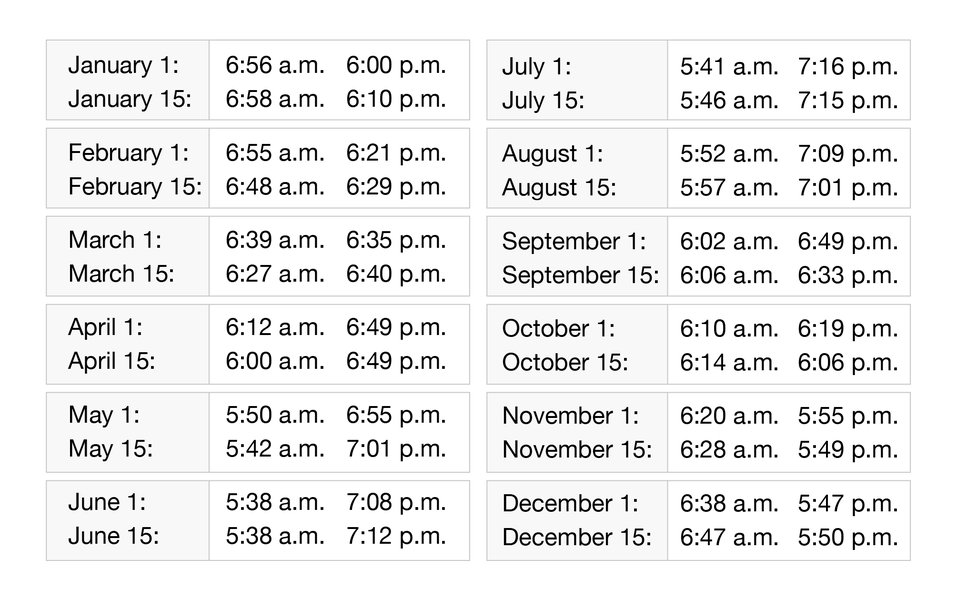
The cyclical patterns of sunrise and sunset, a fundamental basis for early timekeeping.
Time in Different Frameworks
Different fields and applications utilize various time standards. From Barycentric Dynamical Time (used in astronomy) to Coordinated Universal Time (UTC) for global synchronization, these systems, though distinct, can be precisely synchronized through careful measurement. The continuous pursuit of more accurate time measurement reflects time's critical role in science, technology, and our understanding of the universe.
The Profound Implications of Time's Nature
The multifaceted understanding of time has profound implications, touching upon concepts like time travel and the very fabric of existence.
Time Dilation and the Reality of Time Travel
Time dilation, a consequence of Einstein's relativity, shows that time can pass at different rates for different observers. While moving forward in time is a natural phenomenon (e.g., astronauts on the International Space Station age slightly slower than those on Earth), the possibility of traveling backward in time presents significant paradoxes, such as the "grandfather paradox." Most physicists currently believe that time travel to the past is impossible, though theoretical solutions involving parallel universes have been proposed.
Theoretical Physicist Brian Greene Explains Time in 5 Levels of Difficulty.
This video provides an excellent deep dive into the concept of time, explained by renowned theoretical physicist Brian Greene. He breaks down the complexities of time, from its everyday perception to its intricate behavior in the realm of relativity and quantum mechanics. The video highlights how our intuitive understanding of time as a constant, unchanging flow contrasts sharply with its scientific definitions, particularly in how speed and gravity can affect its passage. Greene also touches upon the mystery of the "arrow of time" and the philosophical implications of time's nature, offering a comprehensive overview that bridges the gap between common sense and advanced physics.
The "Illusion" of Time and Quantum Gravity
Some contemporary physicists suggest that time, as we experience it, might not be a fundamental property of reality but rather an emergent phenomenon. This perspective often arises from attempts to reconcile general relativity with quantum mechanics, where at extremely small scales (below the Planck time scale), the very notions of time and spacetime may become less applicable. While this doesn't negate our experience of time, it suggests that at the deepest foundations of nature, time might not be an irreducible element, challenging our conventional understanding.
Summary of Time's Attributes and Measurements
To summarize, time is a complex concept understood through various lenses. The following table provides a concise overview of its key attributes and methods of measurement across different contexts.
| Aspect of Time | Description | Primary Measurement/Definition |
|---|---|---|
| Philosophical Time | Continuous progression of existence; framework for events. Can be linear or cyclical. | Abstract concept, experienced as past, present, future. |
| Classical Physics Time | Universal, absolute, and flows uniformly for all observers (Newtonian). | Scalar quantity; what a clock reads (e.g., pendulum swings). |
| Relativistic Physics Time | Dimension of spacetime, relative and affected by motion and gravity (Einstein). | Time dilation, length contraction; measured by atomic clocks. |
| Time as Change | The interval over which changes occur; if a system is unchanging, it is timeless. | Observation of sequential events and transformations. |
| Human Perception of Time | Subjective experience of time speeding up or slowing down based on context. | Psychological experience, memory formation, brain processing of events. |
| Standard Unit of Time | The internationally defined base unit for time. | The second, defined by the electronic transition frequency of caesium atoms. |
Frequently Asked Questions
What is the "arrow of time"?
Is time travel possible according to physics?
How do atomic clocks measure time?
Why do some physicists say time is an illusion?
Conclusion
Time, whether viewed as a philosophical concept, a measurable physical quantity, or a subjective human experience, remains one of the universe's most captivating mysteries. From the ancient contemplation of its cyclical nature to Einstein's revolutionary insights into its relativity and modern debates about its fundamental existence, our understanding of time continues to evolve. While we can precisely measure its passage and observe its effects, the ultimate essence of time continues to invite profound inquiry, underscoring its pivotal role in both the cosmos and our conscious lives.
Recommended Further Exploration
- How does relativity affect our understanding of time?
- What is the thermodynamic arrow of time?
- Are there philosophical arguments against the existence of time?
- How do quantum mechanics and time interact?
References
Last updated May 21, 2025