
Is Your "Best" Model Truly Superior, or Just a Lucky Find? White's Reality Check Unveiled
Discover the statistical safeguard against misleading discoveries from data snooping, ensuring your model's performance is genuinely robust.
In the world of data analysis, particularly in fields like finance and econometrics, researchers often test numerous models or strategies on the same dataset. This practice, known as "data snooping" or "data mining," significantly increases the risk of finding seemingly successful models that are, in reality, just products of chance. Halbert White's 2000 paper, "A Reality Check for Data Snooping," introduced a groundbreaking statistical method to address this critical issue: the Reality Check Bootstrap. This technique helps determine if the observed superior performance of a chosen model is statistically significant or merely an artifact of the extensive search process.
Key Insights: Understanding the Reality Check
- Guarding Against False Positives: The Reality Check Bootstrap is specifically designed to mitigate the risk of data snooping, where repeated analysis of the same data leads to spurious findings of model superiority.
- Robust Hypothesis Testing: It employs a bootstrap methodology to test the null hypothesis that no model within a tested set genuinely outperforms a benchmark, considering the multiple comparisons made.
- Validating Predictive Power: This method provides a more rigorous assessment of a model's or strategy's predictive ability, helping to distinguish true performance from luck or bias, especially in financial market predictions and economic forecasting.
The Peril of Data Snooping
Data snooping, also referred to as data mining bias, occurs when a researcher extensively searches through data, testing numerous hypotheses or model configurations, until a statistically significant result is found. While exploring data is a crucial part of research, the problem arises when the same dataset is used for both discovering a pattern and validating its significance. Without proper adjustment, this leads to an inflated probability of making a Type I error – falsely concluding that a model is effective when its performance is simply due to random chance. Imagine sifting through thousands of potential trading rules; by sheer luck, some will appear profitable on historical data, even if they possess no genuine predictive power for the future.
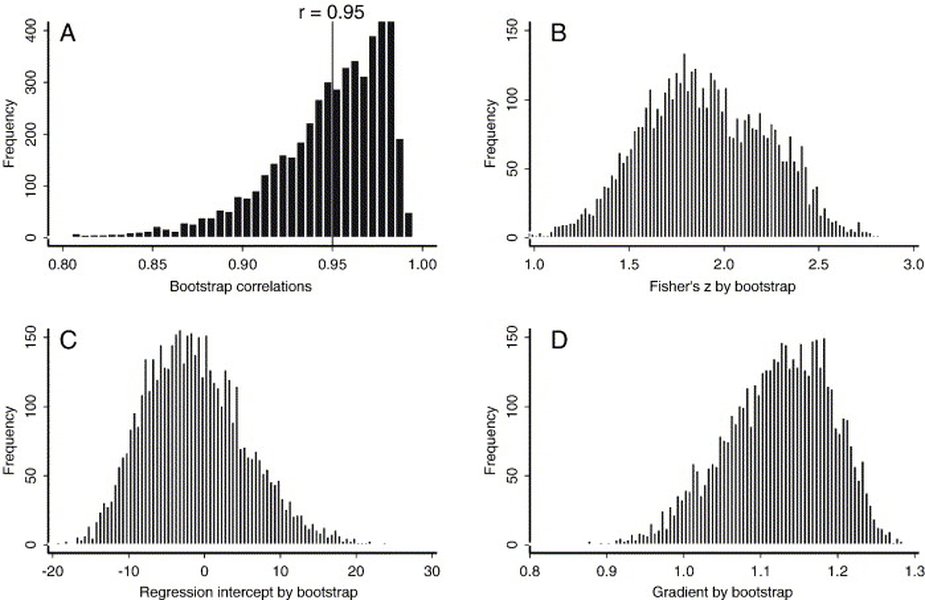
The bootstrap method, a resampling technique, is fundamental to White's Reality Check.
White's Reality Check: The Statistical Shield
Halbert White's Reality Check (WRC) provides a formal statistical framework to assess whether the best-performing model identified from a large set of candidates truly possesses superior predictive ability over a benchmark, or if its apparent success is likely due to data snooping.
Purpose and Core Objective
The primary objective of the WRC is to test the null hypothesis that the expected performance of the best model found is no better than that of a pre-specified benchmark model. In essence, it asks: "Is the top model genuinely good, or did we just get lucky by trying out so many options?"
The Null Hypothesis
The null hypothesis (H₀) formally states that the maximum expected outperformance of any model \(k\) (from a set of \(m\) models) relative to a benchmark is less than or equal to zero. Mathematically, this can be expressed as:
\[ H_0: \max_{1 \leq k \leq m} \mathbb{E}[d_k] \leq 0 \]Where \(d_k\) represents the performance difference (e.g., excess return, lower error) of model \(k\) compared to the benchmark. If the Reality Check yields a p-value that leads to the rejection of this null hypothesis, it suggests that at least one model has genuine predictive superiority.
The Mechanics: How the Reality Check Bootstrap Works
The WRC employs a bootstrap resampling technique to simulate the distribution of the best model's performance under the assumption that the null hypothesis is true. This allows for the calculation of a p-value that is adjusted for the multiple comparisons inherent in the model search process.
Step-by-Step Procedure
- Model Universe and Benchmark Definition: Define a set of \(m\) competing models or strategies and a benchmark model (e.g., a buy-and-hold strategy, a simple autoregressive model).
- Performance Metrics: For each model \(k\) and the benchmark, calculate a time series of performance metrics (e.g., daily returns, forecast errors) over a historical period. Let \(f_{k,t}\) be the performance of model \(k\) at time \(t\), and \(f_{0,t}\) be the performance of the benchmark at time \(t\).
- Performance Differentials: Calculate the performance difference for each model relative to the benchmark: \(d_{k,t} = f_{k,t} - f_{0,t}\).
- Observed Test Statistic: Compute the average performance differential for each model, \(\bar{d}_k = \frac{1}{n} \sum_{t=1}^{n} d_{k,t}\), where \(n\) is the number of observations. The test statistic is the maximum of these average differentials: \[ T_{\text{obs}} = \max_{1 \leq k \leq m} \bar{d}_k \] Some formulations use a scaled version, like \( T^{RC}_n = \max \left[ \max_{k=1,\dots,m} (n^{1/2} \bar{d}_k), 0 \right] \).
- Bootstrap Resampling: This is the core of the Reality Check. To account for potential time-series dependence in the performance differentials (common in financial data), a block bootstrap (like the stationary bootstrap) is typically used. This involves:
- Resampling blocks of the historical performance differentials \(d_{k,t}\) with replacement to create many (e.g., B=1000) bootstrapped time series.
- For each bootstrapped series \(b\), calculate the bootstrapped average performance differentials \(\bar{d}_{k,b}^*\) for all \(m\) models.
- Recentering: To simulate the distribution under the null hypothesis (where no model is truly superior), the bootstrapped differentials are often recentered. For example, \(\bar{d}_{k,b}^* - \bar{d}_k\).
- From each bootstrapped set of \(m\) recentered average differentials, calculate the maximum: \(T_b^* = \max_{1 \leq k \leq m} (\bar{d}_{k,b}^* - \bar{d}_k)\) (adjustments may apply depending on the specific formulation of the null).
- P-value Calculation: The collection of \(B\) bootstrapped maximum statistics \(T_b^*\) forms an empirical distribution of the test statistic under the null hypothesis. The Reality Check p-value is then calculated as the proportion of bootstrapped maximums that are greater than or equal to the originally observed maximum \(T_{\text{obs}}\): \[ \text{p-value} = \frac{1}{B} \sum_{b=1}^{B} \mathbb{I}(T_b^* \geq T_{\text{obs}}) \] where \(\mathbb{I}(\cdot)\) is an indicator function.
- Decision: If the calculated p-value is below a chosen significance level (e.g., 0.05 or 0.10), the null hypothesis is rejected. This suggests that the best-performing model's success is unlikely to be due to data snooping alone and may indicate genuine predictive ability.
Visualizing Key Attributes of White's Reality Check
The following chart provides a qualitative assessment of White's Reality Check across several important dimensions. These are generalized evaluations based on its design and common applications.
This radar chart illustrates that White's Reality Check offers strong mitigation against data snooping and is versatile. While it can be computationally intensive, its robustness and ability to detect true effects (power) are generally good, though its interpretation might require more statistical understanding than naive methods.
Core Concepts and Workflow Mindmap
The mindmap below provides a visual summary of the problem White's Reality Check addresses, its methodology, and its intended outcomes. It highlights the flow from identifying the issue of data snooping to achieving more reliable statistical inference.
This mindmap illustrates the central role of the Reality Check in addressing data snooping by using a bootstrap approach to validate model performance rigorously.
Key Features and Importance
Guarding Against Overfitting
The WRC is crucial for preventing overfitting that arises from data snooping. By rigorously testing the best model's performance against a distribution generated under the null hypothesis (that no model is superior), it helps researchers avoid promoting models that only looked good by chance on past data.
Handling Dependent Data
A significant strength of the WRC, especially when combined with techniques like the stationary bootstrap or block bootstrap, is its ability to handle time-series data where observations are not independent and identically distributed (i.i.d.). This is vital in finance and economics where data often exhibit autocorrelation and volatility clustering.
Nonparametric Nature
The bootstrap approach is largely nonparametric, meaning it makes fewer assumptions about the underlying distribution of the data compared to many traditional statistical tests. This makes it more robust and applicable to a wider range of data types and model performance metrics.
Applications of White's Reality Check
The WRC has found widespread application, particularly in:
- Financial Economics: Evaluating the profitability of technical trading rules, testing asset pricing models, and assessing the performance of investment strategies. For instance, it's used to determine if a newly discovered trading strategy's historical profits are genuine or a result of mining through numerous potential rules.
- Econometric Forecasting: Comparing the out-of-sample predictive accuracy of multiple forecasting models for economic variables like inflation, GDP growth, or exchange rates.
- Machine Learning: In scenarios where multiple algorithms or hyperparameter settings are tested on the same dataset, the WRC can help validate if the selected "best" configuration offers a statistically significant improvement.
Understanding Bootstrap Methods in Practice
The Reality Check relies heavily on bootstrap methods. The following video provides a general introduction to how bootstrap methods are used to construct confidence intervals, which shares the underlying resampling principles with White's Reality Check for hypothesis testing.
This video explains the concept of resampling from the original data to create many simulated datasets. In the context of the Reality Check, these simulated datasets are used to build a distribution of the test statistic (e.g., maximum performance difference) under the null hypothesis, allowing for a more accurate p-value calculation that accounts for the data snooping process.
Comparison with Other Approaches
White's Reality Check was a foundational method. It's useful to compare it to naive approaches and subsequent developments like Hansen's Superior Predictive Ability (SPA) test.
| Feature | Naive p-value Approach | White's Reality Check (WRC) | Hansen's SPA Test |
|---|---|---|---|
| Addresses Data Snooping | No (Considers only one model in isolation) | Yes (Tests the best of many models) | Yes (Refines WRC, tests if any model is better than benchmark) |
| Null Hypothesis Focus | \(H_0: \mathbb{E}[d_k] \leq 0\) for a *single* pre-selected model \(k\) | \(H_0: \max_{k} \mathbb{E}[d_k] \leq 0\) (Is the *best* model no better than benchmark?) | \(H_0: \max_{k} \frac{\mathbb{E}[d_k]}{\text{Var}(d_k)^{1/2}} \leq 0\) (or similar, often better power if some models are very poor) |
| Handling of Poor Models | N/A | Can be conservative if many very poor models are included in the test (as they don't affect the max as much) | More robust to the inclusion of very poor performing models, potentially offering more power. It studentizes the performance differences. |
| Bootstrap Method | May or may not use bootstrap | Typically uses stationary or block bootstrap | Similar bootstrap techniques, but applied to studentized statistics |
| Primary Use Case | Significance of a single, pre-specified hypothesis | Validating if the best model found after a search is genuinely superior | Comparing multiple models against a benchmark, robustly |
The table highlights that while a naive approach ignores the multiple testing problem, White's Reality Check directly addresses it. Hansen's SPA test later improved upon WRC, particularly in situations where some tested models perform very poorly, by studentizing the performance differences, which can lead to a more powerful test.
Extensions and Limitations
Extensions
Subsequent research has built upon White's original work. Peter Hansen's (2005) "A Test for Superior Predictive Ability" (SPA) is a notable extension that often offers better power, especially when some of the tested models are significantly worse than the benchmark. The SPA test modifies the null hypothesis and the way performance differences are treated. Other extensions include the StepM procedure, which can identify a subset of superior models rather than just testing the single best.
Limitations
While powerful, the WRC has limitations:
- Computational Intensity: Bootstrap methods, by their nature, require significant computational resources, as they involve repeated resampling and recalculation of statistics.
- Conservatism: The original WRC can be conservative, meaning it might fail to reject the null hypothesis even when some genuine predictive ability exists, particularly if many poor or irrelevant models are included in the test set.
- Choice of Parameters: The implementation requires choices, such as the block length for block bootstraps, which can affect the results.
Despite these, White's Reality Check remains a landmark contribution for promoting more rigorous and reliable model evaluation in the presence of data snooping.
Frequently Asked Questions (FAQ)
What is data snooping in simple terms?
Data snooping is like searching for a specific shape in the clouds. If you look long enough at enough clouds, you'll eventually find one that looks like, say, a rabbit. But that doesn't mean clouds are inherently rabbit-shaped; you just found one by chance after many observations. In data analysis, if you test many different models or rules on the same dataset, you're likely to find one that looks good purely by luck, not because it's genuinely effective. White's Reality Check helps figure out if your "rabbit-shaped cloud" (good model) is real or just a coincidence.
Why is the Reality Check Bootstrap important for financial trading strategies?
Financial markets are noisy, and historical data can present many apparent patterns that don't persist. Traders often test thousands of potential trading rules. Without a Reality Check, they might invest real money based on a rule that only performed well in the past due to luck (data snooping). The Reality Check provides a statistical test to see if the strategy's historical success is likely genuine and not just a fluke, thus helping to avoid costly mistakes.
What kind of data is the Reality Check suitable for?
White's Reality Check is particularly well-suited for time-series data, which is common in economics and finance (e.g., stock prices, economic indicators). It typically uses bootstrap methods (like the stationary or block bootstrap) that are designed to preserve the temporal dependencies (like autocorrelation) present in such data. However, the general principle of accounting for multiple comparisons can be adapted to other data types where model selection from a large pool is performed.
Is a low p-value from the Reality Check a guarantee of future success?
No. A low p-value suggests that the observed historical performance of the best model is unlikely to be due to mere chance from data snooping, given the data and the models tested. It indicates statistical significance over the benchmark *within the context of the historical data*. It does not guarantee future performance, as market conditions can change, models can become outdated (model decay), and no statistical test can perfectly predict the future. It is, however, a crucial step in validating a model before considering it for real-world application.
Recommended Further Exploration
- How does Hansen's Superior Predictive Ability (SPA) test differ from White's Reality Check?
- Explain the stationary bootstrap method and its use in financial time series analysis.
- What are common pitfalls to avoid when backtesting trading strategies?
- Provide examples of data snooping in scientific research outside of finance.
References
 weapedagogy.wordpress.com
 rwer.wordpress.com
weapedagogy.wordpress.com
 scholar.googleusercontent.com
 azprojects.wordpress.com
Last updated May 7, 2025