
Navigating Work and Supplemental Security Income (SSI): A Comprehensive Guide
Understanding Income Limits, Work Incentives, and How Earnings Impact Your SSI Benefits
Key Insights into Working While Receiving SSI
- Focus on Earnings, Not Hours: The Social Security Administration (SSA) primarily considers your monthly earned income, not the number of hours you work, when determining your SSI benefit amount and eligibility.
- Generous Income Exclusions: SSI includes significant "work incentives" that allow you to keep a substantial portion of your earnings without reducing your benefits dollar-for-dollar. The first $85 of earned income and then half of the remaining earnings are generally excluded.
- Pathways to Increased Financial Well-being: Despite benefit reductions with increased income, working while on SSI often leads to a better overall financial situation and can even lead to continued Medicaid coverage even if cash benefits stop.
For individuals receiving Supplemental Security Income (SSI), the prospect of working can bring about questions regarding how employment might affect their benefits. It's a common misconception that there are strict hourly limits. In reality, the Social Security Administration (SSA) primarily focuses on the amount of income earned, rather than the specific hours worked, when determining SSI eligibility and benefit amounts. This comprehensive guide will delve into the intricacies of working while on SSI, explaining income limits, exclusions, and various work incentives designed to support beneficiaries in their pursuit of employment.
Understanding SSI and Its Purpose
What is Supplemental Security Income?
Supplemental Security Income (SSI) is a federal program administered by the Social Security Administration. It provides financial assistance to individuals who are aged (65 or older), blind, or disabled, and who have limited income and resources. Unlike Social Security Disability Insurance (SSDI), which is based on an individual's work history and contributions to Social Security taxes, SSI is a needs-based program funded by general tax revenues. Its primary goal is to help beneficiaries meet their basic needs for food and shelter.
The Crucial Role of Earned Income on SSI
Income, Not Hours: The Primary Metric
A key distinction to grasp is that the SSA's rules for SSI beneficiaries are centered on earned income thresholds, not an hourly work limit. While working a high number of hours might naturally lead to higher earnings, it is the amount of money you make that directly impacts your SSI benefit. The SSA aims to encourage work and self-sufficiency, providing various incentives to make employment a financially viable option.
For 2025, the general monthly earned income cap for individuals to be eligible for SSI is $2,019. This limit can increase for couples or when parents apply for a child. It's important to note that this is a gross income limit, and not all of it is "countable income" for SSI purposes due to various exclusions.
How Countable Income is Calculated
The SSA applies a specific formula to determine your "countable income," which is then used to reduce your SSI benefit. This calculation involves several exclusions:
- General Income Exclusion: The first $20 of most income (earned or unearned) received in a month is not counted.
- Earned Income Exclusion: After the initial $20 general exclusion, the SSA does not count the first $65 of your earned income. Beyond this, only half of the remaining earned income is counted. This means that for every $2 you earn over the initial $85 exclusion, your SSI payment is reduced by approximately $1.
Let's illustrate with an example: If you earn $600 in a month from a part-time job:
\[ \text{Earned Income} = \$600 \] \[ \text{Less General Exclusion} = \$600 - \$20 = \$580 \] \[ \text{Less Earned Income Exclusion} = \$580 - \$65 = \$515 \] \[ \text{Countable Earned Income} = \frac{\$515}{2} = \$257.50 \] Therefore, only $257.50 of your $600 earned income would be counted against your SSI benefit.
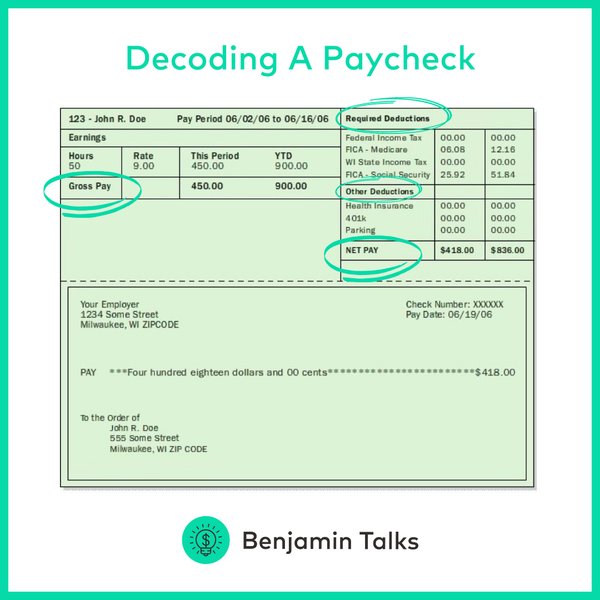
Understanding the components of your paycheck is crucial for managing SSI benefits.
Maximum SSI Payment Amounts (2025)
The maximum monthly SSI payment for 2025 is $967 for an individual and $1,450 for a couple. Your actual payment may be lower based on your countable income and other factors.
Work Incentives for SSI Beneficiaries
Programs Designed to Support Employment
The SSA offers several work incentives aimed at minimizing the risk of losing SSI or Medicaid benefits when beneficiaries return to work:
- Impairment-Related Work Expenses (IRWE): Costs for items or services that a disabled person needs in order to work (e.g., specialized transportation, adaptive equipment, certain medications) can be deducted from earned income before calculating countable income.
- Blind Work Expenses (BWE): Similar to IRWE, blind individuals can deduct any work expenses from their earned income, even if they are not related to their blindness.
- Plan to Achieve Self-Support (PASS): This allows SSI recipients to set aside money and/or resources for an educational or vocational goal (e.g., tuition, starting a business). Funds in a PASS account are not counted as income or resources for SSI purposes, encouraging beneficiaries to invest in their future.
- Student Earned Income Exclusion (SEIE): For students under age 22, a significant portion of their earnings can be excluded from countable income. For 2024, this exclusion is up to $2,290 per month, up to a maximum of $9,230 per year.
- Section 1619(b) Medicaid Eligibility: Even if your earned income becomes too high to receive a cash SSI benefit, you may still be eligible for Medicaid coverage if you need it to work and your earnings are below a certain "threshold" amount set by your state. This is a critical provision as healthcare coverage is often a major concern when considering employment.
The Impact of Work on Benefits: A Visual Analysis
To better understand how various factors interact and influence SSI benefits, consider the following radar chart. It illustrates the relative impact of different work-related factors on SSI eligibility and benefits, reflecting an opinionated analysis of their significance.
The radar chart vividly illustrates that "Monthly Earned Income" and "Countable Income" have the highest impact on SSI benefits, highlighting the SSA's primary focus on earnings. Conversely, factors like "Impairment-Related Expenses" and "Student Status" offer significant flexibility through work incentives. The "Hours Worked" axis shows a lower direct impact, reinforcing that the SSA emphasizes income over hours.
Distinguishing SSI from SSDI When Working
Different Rules for Different Benefits
It's vital to understand that the rules for working differ significantly between SSI and Social Security Disability Insurance (SSDI). While this query focuses on SSI, a brief comparison is helpful:
| Feature | Supplemental Security Income (SSI) | Social Security Disability Insurance (SSDI) |
|---|---|---|
| Primary Focus for Work | Monthly Countable Income (after exclusions) | Substantial Gainful Activity (SGA) |
| Hourly Limit (Direct) | No direct hourly limit; income is the determinant. | No direct hourly limit, but working 30-40 hours/week might suggest ability to engage in SGA regardless of earnings. |
| Trial Work Period (TWP) | Not applicable in the same way; SSI focuses on ongoing income calculation. | Yes, a 9-month period where earnings do not affect benefits, regardless of SGA. |
| Benefit Reduction | Reduced by $1 for every $2 of countable earned income over $65. | Benefits generally continue during TWP; after TWP, exceeding SGA typically leads to benefit cessation, with some grace periods. |
| Medicaid/Medicare | Medicaid eligibility often continues even if cash benefits stop (Section 1619(b)). | Medicare eligibility generally continues for 93 months after TWP. |
For SSDI, the concept of Substantial Gainful Activity (SGA) is critical. If your earnings exceed the SGA limit (which is $1,620 per month for non-blind individuals in 2025, and $2,700 for blind individuals), it may indicate you are no longer considered disabled for SSDI purposes. However, SSI does not use the SGA limit in the same way once you are approved; instead, it focuses on the countable income formula.
Important Considerations When Working on SSI
Reporting Your Income and Activities
It is paramount to report all work activity and earnings to the SSA promptly and accurately. Failure to do so can lead to overpayments that you will be required to pay back, potentially with penalties. You should report changes in your earnings, work hours, or any work-related expenses.
The "Full Retirement Age" and Earnings
It's worth noting that if you are receiving Social Security retirement benefits (not SSI), the earnings limits change once you reach your full retirement age. At that point, there is no limit on how much you can earn while still receiving your full retirement benefits. This rule, however, does not apply to SSI.
Seeking Guidance and Support
The rules governing SSI and work can be complex. The SSA encourages beneficiaries to work and provides various resources, including the Ticket to Work program and Benefits Specialists, who can help you understand how work will affect your specific benefits. These specialists can help you develop a "Plan to Achieve Self-Support (PASS)" and navigate the various work incentives.

Workplace accommodations can greatly assist individuals with disabilities in maintaining employment.
This video further elaborates on working while receiving SSI, offering valuable insights:
This video from CountyOffice.org discusses how individuals can work while receiving Supplemental Security Income without jeopardizing their benefits. It explains the nuances of income limits and how earned income is assessed, providing a visual and auditory explanation of the concepts covered in this guide.
Frequently Asked Questions (FAQ)
What is the maximum income for SSI in 2025?
Will working reduce my SSI benefits?
Are there hourly limits for working while on SSI?
Can I keep my Medicaid if my SSI cash benefits stop due to work?
What are "work incentives" for SSI recipients?
Recommended Further Exploration
- Understanding Social Security Disability Insurance (SSDI) work rules
- How Impairment-Related Work Expenses (IRWE) affect SSI
- Benefits of the Ticket to Work program for SSI beneficiaries
- Impact of in-kind support and maintenance on SSI benefits
References
Last updated May 21, 2025