
Research Problem Statement: Optimizing Wireless Sensor Networks Using the MRFO Algorithm
Enhancing Efficiency and Coverage in WSNs through Advanced Optimization Techniques
Key Takeaways
- Energy Efficiency: Critical for prolonging the lifespan of sensor networks.
- Comprehensive Coverage: Ensuring optimal sensor placement to avoid monitoring gaps.
- Advanced Optimization: Utilizing the MRFO algorithm to address multi-objective challenges in WSNs.
Introduction
Wireless Sensor Networks (WSNs) have become integral in various applications, including environmental monitoring, smart cities, healthcare, and industrial automation. These networks consist of numerous sensor nodes that collect and transmit data, often in challenging environments. However, WSNs face significant challenges related to energy consumption, coverage optimization, data reliability, and real-time processing. Addressing these challenges is paramount to enhancing the performance and longevity of WSNs.
Background
The deployment of WSNs involves strategically placing sensor nodes to monitor specific areas effectively. The primary objectives are to maximize coverage, minimize energy consumption, and ensure reliable data transmission. Traditional optimization methods often fall short in navigating the complex and dynamic environments in which WSNs operate. Hence, nature-inspired metaheuristic algorithms, such as the Manta Ray Foraging Optimization (MRFO) algorithm, have gained attention for their potential to solve multi-objective optimization problems efficiently.
Problem Statement
Despite the advancements in wireless sensor technologies, optimizing the deployment and operation of WSNs remains a challenging task. The primary issues include:
1. Energy Efficiency
Sensor nodes in WSNs are typically powered by limited battery resources. Prolonging the network's lifetime by minimizing energy consumption is crucial. Existing methods often fail to balance energy usage with other performance metrics effectively.
2. Coverage Optimization
Ensuring comprehensive coverage without redundancy or gaps is essential for accurate data collection. Optimizing sensor placement to achieve maximum coverage while minimizing the number of active nodes is a complex optimization problem.
3. Data Transmission Reliability
Reliable data transmission is vital for the integrity of the collected information. Reducing packet error rates and ensuring consistent communication among sensor nodes are persistent challenges in WSNs.
4. Real-Time Processing
The ability to process data in real-time is critical for applications requiring immediate responses. Optimizing algorithms to handle real-time data without significant delays is necessary for the effectiveness of WSNs.
5. Multi-Objective Optimization
Balancing multiple conflicting objectives, such as minimizing energy consumption while maximizing coverage and ensuring data reliability, adds complexity to the optimization process. Effective strategies are needed to navigate these trade-offs.
Research Objectives
- Develop an MRFO-based optimization framework tailored for WSNs to enhance energy efficiency, coverage, and data transmission reliability.
- Formulate a multi-objective optimization model that addresses the trade-offs between energy consumption, coverage maximization, and data reliability.
- Compare the performance of the MRFO algorithm with traditional and other nature-inspired optimization techniques in optimizing WSN parameters.
- Investigate the adaptability and scalability of the MRFO algorithm in diverse WSN scenarios, including varying node densities and environmental conditions.
Methodology
1. Literature Review
Conduct a comprehensive review of existing optimization techniques in WSNs, focusing on energy efficiency, coverage optimization, and data transmission reliability. Analyze the strengths and limitations of traditional methods and the potential of MRFO in addressing identified gaps.
2. MRFO Algorithm Development
Adapt and enhance the MRFO algorithm to suit the specific requirements of WSN optimization. Incorporate strategies such as Tent chaotic mapping, bidirectional search, and Levy flight to improve the algorithm's exploration and exploitation capabilities.
3. Optimization Model Formulation
Develop an objective function that encapsulates multiple criteria, including residual energy, node distance, communication delay, and coverage area. Ensure that the model accurately represents the multi-objective nature of WSN optimization problems.
4. Simulation and Testing
Implement the MRFO-based optimization framework in a simulated WSN environment. Use simulation tools to evaluate performance metrics such as energy consumption, network lifetime, coverage efficiency, and data transmission reliability under various scenarios.
5. Performance Comparison
Compare the MRFO algorithm's performance against traditional optimization techniques and other metaheuristic algorithms. Assess improvements in energy efficiency, coverage optimization, and data transmission reliability.
6. Sensitivity Analysis
Analyze the sensitivity of MRFO parameters to different WSN configurations, including node density, mobility patterns, and varying energy levels. Ensure the robustness and scalability of the optimization framework across diverse environments.
Expected Outcomes
- An optimized sensor node deployment strategy that maximizes coverage while minimizing energy consumption.
- Enhanced network lifetime through improved energy management and efficient clustering protocols.
- Reduced packet error rates and increased data transmission reliability in WSNs.
- A comprehensive framework demonstrating the effectiveness of the MRFO algorithm in multi-objective optimization for WSNs.
- Insights into the adaptability and scalability of MRFO in various WSN scenarios.
Implementation Details
Optimization Framework
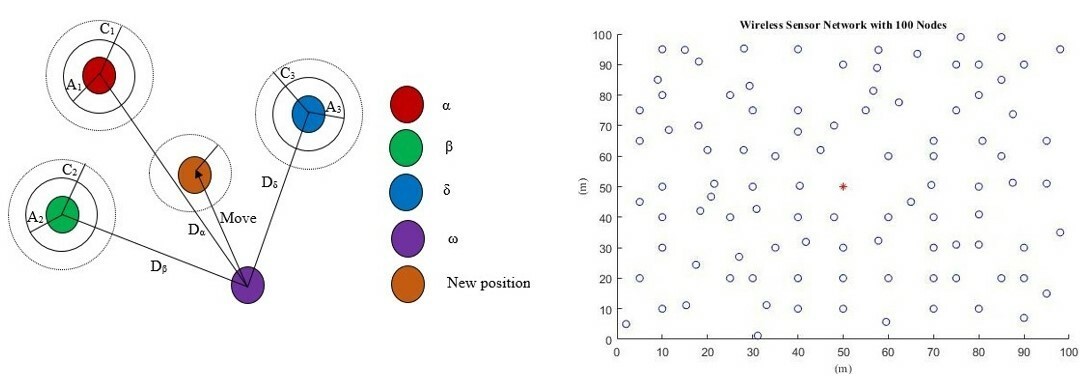
The MRFO-based optimization framework will be developed using simulation tools such as MATLAB or NS-2. The framework will integrate the enhanced MRFO algorithm to determine optimal sensor placement, clustering, and routing protocols. Key parameters will be tuned to balance energy consumption, coverage, and data reliability effectively.
Simulation Setup
| Parameter | Description | Value |
|---|---|---|
| Number of Sensor Nodes | Total sensors deployed in the network | 100-500 |
| Area Coverage | Monitored area size and shape | Various geometries (e.g., square, circular) |
| Initial Energy | Battery capacity of each sensor node | 1000 mAh |
| Communication Range | Maximum distance for data transmission | 30 meters |
| Data Transmission Rate | Frequency of data packet sending | 1 packet/second |
Algorithm Enhancement
To enhance the MRFO algorithm's performance, the following strategies will be implemented:
- Tent Chaotic Mapping: Introduce chaos theory to improve the algorithm's ability to explore the search space more effectively.
- Bidirectional Search: Allow the algorithm to search for optimal solutions from multiple directions, reducing the likelihood of getting trapped in local optima.
- Levy Flight: Incorporate Levy flight random walks to enable long jumps in the search process, enhancing global exploration.
Performance Metrics
The following metrics will be used to evaluate the optimization framework:
-
Energy Consumption: Total energy used by sensor nodes during operation.
-
Network Lifetime: Duration until the first sensor node depletes its energy.
-
Coverage Efficiency: Percentage of the monitored area effectively covered by sensor nodes.
-
Packet Error Rate: Frequency of errors in data transmission.
-
Data Transmission Reliability: Consistency and accuracy of data received at the base station.
Challenges and Considerations
Algorithm Complexity
While enhancing the MRFO algorithm can improve optimization performance, it may also increase computational complexity. Balancing efficiency with performance is essential to ensure real-time applicability in WSNs.
Dynamic Environments
WSNs often operate in dynamic environments where sensor nodes may fail or environmental conditions may change. The optimization framework must be adaptable to such changes to maintain network performance.
Scalability
The proposed optimization approach should scale effectively with increasing numbers of sensor nodes and larger monitoring areas without a significant drop in performance.
Energy Harvesting
Incorporating energy harvesting techniques can further enhance energy efficiency. Optimizing the integration of energy harvesting within the MRFO framework presents an additional layer of complexity.
Conclusion
Optimizing Wireless Sensor Networks using the Manta Ray Foraging Optimization (MRFO) algorithm presents a promising avenue for addressing critical challenges such as energy efficiency, coverage optimization, and data transmission reliability. By developing an enhanced MRFO-based framework, this research aims to significantly improve the performance and longevity of WSNs. The integration of advanced optimization strategies within the MRFO algorithm can lead to more efficient sensor placement, balanced energy consumption, and reliable data transmission, thereby advancing the capabilities of WSN applications in various domains.
References
Last updated February 11, 2025