
Unraveling the Mystery of the Submarine Commander and Bridge Sabotage in WWII Japan
Exploring Daring Naval and Commando Operations Against Japanese Infrastructure
During World War II, both Allied and Japanese forces recognized the strategic importance of bridges, leading to various operations involving their destruction or defense. While there isn't a single widely documented instance of an American submarine commander landing a team ashore specifically to blow up a bridge in Japan itself, the broader context of submarine special operations, commando raids, and bridge sabotage provides a fascinating look into the covert warfare of the era. The United States Navy primarily focused its submarine efforts on disrupting Japanese shipping lanes and naval movements, which proved devastatingly effective against their logistics and lines of communication. However, the nature of wartime operations often involved collaboration between different forces, such as submarines supporting commando raids in various theaters.
Key Insights into WWII Bridge and Submarine Operations
- Strategic Importance of Bridges: Bridges were critical infrastructure targets for both Allied and Axis forces, leading to numerous sabotage attempts and defenses.
- US Submarine Role: American submarines were highly successful in disrupting Japanese shipping and naval forces, though direct shore-based sabotage in Japan was less common for them.
- Commando Operations: Allied commandos, often supported by submarines, executed daring raids against Axis infrastructure, including bridges, across various theaters.
The Strategic Significance of Bridges in World War II
Lifelines of Logistics and Targets of Destruction
Bridges served as vital arteries for military logistics, enabling the rapid movement of troops, supplies, and equipment. Their destruction could cripple enemy supply lines, isolate forces, and disrupt offensive operations. This made them prime targets for sabotage and bombing campaigns throughout World War II.
The Marco Polo Bridge Incident: A Catalyst for War
One of the most significant incidents involving a bridge at the outset of World War II in Asia was the Marco Polo Bridge Incident on July 7, 1937. This clash near Beijing between Chinese and Japanese troops is widely considered the beginning of the Second Sino-Japanese War. Japanese forces, already occupying areas like Fengtai, a railway junction near the bridge, initiated military maneuvers without prior notice. When a Japanese soldier briefly went missing (though he soon returned), they demanded entry into the nearby town of Wanping to search, leading to an exchange of fire. This incident rapidly escalated into a full-scale invasion by Japan, leading to extensive fighting across China.
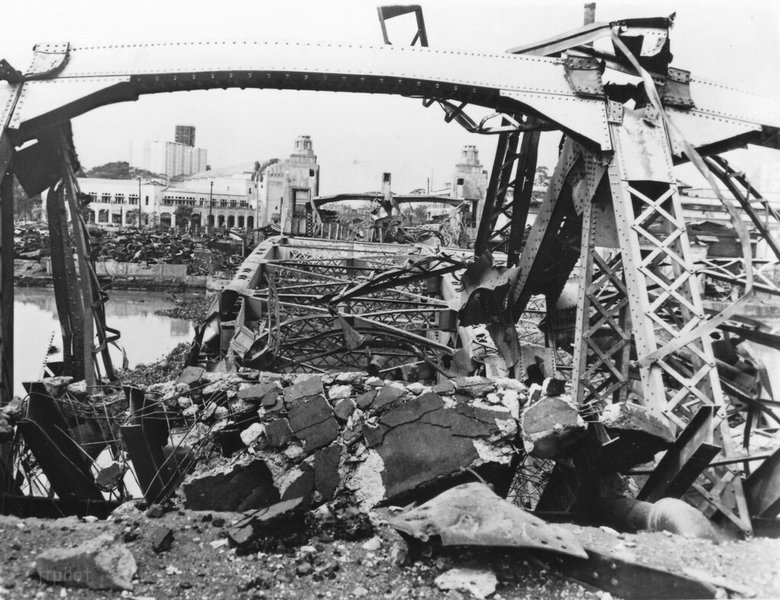
The Quezon Bridge in Manila, Philippines, destroyed by Japanese demolition charges during World War II.
The "Bridge on the River Kwai" and Allied Sabotage Efforts
The infamous "Bridge on the River Kwai" in Burma (now Myanmar) highlights Allied efforts to sabotage Japanese infrastructure built using Allied POW labor. While the popular film portrays a British colonel unwittingly aiding the Japanese, in reality, Allied POWs actively sought to undermine the bridge's construction. This included mixing concrete poorly and encouraging termites to infest wooden structures to delay completion. The 7th Bomb Group of the Allied forces also concentrated on bombing railroad bridges along Japan's supply lines to Burma, including the Bridge on the River Kwai, to disrupt their war efforts.
Submarine Operations in the Pacific Theater
The "Silent Service" and its Devastating Impact
United States submarines played a crucial and often overlooked role in the Pacific War, severely crippling Japan's merchant fleet and naval power. Initially based at Pearl Harbor and later at Brisbane and Fremantle in Australia, American submarines conducted extensive patrols across the Pacific and into the Indian Ocean. These "fleet boats," such as the Gato-class submarines, were robustly constructed, had long cruising ranges, and carried a formidable arsenal of torpedoes and deck guns. Amenities like air conditioning were also crucial for operations in tropical waters, preventing equipment failures due to humidity.

A captured Japanese submarine on the deck of a naval vessel in San Francisco, 1945.
Beyond Torpedoes: Special Missions and Reconnaissance
While their primary role was anti-shipping, submarines also performed a myriad of special missions, including reconnaissance, rescue of downed pilots, supply delivery, and even landing special operations forces. For instance, in August 1942, US Marine Raiders launched the first amphibious attack from submarines during the raid on Makin Island, aiming to destroy enemy installations and gather intelligence. British submarines similarly landed agents and commandos for various missions, such as the raid on St. Nazaire, a critical dry dock in German-occupied France, which involved Commandos ramming the gates and destroying facilities.
This video provides a deep dive into the fascinating world of United States Navy submarine special operations in the Pacific during World War II, showcasing the diverse and often daring missions undertaken by these covert vessels.
Notable Submarine Commanders
Several submarine commanders distinguished themselves during the war. Rear Admiral Richard H. O'Kane, considered the most successful American submarine commander, led the USS Tang and previously served as executive officer of the USS Wahoo under Commander Dudley "Mush" Morton. O'Kane was awarded the Medal of Honor for his extraordinary gallantry. Another notable figure is Commander Howard W. Gilmore of the USS Growler, who sacrificed himself to save his crew by giving the order to "Take her down!" while he was critically wounded on the bridge. On the Japanese side, commanders like Takakazu Kinashi of I-29 were noted for their successes in sinking Allied vessels.
Sabotage and Commando Raids: Covert Warfare
The Art of Disrupting Enemy Operations
Sabotage and commando raids were integral to Allied strategy, aiming to disrupt enemy infrastructure, logistics, and morale. These operations often involved small, highly trained units infiltrating enemy territory to destroy key targets such as bridges, railways, and factories.
Allied Commando Forces
The British established commando units early in the war, training them in physical fitness, survival, demolition, and amphibious assault. These units conducted operations across various theaters, from the Arctic to Europe and Asia. Their missions included raids against hydroelectric power plants in Norway (Operation Musketoon) and the significant raid on St. Nazaire. The Special Operations Executive (SOE) also played a crucial role in fostering revolt and guerrilla warfare in occupied territories, focusing on blowing up trains, bridges, and factories.
Japanese Attempts and Concerns Regarding Sabotage
Defending the Home Front and Foreign Territories
Japan also faced internal and external threats of sabotage. While direct attacks on the Golden Gate Bridge by Japanese submarines were reported, no torpedoes ever hit the bridge. There were also concerns about potential sabotage from Japanese Americans on the US home front, though no serious acts of espionage or sabotage were ever proven. Japanese forces themselves destroyed bridges, such as the Quezon and Jones Bridges in the Philippines, as they retreated. Furthermore, the Kempeitai, Japan's secret police, were known to arrest foreign populations in occupied Shanghai on charges of anti-Japanese activity or espionage, imprisoning and torturing them in facilities like Bridge House.

The Hintoku-Tampi Bridge, part of the Burma Railway, built under harsh conditions during WWII.
Operational Effectiveness and Challenges
A Comparative Analysis of Submarine and Commando Strengths
To better understand the capabilities and focus of both submarine and commando operations during World War II, a comparative analysis of their strengths and limitations is useful. The radar chart below illustrates perceived effectiveness in different mission aspects.
This radar chart illustrates the perceived strengths of typical US submarine operations versus Allied commando raids during WWII across several key performance indicators. US submarines excelled in anti-shipping capabilities, covert infiltration (for their primary missions), and self-reliance during long patrols. They also performed well in intelligence gathering and personnel delivery for special missions. On the other hand, Allied commando raids, often launched from various platforms including submarines, demonstrated superior capabilities in direct infrastructure destruction (such as bridges and factories) and direct personnel delivery for shore-based assaults. Their survivability and self-reliance in deep enemy territory, while impressive, were generally lower than a submarine's extended operational endurance, making them highly effective for focused, high-impact strikes.
Summary of Key Submarine and Commando Operations During WWII
A Glimpse into Covert and High-Impact Missions
| Operation Type | Primary Objectives | Notable Examples/Participants | Impact on War Effort | Associated Bridges/Infrastructure |
|---|---|---|---|---|
| US Submarine Operations | Disrupt Japanese shipping, naval movements, reconnaissance, rescue, special forces delivery. | USS Wahoo (Dudley Morton), USS Tang (Richard O'Kane), USS Growler (Howard W. Gilmore). Makin Island Raid (Marine Raiders via submarine). | Severely crippled Japanese logistics and supply lines, contributed significantly to ultimate victory in the Pacific. | Limited direct bridge destruction, but supported operations near critical infrastructure. |
| Allied Commando Raids | Sabotage enemy infrastructure (bridges, railways, factories), gather intelligence, cause disruption. | Raid on St. Nazaire (destroying dry dock), Operation Musketoon (Glomfjord power plant, Norway), Burma Railway sabotage (Allied POWs), SOE operations. | Significant tactical disruption, boosted morale, tied up enemy resources. | "Bridge on the River Kwai" (sabotage efforts), specific railway and road bridges in occupied territories. |
| Japanese Submarine Operations | Anti-shipping, technology exchange (e.g., I-8 with Germany), transport of special weapons (e.g., I-400 with aircraft), attacks on Allied naval assets. | I-29 (Takakazu Kinashi), I-58 (Mochitsura Hashimoto), I-8 (technology exchange). I-400 class (planned attacks on US mainland/Panama Canal). | Varied success; some notable sinkings, but overall less strategic impact than Allied submarines. Limited direct infrastructure attacks on Allied homelands. | Reports of attempts to attack Golden Gate Bridge (unconfirmed impact). |
While no single US submarine commander is widely credited with directly putting a team ashore to blow up a bridge in Japan during WWII, the interconnected roles of submarines and commando units highlight the diverse and daring nature of warfare during that period. The focus of American submarines was predominantly on naval and merchant shipping, a strategy that proved highly effective in strangling Japan's war economy. However, special missions involving submarines delivering commando teams were certainly part of the Allied strategic toolkit in various theaters, impacting critical enemy infrastructure.
Frequently Asked Questions
What was the primary role of US submarines in the Pacific War?
Did Japanese submarines attempt to attack the US mainland during WWII?
What was the significance of the Marco Polo Bridge Incident?
Were Allied POWs involved in sabotaging the "Bridge on the River Kwai"?
Conclusion
While the specific scenario of a US submarine commander leading a team to blow up a bridge in Japan itself is not a widely documented event in historical records, the underlying themes of daring sabotage, the critical role of bridges in warfare, and the multifaceted nature of submarine operations are central to understanding World War II in the Pacific. US submarines were highly effective in their primary role of disrupting Japanese shipping, and both Allied submarines and commando units undertook numerous special operations that involved targeting enemy infrastructure, including bridges, across various theaters. The narrative of covert warfare and strategic destruction played a pivotal role in shaping the outcomes of the war.
Recommended Further Exploration
- How effective was the US submarine strategy in crippling Japan's war machine?
- What were some of the most famous commando raids targeting infrastructure during World War II?
- What unique types of submarines did Japan develop and what were their special missions in WWII?
- How did the control and destruction of bridges impact the Second Sino-Japanese War?