
Unveiling Safer Horizons: Top Alternatives to Xylene in Slide Staining
Explore the advanced clearing agents transforming histology, offering enhanced safety and performance without compromise.
Key Insights into Xylene Alternatives
- Enhanced Safety: The primary driver for xylene alternatives is the significant reduction in toxicity, flammability, and noxious odors, creating a safer laboratory environment.
- Diverse Options: From aliphatic hydrocarbons and terpene-based solvents to natural vegetable oils and commercial blends, a wide array of effective substitutes offers varying benefits in terms of performance, cost, and environmental impact.
- Comparable Performance: Many modern alternatives demonstrate performance comparable to, and in some cases even superior to, xylene in critical aspects like tissue transparency, morphology preservation, and compatibility with standard staining protocols like H&E and IHC.
Xylene has historically been the cornerstone clearing agent in histology, prized for its ability to rapidly remove dehydrating alcohols from tissue sections, render them transparent, and facilitate optimal paraffin wax infiltration. This transparency is crucial for subsequent microscopic examination and ensures proper staining. However, its widespread use comes with significant drawbacks, including its classification as a toxic, flammable, and volatile organic compound. Prolonged exposure can lead to severe health issues for laboratory personnel, such as respiratory problems, skin irritation, and potential carcinogenicity, in addition to contributing to environmental pollution. These concerns have spurred a vigorous pursuit of safer, more eco-friendly, and equally effective alternatives in modern histopathology laboratories.
The Imperative for Safer Clearing Agents
The process of "clearing" is a vital intermediate step in tissue processing. After dehydration, where water is removed using alcohols, a clearing agent is introduced. This agent must be miscible with both the dehydrating alcohol and the embedding medium (typically paraffin wax). Its primary functions are to displace the alcohol, render the tissue translucent by adjusting its refractive index to that of tissue proteins, and prepare the tissue for wax infiltration. Xylene excels at these tasks, acting quickly and being relatively inexpensive, which has cemented its traditional role. However, the associated health and safety risks have made its replacement a high priority for laboratories worldwide. The shift towards alternatives is driven by the desire to improve working conditions, comply with stricter safety regulations, and reduce the environmental footprint of histopathology practices.
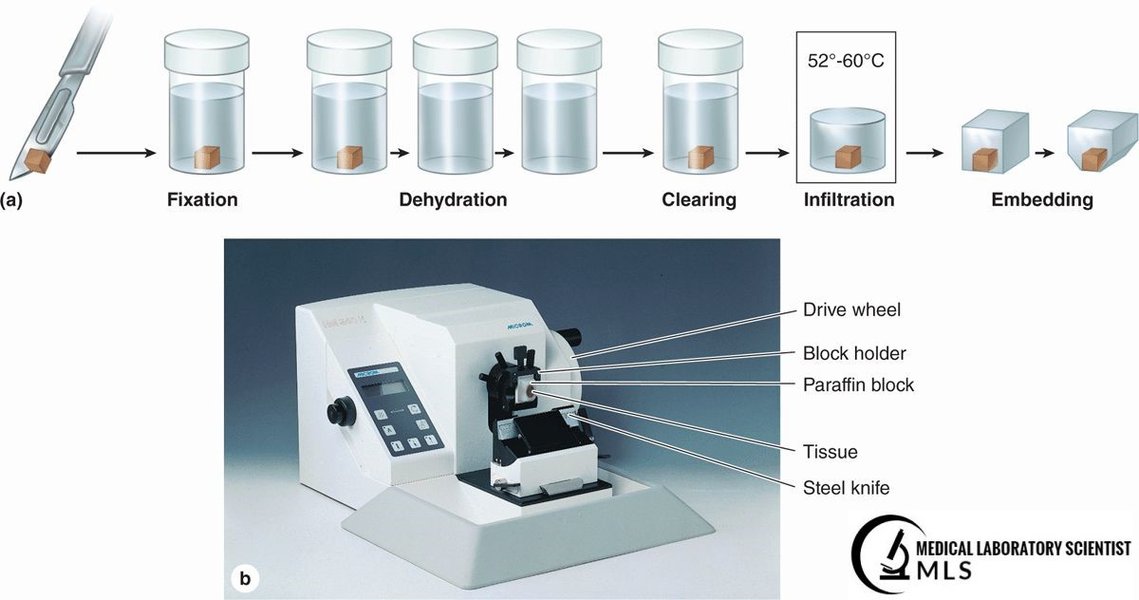
An illustrative diagram depicting the stages of tissue processing in histology, where clearing is a crucial step.
Leading Xylene Alternatives for Histology
The market now offers a diverse range of alternatives, each with unique properties designed to address the shortcomings of xylene while maintaining or improving tissue quality. These alternatives generally fall into categories such as aliphatic hydrocarbons, terpene-based solvents, and various natural oils, alongside proprietary commercial blends.
Aliphatic Hydrocarbon-Based Solutions: The Safe and Odorless Path
Aliphatic hydrocarbons are emerging as a highly favored class of xylene substitutes due to their excellent safety profiles. Products like **Slide Brite™** and **Clear-Advantage™** exemplify this category. They are non-hazardous, non-irritating, and notably, odorless, significantly enhancing laboratory air quality and personnel safety. These agents effectively clear tissues, preventing brittleness, shrinkage, or adverse morphological changes often associated with xylene. They are also compatible with various staining techniques, including Hematoxylin and Eosin (H&E) and Immunohistochemistry (IHC). While they might sometimes require slightly longer clearing times than xylene, the trade-off for improved safety and comparable tissue quality is often deemed worthwhile.
Terpene-Based Solvents: Nature's Aromatic Alternative
Derived from citrus fruits, terpene-based solvents, such as **d-Limonene** and products like **Citrisolv**, offer a biodegradable and less toxic alternative. They possess a characteristic citrus scent, which is generally more pleasant than xylene's strong odor, improving the laboratory environment. These solvents are effective in deparaffinization and clearing, though their performance can sometimes vary compared to xylene, and they may require adjustments in clearing times. While considered safer, d-Limonene still has some toxicity concerns due to its strong odor, and it may not be compatible with all mounting media or staining protocols.
Natural Vegetable Oils: Eco-Friendly and Economical
A variety of vegetable oils present a natural, low-cost, and non-toxic option for clearing. **Coconut oil** is a standout, with studies demonstrating its ability to preserve tissue morphology and staining quality comparably to xylene. Other oils like **sesame oil, olive oil, pine oil, and rose oil** have also been explored, with sesame oil showing high diagnostic adequacy in studies. These oils are non-flammable, non-toxic, and environmentally friendly. However, they may sometimes necessitate protocol adjustments for optimal results and can occasionally lead to slight alterations in tissue texture or slower drying times compared to xylene.

An infographic detailing the comprehensive steps involved in sample preparation for histology.
Commercial Blends and Other Options: Tailored Solutions
Several proprietary commercial xylene substitutes are formulated to mimic xylene's properties while minimizing hazards. **UltraClear™** is a well-regarded example, noted for its comparable performance to xylene in H&E staining and ease of tissue cutting, though it comes at a higher cost. Other products like **Waxol**, **Polychem 36**, and **Clearene** are designed for routine histopathology, offering safety, compatibility, and often recyclability. Kerosene has also been explored as a less toxic alternative, though it might require extended staining times to achieve comparable results to xylene.
Comparative Analysis of Xylene Alternatives
Choosing the right xylene alternative involves weighing several factors. This table provides a concise comparison of the prominent alternatives based on key criteria.
| Alternative Type | Examples | Advantages | Disadvantages / Considerations | Key Performance Aspect |
|---|---|---|---|---|
| Aliphatic Hydrocarbons | Slide Brite™, Clear-Advantage™ | Non-hazardous, non-flammable, odorless, excellent safety, preserves tissue morphology. | May require slightly longer clearing times. | High safety, comparable tissue quality. |
| Terpene-Based Solvents | d-Limonene, Citrisolv | Biodegradable, less toxic, pleasant citrus odor, effective deparaffinization. | Strong odor can still be an issue, may affect certain mounting media, variable performance. | Eco-friendly, good clearing with protocol adjustment. |
| Natural Vegetable Oils | Coconut Oil, Sesame Oil, Pine Oil | Non-toxic, inexpensive, biodegradable, non-flammable, eco-friendly, preserves tissue morphology. | May cause slight texture alterations, slower drying, requires protocol refinement. | Cost-effective, natural, good tissue preservation. |
| Commercial Blends | UltraClear™, Waxol, Polychem 36 | Formulated for optimal performance, less toxic/flammable, often recyclable, good compatibility. | Higher cost than xylene, specific equipment compatibility may be needed. | High performance, tailored for lab workflows. |
| Kerosene | Kerosene | Less toxic, economical. | Requires extended staining times, generally lower initial performance than xylene. | Cost-effective, safer than xylene, but needs protocol adjustment. |
Visualizing Performance and Safety Considerations
To further illustrate the multifaceted considerations when selecting a xylene alternative, the radar chart below provides an opinionated analysis of how different categories stack up across various important criteria for laboratory use. This chart is based on the synthesized information regarding their performance, safety, and practicality in a typical histology lab setting.
The Core Purpose of Clearing in Histology: A Mindmap
The following mindmap visually breaks down the essential aspects of the clearing step in tissue processing, highlighting why it's critical and the role xylene and its alternatives play. This provides a structured overview of the underlying principles and objectives.
Understanding Clearing in Tissue Processing
To fully grasp the importance of xylene alternatives, it is essential to understand the overall tissue processing workflow in histology. The clearing step is sandwiched between dehydration and infiltration, ensuring that the tissue is perfectly prepared for embedding in paraffin wax. The embedded tissue can then be sectioned into thin slices, mounted on slides, and stained for microscopic examination. The video below provides a comprehensive overview of tissue processing, including the critical role of clearing agents.
An insightful video on "Mastering Paraffin Wax Tissue Processing," offering a step-by-step guide that highlights the critical role of clearing agents.
This video helps contextualize the clearing step, emphasizing how the choice of clearing agent, whether xylene or an alternative, directly impacts the quality of the final slide and the reliability of diagnostic interpretations. The effectiveness of the clearing agent determines how well the tissue is prepared for wax infiltration, which in turn affects the ease of sectioning and the clarity of the stained slide.
Frequently Asked Questions (FAQ)
What is the primary reason for seeking xylene alternatives?
Do xylene alternatives compromise slide quality?
Are natural oils effective as clearing agents?
Are there any cost implications when switching to xylene alternatives?
How do I choose the best xylene alternative for my lab?
Conclusion
The pursuit of effective and safer alternatives to xylene in slide staining has yielded a robust array of options that address the critical need for improved laboratory safety and environmental responsibility. From the odorless and gentle aliphatic hydrocarbons to the biodegradable terpene-based solvents and the eco-friendly natural vegetable oils, laboratories now have diverse choices. Commercial blends further refine these alternatives, offering tailored solutions with proven performance. While careful consideration of factors like cost, compatibility, and clearing times is necessary, the overarching benefits of reduced toxicity, flammability, and improved working conditions make the transition to xylene alternatives a compelling and increasingly standard practice in modern histopathology. By adopting these innovative solutions, laboratories can achieve high-quality diagnostic slides while prioritizing the health of their personnel and the planet.
Recommended Further Exploration
- How to optimize tissue processing for xylene-free protocols?
- What is the impact of xylene alternatives on immunohistochemistry results?
- Perform a cost-benefit analysis of switching to xylene-free histology labs.
- What are the environmental regulations for chemical waste in histology laboratories?