
Complete Glossary of Yeast and Mold Terms
Expand your understanding of these essential fungal concepts in detail
Key Takeaways
- Unicellular vs. Multicellular: Yeasts are unicellular while molds are multicellular, forming complex networks.
- Reproduction Methods: Yeasts primarily reproduce through budding and fission; molds use spore production and hyphal growth.
- Roles in Nature and Industry: Both play critical roles in fermentation, decomposing organic matter, and in biotechnological applications.
Understanding the Basics
Introduction to Fungi
Fungi is a kingdom of eukaryotic organisms that includes diverse forms such as yeasts, molds, and mushrooms. They are characterized by their method of nutrient absorption through the secretion of enzymes that break down organic substrates. Unlike plants, fungi do not perform photosynthesis; instead, they rely on heterotrophy to obtain energy. This glossary focuses particularly on the two most common groups used in everyday contexts: yeast and mold.
Why Definitions Matter
The terminology associated with yeasts and molds can be complex due to their diverse nature and roles in various scientific, industrial, and domestic environments. Understanding these definitions is crucial for fields ranging from food technology to medical mycology and environmental sciences. Every term is defined below with a detailed description that can be informative for students, researchers, and professionals alike.
Detailed Definitions of Key Terms
Fungus
A fungus is a eukaryotic organism that is part of the kingdom Fungi. This group includes yeasts, molds, and mushrooms. Fungi are heterotrophic, meaning they cannot produce their own food through photosynthesis. Instead, they absorb nutrients from their surroundings by breaking down organic matter using secreted enzymes. They play a significant role in the decomposition of organic material and nutrient cycling in the ecosystem.
Yeast
Yeast refers to a type of unicellular fungus that primarily reproduces asexually through budding or fission. They are usually microscopic and oval or round in shape. Yeasts are renowned for their role in fermentation, where they convert sugars into alcohol and carbon dioxide. Saccharomyces cerevisiae is one of the most well-known yeast species used in baking, brewing, and biotechnology.
Mold
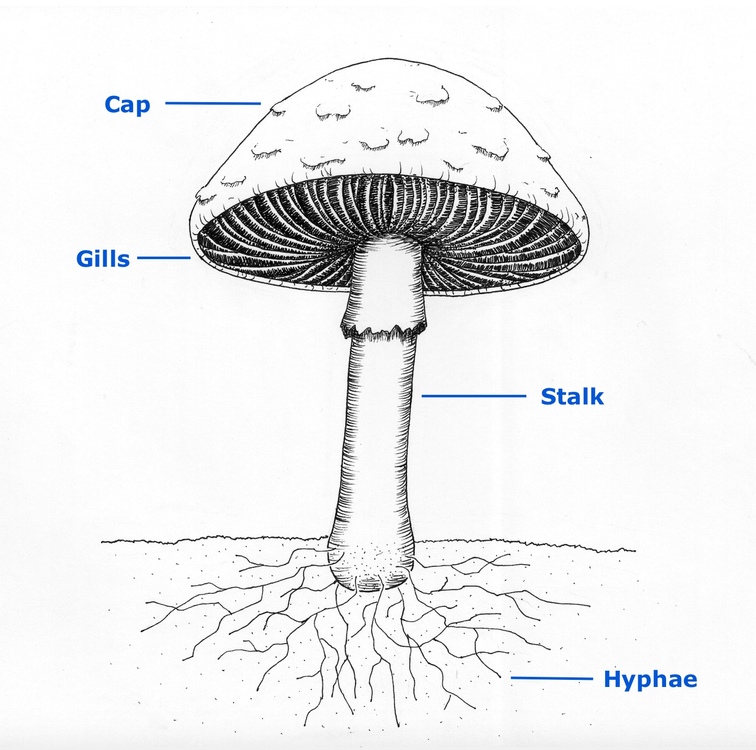
Mold is a type of multicellular fungus that grows by forming long, branching filaments known as hyphae. The network of hyphae is called a mycelium. Molds are often visible as fuzzy or downy growths on organic matter such as food, wood, and other surfaces in damp environments. They reproduce both sexually and asexually, primarily by producing spores that can become airborne.
Hyphae
Hyphae are long, filamentous structures that form the main mode of growth in molds. These thread-like filaments spread and branch out, allowing the mold to cover a surface and absorb nutrients efficiently. Hyphae aggregate to form a mycelium, which constitutes the visible part of the mold.
Mycelium
The mycelium is the interconnected network of hyphae that constitutes the vegetative body of a mold. It is responsible for absorbing nutrients and breaking down organic matter. In molds, the mycelium is what gives the appearance of a fuzzy or powdery deposit on decaying materials. Although individual hyphae are microscopic, their collective structure is often easily seen with the naked eye, especially when present in large colonies.
Spore
Spores are reproductive units produced by both yeasts and molds. These are typically single-celled or multicellular structures that are capable of developing into a new organism under favorable conditions. In molds, spores are crucial for dispersal through the air or water. They can be highly resistant to environmental stresses and may be involved in both sexual and asexual reproductive cycles.
Budding
Budding is a common form of asexual reproduction observed in yeasts. In this process, a new cell develops as a protrusion or “bud” from the surface of the parent cell. Once the bud grows to a sufficient size, it detaches and becomes an independent entity. This method is highly efficient for rapid population increase in favorable conditions.
Binary Fission
Binary fission is another form of asexual reproduction where a single yeast cell divides into two equal parts. This process is less common in yeast compared to budding but plays an important role in cellular reproduction under certain conditions.
Asexual Spore Formation
In mold reproduction, asexual spore formation is a vital process where specialized cells called conidia are produced on the tips of hyphae. These spores are adapted for dispersal and enable the mold to colonize new areas rapidly. The production of asexual spores allows molds to spread faster, especially in environments with abundant moisture.
Sexual Reproduction in Fungi
Both molds and some yeast species can undergo sexual reproduction. This process typically involves the fusion of two different mating types, resulting in the formation of genetic recombinants. In molds, sexual reproduction often involves the fusion of specialized cells followed by the formation of spores. The genetic diversity produced by sexual reproduction allows fungi to adapt to varying environmental conditions.
Conidia
Conidia are a type of asexual spore produced by many molds. They are generated at the ends of specialized structures called conidiophores. Conidia are typically well-adapted for dispersal, either through the air or via water droplets, and contribute significantly to the spread of mold colonies in nature.
Fermentation
Fermentation is a metabolic process in which yeasts convert sugars into alcohol and carbon dioxide. This process is fundamentally important in the production of alcoholic beverages like beer and wine, as well as in baking, where the carbon dioxide produced causes dough to rise. The role of fermentation extends to various industries, including the production of biofuels and other biotechnological applications.
Dimorphism
Dimorphism in fungi refers to the ability of an organism to exist in two distinct morphological forms. Some fungi can alternate between a yeast-like form and a mold-like form depending on environmental conditions. This phenomenon is significant in understanding fungal pathogenicity and environmental adaptations.
Opportunistic Pathogen
An opportunistic pathogen is a microorganism, such as certain yeasts and molds, that normally does not cause disease but can become pathogenic in a host with a weakened immune system. Conditions such as immunosuppression, illness, or age-related vulnerabilities can render these normally benign organisms harmful.
Filamentous Fungi
Filamentous fungi refer to molds that form an extensive network of filaments known as hyphae. These fungi are typically involved in the decomposition of organic materials and can be seen as fuzzy or powdery structures on decaying substrates. Their filamentous nature distinguishes them from the unicellular structure of yeasts.
Sporulation
Sporulation is the general process by which fungi produce spores. This process can be either sexual or asexual, and is crucial for the survival and reproduction of fungi. Spores enable fungi to withstand unfavorable environmental conditions and disperse over long distances.
Pathogenicity
Pathogenicity refers to the ability of an organism, such as certain yeasts or molds, to cause disease. This property is particularly significant in strains of yeasts like Candida and specific molds that produce mycotoxins. Understanding pathogenicity is fundamental for developing treatment strategies and preventive measures in medical mycology.
Environmental Impact and Nutrient Cycling
Both yeasts and molds play essential roles in environmental nutrient cycling. Molds, with their extensive mycelial networks, decompose complex organic materials such as cellulose and lignin, thereby releasing nutrients back into the ecosystem. Although yeasts are more known for their industrial applications, they also contribute to nutrient recycling in various ecosystems.
Comparative Overview: Yeast vs. Mold
Summary Table
| Aspect | Yeast | Mold |
|---|---|---|
| Cellular Structure | Unicellular, generally microscopic | Multicellular, forms hyphae and mycelium |
| Reproduction | Asexual (budding, binary fission) and occasionally sexual via spore formation | Asexual (spore production, conidia) and sexual reproduction via hyphae fusion |
| Appearance | Oval or round, usually smooth | Visible as fuzzy or powdery due to the network of hyphae |
| Role in Fermentation | Crucial in converting sugars to alcohol and carbon dioxide | Rarely used in fermentation; some species are utilized in food processing (e.g., cheese, soy sauce) |
| Environmental Habitat | Found on fruits, animal skin, and sugary substrates | Thrives in damp, humid environments; common on decaying organic matter |
| Industrial Applications | Baking, brewing, pharmaceuticals, and biotechnology | Food preservation, antibiotics production, decomposition, and biotechnological processes |
This table provides a comparative overview of yeast and mold characteristics, underscoring the fundamental differences in their structure, reproduction methods, and roles in both natural and industrial contexts.
Additional Related Terms and Concepts
Antibiotics and Industrial Applications
Many antibiotics are derived from molds. For instance, penicillin, discovered by Alexander Fleming, and several statin drugs are produced by specific mold species. The ability of mold to produce biologically active secondary metabolites is harnessed in pharmaceutical development, providing new treatments for bacterial infections and cholesterol management.
Mycotoxins
Mycotoxins are toxic secondary metabolites produced by certain mold species. These compounds can contaminate food products and pose severe health risks to humans and animals if ingested or inhaled. The study of mycotoxins is crucial in food safety and public health to mitigate risks associated with mold contamination.
Saccharification
Saccharification refers to the process by which complex starches are broken down into simple sugars. Certain molds, such as the Aspergillus species used in traditional Asian fermentations, perform saccharification. This process is essential in the production of soy sauce, sake, and other fermented products where starch breakdown is a critical step.
Biodegradation and Composting
Biodegradation is the breaking down of organic matter by microorganisms. Molds, with their extensive hyphal networks, play a significant role in decomposing dead plant material and recycling nutrients in ecosystems. This natural process is harnessed in composting, where both molds and bacteria break down organic waste into nutrient-rich compost.
Allergy and Immunology
Due to their high spore production, molds are often associated with respiratory allergies and asthma. The inhalation of spores can trigger allergic reactions in sensitive individuals. Understanding mold spore dynamics is therefore important in building construction, air quality management, and healthcare.
Scientific Research and Culinary Uses
Yeasts are extensively used as model organisms in biological research due to their simple genetics and ease of cultivation. Moreover, their use in culinary applications, such as baking and brewing, underscores their importance in both traditional and modern food production. Their metabolic pathways continue to be explored for various industrial processes.
Terminology in Mycology
Mycology, the study of fungi, employs a range of terms that describe the various forms and reproductive techniques of yeasts and molds. Terms such as sporulation, mycelium, hyphae, and conidia are essential for understanding not only the lifecycle of these organisms but also their ecological interactions and industrial applications.
Glossary Summary Example
Below is an example of a condensed glossary list that highlights essential terms related to yeast and mold:
| Term | Definition |
|---|---|
| Yeast | A unicellular fungus that reproduces mainly by budding or fission; used in fermentation. |
| Mold | A multicellular fungus that grows as hyphae forming a mycelium; reproduces via spores. |
| Mycelium | An interconnected network of hyphae forming the vegetative body of mold. |
| Spore | A reproductive unit in fungi, capable of developing into a new organism. |
| Budding | An asexual reproduction method in yeast, where a new cell forms as a protrusion from the parent cell. |
| Hyphae | Long, thread-like structures in molds that form and extend the mycelium. |
Conclusion
In summary, the distinction between yeast and mold is more than just a matter of cellular structure. It encompasses a broad range of concepts related to their reproduction, metabolic activities, environmental roles, and industrial applications. Yeasts, being unicellular and primarily involved in fermentation, have a significant impact on food and biotechnology sectors. Molds, through their multicellular growth, play a crucial role in decomposition, nutrient cycling, and the production of diverse bioactive compounds including antibiotics and mycotoxins. Understanding these terms and processes enhances our ability to harness their benefits in industries ranging from food production to pharmaceuticals, while also managing their potential impacts on health and the environment.
References
-
Yeast - Cambridge Dictionary
- What is Yeast? - Explore Yeast
- Yeast - Merriam-Webster
-
Yeast - The Free Dictionary
- What is Yeast? - Food Network Essentials
- Mold - Merriam-Webster
- Mold - Wikipedia
- What Are Molds? - EPA
-
Mold - Cambridge Dictionary
- What Are Molds? - NCDHD
- Mold - Dictionary.com
- Mold - Vocabulary.com
- Mold - NCI Dictionary of Cancer Terms
- Mold - Collins Dictionary
- Mold - Britannica Dictionary
Learn More
Last updated February 18, 2025