
Exploring Features in Extended Zermelo’s Model for Paired Comparisons
A deep dive into whether Zermelo's model extension accommodates tournament-specific operational features
Key Highlights
- Model Core versus Operational Extensions: The extension of Zermelo’s model primarily focuses on refining probabilistic ranking based on paired comparisons and does not intrinsically include tournament management features.
- Potential for Integration: While features like brackets, seeding, match scheduling, and engagement are not inherent to the model, they can be implemented via complementary systems that use Zermelo's ranking output.
- Customization and Data Integration: Adaptation of the model to specific contexts may offer ways to integrate external data, customize weightings, and indirectly impact economic decisions through enhanced ranking accuracy.
Analyzing Feature Compatibility
Zermelo's model, initially formulated in 1929, is a probabilistic ranking framework that estimates the strengths of competitors based on the outcomes of paired comparisons. Its original purpose was to provide a mathematical foundation for ranking entities, such as chess players or sports competitors, from the results of head-to-head encounters. As research and practical applications evolved, extensions of this model were developed in order to improve ranking consistency and address arbitrary outcome matrices. It is important to clarify that these extensions inherit the core focus on ranking. The following sections examine how each of the operational features often associated with tournament formats relates to the extended Zermelo model.
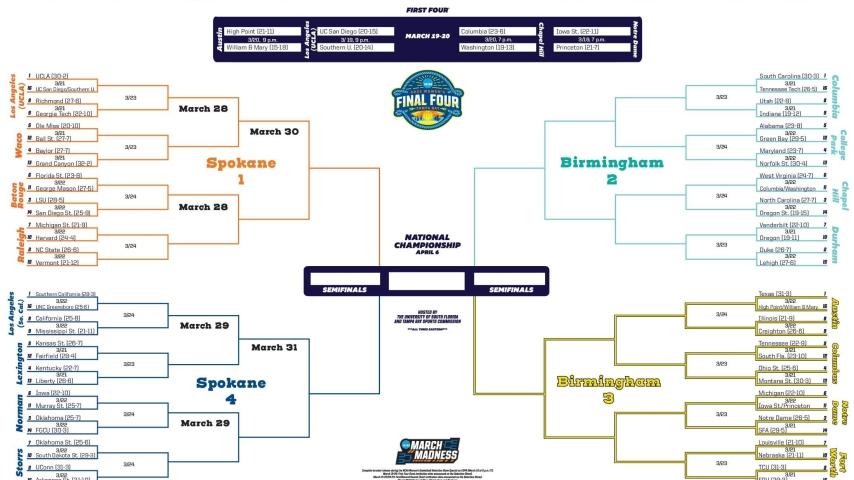
1. Brackets Format
The concept of a "brackets format" refers to a layout commonly seen in elimination tournaments where competitors are placed in a bracket, and winners advance through successive rounds. The extended Zermelo model does not provide explicit support for visual bracket creation or management. Instead, it offers a ranking mechanism derived from paired comparisons. However, the ranking data it produces can be used as an input for designing bracket systems. In practice, tournament software may use Zermelo’s ranking scores to seed players into a bracket, ensuring that the bracket reflects the relative strengths of the competitors.
In summary, while the extended Zermelo model itself does not handle bracket visualization or operational bracket management, its outputs can be integrated into systems that do.
2. Seeding Mechanism
A seeding mechanism involves arranging competitors in a tournament according to predetermined criteria, usually based on previous success or ranking, to ensure that the strongest competitors are not eliminated prematurely. Zermelo’s model extension provides refined rankings based on head-to-head outcomes. These rankings are critically important for seeding decisions, although the model does not inherently include a process for assigning seeds. Instead, the ranking information is used by tournament organizers or integrated software solutions to implement seeding systems.
Therefore, while the seeding mechanism per se is not a built-in feature of the extended model, the model’s output is intrinsically valuable for forming a seeding strategy in competitive environments.
3. Match Scheduling
Match scheduling in tournaments refers to the planning of when and where matches or comparisons occur. The extended Zermelo model does not extend to the operational logistics such as scheduling of matches. Its focus remains on analyzing comparison outcomes to generate rankings. Operational scheduling, including creating fixtures and determining venues or match times, must be handled by separate scheduling algorithms or tournament management systems.
In application, once the ranking information is available from the model, it can be integrated with scheduling tools to help optimize match timings, avoid conflicts, and allow for corresponding adjustments regarding competitor rest and logistics.
4. Engagement Features
Engagement features are typically associated with interactive elements, such as real-time score updates, live brackets displays, social media integrations, and other functionalities that enhance user and spectator involvement. The extension of Zermelo's model is mathematical in nature; it does not consider the design of user interfaces or interactive components. Engagement is an aspect that falls under product and interface design rather than the ranking algorithms themselves.
Although the statistical engine behind Zermelo’s model is robust, additional layers—such as web interfaces, mobile applications, and real-time data dashboards—are required to provide engagement features that users expect in modern tournament management.
5. Customization
Customization refers to the ability to modify a system to suit specific conditions or preferences, which could include varying parameters within the ranking system or adapting the ranking algorithm to different competitive contexts. The extended model, although built upon a consistent probabilistic framework, does have inherent flexibility in that parameters can be adjusted. However, its primary design does not inherently include detailed customization options for application-specific needs such as interface layouts or event-specific rules.
In practice, applying customization involves adapting the model’s methodology—such as altering weighting factors, adjusting the significance of comparison outcomes, or integrating additional factors like home advantage or player fitness—into a broader software ecosystem tailored for tournament organization.
6. Data Integration
Data integration is a often crucial requirement in dynamic environments where multiple data sources, real-time results, and historical performance are compiled. Zermelo’s model, particularly in its extended forms, presupposes the availability of paired comparison data. It is designed to compute rankings based solely on these inputs. However, it does not feature built-in capabilities for aggregating data from disparate sources or environments.
The use of Zermelo's output in an operational tournament setting would typically involve integration with databases, live feeds, and other external data sources. Such integrations are managed by the overall system architecture rather than the ranking algorithm itself. In a fully integrated tournament management solution, the ranking algorithm might be just one component among many, with data integration processes synchronizing match results, competitor statistics, and other pertinent information.
7. Economic Impact
The economic impact of ranking models like Zermelo’s primarily concerns how accurate and efficient rankings can influence decisions, such as prize allocations, sponsorships, or investments. While the extended model is largely mathematical and does not directly embed economic functionalities, its precision in producing reliable rankings can indirectly inform economic outcomes in competitive settings. For example, well-calibrated rankings might affect resource distribution in sports leagues, influence market valuations in competitive industries, or even underpin game-theoretic strategies in business contexts.
Direct economic features, such as revenue management or cost optimization, are not components of the ranking model. Instead, economic impact emerges as a secondary benefit from the correct application of the ranking system in economic decision-making scenarios.
Synthesis Table: Model Characteristics vs. Operational Features
| Feature | Relevance in Extended Zermelo’s Model | Operational Implementation |
|---|---|---|
| Brackets Format | Not explicitly included; focus remains on ranking outcomes. | Implemented in tournament software for visual structure. |
| Seeding Mechanism | Outputs ranking data suitable for seeding decisions. | Used to seed competitors in tournaments; managed by organizers. |
| Match Scheduling | Does not address scheduling logistics. | Handled by separate scheduling algorithms integrated into management systems. |
| Engagement Features | Focus is solely on ranking, not on user engagement. | Enhanced through interactive interfaces and live updates in auxiliary systems. |
| Customization | Permits parameter adjustments within the probabilistic framework. | Implemented in complementary systems to meet event-specific needs. |
| Data Integration | Requires input data for paired comparisons. | Externally integrated with databases and real-time result feeds. |
| Economic Impact | Indirect; accurate rankings can inform economic decisions. | Affect economic outcomes through financial planning and resource allocation in tournaments. |
Extended Discussion: Integrating the Extended Zermelo Model into Modern Applications
As competitions and tournaments have grown in complexity, there is an increasing need to combine sophisticated ranking algorithms like the extended Zermelo model with practical tournament features. In contemporary applications, the approach is typically multifaceted:
Enhanced System Architecture
A modern tournament management system can be seen as an integration of several subsystems. The core ranking engine, which can be based on Zermelo's extended model, works alongside other modules responsible for scheduling, bracket management, and user engagement. For instance, competitors’ head-to-head results are fed into the ranking algorithm. The computed rankings then inform a layout module that dynamically generates seeds and brackets. This inter-module communication is crucial for ensuring that the theoretical underpinnings of the ranking model are fully exploited in the operational environment.
Data Processing and Customization
Customization and data integration play significant roles when adapting the extended Zermelo model to real-world scenarios. Tournament organizers might wish to calibrate the ranking model by adjusting weights for specific types of outcomes, such as emphasizing wins by a large margin. Additionally, integrating data from multiple sources—such as historical performance, real-time scores, and player statistics—can enrich the input data set, thereby enhancing the reliability of the ranking outputs.
In this context, data integration becomes a key enabler for adaptability. Systems are typically built with modular architectures where data ingestion, processing, and any subsequent customization of ranking formulas are handled by separate but interlinked components. This not only increases accuracy but also allows for scalability across different types of tournaments, whether they are sports leagues, esports competitions, or academic contests.
Economic Considerations
Although the extended Zermelo model does not directly manage economic features or transactions, its high level of accuracy in ranking can have far-reaching financial effects. For instance, fair and reliable rankings can justify the distribution of prize money, attract sponsorship deals, and even influence betting markets. In competitive sports or online gaming environments, the economic implications of these rankings are considerable. By ensuring that competitors are accurately ranked, organizers can better predict outcomes, distribute resources more equitably, and structure tournaments in ways that maximize economic efficiency.
It is also worth noting that while traditional implementations of Zermelo’s model don't supply direct economic metrics, the transparency and objectivity provided by a statistically sound ranking system can foster greater trust among stakeholders. This trust may indirectly lead to increased economic value through improved participation rates, enhanced fan engagement, and the subsequent financial benefits derived from these factors.
Practical Implementation: A Hypothetical Workflow
To illustrate how the extended Zermelo model could be incorporated into a comprehensive tournament management system, consider the following hypothetical workflow:
-
Data Collection and Integration
Competitor data, including historical match results and current performance metrics, is gathered from multiple sources. This data is cleaned, standardized, and fed into the ranking algorithm.
-
Ranking Computation
The extended Zermelo model processes the paired comparison data to generate a probabilistic ranking for each competitor. Adjustments and customizations may be applied at this stage through parameter tuning.
-
Seeding and Bracket Generation
The computed rankings are utilized to seed competitors into an automated bracket generation module. This ensures that top competitors are strategically placed, preserving the integrity of the competition.
-
Match Scheduling and Engagement
Parallel to seeding, a scheduling system assigns match times and locations, which can be optimized for logistics and viewer engagement. Interactive dashboards display live match results and rankings in real time for enhanced engagement.
-
Economic Implications
Accurate rankings help in making objective decisions regarding prize allotments, sponsorship distributions, and market projections, ensuring economic fairness and maximizing revenue.
This workflow shows that while the extended Zermelo model itself is not designed to provide an all-in-one solution, its robust ranking mechanism serves as a cornerstone that, when combined with specialized modules, can deliver a fully functional and economically viable tournament management system.
Implementation Challenges and Future Directions
Integrating the extended Zermelo model with features like brackets, seeding, and scheduling presents several challenges:
-
Data Quality and Availability
The effectiveness of the ranking algorithm hinges on the quality and completeness of the input data. In many scenarios, data inconsistency or incompleteness can undermine the system’s ability to generate accurate rankings.
-
Interoperability Between Modules
Building a cohesive system requires seamless integration of the ranking engine with modules for scheduling, bracket design, and engagement. Ensuring interoperability and real-time data transfer can be complex.
-
Customization versus Standardization
There is often a tension between developing a highly customizable system versus a standardized one that guarantees consistency. Balancing these demands requires careful design choices.
-
Economic and Logistic Constraints
Tournament organizers must consider budgetary and logistical limitations when implementing features derived from ranking systems. Ensuring that the system is economically viable while meeting operational demands poses an ongoing challenge.
Future research and development may focus on creating more integrated solutions that merge the accuracy of probabilistic ranking models with the dynamic needs of tournament management. This could involve leveraging machine learning techniques to further refine predictions, integrating real-time analytics, and developing user-friendly interfaces that bring all desired features into a single cohesive platform.
References
- Zermelo Features and Letters From Users - Ratings Central
- Zermelo Software PDF - Ratings Central
- An extension of Zermelo's model for ranking by paired comparisons - ResearchGate
- An Extension of Zermelo's Model Publication - BYU ScholarsArchive
- Efficient Computation of Rankings - JMLR
Recommended Exploratory Queries
 cdn2.mhpbooks.com
Last updated March 25, 2025