
Revolutionizing Physics: Zhang Xiangqian's Controversial Unified Field Theory
How a Chinese farmer's extraterrestrial encounter led to a radical new framework challenging conventional physics
Essential Insights into Zhang's Unified Field Theory
- Unconventional Origin: Zhang claims his theory stems from a 1985 extraterrestrial encounter that provided advanced cosmic knowledge
- Core Framework: Proposes the universe consists of objects and cylindrical spiral motion of surrounding space, redefining fundamental concepts
- Unified Forces: Attempts to unify electromagnetic, gravitational, and nuclear forces through a single mathematical framework
Background and Origin of Zhang's Theory
Zhang Xiangqian, born in 1967 in Anhui Province, China, presents one of the most unconventional stories in theoretical physics. Despite having only a middle school education and a background in farming and welding, Zhang claims to have developed a comprehensive Unified Field Theory following an extraordinary event in 1985, when, at the age of 18, he allegedly had contact with an advanced extraterrestrial civilization.
According to Zhang, this encounter provided him with profound insights into the universe's fundamental nature, including advanced knowledge about space, time, mass, charge, and the four fundamental forces. This claimed extraterrestrial knowledge forms the foundation of his Unified Field Theory, which he has been developing and refining since this encounter.
While mainstream physics has historically dismissed such extraordinary claims, Zhang's works have been published in various formats, including books available on Amazon and papers on platforms like SSRN. His theory has begun attracting attention in certain circles, though it remains largely outside the established scientific consensus.
Timeline of Zhang's Theory Development
Zhang's journey from farmer to theoretical physicist spans decades of independent research and development:
- 1985: Claimed extraterrestrial encounter at age 18
- Post-1985: Began developing his theoretical framework based on alleged extraterrestrial knowledge
- Recent years: Published multiple works explaining his Unified Field Theory in both academic and popular science formats
- Present: Continues to develop his theories, seeking collaboration with research institutions
Key Concepts of Zhang's Unified Field Theory
Fundamental Framework
At its core, Zhang's Unified Field Theory proposes a radical reimagining of the universe's structure. According to Zhang, the universe consists of objects and the surrounding space, with all physical phenomena being human descriptions of the motion of these entities. Unlike conventional physics, Zhang's theory suggests that space itself moves in a cylindrical spiral pattern around objects, a concept central to his unification efforts.
Redefinition of Fundamental Concepts
Zhang's theory challenges traditional definitions of fundamental physical concepts:
- Time: Redefined as a product of the motion of space and objects rather than an independent dimension
- Mass: Considered a manifestation of space motion rather than an intrinsic property
- Charge: Reinterpreted within the framework of space motion patterns
- Force: Viewed as an effect of the interaction between objects and space motion
The Grand Unified Equation
The centerpiece of Zhang's theory is what he calls the "Grand Unified Equation of the Universe," expressed as P=m(c-v). This equation allegedly unifies the four fundamental forces of physics (electromagnetic, gravitational, strong nuclear, and weak nuclear) into a single mathematical framework. Zhang argues that the weak nuclear force is not fundamental but rather an effect of the electromagnetic and nuclear forces, focusing his unification efforts on the remaining three forces.
Force Unification Approach
Zhang's approach to unifying forces differs significantly from mainstream attempts:
- Proposes that electromagnetic fields can directly influence gravitational effects
- Suggests that changing electromagnetic fields can generate gravitational fields
- Claims to have experimental evidence supporting this electromagnetic-gravitational connection
- Challenges the standard model's separation of forces as fundamentally different interactions
Practical Applications and Implications
Zhang's Unified Field Theory extends beyond theoretical physics, proposing several practical applications with potentially transformative implications:
Artificial Field Scanning Technology
One of the most intriguing concepts in Zhang's theory is "artificial field scanning technology." This technology supposedly leverages the principles of his unified field theory to interact with and manipulate fields in ways conventional physics doesn't anticipate. According to Zhang, this technology could revolutionize various fields:
- Space Travel: Potentially enabling advanced propulsion systems by manipulating gravitational fields
- Energy Systems: Offering new methods of energy generation and transmission
- Communication Technologies: Providing novel approaches to information transfer
Civilizational Transition
Zhang's theory incorporates a broader perspective on human civilization's development. He suggests that humanity is poised to transition from an "electric civilization" to a "field civilization" — a fundamental shift in how we harness and interact with energy and matter. This transition would supposedly address many current crises facing humanity and enable advanced technological capabilities.
| Civilization Type | Energy Source | Technological Focus | Limitations |
|---|---|---|---|
| Electric Civilization (Current) | Electromagnetic | Electronic devices, digital systems | Speed limitations, resource constraints |
| Field Civilization (Proposed) | Unified fields | Field manipulation, gravitational control | Requires new theoretical framework |
Experimental Evidence and Claims
Zhang claims to have conducted experiments demonstrating that changing electromagnetic fields can produce gravitational fields — a phenomenon not predicted by conventional physics but central to his unified theory. While details of these experiments are limited in mainstream scientific literature, Zhang's proponents cite these results as empirical support for his theoretical framework.
The experiments allegedly show that by manipulating electromagnetic fields in specific patterns, measurable gravitational effects can be produced. If verified by independent researchers, such results would represent a significant challenge to the current understanding of the relationship between electromagnetism and gravity.
Visualization of Zhang's Theory Structure
Comparative Analysis: Zhang's Theory vs. Mainstream Physics
To understand the significance of Zhang's claims, it's important to compare his Unified Field Theory with mainstream approaches to unification in physics:
This radar chart compares key aspects of Zhang's Unified Field Theory with other prominent theories in physics. While Zhang's theory scores relatively high on simplicity and claimed predictive power, it falls short in areas such as peer review and experimental validation compared to established theories like the Standard Model.
Educational Resources and Publications
Zhang has published his Unified Field Theory in multiple formats, catering to different audiences:
Academic Edition
The Academic Edition provides a comprehensive exploration of Zhang's theoretical framework, including detailed mathematical formulations, scientific principles, and philosophical implications. This edition targets researchers, academics, and professionals interested in the technical aspects of the theory.
Popular Science Edition
To make his ideas accessible to a wider audience, Zhang also offers a Popular Science Edition that simplifies complex concepts while preserving the core principles of his theory. This edition focuses on explaining the practical implications and potential applications of the unified field theory in everyday language.
Visual Exploration of Unified Field Theories
The following images help visualize key concepts related to unified field theories and the quest to understand the fundamental forces of nature:

Visualization of quantum field theory concepts, which form the basis of many unification attempts including Zhang's approach
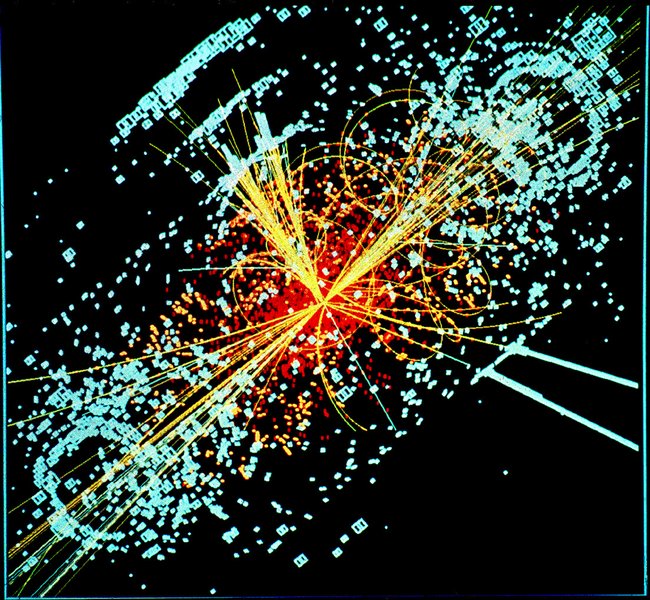
Particle collision data from CERN, representing our current experimental understanding of fundamental forces
The Quest for Unified Field Theory
To better understand the context and significance of Zhang's theory, it's helpful to explore the broader history of unified field theories:
This video explores the historical quest for a unified field theory, from Maxwell's early unification of electricity and magnetism to modern approaches. Understanding this context helps place Zhang's unconventional theory within the broader scientific pursuit of unification.
Scientific Reception and Controversy
Zhang's Unified Field Theory remains highly controversial within the scientific community. Several factors contribute to the skepticism surrounding his work:
Academic Credentials
Zhang's lack of formal education in physics or mathematics beyond middle school raises questions about his ability to develop complex theoretical frameworks. Traditional scientific advancement typically requires rigorous training in mathematical formalism and existing theories.
Extraordinary Claims
Zhang's claim of receiving knowledge from an extraterrestrial civilization represents an extraordinary assertion that, by scientific standards, would require extraordinary evidence. Such claims fall outside the methodological naturalism that underpins modern science.
Peer Review Status
While Zhang's work has been published in book form and on various platforms, it has not undergone the rigorous peer review process typical of mainstream scientific publications. This lack of formal validation makes it difficult for the scientific community to assess the validity of his claims.
Nevertheless, Zhang's theories have garnered attention, with some proponents arguing that unconventional perspectives sometimes lead to scientific breakthroughs. Zhang himself has expressed hope for collaboration with universities and research institutions to further develop and validate his ideas.
Frequently Asked Questions
References
-
Unified Field Theory - Official Collection of Zhang Xiangqian's Works
- Unified Field Theory: Academic Edition - Amazon
-
Zhang XiangQian's Unified Field Theory: Popular Science Edition - Amazon
- Artificial Field Scanning Technology - ZZCBJT Journal
- Unified Field Theory GitHub Repository
- Zhang's Unified Field Theory Paper - SSRN
- Discussion of Zhang's Theory - Physics Discussion Forum
Recommended Explorations


Last updated April 4, 2025