
Marshal Zhukov and the Order of the Bath
Exploring the details and ceremonial nuances of this wartime honor
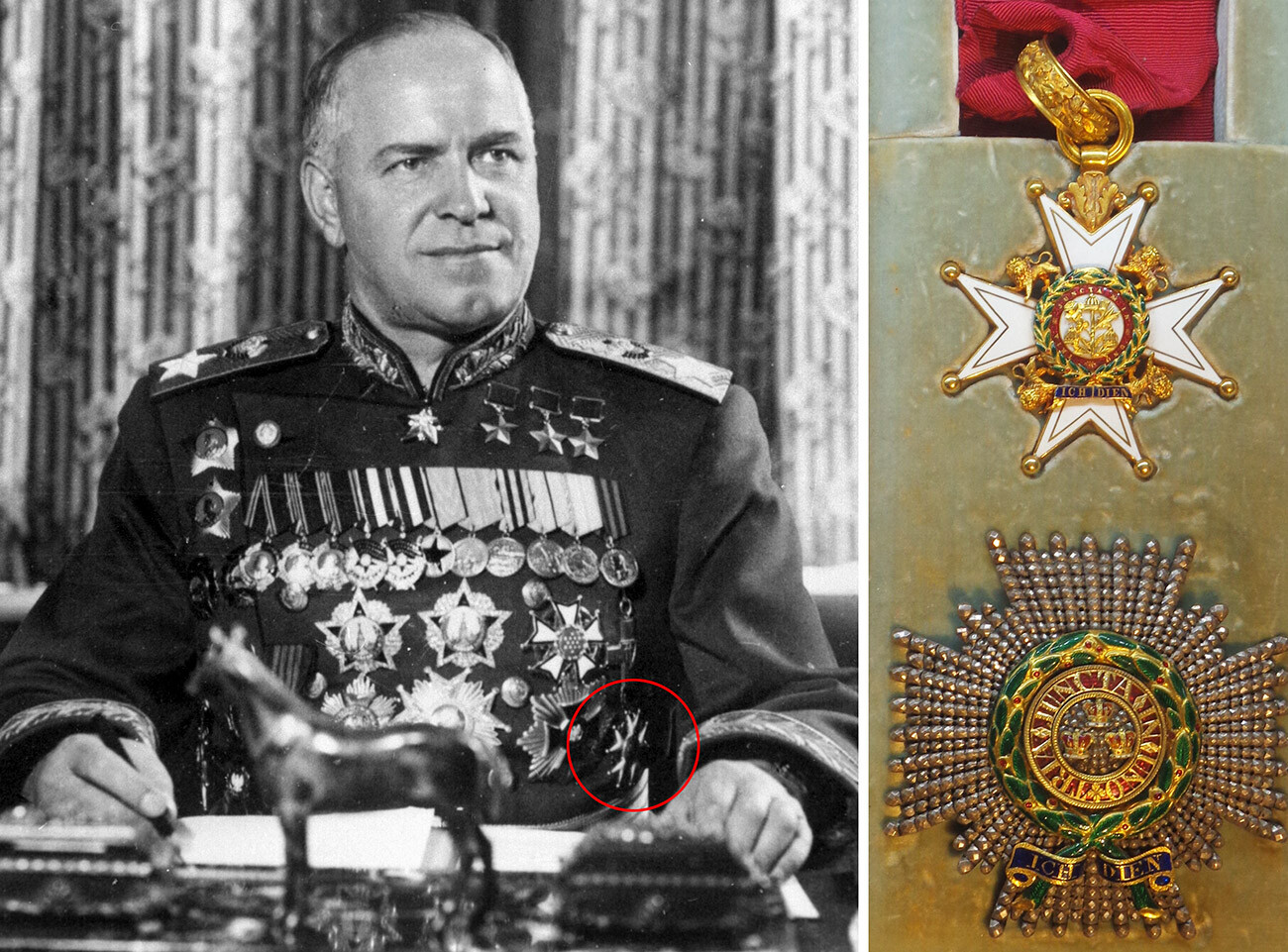
Highlights
- Ceremonial Context: The award ceremony took place shortly after World War II at the historic Brandenburg Gate in Berlin.
- Investiture Details: Marshal Zhukov was invested as an Honorary Knight Grand Cross of the Order of the Bath, a prestigious military honor.
- Montgomery’s Involvement: Field Marshal Bernard Montgomery played a central role in the ceremony, though the specifics of the presentation have nuances in interpretation.
Understanding the Award Ceremony
The ceremony that recognized Marshal Georgy Zhukov with an honorary British decoration remains one of the most memorable military events of the immediate post-World War II period. On July 12, 1945, a ceremony was held at the Brandenburg Gate in Berlin, where several high-ranking Soviet military leaders were honored for their role in the Allied victory. Among these commanders, Marshal Zhukov was invested as an Honorary Knight Grand Cross of the Order of the Bath, a prestigious honor that carries a rich historical legacy.
The Historical Significance of the Order of the Bath
The Order of the Bath is one of Britain’s most illustrious orders of chivalry. Its origins stretch back to medieval times when candidates for knighthood were required to undergo a symbolic ritual of bathing, representing purification and renewal before being formally inducted. By the time of World War II, the order had evolved into a recognition system that honored exceptional service, particularly in military affairs. The decision to bestow this decoration on Marshal Zhukov was not only symbolic of international recognition for military prowess but also a sign of the deep-seated cooperation among the Allied forces during the war.
The Role of Field Marshal Bernard Montgomery
Ceremonial Leadership in Berlin
Field Marshal Bernard Montgomery, one of Britain’s foremost military leaders and a key Allied commander, served as the figurehead for the ceremony held in Berlin. On July 12, 1945, he was present as a symbol of Western military acknowledgment and solidarity with the Soviet leadership. His role was integral to organizing and overseeing the investiture ceremony at the Brandenburg Gate, a site laden with historical symbolic weight owing to its status as a monument in Berlin.
However, in addressing the specifics of the question—whether Zhukov received the Order of the Bath directly from General (or Field Marshal) Montgomery—the historical records reveal that while Montgomery presided over the investiture ceremony, the award itself was an honor sanctioned by British authorities rather than a personal gift directly conferred from Montgomery’s hands. In recognition ceremonies of this nature, it is common for the investiture to be conducted through a formal ceremony where a representative or a high-ranking official plays a ceremonial role. Therefore, although Montgomery was the central figure in the ceremony, the underlying process was part of a broader, ceremonial investiture of military honors.
Detailed Analysis of the Investiture Ceremony
Investiture Specifics
The investiture of Marshal Zhukov took place amidst the remnants of a war-torn Berlin, a city symbolic of both destruction and renewal in the aftermath of conflict. Held at the Brandenburg Gate, the location itself underscored the transition from wartime chaos to the pursuit of peace and reconstruction. The ceremony was part of a larger series of recognitions that included other prominent Soviet generals, such as Marshal Konstantin Rokossovsky, thereby reinforcing the allied spirit of collaboration in the final throes of the conflict.
Ceremonial Protocol and Honors
The Order of the Bath, when conferred as an Honorary Knight Grand Cross, conferred a high level of prestige and recognition. The award was intended to honor exceptional achievements in military command and strategic prowess. During the ceremony, ceremonial protocols were observed that echoed traditions dating back centuries, including formal presentations and the accompanying regalia that distinguishes military orders of chivalry.
The role of Field Marshal Montgomery in this context was largely as a ceremonial figurehead. While he led the proceedings, the investiture did not imply that Zhukov’s award was personally handed over by Montgomery in a private or direct manner. Instead, Montgomery’s leadership and presence served to underscore the significance of the award and the broader importance of allied cooperation.
Interpreting the Specific Inquiry
The question asked, "Did Zhukov receive the Order of Bath from General Montgomery?" This inquiry can be unpacked on two levels:
- The Contextual Question: This involves understanding the circumstances and ceremonial context. In this regard, Zhukov was undeniably awarded the Order of the Bath during a ceremony where Field Marshal Montgomery was the leading figure. The investiture was a formal act of recognition orchestrated by British military tradition.
- The Procedural Specificity: This pertains to the precise ceremonial protocol of the award. While Montgomery was the figurehead and presided over the ceremony, the act of conferring the order was not necessarily a direct hand-over from Montgomery to Zhukov in a one-on-one personal moment, but rather a part of the structured ceremonial tradition that defined the investiture process.
In summary, while it is accurate to state that Zhukov received an honorary investment in the Order of the Bath in a ceremony led by Montgomery, it would be more precise to acknowledge that the award was part of a formal investiture process rather than implying a direct, one-to-one presentation by Montgomery.
Deeper Insights into the Ceremony's Historical and Diplomatic Implications
The Symbolism of the Brandenburg Gate Ceremony
The choice of the Brandenburg Gate as the location for the investiture ceremony was laden with symbolic significance. Once a neoclassical monument and a central part of Berlin’s cityscape, the Gate came to symbolize both the division and later the reunification of Germany during the Cold War era. In 1945, after the fascist regime had been defeated, the site was repurposed as a symbol of freedom, reconstruction, and international cooperation. Conducting the investiture at this location underlined the tenet that even in the aftermath of destructive conflict, a future of unity and mutual respect was attainable.
Impact on Soviet-British Relations
The investiture of Marshal Zhukov with the Honorary Knight Grand Cross was not only a military accolade but also a diplomatic gesture. It represented a moment of reconciliation and mutual respect between the wartime allies, the Soviet Union and the United Kingdom. Despite ideological differences that would later characterize the Cold War, the immediate post-war period was marked by an acknowledgment of joint sacrifice and collective victory.
Though the award itself was wrapped in ceremonial pomp and traditional ritual, its underlying purposes included building trust and fostering a spirit of cooperation. The presence of a British field marshal, specifically Field Marshal Montgomery, lent additional gravitas to the event. His participation underscored the view that military honor transcends national boundaries, emphasizing that valor and strategic acumen are worthy of recognition regardless of the political context.
Nuances and Misconceptions
It is important to clarify a common misconception surrounding this historical event. Some interpretations of the ceremony might suggest that Marshal Zhukov directly received the Order of the Bath from Field Marshal Montgomery. While the latter was indeed instrumental in the proceedings and symbolizes the personal element of the investiture, the actual process adhered to established protocols wherein the award is conferred as an honorary title. This distinction is crucial in understanding the ceremonial nature of British honors, where the investiture is typically conducted by designated representatives of the Crown rather than being a personal gift.
The nuance rests in recognizing that Field Marshal Montgomery’s presence added a layer of ceremonial legitimacy and fostered a spirit of allied camaraderie, but the investiture process fundamentally represents a formal acknowledgment by British authorities. In many such events, the investiture ceremony is presided over by a high-ranking official which helps convey the significance of the honor, while the act of presenting the order is executed as part of a well-established tradition.
Comparative Overview: Protocols of Military Honors
To better understand the distinction between a direct personal presentation and a structured investiture ceremony, consider the following comparative overview, which outlines the typical conventions of military honors:
| Aspect | Direct Personal Presentation | Structured Investiture Ceremony |
|---|---|---|
| Ceremonial Leader | Typically, a personal hand-over by an individual of equal rank or superior status in an informal setting | Conducted by a designated high-ranking official in a formal setting representing a governmental or institutional mandate |
| Setting | Often a private or semi-public occasion | A public, highly symbolic location reflective of historical or cultural significance |
| Purpose | Personal acknowledgment of merit | Official recognition and reinforcement of geopolitical or military alliances |
| Role of the Presenter | Engages directly in handing over the award | Serves as a figurehead presiding over the process as a representation of institutional authority |
In the case of Marshal Zhukov, the ceremony at the Brandenburg Gate aligns with the structured investiture model. Field Marshal Montgomery’s role was essential in presiding over the ceremony, thereby symbolizing the endorsement of British honors by the Crown, yet the investiture followed predetermined protocols that do not equate to a direct hand-over in the personal sense often implied by the term “from General Montgomery.”
Synthesis and Final Explanation
When addressing whether Marshal Zhukov “received the Order of the Bath from General Montgomery,” it is crucial to parse the historical and ceremonial context. Marshal Zhukov was validly invested with the Honorary Knight Grand Cross of the Order of the Bath during a ceremony held on July 12, 1945, at the Brandenburg Gate in Berlin. The ceremony was orchestrated under the auspices of the British military honors system. Field Marshal Bernard Montgomery, a central figure in the event, oversaw the proceedings and played a prominent ceremonial role. However, the award did not result from a direct, personal presentation where Montgomery handed the decoration directly to Zhukov in an informal exchange; rather, it was part of a formal investiture process governed by longstanding traditions.
Therefore, the correct understanding is that while Zhukov was honored in a ceremony that featured Montgomery prominently, the investiture did not equate to a direct one-on-one hand-over by Montgomery. Instead, it was symbolic of the mutual respect and recognition between the Allied powers in the aftermath of World War II, thereby establishing an enduring legacy of military honor and international camaraderie.
Conclusion and Final Thoughts
In conclusion, the investiture of Marshal Zhukov with the Honorary Knight Grand Cross of the Order of the Bath stands as a historic moment marking the intersection of military valor and international diplomacy. Held at the Brandenburg Gate in Berlin on July 12, 1945, the ceremony was a highly formalized event presided over by Field Marshal Bernard Montgomery. While Montgomery’s involvement as a ceremonial leader was critical in emphasizing the importance of the award, the investiture itself was executed as a formal part of the British honors system rather than a direct personal presentation by Montgomery.
This distinction clarifies that although the award ceremony is often cited as Zhukov receiving the order “from General Montgomery,” it is more accurate to state that Zhukov’s investiture was an honorary decoration from the British government, administered through a structured and symbolic ceremony with Montgomery at its helm. This approach to acknowledging military excellence not only celebrated Zhukov’s contributions during World War II but also reinforced the powerful narrative of allied unity and mutual recognition among nations emerging from the conflict.
References
- Field Marshal Montgomery Decorates Russian Generals - Imperial War Museums
- Georgy Zhukov - Wikipedia
- Bernard Montgomery and Zhukov Ceremony - World War II Database
- The Most Honourable Order of the Bath - Tallinn Museum
Recommended Queries
 ww2images.blogspot.com
 ww2colorfarbe.blogspot.com
Last updated February 23, 2025