
Determinants of Zimbabwean Foreign Policy Since August 2018
An in-depth examination of Zimbabwe's strategic reorientation in diplomatic and economic engagement
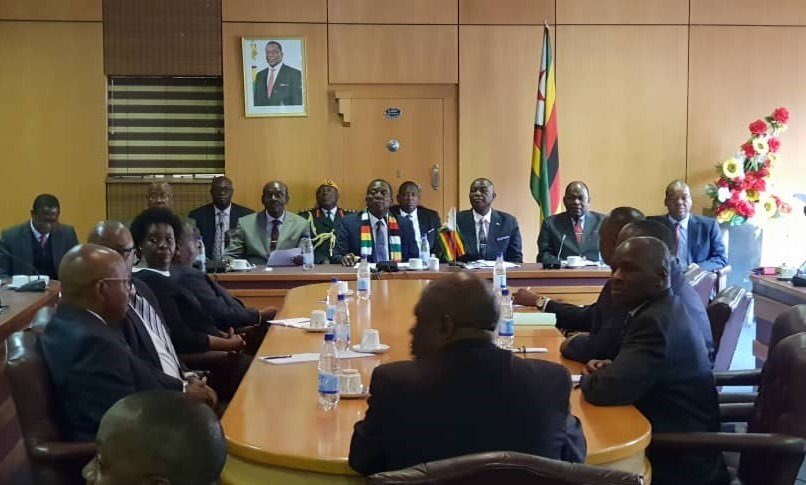
Key Highlights
- Economic Diplomacy: "Zimbabwe is Open for Business" reflects a drive toward investment and growth (Zimbabwe Advocate, 2024).
- Diplomatic Neutrality: "Friend to all and enemy to none" underscores a balanced re-engagement with global partners (Herald Online, 2025).
- Regional & Global Engagement: Shifts involve re-engagement with the West, strengthening ties with China and regional blocs, and commitment to sovereignty (Melber, 2021).
Introduction
Since August 2018, Zimbabwe's foreign policy has undergone a paradigm shift emanating from President Emmerson Mnangagwa's leadership. This period in Zimbabwean diplomacy is marked by two guiding maxims: "friend to all and enemy to none" and "Zimbabwe is open for business." These principles have redefined Zimbabwe's international strategy, steering it away from decades of isolation and towards an inclusive, economically driven approach. This discussion synthesizes multiple perspectives and sources, providing a comprehensive exploration of the determinants behind Zimbabwe’s new foreign policy trajectory. The analysis incorporates in-text citations, quotations, and references to shed light on the evolution of Zimbabwe's external engagements.
Core Determinants of Zimbabwean Foreign Policy
1. Economic Diplomacy and Investment
One of the most significant determinants of Zimbabwe's foreign policy in the new dispensation is economic diplomacy. The principle "Zimbabwe is open for business" explicitly signals a commitment to attracting foreign direct investment (FDI) and stimulating economic growth. This shift was necessitated by the urgent need for economic revival following years of sanctions and domestic challenges. According to the Zimbabwe Advocate (2024), the strategy is aligned with the National Development Strategy One (NDS1), which aims to create an environment conducive to investment.
Moreover, amendments to indigenisation laws such as reducing local ownership requirements have played a crucial role in facilitating foreign partnerships. As noted by recent government communications, these reforms are intended to remove barriers and invite international investors (Herald Online, 2025). An economic diplomat remarked, "Zimbabwe is open for business, and our new policies reflect a long-overdue commitment to economic pragmatism." This economic pivot is further bolstered by institutional reforms, including the establishment of agencies like the Zimbabwe Investment and Development Agency (ZIDA) in 2020, which serves as a one-stop shop for potential investors.
2. Diplomatic Neutrality and Re-engagement with the West
"Friend to all and enemy to none" is a slogan that captures Zimbabwe's move to adopt a neutral and balanced diplomatic posture. After years of political isolation, the Mnangagwa administration has been keen to re-establish ties with Western nations. This re-engagement strategy is viewed as critical for securing the removal of sanctions and regaining lost diplomatic credibility.
As highlighted by Henning Melber (2021), the administration’s overt effort to re-engage with the West is not only driven by economic imperatives but also by the desire to rebuild Zimbabwe’s image within the international community. Diplomatic neutralization is manifested in active participation in global platforms such as the World Economic Forum and international climate summits, which signal Zimbabwe’s commitment to global dialogue (NewsDay Zimbabwe). One senior official was quoted as saying, "We are committed to a foreign policy that is inclusive, transparent, and equitable, ensuring that we are a friend to all while guarding our national interests."
3. Sovereignty, Self-Reliance, and National Pride
While re-engagement with international partners is a primary focus, Zimbabwe's foreign policy also emphasizes safeguarding its sovereignty. The commitment to national autonomy is solidified in the greater emphasis on self-reliance, encapsulated in the local saying, "Nyika Inovakwa Nevene Vayo" (The country is built by its own people) (D, 2025). This sentiment represents a balancing act; while adopting a more open stance toward global cooperation, Zimbabwe remains steadfast on preserving its territorial integrity and national interests.
This protective stance is particularly significant in negotiations and diplomacy, where the government is keen to ensure that economic cooperation does not compromise its sovereignty. The preservation of national pride and self-determination remains an inviolable pillar of Zimbabwe’s new foreign policy paradigm.
4. Regional Engagement and Pan-African Solidarity
Zimbabwe's renewed foreign policy does not operate in isolation from regional dynamics. Maintaining robust relations with neighboring countries and participation in regional organizations like the Southern African Development Community (SADC) is central to this diplomatic strategy. A regional perspective was noted in a study by the Council on Foreign Relations (2025), stating, "Regional security and economic cooperation are indispensable for sustainable development, and Zimbabwe continues to be a vital player in the Southern African region."
Additionally, despite the emphasis on re-engaging with global powers, Zimbabwe continues to nurture its Pan-African commitments. The focus remains on ensuring regional cohesion with initiatives that promote African solidarity. Zimbabwe's participation in regional economic and security dialogues supports long-term stability and reflects its commitment to shared African development.
5. Strategic Partnerships with China and Other Global Powers
Besides Western engagement, Zimbabwe has also continued to build strategic relationships with non-Western partners, notably China. Given that bilaterally, the trade exchange with China has historically been significant—with annual figures exceeding $1 billion—this partnership remains essential to Zimbabwe's economic framework (D, 2025). However, it is noteworthy that recent cautious approaches by China regarding new investments have prompted Zimbabwe’s government to diversify its international partnerships.
The broader strategy includes balancing relations with traditional allies such as South Africa and forging new links with countries on other continents. This calibrated approach not only mitigates risks associated with over-dependence on a single partner but also reinforces Zimbabwe’s geopolitical flexibility in an evolving global economy.
Comparative Overview Table of Determinants
| Determinant | Description | Key Policy Actions |
|---|---|---|
| Economic Diplomacy | Emphasis on attracting FDI through the "Zimbabwe is Open for Business" approach, reforms in indigenisation laws, and institutional support. | Reforms in investment policies, creation of investment agencies (ZIDA), involvement in international economic forums. |
| Diplomatic Neutrality | Adopting a balanced stance towards both Western and non-Western nations, reinforcing the "friend to all and enemy to none" policy. | Re-engagement with the West, participation in global summits, removal of sanctions. |
| Sovereignty and Self-Reliance | Focus on preserving national autonomy and territorial integrity while engaging in economic partnerships. | Emphasizing "Nyika Inovakwa Nevene Vayo", safeguarding critical national interests in international agreements. |
| Regional Engagement | Active participation in regional blocs like SADC to promote security, trade, and political alliances. | Strengthening regional diplomatic ties, supporting Pan-African initiatives. |
| Strategic Global Partnerships | Balancing relations with key global players, including China, South Africa, and Western nations. | Diversification of international alliances, fostering bilateral trade and investment partnerships. |
Detailed Analysis and In-text Citations
The transformation in Zimbabwe's foreign policy reflects an amalgamation of internal imperatives and external pressures. Economically, after decades marked by sanctions and slow growth, the priority shifted toward economic diplomacy. Multiple sources, including the Zimbabwe Advocate (2024) and Herald Online (2025), underscore that the primary intent behind adopting "Zimbabwe is open for business" is to generate a conducive atmosphere that draws in foreign capital and technological expertise. For instance, reforms in investment regulations represent a concrete measure aimed at eliminating bureaucratic delays, which historically deterred investors.
In parallel, the diplomatic approach of maintaining neutrality — "friend to all and enemy to none" — is a calculated effort to pluralize Zimbabwe's diplomatic engagements. Melber (2021) indicates that this re-engagement with the West is not a reversal of old policies but a recalibration designed to build bridges rather than walls. As such, Zimbabwe has been proactive in international forums where articulating and reaffirming its neutrality is central to its identity as a modern state. A government official emphasized this by stating, "Our policy ensures that while we engage with all nations, our core values and interests as a sovereign nation remain paramount."
The commitment to sovereignty takes on further importance within the context of historical anti-imperialism and a long tradition of self-reliance. This is particularly evident when considering the ethos expressed by the phrase, "Nyika Inovakwa Nevene Vayo", which reinforces that while Zimbabwe welcomes global engagement, its national integrity cannot be compromised (D, 2025). This duality in policy has allowed the country to capitalize on modern economic opportunities while protecting its historical values.
Regionally, Zimbabwe recognizes that economic and political stability is interlinked with the security of the broader Southern African region. Engagement with regional organizations such as SADC is therefore not just a diplomatic formality but a strategic necessity. According to a recent report by the Council on Foreign Relations (2025), such engagement enhances cooperative security frameworks that benefit all member states. As a result, Zimbabwe’s active participation in regional deliberations and policy formation reflects an emphasis on regional stability as a cornerstone of its broader foreign policy approach.
Finally, the interplay with strategic global partners further underscores Zimbabwe's balanced diplomatic calculus. With China remaining a significant economic driver despite recent cautious stances (D, 2025), Zimbabwe's strategy is now about diversification. This diversification is intended to mitigate the risks associated with over-reliance on a single partner by expanding relations with Western countries and neighboring states such as South Africa. This multifaceted approach has been designed to secure both economic returns and strategic alignments in an increasingly interconnected global order.
References
- Zimbabwe’s Foreign Policy Drives Economic Growth - Zimbabwe Advocate
- Melber, H. (2021), Re-engagement with the West - University of Pretoria Repository
- Foreign Doctrine Parameters - Herald Online
-
Zimbabwe Ministry of Foreign Affairs & International Trade
- U.S. Relations with Zimbabwe - United States Department of State
Recommended Topics for Further Exploration
Last updated March 8, 2025