
Unraveling "Echo Shift": Academic Problem Statements for an Innovative Game
Exploring dynamic game mechanics through academic lenses
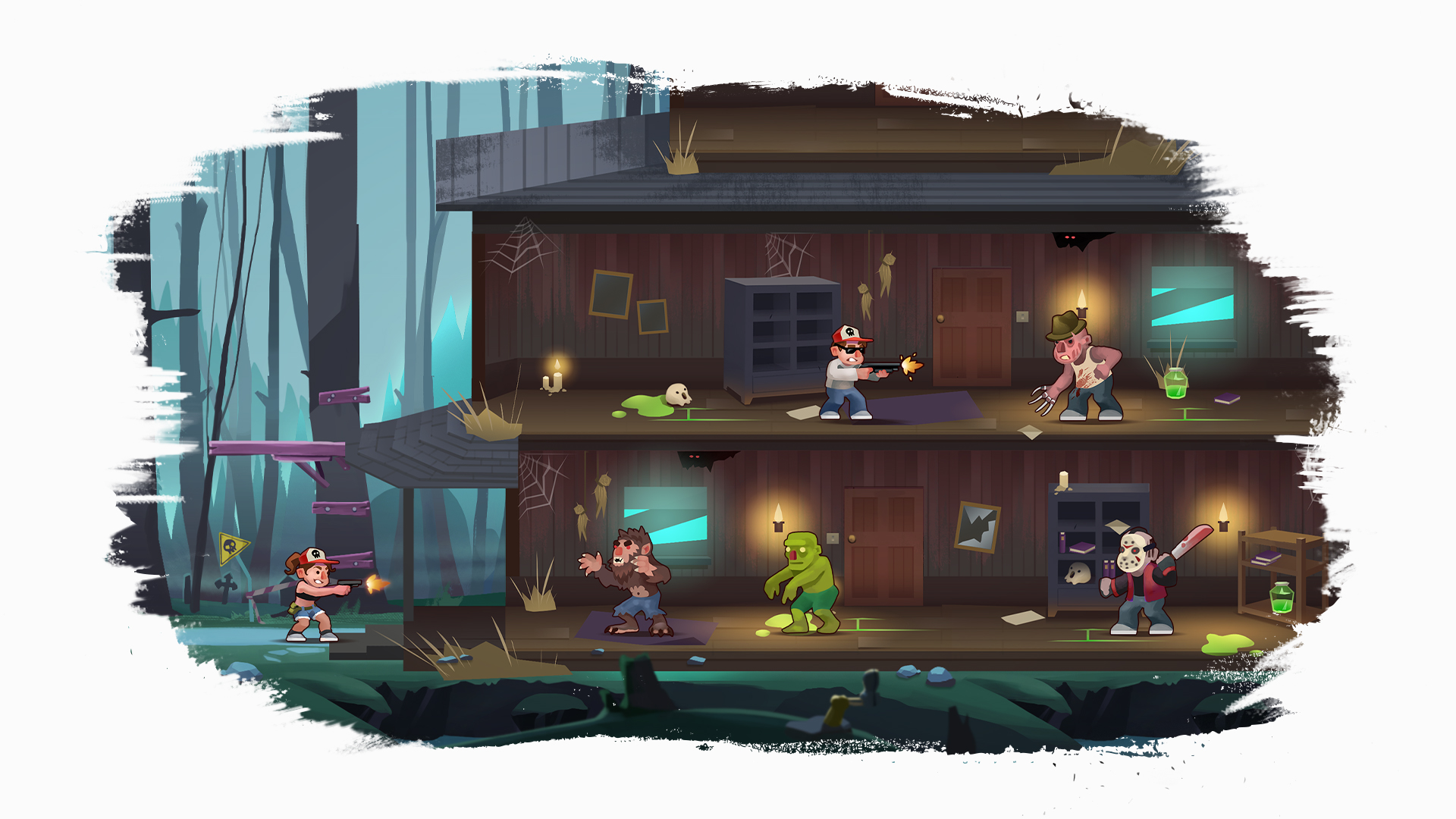
Key Takeaways
- Dynamic Environment Manipulation: Investigates how real-time terrain shifts, temporary platforms, and barriers influence engagement and strategic decision-making.
- Procedural Generation and Adaptive Difficulty: Explores the balance between diverse, procedurally generated challenges and the derivation of player skill and satisfaction.
- Emergence from Minimal Assets: Examines how modular mechanics and minimal visual assets yield complex gameplay through emergent behaviors and reactive interactions.
Overview of "Echo Shift" and Its Design Complexity
"Echo Shift" presents a fascinating design paradigm in the realm of 2D action-platformers. The core gameplay pivots on a unique "shift" ability that enables players to manipulate the game environment dynamically. This not only includes creating transient platforms and barriers but also involves using deflective surfaces as a means of strategic combat and navigation. The game employs procedural content generation to craft challenges that are both unpredictable and progressively difficult, compelling players to constantly adapt their strategies. The emphasis on real-time combat integrated with adaptive difficulty means that players must harness a synergy between movement, attacks, and environment manipulation — all orchestrated within an intuitive yet deeply engaging gameplay loop. Academic inquiry into these dynamics provides both a conceptual and technical framework, highlighting challenges and potential research pathways in dynamic game design.
Synthesized Problem Statements from Academic Perspectives
1. Dynamic Environment Manipulation
Problem Statement: Environmental Control and Player Engagement
How can dynamic environment manipulation, implemented through the "shift" ability in "Echo Shift," be quantitatively and qualitatively assessed for its impact on player engagement and cognitive load during gameplay? In particular, what are the underlying cognitive processes that govern the player’s ability to quickly adapt to shifting terrains and transient obstacles? Such inquiry requires rigorous analysis referenced in academic journals related to human-computer interaction, emphasizing how reactive decision-making and environmental control converge to shape player motivation and immersive experiences.
Relevant Academic Perspectives:
- Study adaptive behaviors in virtual environments where dynamic terrain manipulation affects perceptual decision-making (referenced in research on sensorimotor adaptation and environmental control).
- Explore psychological impacts of visually shifting environments using real-time feedback loops.
- Analyze related work on gameplay engagement metrics in dynamic control scenarios.
2. Procedural Generation and Adaptive Difficulty
Problem Statement: Balancing Randomness with Strategic Depth
How can procedural content generation be effectively used in "Echo Shift" to maintain a balance between unpredictability and strategic depth? This problem statement addresses the inherent challenge of ensuring that procedurally generated levels do not become overly random or lack coherent design insights. Research in this domain examines techniques for integrating adaptive difficulty settings that tune challenges according to player performance and skills, enhancing overall gameplay without compromising the game's aesthetic or strategic complexity.
Relevant Academic Perspectives:
- Investigation on algorithms for procedural generation that provide both variety and consistency, ensuring that the emergent complexity remains engaging.
- Study of adaptive difficulty where feedback mechanisms adjust the challenge in real-time based on player performance.
- Analysis of how procedural generation impacts the perceived quality of the gameplay experience, with references to academic surveys on procedural content generation.
3. Emergent Depth from Minimal Assets
Problem Statement: Modular Mechanics and Emergence in Low-Asset Environments
What methodologies can be employed to analyze the emergence of deep gameplay mechanics in "Echo Shift" given its reliance on minimal assets and modular design? This statement calls for a study on how seemingly simple mechanics can lead to a rich, emergent gaming experience. The focal point is understanding how player interactions with modular elements—when combined with the dynamic "shift" ability—can lead to unpredicted, emergent behaviors typically observed in more resource-intensive game designs.
Relevant Academic Perspectives:
- Research on emergent behavior from minimalistic design elements in game development, highlighting cognitive aspects of decision-making.
- Cross-disciplinary analysis linking principles of modular system design in computer science to emergent gameplay phenomena.
- Evaluation of design principles that emphasize simplicity yet encourage complex interactions, as seen in “one-button” mechanics extended to multidimensional outputs.
4. Real-Time Combat and Strategic Decision-Making
Problem Statement: Analyzing the Interplay between Combat Dynamics and Environmental Manipulation
In what ways does the integration of real-time combat with environmental manipulation in "Echo Shift" affect player strategic decision-making? This aspect of the game introduces a dual layer of challenge where players must simultaneously consider offensive moves and environmental adjustments. Advanced research can be directed toward evaluating the cognitive load associated with such dual-task performance, investigating how intuitive control schemes reconcile with the demands of rapid strategic decision-making during combat.
Relevant Academic Perspectives:
- Analysis of cognitive strategies in split-second decision-making scenarios, with comparisons to high-pressure sports environments.
- Studies on the integration of combat and environmental interaction, using dynamic difficulty metrics.
- Research into neural and behavioral responses during dual-task challenges in interactive environments.
5. Synergy of Movement, Attack, and Terrain Manipulation
Problem Statement: Understanding the Synergistic Integration of Core Gameplay Elements
How can the synergy between movement, attack mechanics, and terrain manipulation in "Echo Shift" be quantitatively modeled to assess overall player performance and satisfaction? The challenge focuses on dissecting the interplay among core gameplay elements, examining how the combination of dynamic shift abilities with combat and movement can lead to higher levels of player skill expression. Academic inquiry here should integrate perspectives from game theory, cognitive psychology, and system dynamics, aiming to provide quantifiable models that predict player success and engagement.
Relevant Academic Perspectives:
- Investigation of interactive synergies using computational modeling to simulate player behavior in controlled environments.
- Application of game theory principles to dissect complex interactions between simultaneous gameplay actions.
- Utilization of adaptive learning techniques to assess the progression of player skill over time in a dynamic game setting.
Comprehensive Table of Problem Statements
| Aspect | Problem Statement | Key Research Areas |
|---|---|---|
| Dynamic Environment Manipulation | How can the "shift" ability be leveraged to assess player engagement and cognitive adaptation during dynamic environmental changes? | Cognitive Load, Sensorimotor Adaptation, HCI Studies |
| Procedural Generation & Adaptive Difficulty | How to balance procedural generation algorithms to ensure diverse yet coherent level designs that tune to player skill? | Algorithm Consistency, Adaptive Difficulty, Engagement Metrics |
| Emergent Depth from Minimal Assets | What methodologies can reveal the emergence of complex gameplay from minimal assets and modular mechanics? | Emergent Behavior, Minimalistic Design, Modular System Analysis |
| Real-Time Combat & Strategy | What is the effect of concurrently managing real-time combat and dynamic environment manipulation on strategic decision-making? | Cognitive Strategies, Dual-task Performance, Game Physics |
| Synergy of Core Gameplay Elements | How can the interaction between movement, combat, and terrain manipulation be quantitatively modeled to evaluate player performance? | Game Theory, System Dynamics, Computational Modeling |
Integrating Academic Insights into Game Design
The design inquiries reflected in "Echo Shift" offer rich avenues for academic research and exploration. The dual imperative of maintaining an engaging player experience while harnessing procedural generation and adaptive difficulty mechanics has been a focal point in studies spanning human-computer interaction, game design, and cognitive psychology. By synthesizing findings from academic journals with innovative game mechanics, developers can ground their design philosophy in both theoretical and empirical research. This approach enables them to understand the balance between player expectations, cognitive load, and the emergent complexity that arises from integrating minimal assets with sophisticated dynamics.
Scholarly work on procedural content generation provides robust frameworks to evaluate the consistency and quality of dynamic level formation. Simultaneously, research into the cognitive aspects of real-time reactive decision-making underlines the importance of intuitive design choices that empower players without overwhelming them. Each of these aspects contributes to a holistic understanding of how games like "Echo Shift" can push the boundaries of interactive digital experiences.
References
- Integrating Visual Effects into 2D Platformer Games - Northeastern University Repository
-
Procedural Quest Generation and Branching Storylines - ScienceDirect
- Survey of Procedural Content Generation Algorithms - arXiv
- Perceptual Uniqueness in Procedural Games - Yale CampusPress
- Procedural Content Generation for Games Survey - ACM Digital Library
Recommended Further Queries

 gamedesign-development.blogspot.com
Last updated March 25, 2025