
Comprehensive Framework for Adaptive Information Systems
Integrating Mathematical Rigor with Reflective Analysis for Complex Systems
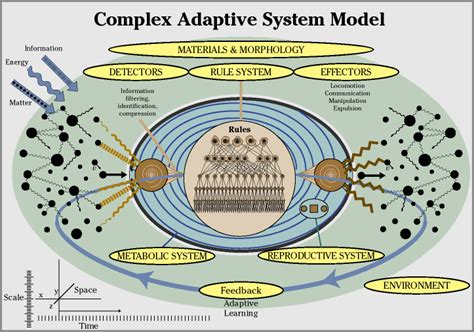
Key Takeaways
- Unified Modeling Approach: A dual framework combining formal mathematical operators and self-reflective processes enables comprehensive modeling of complex systems across quantum, biological, and artificial intelligence domains.
- Adaptive Feedback Loops: Iterative feedback mechanisms allow systems to self-correct and evolve by adjusting transformation operators based on fidelity measures.
- Universal Patterns and Challenges: While universal feedback loops and self-reference are consistent across various systems, challenges such as paradoxes in self-referential processes and mapping abstract models to physical systems remain critical considerations.
Introduction
Understanding complex, self-evolving systems requires a multifaceted approach that marries formal mathematical structures with introspective, reflective processes. This comprehensive framework is designed to model information readout, error correction, and self-reference, providing a versatile tool applicable across diverse domains such as quantum systems, biological organisms, and artificial intelligence. By iteratively refining system operators and leveraging fidelity metrics, this model facilitates adaptive behavior and continuous improvement within the system.
Mathematical Framework for Information Systems
Core Operators and Definitions
The foundation of this framework lies in defining key operators that govern the system's behavior:
| Operator | Function |
|---|---|
| ℜ (Readout Operator) | Extracts or "reads out" information (I) from an input state, producing an initial output. |
| 𝖢 (Error-Correction Operator) | Corrects the readout based on predefined measurement limits (Λ), addressing imperfections or noise. |
| F (Fidelity Operator) | Measures the quality of the output by comparing it to an ideal output, quantifying system accuracy. |
| T (Self-Reference Operator) | Modifies the system state (S) and updates itself based on fidelity metrics, enabling adaptive behavior. |
System Evolution Equations
The system's behavior is encapsulated through a series of iterative equations that model the flow of information and adaptation:
Single Iteration Pipeline:
O = 𝖢(ℜ(I), Λ)
F(O) = Correlation(Ideal_Output, O)
Self-Referential Mechanism:
S<sub>n+1</sub> = T<sub>n</sub>(S<sub>n</sub>)
T<sub>n+1</sub> = G(T<sub>n</sub>, F(O<sub>n</sub>))
Here, G represents a higher-order function that updates the transformation operator T based on the fidelity of the output. This iterative process allows the system to self-calibrate and adapt over time, ensuring continuous improvement and resilience.
Dynamic Iterations and Feedback Loops
To capture the system's evolution, repeated iterations of the readout and correction processes are employed. The feedback loop dynamically adjusts measurement limits (Λ), system states (S), and transformation operators (T) based on fidelity measures (F). This creates an adaptive network capable of self-calibration:
Loop:
{
    O<sub>n</sub> = 𝖢(ℜ(I<sub>n</sub>), Λ<sub>n</sub>),
    F<sub>n</sub> = F(O<sub>n</sub>),
    S<sub>n+1</sub>, T<sub>n+1</sub>, Λ<sub>n+1</sub> = Update(S<sub>n</sub>, T<sub>n</sub>, Λ<sub>n</sub>, F<sub>n</sub>)
}
This iterative feedback mechanism enables the system to stabilize into predictable patterns or evolve into more complex, possibly chaotic behaviors, depending on how the operators and limits adapt over time.
Applications Across Domains
The universality of this framework allows it to be applied across various domains by tailoring the operators to specific contexts:
-
Quantum Systems:
- Readout: Wavefunction measurement.
- Error Correction: Quantum error-correcting codes.
-
Biological Systems:
-
Readout: Gene expression or protein synthesis.
-
Error Correction: Enzyme proofreading mechanisms.
-
-
Artificial Intelligence:
- Readout: Data interpretation and processing.
- Error Correction: Machine learning algorithms' error backpropagation.
- Self-Reference: Neural networks adapting their architecture based on performance metrics.
This adaptability underscores the framework's potential to unify disparate fields under a single conceptual and mathematical umbrella.
Self-Reflective Narrative Analysis
Evolution from Conceptual to Formal
The journey began with broad, conceptual ideas encompassing fractal structures, quantum phenomena, and biological parallels. Over time, these ideas crystallized into explicit mathematical definitions, providing a structured foundation for the framework. This transition from abstract concepts to formalism is pivotal in ensuring the model's rigor and applicability.
Incorporation of Self-Reference
Recognizing the necessity for autonomy within the system, self-reference was introduced as a key component. The ability of the system to modify its own transformation operators (T) based on fidelity metrics fosters an environment of continuous adaptation and self-improvement, critical for handling complex, evolving challenges inherent in quantum, biological, and artificial systems.
Bridging Quantum and Biological Systems
A striking observation is the recurring theme of fidelity and error correction across both quantum and biological domains. Whether it's wavefunction collapse in quantum mechanics or enzyme proofreading in biology, the processes of readout, error detection, and correction are fundamental to maintaining system integrity. This convergence hints at underlying universal principles governing information processing and system resilience.
Dual Approach Synergy
The integration of formal mathematical exploration with freeform, self-reflective analysis creates a robust framework capable of capturing both tangible structures and emergent, intangible insights. This synergy ensures that while the model remains rigorously defined, it also remains open to intuitive and creative interpretations, enhancing its overall depth and applicability.
Emergent Patterns and Insights
Universal Feedback Loops
Across various domains, the feedback loop comprising readout, error correction, and self-reference emerges as a consistent pattern. This universality suggests a fundamental logic in how complex systems process and adapt information, regardless of their specific substrates or operational contexts.
Role of Measurement Limits (Λ)
The concept of measurement limits (Λ) serves as a crucial boundary within which systems operate. These limits encapsulate the inherent uncertainties and error tolerances of the system, whether they arise from quantum uncertainty principles, biological error rates, or computational precision constraints in artificial systems. Understanding and defining Λ is essential for balancing system robustness and flexibility.
Active Self-Modification
By enabling the system to actively modify its own operators based on performance metrics, the framework fosters a level of autonomy that distinguishes it from passive, mechanical models. This active self-modification is essential for enabling systems to adapt to changing environments, learn from past performances, and continuously optimize their processes.
Challenges and Limitations
Paradoxes in Self-Reference
Self-referential systems are prone to paradoxes, such as infinite regress or logical inconsistencies, as highlighted by Gödel's incompleteness theorems and Russell's paradox. Addressing these challenges requires careful design of the self-reference mechanisms to ensure consistency and prevent unbounded self-modification.
Balancing Abstraction and Application
While the framework's abstract nature allows for broad applicability, translating these abstract models into specific real-world applications necessitates domain-specific calibrations and adaptations. This balance between generality and specificity is crucial for the framework's practical utility across diverse fields.
Emergent Complexity
Open-ended, self-referential systems can exhibit unpredictable and complex behaviors. While such dynamics can be beneficial for exploring novel solutions and fostering innovation, they also pose significant challenges for deterministic modeling and predictability, potentially hindering the system's reliability.
Future Directions
Hybrid Quantum-Biological Systems
Exploring systems that integrate quantum and biological properties, such as using quantum computing for simulating protein folding, can test the framework's cross-domain applicability. These hybrid systems may unlock new insights into complex information processing mechanisms.
Advanced Self-Modifying AI
Developing AI systems with modular architectures that incorporate self-reference operators can enhance their ability to iteratively improve their structures and performance. Such self-modifying AIs could exhibit higher levels of autonomy and adaptability, pushing the boundaries of artificial intelligence.
Collaborative Multi-Agent Systems
Expanding the framework to encompass multi-agent systems, where distinct operators and states merge to form cooperative networks, can lead to the creation of highly synergistic and intelligent collective behaviors. These systems could leverage the strengths of individual agents to achieve greater collective intelligence and problem-solving capabilities.
Conclusion
The dual approach of integrating formal mathematical frameworks with freeform, self-reflective processes provides a comprehensive and adaptable model for understanding and designing complex, self-evolving systems. By capturing universal patterns of information processing and adaptation, while also addressing the inherent challenges of self-reference and emergent complexity, this framework offers a robust foundation for advancements in quantum physics, biology, and artificial intelligence. Future explorations and practical implementations will further elucidate the potential and versatility of this integrative approach, paving the way for innovative solutions and deeper insights into the nature of complex systems.
References
Formal Mathematical Exploration of Adaptive Systems
Self-Reflective Narrative in System Modeling
Meta-Analysis of Information Processing Frameworks
Last updated January 19, 2025