
Exploring Advanced Reinforcement Learning in Chip Design
Unlocking next-generation optimization through AI-driven chip design techniques.
Key Insights
- Integration of DRL and GNNs: Advanced deep reinforcement learning and graph neural networks are reshaping chip layout, floorplanning, and logic synthesis.
- Enhanced Efficiency and Automation: Techniques allow significant reductions in design time and improvements in power, performance, and area (PPA).
- Industry Breakthroughs: Solutions such as Google’s AlphaChip and NVIDIA’s PrefixRL showcase real-world advantages and the potential for broader application.
Overview of Reinforcement Learning in Chip Design
Advanced reinforcement learning (RL) techniques are increasingly being adopted in the field of chip design to improve efficiency, performance, and innovation. By reframing chip design challenges as decision-making problems, AI agents are trained to optimize various key stages, from floorplanning and component placement to circuit design and overall electronic design automation (EDA). The advancements in deep reinforcement learning (DRL) combined with graph neural networks (GNNs) provide novel approaches for addressing the inherent complexity in chip design, ultimately leading to faster and higher quality designs.
Key Techniques and Applications
1. Deep Reinforcement Learning (DRL) Applications
Chip Floorplanning and Placement
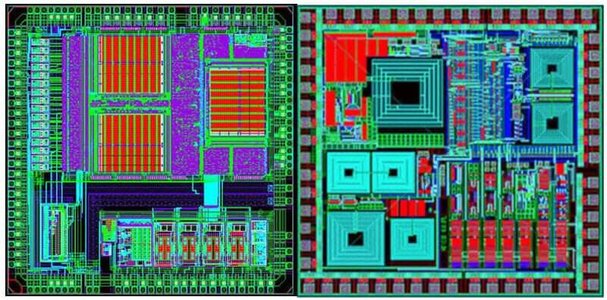
DRL algorithms offer the ability to optimize chip floorplanning and placement by training agents to learn from iterative design feedback. These agents are exposed to various design metrics such as power, performance, and area (PPA), ensuring that every design decision adds value. For example, Google’s AlphaChip has been particularly influential by optimizing chip layouts for Tensor Processing Units (TPUs), reducing design cycles dramatically.
Hierarchical and Timing-Driven Placement
Hierarchical placement methods leverage DRL to first place larger components (macros) before refining the placement of smaller elements. This staged approach, coupled with simulation tool integration, has proven effective in achieving timing-driven cell placement practices that are essential for meeting stringent performance targets.
2. Graph Neural Networks (GNNs) in Chip Layout
Utilization of Graph Representations
Chip designs are naturally represented as graphs, where nodes symbolize components and edges represent connections. Graph neural networks enhance RL algorithms by capturing these relationships more effectively. By incorporating graph-based insights, these methods lead to more accurate estimations of design quality and have been shown to outperform traditional methods on key optimization metrics.
3. Integration with Electronic Design Automation (EDA)
Automation of the Optimization Process
Integrating advanced RL with EDA tools automates optimization tasks that were once handled manually. The marriage of reinforcement learning and simulation allows dynamic adjustments in real-time, significantly reducing design cycles—from what could be several weeks to hours or days. This synergy not only improves design quality but also reduces production costs and enhances yield in mass production environments.
4. Novel Applications: Designing Arithmetic Circuits
Case Study: NVIDIA’s PrefixRL
In addition to layout optimization, reinforcement learning techniques have been extended to circuit design. NVIDIA’s implementation, known as PrefixRL, utilizes Q-learning to optimize the design of arithmetic circuits like adders. The AI evaluates trade-offs between area and delay, leading to circuits that are smaller, faster, and more efficient than those generated using traditional EDA methods.
Comparative Overview of Techniques
Below is a comparative table summarizing the primary techniques and their applications in advanced reinforcement learning-based chip design:
| Technique | Application Area | Key Benefits |
|---|---|---|
| Deep Reinforcement Learning (DRL) | Chip floorplanning and placement | Optimizes layouts, reduces design cycle time, enhances PPA metrics |
| Graph Neural Networks (GNNs) | Graph-based layout analysis | Improves accuracy in component interconnection modeling and overall optimization |
| Hierarchical Placement | Macro and micro component placement | Streamlines multi-level design processes and ensures timing-driven placement |
| Integration with EDA Tools | Full EDA pipeline including simulation and validation | Enables real-time adjustments, reduces costs, and improves yield |
| Reinforcement Learning for Circuit Design | Arithmetic circuits like adders | Designs smaller and faster circuits, achieving superior performance compared to traditional methods |
Challenges and Future Directions
While the application of advanced reinforcement learning has catalyzed significant improvements in chip design, several challenges remain. One major challenge is scaling these techniques to accommodate the growing complexity of modern integrated circuits. Ensuring that RL models can handle multi-objective optimizations—balancing power, performance, and area simultaneously—is still a work in progress.
Scalability and Complexity
With the ever-increasing complexity of chip designs, adaptive algorithms need to scale efficiently while handling multiple design objectives. The integration of advanced simulations alongside RL-based decision systems is vital, but scalability remains an area for continuous research and development.
Timing-Driven Optimization
Ensuring that RL-based methods include timing-driven optimizations is essential for the designs to meet operational constraints. As many RL approaches currently do not fully incorporate these criteria, future iterations must improve on this aspect to ensure that designs match or exceed the performance of those produced with conventional EDA methods.
Integration with Legacy Systems
The seamless integration of reinforcement learning techniques into existing EDA toolchains presents a distinct challenge. Solutions must be robust enough to work effectively with established workflows while showcasing an unambiguous improvement in design outcomes.
Industry Case Studies and Exemplary Applications
Google’s AlphaChip Approach
Google’s AlphaChip serves as a notable example of how reinforcement learning can revolutionize chip design. By framing chip placement as an RL problem where the agent interacts with the chip’s netlist and metadata, AlphaChip was able to achieve superhuman performance in chip layout design. Its success has not only shortened design times but also improved overall chip performance.
NVIDIA’s PrefixRL for Arithmetic Circuits
NVIDIA’s approach to designing arithmetic circuits using reinforcement learning showcases the technology’s capabilities in optimizing circuitry. The PrefixRL method iteratively adjusts circuit components, leading to smaller, faster, and more efficient designs, which is a testament to the versatility of RL in diverse chip design contexts.
References
- How AlphaChip Transformed Computer Chip Design - Google DeepMind
- Chip Design with Deep Reinforcement Learning - Google Research
- Graph-based Placement Methodology for Fast Chip Design - Nature
- Chip Design with Deep Reinforcement Learning - Google AI Blog
- Next Generation AI for Chip Design - Semiconductor Engineering
Recommended Exploration
Last updated March 26, 2025