
Unraveling the Age of Artificial Intelligence: From Ancient Dreams to Modern Marvels
Tracing AI's Journey Through Centuries of Innovation and Future Horizons
Key Highlights of AI's Enduring Journey
- Ancient Roots: The concept of artificial intelligence stretches back to antiquity, with philosophical ideas and mythical tales of intelligent automatons laying the foundational dream for thinking machines.
- Formal Birth in the Mid-20th Century: While philosophical discussions date back centuries, the formal birth of artificial intelligence as a field of study is widely attributed to the Dartmouth Summer Research Project on Artificial Intelligence in 1956, where John McCarthy coined the term "artificial intelligence."
- Dynamic Evolution and Future Impact: AI has undergone periods of rapid growth ("AI summers") and slowed progress ("AI winters"), continually evolving with significant milestones in areas like natural language processing, machine learning, and robotics, and is poised for transformative impacts in 2025 and beyond, especially with the rise of autonomous AI agents.
The question of "how old is AI?" doesn't have a single, simple answer, as the journey of artificial intelligence encompasses a rich tapestry of philosophical contemplation, theoretical breakthroughs, and technological innovations spanning millennia. While the term "artificial intelligence" was coined in the mid-20th century, the underlying ideas of creating intelligent machines or mimicking human thought processes have roots deep in antiquity.
The Philosophical Origins and Ancient Dreams
The concept of artificial intelligence isn't a modern invention. Long before computers, philosophers and thinkers envisioned mechanical beings or systems that could exhibit intelligence. Ancient myths and stories often featured artificial beings endowed with consciousness or abilities beyond human capacity. For instance, automatons, mechanical devices that moved independently, were conceived as early as 400 BCE, with a mechanical pigeon created by Archytas of Tarentum, a friend of Plato. Leonardo da Vinci also designed famous automatons around 1495, further illustrating this long-standing human ambition to create intelligent, self-operating entities.
Philosophers in the 17th and 18th centuries, such as Gottfried Wilhelm Leibniz, explored ideas related to universal languages of reasoning (like his characteristica universalis), which laid theoretical groundwork for formal systems that could process information and draw logical conclusions. These early philosophical inquiries about knowledge, reasoning, and the possibility of predicting intellectual processes can be seen as precursors to modern AI.
The Dawn of Modern Computing and Theoretical Foundations
The true practical groundwork for AI began to solidify in the mid-20th century with the invention of the programmable digital computer. Key figures emerged whose theoretical work was indispensable:
Alan Turing's Visionary Work
One of the most pivotal figures in the theoretical foundation of AI is the British mathematician and computer science pioneer, Alan Turing. In 1936, Turing introduced the concept of the "Turing machine," a theoretical construct that could manipulate symbols based on a set of rules, demonstrating that a mechanical device could imitate any conceivable process of mathematical deduction. This insight was revolutionary. In 1948, he wrote a report titled "Intelligent Machinery," where he introduced many central concepts of AI.
Perhaps his most famous contribution to the AI discourse came in 1950 with his paper "Computing Machinery and Intelligence," where he posed the fundamental question, "Can machines think?" In this paper, he introduced what is now known as the "Turing Test," or the "imitation game." This test proposed a practical way to determine if a machine could exhibit intelligent behavior indistinguishable from a human, effectively side-stepping the complex philosophical debate of defining intelligence itself.
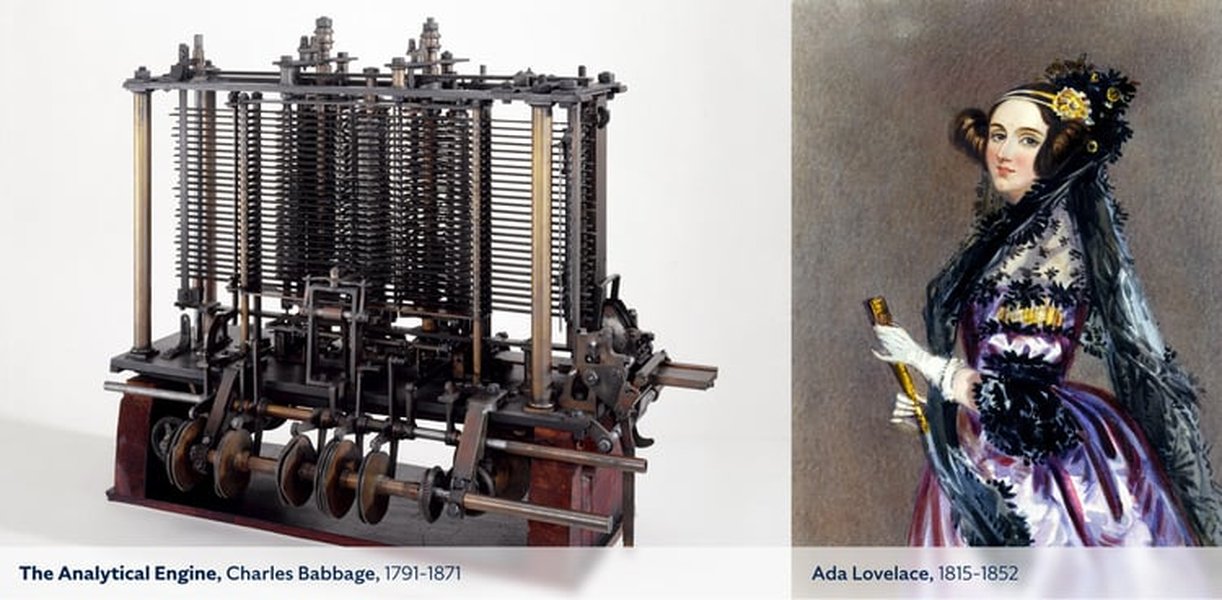
Early pioneers of AI, illustrating the foundational thinkers who shaped the field.
The Official Birth of AI: Dartmouth 1956
While Turing laid the conceptual groundwork, the formal academic field of "artificial intelligence" was officially born and christened in 1956. This landmark event was the Dartmouth Summer Research Project on Artificial Intelligence.
John McCarthy and the Coining of "AI"
It was at this seminal workshop, organized by John McCarthy, that the term "artificial intelligence" was coined. McCarthy, along with other luminaries like Marvin Minsky, Nathaniel Rochester, and Claude Shannon, gathered to explore the possibility of creating machines that could simulate human intelligence. Their proposal for the project stated their belief that "every aspect of learning or any other feature of intelligence can in principle be so precisely described that a machine can be made to simulate it." This workshop is widely regarded as the official birthdate of the field of AI, marking the transition from theoretical discussions to dedicated scientific research.
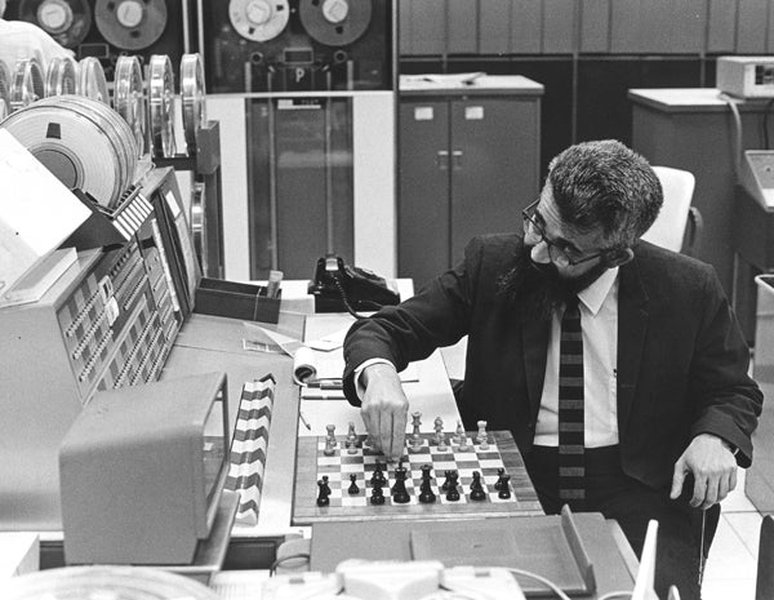
John McCarthy, the computer scientist who coined the term "artificial intelligence" in 1956.
The Evolution of AI: Milestones and Eras
Since its formal inception, AI has experienced dynamic periods of advancement and challenge, often referred to as "AI summers" (periods of significant progress and funding) and "AI winters" (periods of reduced funding and interest due to unmet expectations).
Early Successes and the First AI Summer (1956-1974)
Following Dartmouth, the field saw rapid growth. Early successes included:
- Logic Theorist (1955): Developed by Herbert Simon and Allen Newell, this was the first artificial intelligence program, capable of proving mathematical theorems.
- ELIZA (1966): Created by Joseph Weizenbaum at MIT, ELIZA is considered the first chatbot. It simulated therapy by rephrasing user inputs as questions, demonstrating early natural language processing capabilities.
- Shakey the Robot (1966-1972): Developed at Stanford Research Institute, Shakey was a mobile robot equipped with sensors and a camera that could navigate and reason about its environment, aiming for autonomous function in realistic settings.
- LISP (1960): John McCarthy developed this programming language, which became the principal language for AI work in the United States for decades, before being supplanted by languages like Python and Java in the 21st century.
AI Winters and Resurgence
The initial excitement faced setbacks due to limitations in computing power, data availability, and the complexity of real-world problems. The 1970s and 1980s saw periods of reduced funding and optimism. However, breakthroughs in the late 1990s and early 2000s, particularly in machine learning, renewed interest:
- Deep Blue (1997): IBM's chess-playing computer defeated world champion Garry Kasparov, a significant milestone in machine problem-solving.
- ImageNet and Deep Learning (2010s): The availability of massive datasets like ImageNet and advancements in deep neural networks led to significant progress in image recognition, natural language processing, and other areas.
The Age of Intelligent Agents and Beyond (2020s and 2025)
The current era of AI is characterized by unprecedented advancements, particularly with the rise of generative AI and AI agents.
- GPT Models (2020s): OpenAI's GPT series, exemplified by GPT-3 with its 175 billion parameters, marked a landmark moment, showcasing remarkable capabilities in generating human-like text and engaging in conversations.
- Autonomous AI Agents (2025): A major trend in 2025 is the shift from mere chatbots and image generators to "agentic" systems. These AI agents are designed to act autonomously, plan, reason, and complete complex tasks on behalf of users, rather than simply answering questions. They are expected to simplify life at home and work, with human oversight remaining crucial. The U.S. government is allocating significant funds to integrate AI and robotics in manufacturing, logistics, and service roles, leveraging AI's ability to process natural language and execute instructions.
The radar chart above illustrates the perceived impact and maturity of different AI concepts and applications across various historical and contemporary stages. Each spoke represents a dimension of AI progress, from foundational theory to practical application. The blue line represents the status around the "Birth of AI" (1950s-1970s), characterized by strong theoretical foundations and early symbolic AI. The green line illustrates the "Modern AI Era" (2010s-present), showing significant advances in data processing, machine learning, and application breadth. The red line projects the "Intelligent Age (2025+)," anticipating further leaps in autonomous agents, ethical considerations, and integration into daily life, while highlighting the continuous evolution of computational power and algorithmic sophistication.
The "Intelligent Age" and Beyond: AI in 2025
The year 2025 is often referred to as being firmly within the "Intelligent Age," a transformative chapter driven by the rapid advancements in AI, alongside quantum computing and blockchain. This period signifies AI's evolution from a mere tool to an integral part of daily life and work. For instance, the World Economic Forum's Annual Meeting 2025 in Davos focused on "Industries in the Intelligent Age," underscoring AI's strategic importance for organizations across sectors.
In 2025, several trends are accelerating:
- AI-powered Agents: These agents will perform tasks with greater autonomy, from simplifying home tasks to assisting in professional settings.
- Specialized Models: The development of faster, better, and more specialized AI models will lead to new and more useful AI experiences.
- Human Oversight: Despite increased autonomy, human oversight remains a central theme, with ongoing conversations about drawing boundaries around what AI agents are permitted to do.
- National Security Focus: Governments worldwide are increasingly viewing AI through the lens of national security, leveraging it for border surveillance, intelligence gathering, and military applications while also managing global competition.
- Legislative Momentum: 2025 is anticipated to be a significant year for AI legislation, with many proposals at state and national levels aiming to establish regulatory frameworks.
Key Milestones in the History of AI
To summarize the age and evolution of AI, it's helpful to look at some key milestones, from early theoretical concepts to modern applications. This table highlights significant moments that have shaped the field.
| Period/Year | Key Development/Event | Significance |
|---|---|---|
| Antiquity - 18th Century | Philosophical ideas, myths of artificial beings, automatons (e.g., Archytas' pigeon, Leonardo da Vinci's designs), Leibniz's universal language of reasoning. | Laid the conceptual groundwork for intelligent machines, envisioning the possibility of automated reasoning and mechanical life. |
| 1936 | Alan Turing publishes "On Computable Numbers," introducing the Turing Machine. | Provided the theoretical foundation for modern computing and the concept of universal computation. |
| 1948 | Alan Turing writes "Intelligent Machinery" report. | Introduced early concepts of machine learning and intelligence before the formal field existed. |
| 1950 | Alan Turing publishes "Computing Machinery and Intelligence," proposing the Turing Test. | Defined a practical test for machine intelligence, shifting focus from philosophical debates to empirical evaluation. |
| 1955 | Herbert Simon and Allen Newell develop Logic Theorist, the first AI program. | Demonstrated a program capable of solving problems requiring human-like reasoning (proving theorems). |
| 1956 | Dartmouth Summer Research Project on Artificial Intelligence; John McCarthy coins "Artificial Intelligence." | Official birth of AI as an academic field; established the term and agenda for future research. |
| 1960 | John McCarthy develops LISP programming language. | Became the dominant programming language for AI research for decades. |
| 1966 | Joseph Weizenbaum creates ELIZA, the first chatbot. | Early demonstration of natural language processing and human-computer interaction. |
| 1970s-1980s | First AI Winter (reduced funding and interest). | Highlighting the challenges of early AI, including limited computational power and unrealistic expectations. |
| 1997 | IBM's Deep Blue defeats Garry Kasparov in chess. | Significant milestone in machine problem-solving and brute-force computation. |
| 2010s | Rise of Deep Learning, fueled by big data and increased computational power (e.g., ImageNet, neural networks). | Revolutionized image recognition, natural language processing, and machine learning, leading to current AI boom. |
| Late 2022 | OpenAI launches ChatGPT to the public. | Democratized access to advanced generative AI, sparking widespread public and industry interest. |
| 2025 | Emergence of advanced AI agents, significant focus on AI in national security, increased legislative efforts. | Marks the "Intelligent Age," where AI moves beyond chatbots to autonomous, complex task execution, with growing regulatory and ethical considerations. |
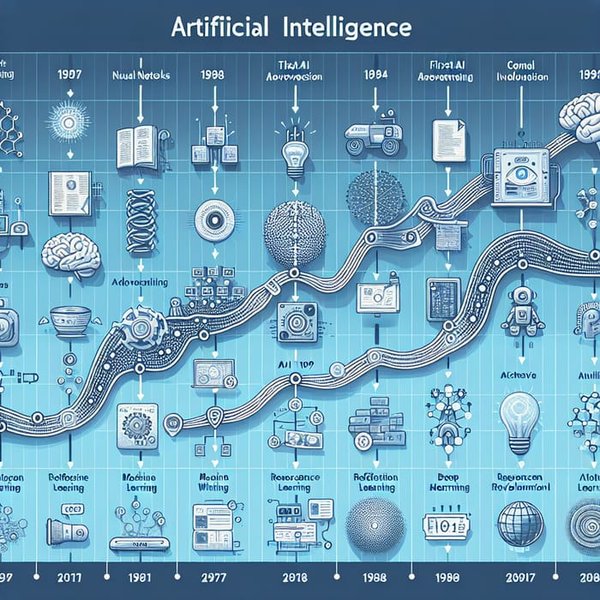
A visual timeline illustrating the key milestones in the evolution of artificial intelligence.
The Impact of AI in 2025 and Beyond
The year 2025 is not just another year in AI's history; it represents a significant acceleration point. Discussions at global forums like the World Economic Forum in Davos emphasize AI's role in transforming industries, from manufacturing with AI-powered production lines to healthcare and logistics. The focus is shifting towards how companies can harness and scale these frontier innovations to "future-proof" their operations.
Concerns about the future of being human in the AI age are also prominent, with experts worrying about the impact on our sense of purpose and the need for human oversight. Compliance frameworks are being revolutionized by AI, presenting both unprecedented opportunities and significant challenges for businesses and governments. The ability of AI to process vast amounts of data and perform human-like tasks at scale is driving innovation and efficiency across almost every sector.
A comprehensive overview of AI's history, from Alan Turing's early ideas to modern developments.
This video provides an excellent visual and narrative journey through the complete history of artificial intelligence. It highlights the pivotal moments and influential figures, contextualizing how AI has evolved from conceptual beginnings to the complex, rapidly advancing field it is today. Understanding this timeline is crucial for appreciating the depth and breadth of AI's development, bridging the gap between historical theoretical work and contemporary real-world applications, and setting the stage for future innovations.
Frequently Asked Questions (FAQ)
When was the term "artificial intelligence" first used?
Who is considered the "father of AI"?
What are AI winters?
How is AI impacting 2025?
Recommended Further Exploration
- Explore the comprehensive impacts of AI on the global economy in 2025.
- Delve into the ethical challenges and considerations in AI development.
- Understand the anticipated advancements and implications of autonomous AI agents.
- Examine the role of AI in national security and the evolving governance frameworks.